Thursday, November 12, 2026


New clinical definition of obesity could help target care more effectively, saving time and money


University College London


The traditional way of assessing whether someone is overweight using body mass index (BMI) may fail to capture whether excess body fat is harmful and could be supplemented with a second measure when assessing patients, a new UCL study suggests.

In a study published in the International Journal of Obesity, the researchers used data from the 1970 British Cohort Study to see how nearly 7,000 46-year-olds compared in terms of their obesity levels according to both the traditional Body Mass Index (BMI) (an adult’s weight divided by their height squared) and the newer Lancet Commission on Clinical Obesity definition¹ which considers excess body fat alongside either tissue/organ functional impairment or substantial, age-adjusted limitations in daily living activities.

They found that about two thirds 69%) of people classified as living with obesity (>=30+ kg/m2) according to the BMI were not considered to have clinical obesity by the newer definition; by contrast, a smaller number (4%) who were considered a healthy weight by BMI thresholds showed signs of having clinical obesity.

Their study is the first to look at a wide group of people of a specific age, thereby ruling out factors that might be accounted for by age (such as that older people are naturally more likely to have organ damage).

The researchers are calling for clinicians and policymakers to consider “moving beyond BMI alone” when it comes to assessing the health implications of an individual’s weight, arguing that the traditional BMI measure does not give the full picture – and can even be very misleading.

They say the NHS could save time and money were the newer definition of obesity to used routinely by GPs and hospital doctors alongside the BMI and the former may also better identify those people at greater risk of obesity-related illness in the future.

Lead author Dr Jo Blodgett (UCL Division of Surgery and Interventional Science) said: “Midlife is a sensitive period when we consider trajectories of developing negative health outcomes. Using the newer Lancet classification in this age group may help identify those at greatest risk of poor health and who would benefit most from intervention. This has a lot of value from a policymakers’ perspective and could save the NHS and its staff time and money.

“Moving beyond BMI alone could better distinguish healthy people, who have high BMI due to their body type, from those who have underlying and clinically relevant health limitations or relevant organ dysfunction.

Co-author Dr John Mitchell (UCL Division of Surgery and Interventional Science) said: “The Lancet Commission definition also provides a more meaningful way for researchers to study who develops clinical obesity, how people transition from pre-clinical to clinical obesity, and which groups are at greatest risk of subsequent disease.”

The Lancet Diabetes & Endocrinology Commission on the Definition and Diagnostic Criteria of Clinical Obesity was established to resolve long-standing controversies over whether obesity is a distinct disease or merely a risk factor for other illnesses, and to move away from the limitations of using Body Mass Index (BMI) alone.

In January 2025, the Commission published its new Clinical Obesity definition in a report which was endorsed by 76 global medical and patient-advocacy organisations.

The UCL team applied the new 2025 clinical definition of obesity to 6,978 46-year-old UK adults and found substantial differences compared with traditional BMI categories.

The new framework classified 30% of their study’s participants as not having obesity, 53% as having a pre-clinical level of obesity and 18% as having clinical obesity. By comparison, BMI classified 29% as of a healthy weight, 38% as overweight and 32% as having obesity.

Importantly, the researchers said, among people classified as being obese using BMI (≥30 kg/m²), only 31% were deemed to have clinical obesity by the new definition, with the remaining 69% being classified as having pre-clinical obesity. The mismatch also worked in the other direction; among people considered overweight by BMI (25-30kg/m2), only 16.6% of those met the criteria for having clinical obesity, while 18% had no obesity, according to the new definition.

There was also some early evidence that the clinical definition may better distinguish future health risk. Over five years, people with pre-clinical and clinical obesity had approximately three and five times greater odds of death, respectively, than those without obesity, whereas BMI-defined overweight and obesity categorisations were not associated with mortality. However, there were only 27 deaths, so these mortality findings need to be interpreted cautiously and replicated in larger studies with longer follow-up.

Notes to Editors

For more information, including a copy of the research paper or to speak to the UCL authors, please contact Nick Hodgson, UCL Media Relations. T: +44 (0)7769 240209, E: nick.hodgson@ucl.ac.uk  

Joanna M Blodgett, John J Mitchell, Janine Makaronidis and Mark Hamer, Rethinking obesity: comparison of the new clinical obesity framework with traditional BMI-based classifications in midlife UK adults, will be published in the International Journal of Obesity at 01:00 Wednesday 11th November UK time/20:00 Tuesday 10th November US Eastern time and is strictly embargoed until that time.

The DOI number is 10.1038/s41366-026-02257-2.

¹ Cf Definition and diagnostic criteria of clinical obesity, The Lancet Diabetes and Endocrinology, January 14, 2025.

About University College London (UCL)

UCL is a global top 10 university, set up in London 200 years ago to offer education for all. Today, we gather 60,000 staff and students, from over 150 countries, to create a unique city within a city – a research and innovation powerhouse that leads the world in subjects spanning the arts, sciences, technology and the humanities. We’ve nurtured 33 Nobel Prize winners, because here, brave ideas have the scale and the support they need to succeed. We are University College London. And here, it can happen. 

UCL turns 200 in 2026. Join us for a year of bicentennial events and celebration. 

www.ucl.ac.uk


Managing holiday meals in an unprecedented year of food recalls


New national survey shows most Americans on higher alert for foodborne illnesses


Orlando Health

Family holiday meal

image: 

A new national survey from Orlando Health shows nearly 60% of U.S. adults are more concerned about foodborne illnesses this year.

view more 

Credit: Orlando Health


ORLANDO, FL — 2026 has been an unusually severe and active year for food safety issues, particularly when measured by outbreak case counts and recall volume by weight. Now Americans are on high alert to protect their loved ones around the table this holiday season.

A new national survey from Orlando Health reveals nearly 60% of U.S. adults are more concerned about foodborne illnesses this year than in previous years.

“It sounds scary to hear about all of these different bacteria or these new infections, E. coli, Salmonella, Cyclospora, Campylobacter, Giardia, but in reality, they're not new. We’ve treated them before,” said Daniel Egan, M.D., a physician with Orlando Health Medical Group - Infectious Diseases. “If you're more aware of it, you're also going to take more steps to prevent those kind of infections.” 

Dr. Egan recommends vigilance from preparing the food to putting away leftovers:

  • Wash your hands frequently between tasks: Taking a brief pause to wash your hands with soap and water, especially between different preparation steps (such as switching from handling raw poultry to preparing stuffing), after using the restroom or when feeling unwell, is one of the single most effective ways to prevent spreading pathogens.

  • Never wash or rinse raw poultry: Do not rinse raw turkey or chicken in the sink. Water splashing off the poultry splatters bacteria onto surrounding countertops, plates, utensils and sink surfaces. Heat from proper cooking safely destroys the bacteria.

  • Prevent cross-contamination with separate tools and storage: Use distinct cutting boards, prepware and utensils for raw meats versus serveware and ready-to-eat dishes. In the refrigerator, keep raw meats covered and stored on separate shelves or drawers away from produce and leafy greens.

  • Use a food thermometer to check internal temperatures: Avoid eyeballing or relying on visual inspection alone. Use a thermometer probe to ensure poultry and meats reach safe internal cooking temperatures and don't remain in the bacterial “danger zone.” 

  • Rinse produce and leafy greens, even pre-washed items: Always rinse fresh produce under running water before eating, even if the package states it is "pre-washed" or "pre-cleaned" because bacteria can be picked up during transport and handling.

  • Keep food covered and track sitting time: Keep dishes covered while serving or transporting them to guard against environmental contaminants like dust and pet hair. Limit the time perishable foods sit out (aiming for a one to two-hour maximum) before packing leftovers into airtight containers in the refrigerator.

“Holiday cooking is unique compared to your normal daily or weekly cooking,” Dr. Egan said. “Cooking large meals, you might skip a few steps here and there to try and be more efficient. But that increases your risk for transmitting infection.” 

Symptoms, including vomiting, nausea, cramps, diarrhea and fever, can happen anywhere from six hours to several days after exposure to foodborne bacteria. Mild cases that clear within a day can usually be managed at home. Dr. Egan advises going to the doctor when symptoms worsen or persist. Young children, older adults, pregnant women and immunocompromised people face the greatest risk of complications, such as dehydration and kidney problems.

“If it resolves within a day, then it's resolved,” Dr. Egan said. “If it's not going away or it's even escalating, your body is losing fluids, it's losing electrolytes. We can do testing to see if there's anything wrong with your electrolytes and if there's any particular infection that needs antibiotics.”

Nationally, foodborne diseases sicken 48 million people every year, causing 128,000 hospitalizations and 3,000 deaths. That’s why Meg Powel, 33, of Columbus, Ohio, takes the necessary steps, no matter the current outbreak, to protect her family meals from foodborne illnesses.

“I would never want that to happen in my own house, in my own kitchen so I really try to be as careful as possible,” Powel said. “Using disposable gloves, a good produce wash, airtight containers, a food thermometer, multiple cutting boards. At the end of the day, if I'm the one serving everything, then I take full responsibility to make sure everyone is really taken care of.”


Leftover safety

Meg Powel, 33, of Columbus, Ohio, puts leftovers in an airtight container before they get cold, which is one way experts say to avoid foodborne illnesses.

Credit

Orlando Health


About Orlando Health

Orlando Health is a private not-for-profit, integrated academic healthcare system with $15 billion of assets under management, that serves the southeastern United States – including Florida and Alabama – and Puerto Rico. With corporate offices in Orlando, Florida the system provides a complete continuum of care across a network of medical centers and institutes, community and specialty hospitals, physician practices, urgent care facilities, skilled nursing facilities, home healthcare, and long-term and behavioral health care services. Founded more than 100 years ago, Orlando Health’s mission is to improve the health and the quality of life of the individuals and communities we serve. The system provided $3.6 billion in community impact in the form of community benefit programs and services, Medicare shortfalls, bad debt, community-building activities and capital investments in FY 25, the most recent period for which the information is available. For more information, visit orlandohealth.com, or follow us on LinkedIn, Facebook, Instagram and X.

UK Government guidance indicates 95% of processed foods are unhealthy


University College London


The study, published in BMJ Medicine, found that among the official public health definitions* used to identify and regulate food and drink products in the UK, each varied widely in what proportion of processed and ultra-processed products was classed as unhealthy, while systems such as traffic light labels failed to identify more than half of these unhealthy packaged foods.

When the Eatwell Guide — a set of government recommendations for nutrient, food and drink intake — was used to define unhealthy food, it classified over 98% of ultra-processed products and 95% of processed products sold in the UK as unhealthy.

By contrast, the voluntary green, amber and red traffic light labelling on the front of packaging identified fewer than half (48.2%) of those foods as unhealthy.

The high fat, salt and sugar (HFSS) definition used by the Food Standards Agency Nutrient Profiling Model (FSA-NPM) to restrict the advertising and promotion of unhealthy foods identified just over half (57.6%) of the same foods as unhealthy.

As a result, the researchers suggest that inconsistencies in labelling and regulation may lead consumers to buy food and drink products which have high levels of saturated fat, salt and sugar without realising they are unhealthy.

The authors conducted a cross-sectional analysis of a representative database of 262 processed and 1,636 ultra-processed food and drink items available across the UK.

They then compared the proportions of processed and ultra-processed products identified as unhealthy by FSA-NPM, the traffic light system and new Nutrient Profiling Models aligned with the Eatwell Guide.

Professor Chris van Tulleken (UCL Infection, Immunity and Transplantation), the study’s senior author, said: “This study shows that the UK food environment is saturated with products that make it hard for consumers to eat a diet in line with UK government advice. The reason such products are so dominant may be because existing labelling and regulation systems fail to identify them as unhealthy.

“If these products make up the majority of a person’s diet, as they do in the UK, there is a significant risk of consuming more sugar, salt and saturated fat than the Eatwell Guide recommends, even if someone fastidiously avoids red traffic lights, and HFSS products.

“This itself would be difficult as traffic lights are voluntary and the HFSS definition is hidden from consumers.”

Lead author Sam Dicken (UCL Epidemiology and Health Care) said: “Our analysis shows that tools for regulating healthy and unhealthy foods in the UK are inconsistent.

“For example, traffic light labelling showed that 48% of ultra-processed products surveyed are unhealthy, and the FSA-NPM showed that 57% of ultra-processed products surveyed are unhealthy. But nutrient profiling models based on UK government guidance, the Eatwell Guide, indicated that between 91% and 98% of ultra-processed products surveyed are unhealthy.

“Current food and drink regulatory tools do not capture products with an excess content of harmful nutrients, but UK dietary guidance does.”

Some of the food products which would be classified as having high levels of fat, salt and sugar under the Eatwell Guide include canned pasta in tomato sauce, macaroni cheese made from packet mix, and fat-free probiotic yoghurts. These products are not identified as being unhealthy under traffic light labels or the HFSS definition.

Conversely, foods such as nuts or whole fruit may be flagged as being high in sugars or fats by traffic light labelling, despite being encouraged as part of a healthy diet by the Eatwell Guide.

Co-author Dr Dolly van Tulleken, Visiting Researcher from the University of Cambridge, said: “This study reveals how confusing and incoherent the UK government’s definitions of unhealthy food are.

“Products classified as unhealthy by one system are healthy under another.  A single, unified system for categorising food and drink products as unhealthy using existing UK dietary guidance, is much needed, both for consumers and regulation.

“This must be developed independently of food and drink industry influence. This would help to close regulatory loopholes and address the inconsistency of front-of-pack ‘traffic light’ labels and FSA-NPM.”

Co-author Dr Adrian Brown (UCL Division of Medicine) said: “This study highlights the need for clearer, more consistent food classification systems that better align with the UK dietary guidelines to help consumers make informed choices about food and drink.”

Study limitations

The authors note that while their study identifies a representative selection of processed items to compare the performance of different models, it does not suggest this would be an exact list of foods which would be subject to regulation, nor the specific regulatory approaches that should be used. These approaches should be developed independently of food industry influence.

Additionally, as the analysis focuses on processed and ultra-processed products it does not test minimally processed foods. There may therefore be additional scope for future studies around this food area.

*For this study, researchers evaluated the Eatwell Guide, the Food Standards Agency Nutrient Profiling Model, the front-of-pack multiple traffic light system, and used the Nova classification of food processing to identify processed and ultra-processed food in the UK.

Wednesday, November 11, 2026

Global powers head to Asia with trade, AI, security in focus

Manila (AFP) – Global leaders are set to descend on Asia for a series of high-stakes meetings that will tackle everything from AI to trade to, potentially, nuclear disarmament.

Issued on: 12/11/2026 - RFI

People walk past an advertisement for Asia-Pacific Economic Cooperation (APEC) China 2026 summit that will take place in Shenzhen from November 18 to 19, at the Shenzhen-Bao'an International Airport in Shenzhen © Hector RETAMAL / AFP/Fil


AFP looks at a few of the key issues to watch for in the days ahead:

Three summits, five days

The 11-nation Association of Southeast Asian Nations (ASEAN) opens its final leaders' summit of the year on Sunday in Manila, while French President Emmanuel Macron attends a Francophonie summit in Phnom Penh.

Focus then shifts north for the annual Asia-Pacific Economic Cooperation (APEC) conference in Shenzhen.


Russian President Vladimir Putin is expected to be a key figure at APEC, while India's Narendra Modi will be attending the ASEAN meet.

US President Donald Trump and Canadian Prime Minister Mark Carney will travel to both.

Analysts told AFP that the bruising midterm election defeat Trump recently suffered will not appreciably change how the US president is perceived.

"I don't think the region will see him as a lame duck," Siew Mun Tang, former head of the ASEAN Studies Centre at Singapore's ISEAS-Yusof Ishak Institute, told AFP.

"He has two more years. He can do a lot of things."
Xi-Trump-Putin meet

The agenda for a proposed sit-down between China's Xi Jinping, Trump and Putin may remain a mystery, but no meeting at the APEC conference will attract more attention.

President Trump Hosts Chinese Premier Xi Jinping For A State Visit © CHIP SOMODEVILLA / GETTY IMAGES NORTH AMERICA/AFP/File

While Putin has pushed for talks on Ukraine, Trump this week suggested the focus would be on denuclearisation and ending his faltering war in Iran.

Analysts who spoke to AFP cautioned expectations should be kept to a minimum.

"The symbolism... will account for a good portion of its substance," the Brookings Institution's Ryan Hass told AFP.

While he expects Xi and Putin to give Trump "a respectful hearing" on arms control, Hass said they will likely only "agree on broad principles without committing to any follow-on actions".

Wang Wen, dean of Renmin University's Chongyang Institute for Financial Studies, agreed major outcomes were unlikely, calling it "a high probability that talks could end without a breakthrough".

Separately, a meeting Trump once hoped for with North Korean leader Kim Jong Un appears dead in the water, with Pyongyang rejecting repeated overtures.


Eyeing AI safeguards


Artificial intelligence will be a hot topic at APEC, after Xi and Trump agreed in September to set up a "communication channel" for AI incidents.

Trump has repeatedly dismissed fears that AI could pose a threat to humanity. But despite the countries' fierce tech rivalry, calls for cooperation are growing due to shared concerns regarding bioweapons and infrastructure hacking.

Xi in September said Washington and Beijing have a responsibility to "develop and manage AI for good and ensure that the development of AI is always under human control".

APEC talks could build on the pair's previous communication channel agreement, Stephen Wu, founder of Carthage Capital, told AFP.

"Both sides need an outcome, and a hotline is diplomacy's cheapest: free to announce, free to ignore," he said.

Meanwhile, a spying scandal enveloping Nvidia boss Jensen Huang, who was once widely expected to accompany Trump to APEC, threatens to cast a pall on AI discussions. US officials have accused him of sleeping with a woman they claim was working for Beijing.
ASEAN's murky waters

In Manila, the Philippines' year in the ASEAN chair looks set to come and go without fulfilling one of its top objectives: signing a South China Sea Code of Conduct (COC) with China.

The ongoing dispute over the waterway has cast a shadow over the bloc's events all year. Philippine and Chinese sailors clashed a day before the start of a July summit, and a diplomatic row erupted at an October defence meeting.

One Southeast Asian diplomat involved in summit preparations told AFP he did not see any agreement being reached in Manila.

Tang, the former ASEAN Studies Centre chief, said the code may have outlived its usefulness.

"If a COC was signed 10 years ago, 15 years ago, it's meaningful. The COC today, I think, has lost its purpose... because the effects on the ground have changed," he said, noting the militarisation of islands by both China and Vietnam.
Tariff relief? Not likely

Trade will be a major topic at both ASEAN and APEC, but the prospect of advancing regional free-trade frameworks remains complicated by China-US tensions and Trump's tariff war.

A pause in the China-US trade war was extended through January 10 during Xi's September visit to the White House. But friction remains over the level of Chinese rare-earth exports.

For the rest of the APEC and ASEAN nations, no major changes to US trade policy are expected for the time being.

Existing tariff "mechanisms rest with the president and executive branch rather than Congress... reversing them would require legislation the president could veto", Harry Murphy Cruise, an economist from Oxford Economics, warned in a note.

burs-cwl/lga/abs

© 2026 AFP
World leaders begin talks at Cop31 climate conference but big names missing

World leaders take the stage at Cop31 in Turkey on Wednesday but despite global warming intensifying some prominent names, including the French president, are missing from this year's annual UN climate summit.


Issued on: 11/11/2026 - RFI

High level talks continue at the COP31 climate summit in Antalya, but without the leaders of some of the world's biggest polluting nations. REUTERS - Murad Sezer

The two-week conference kicked off earlier this week in the Mediterranean resort city of Antalya, with governments under pressure to tackle the climate crisis after a year of heatwaves in Europe, deadly floods in Nepal and major wildfires in Indonesia.

Dozens of leaders will speak during the "high-level segment" taking place on Wednesday and Thursday, including Turkish President Recep Tayyip Erdogan, Brazilian President Luiz Inacio Lula da Silva and Iran's Masoud Pezeshkian.

But some big names are missing – British Prime Minister Andy Burnham is the only leader from a G7 country scheduled to address the summit.

While European Union chief Ursula von der Leyen is attending, French President Emmanuel Macron, German Chancellor Friedrich Merz and Italian Prime Minister Giorgia Meloni are skipping the event.

The French government said Macron would be absent because November 11 is World War I Armistice Day and the president will attend an EU summit in Ireland on Thursday.

The prime ministers of both Canada and Japan are also absent from the most recent list.

'Expectations not necessarily high'


"It is a shame that some of the bigger European leaders aren't coming. We need Europe to be showing up strongly at this COP," Cosima Cassel, a climate diplomacy expert at think-tank E3G, told AFP.

"If top leaders want influence over where the global (energy) transition is going, showing up is a pretty good place to start," said Chiara Martinelli, director of Climate Action Network Europe.

"I am afraid that Ursula von der Leyen will be lonely on the stage while the leaders of the biggest EU economies are a no-show," Martinelli said.

Wopke Hoekstra, the EU's top climate official, said the absences were "not completely atypical" as leaders may have "practical" reasons for not being able to attend a summit.

But he also told reporters in Brussels that "expectations are not necessarily high" for this climate conference.

Iran's Pezeshkian said he would use the event as an opportunity to express Tehran's position on environmental destruction in war.

"At this conference, we will speak about the actions of the United States and Israel in destroying the environment," he said before departing for Turkey, according to Iranian state television.

Push for electrification

US President Donald Trump, who pulled the United States out of the Paris Agreement in 2017 and has not sent officials to climate talks since his re-election in 2024, is not attending the summit.

Chinese President Xi Jinping, who rarely attends COPs, will be represented by Vice President Han Zheng.

The United States and China are the world's top economies and biggest emitters of planet-heating emissions, making their presence at climate talks crucial to the process.

Climate campaigner Cassel said she took heart in the presence of Lula – a defender of cutting deforestation rates and who defeated right-wing rival Flavio Bolsonaro in last month's Brazilian presidential election.

COP31 host Turkey is championing a voluntary initiative to accelerate the electrification of transport, buildings and industry, with a target of raising electricity's share of global energy consumption to 35 percent by 2035.

The EU has stressed that electrification must be "clean", which could spark debate over the role of oil, gas and coal in the Turkish proposal.

Since agreeing in 2023 for the first time to transition away from fossil fuels – the main driver of climate change – nations have struggled to advance that goal at the annual COP conferences.

(with newswires)


UN chief urges world leaders to tackle fossil fuels at COP31

UN Secretary-General Antonio Guterres railed against the oil and gas lobby on Wednesday, telling world leaders fossil fuels "must go the way of the dinosaurs" at a climate summit missing several prominent figures.


Issued on: 11/11/2026 - RFI

UN Secretary-General Antonio Guterres urged world leaders to tax the windfall profits of fossil fuel companies at COP31. © OZAN KOSE / AFP


The two-week COP31 talks kicked off in Turkey this week with governments under pressure to tackle climate change after a year of searing heatwaves and wildfires in Europe, and deadly floods in Nepal.

"The brutal truth is that the climate crisis is outrunning us," Guterres told dozens of world leaders assembled in the Mediterranean city of Antalya for two days of speeches by heads of state and government.

But few major breakthroughs are anticipated at the COP31 negotiations, which run until November 20, as countries grapple with an oil price shock and geopolitical tensions fuelled by the US war with Iran and Russia's invasion of Ukraine.

Since agreeing in 2023 for the first time to transition away from fossil fuels -- the main driver of climate change -- nations have struggled to advance that goal at the annual UN conferences.

"Fossil fuels must go the way of the dinosaurs, but that won't happen on its own. The dinosaurs did not have a lobby, but fossil fuels do," Guterres said, urging governments to tax the windfall profits of oil companies.

"Their strategy is simple: Distort the science. Delay the policy. Delay the action. Delay the accountability. It's time to kick the habit - and end the fossil fuel addiction," he said to sustained applause.
Leaders missing

Guterres, who has made the climate change fight a central issue since taking office in 2017, is attending his last COP before his term ends in December.

Brazilian President Luiz Inacio Lula da Silva told COP31 that 'climate change has disappeared' from global leadership. © Ozan KOSE / AFP

Some big names are missing at COP31, with British Prime Minister Andy Burnham the only leader from a G7 country scheduled to address the summit.

"Since the start of this year, climate change has disappeared from speeches and documents from our global leadership," recently re-elected Brazilian President Luiz Inacio Lula da Silva told fellow leaders.

"We've turned to talking more about arms and tariffs than the survival of future generations," he said.

Climate campaigners breathed a huge sigh of relief when Lula, who has overseen a dramatic drop in deforestation in the Amazon, defeated right-wing rival Flavio Bolsonaro in last month's presidential election.

"Brazil is back to defend the continuity of a healthy planet," Lula said.

While European Union chief Ursula von der Leyen is coming to Antalya, French President Emmanuel Macron, German Chancellor Friedrich Merz and Italian Prime Minister Giorgia Meloni are staying away. COP31 coincides with an EU leaders' summit in Ireland on Thursday.

Canadian Prime Minister Mark Carney and Japanese counterpart Sanae Takaichi are also absent from the most recent list.

Cop31 opens in Turkey as climate funding and fossil fuels divide nations

Unsurprisingly, President Donald Trump, who pulled the United States out of the Paris Agreement and has not sent officials to climate talks since his re-election in 2024, is not attending the summit.

Chinese President Xi Jinping, who rarely attends COPs, will be represented by Vice President Han Zheng. Indian Prime Minister Narendra Modi is also absent.

The United States and China are the world's top economies and biggest emitters of planet-heating emissions.
Low expectations

"It is a shame that some of the bigger European leaders aren't coming. We need Europe to be showing up strongly at this COP," Cosima Cassel, a climate diplomacy expert at think-tank E3G, told AFP.

Wopke Hoekstra, the EU's top climate official, said the absences were "not completely atypical" as leaders may have "practical" reasons for not being able to attend a summit.

But he also told reporters in Brussels that "expectations are not necessarily high" for this climate conference.

COP31 host Turkey is championing a voluntary initiative to accelerate the electrification of transport, buildings and industry, with a target of raising electricity's share of global energy consumption to 35 percent by 2035.

The EU has stressed that electrification must be "clean", which could spark debate over the role of oil, gas and coal in the Turkish proposal.

Turkish President Recep Tayyip Erdogan said the world needs a "fair" energy transition that "takes into account the energy security and different development needs of different countries".
Fears of rising antisemitism in Europe

Tessa Clara Walther
DW
November 11, 2026

Holocaust survivor Regina Sluszny commemorates the victims of Auschwitz as Jewish communities across Europe face growing hostility. What does the promise of "Never Again" mean for Jewish life in Europe today?

https://p.dw.com/p/5PLJ1

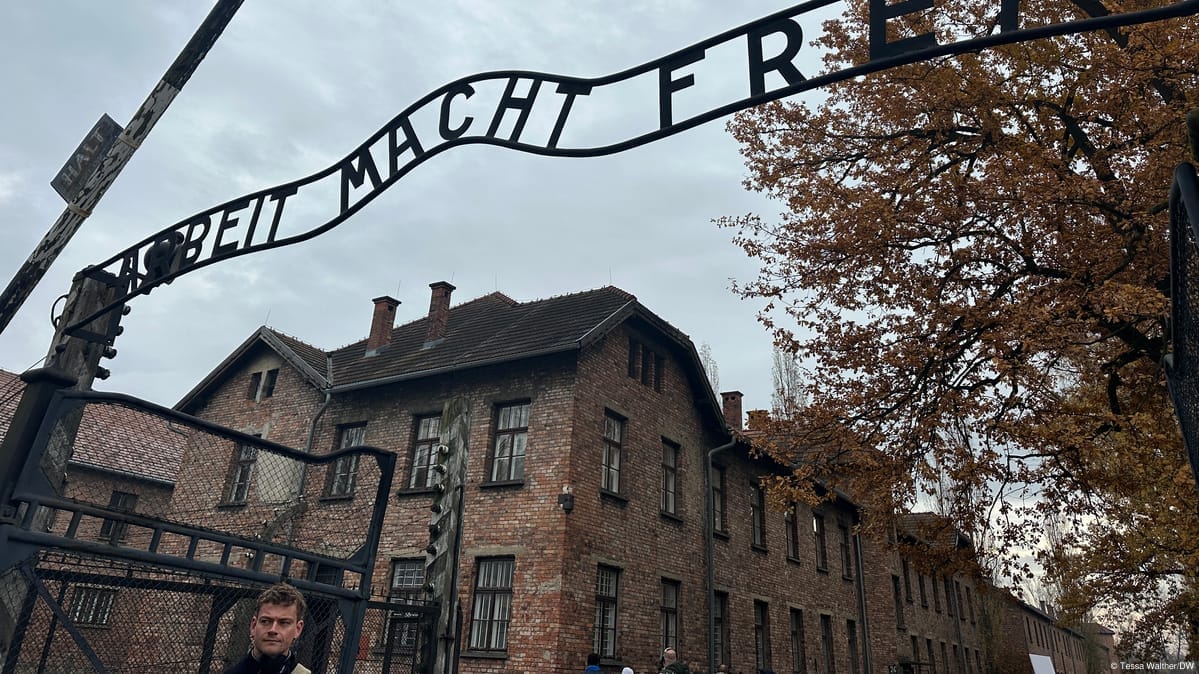
The infamous line 'Work sets you free' (Arbeit macht frei) is written on the iron gateway to Auschwitz
Image: Tessa Walther/DW

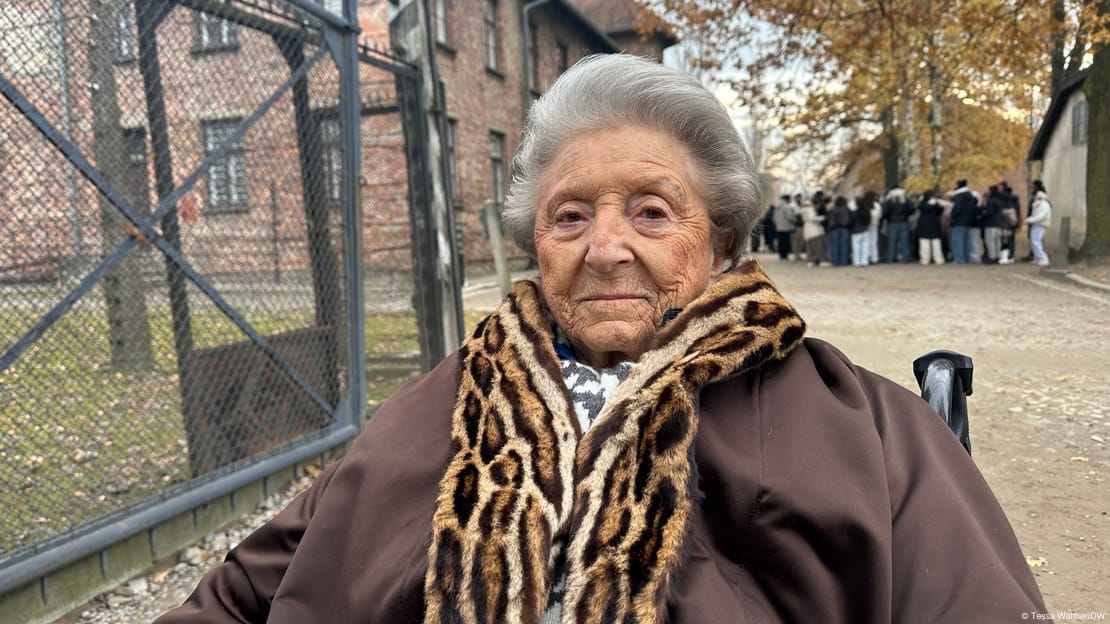
Regina Sluszny makes her way in her wheelchair through the iron gate marking the entrance to the former Auschwitz concentration camp. "I feel the cold, both physically and emotionally," says the 87-year-old Jewish woman, her gaze fixed on the grey horizon.

How many times has she been here? Six, seven, perhaps eight, she estimates. And each time, the same thoughts run through her mind: "I think about my husband's family. He lost seven loved ones here. They were sent straight to the gas chambers and murdered."

Regina Sluszny has spent four decades sharing her story with school children
Image: Tessa Walther/DW

Regina Sluszny traveled to Poland with a delegation from the European Jewish Association (EJA), a European advocacy group representing Jewish interests that regularly organizes conferences on Jewish life as well as visits to former concentration camps.

This year, the organization invited political representatives and members of Jewish communities to Krakow and Auschwitz on November 9 and 10. The trip was deliberately scheduled to coincide with the anniversary of the November Pogroms of 1938, widely regarded as a watershed moment on the path to the Holocaust.

"Honoring the past, securing the future" is the event's motto. Like many others in attendance, Holocaust survivor Regina Sluszny fears that the horrors of the Shoah are slowly fading from Europe's collective memory.

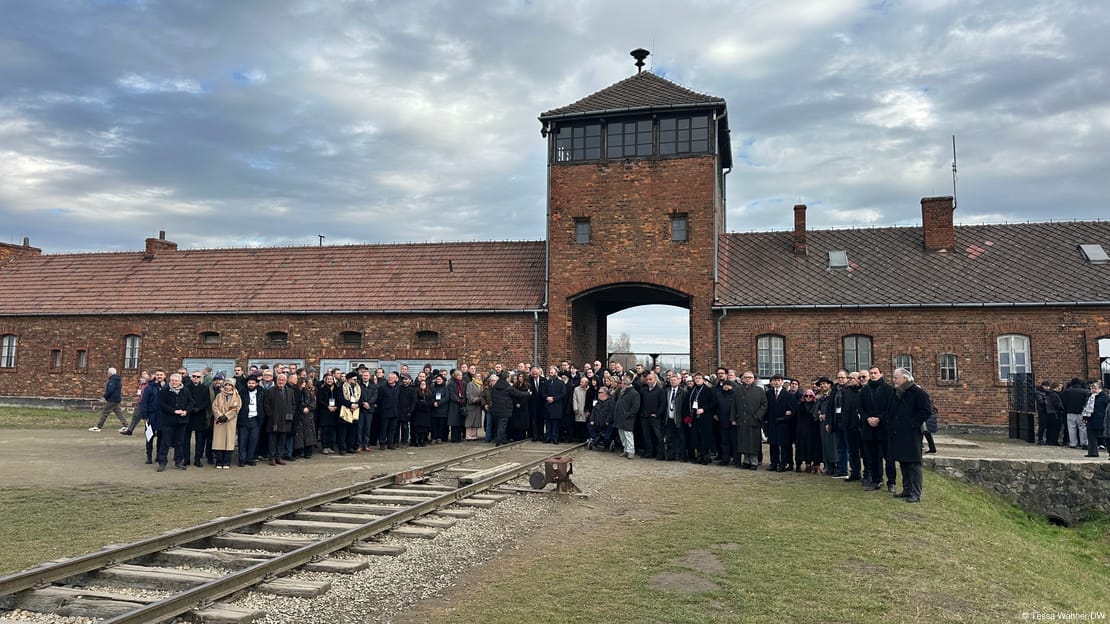
A delegation of the European Jewish Association visits the former Auschwitz concentration camp
Image: Tessa Walther/DW


Persian-Jewish ties

Among this year's international religious and political representatives, the guest of honor was Reza Pahlavi, the exiled son of Iran's last shah and a prominent opponent of the Islamic Republic. The European Jewish Association (EJA) honored him for his efforts to combat antisemitism.

Accepting the award, Pahlavi recalled the historic ties between the Persian and Jewish peoples and called on democratic nations around the world to unite against oppression and ideological extremism.

But talking to attendees at the symposium in Krakow, it quickly becomes clear that fear of rising antisemitism is much closer to home. Many describe growing hostility towards Jews and rising fear in Jewish communities across Europe.

In France, authorities recorded a total of 1,320 antisemitic incidents in 2025. That was fewer than in 2024, but around three times as many as in 2022.

In Germany, the number of antisemitic crimes recorded by police rose from 2,641 in 2022 to 6,236 in 2024 and 6,548 in 2025. Authorities and monitoring organizations across Europe have reported a significant increase in antisemitic incidents since October 7, 2023.

For Ellen van Praagh, chair of the Interprovincial Rabbinate in the Netherlands, October 7, 2023, marked a turning point. She also lost a family member during the Hamas-led attack which saw around 1,200 people in Israel killed and over 250 taken hostage and abducted to the Gaza Strip.

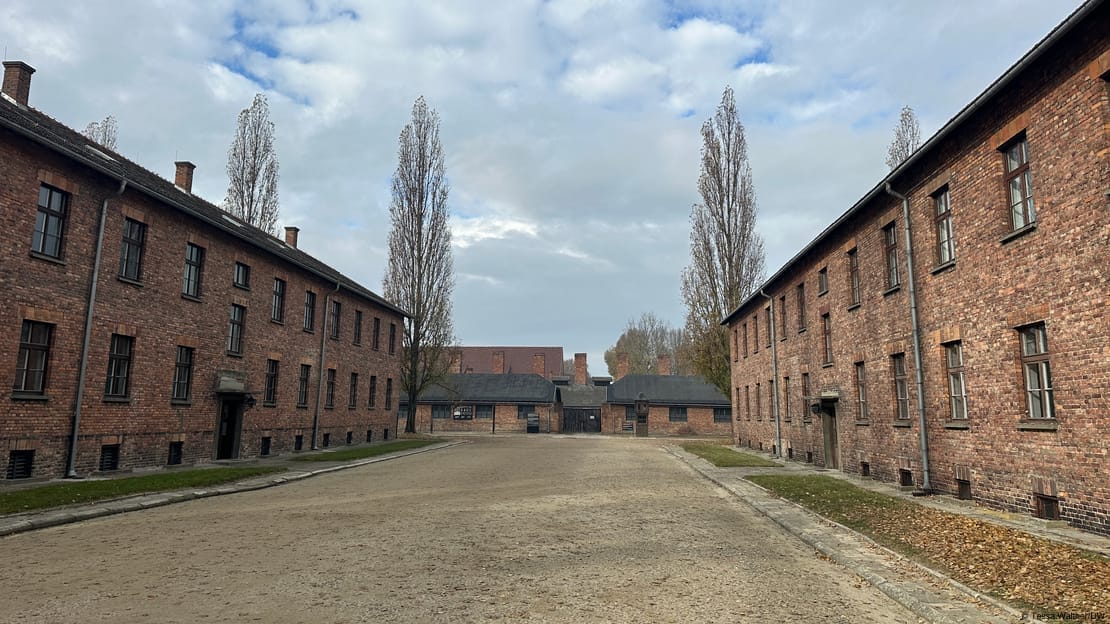
Around six million Jews were murdered during the Holocaust
Image: Tessa Walther/DW


'We want to live in freedom'

"My family has lived in the Netherlands since the 16th century. And now I'm being told to leave," says van Praagh. She says the atmosphere in the Netherlands has changed dramatically since the attack. She no longer feels safe there as a Jew. "We Jews are being held responsible for Israel's actions."

Israel launched a major military offensive in the Gaza Strip after the October-7 attack. More than 75,000 Palestinians have been killed there since the start of the war, according to conservative estimates.

Like many others at the symposium, van Praagh says she is increasingly losing faith in politicians. "Never Again" has become an empty phrase, she argues, with little relevance to the everyday lives of Jews in Europe.

Jewish communities now have to protect themselves behind high walls. Constant security measures restrict their daily lives, she explains. "That is not what we want. We want to live in freedom."

Rabbi Menachem Margolin, chairman of the European Jewish Association, is also calling on European political leaders to take greater responsibility. He says he is grateful for their support, without which Jewish life in Europe would hardly be possible.

However, laws designed to protect Jewish life are often not enforced in practice. Many officials hesitate to call antisemitism by its name as soon as doing so becomes politically inconvenient. "But Auschwitz did not begin with gas chambers. It began with words," he cautioned.

At the Birkenau memorial

Regina Sluszny joined the delegation visiting the Birkenau memorial. The Auschwitz concentration and extermination camp, built by Nazi Germany, became a symbol of the Holocaust. The Nazis murdered around 1.1 million people there, including approximately one million Jews. Most were killed here at Birkenau.

The delegation is gathered to commemorate the November Pogroms of November 9 and 10, 1938, when Nazis set synagogues on fire, ransacked Jewish businesses and homes and murdered Jews. Around 30,000 Jewish men were deported to concentration camps.

Survivors like Regina are increasingly rare. Most Holocaust survivors have passed away. Regina survived because, in 1942, a family friend and his wife took her in when she was just two years old while her parents fled the Nazis with her two brothers and went into hiding.

For more than 40 years, she has been sharing her story with schoolchildren, doing her part to ensure that the Holocaust is never forgotten. For her, "Never Again" is a promise that must be kept. Otherwise, it becomes a lie.


GERMANY

Controversial kinship: From colonial rule to the Holocaust?


Helen Whittle
DW
November 10, 2026

Hitler once called Eastern Europe "Germany's India." A new exhibition examines the links between colonialism and Nazism, and the bitter debate over where comparisons illuminate history and where they fall short.

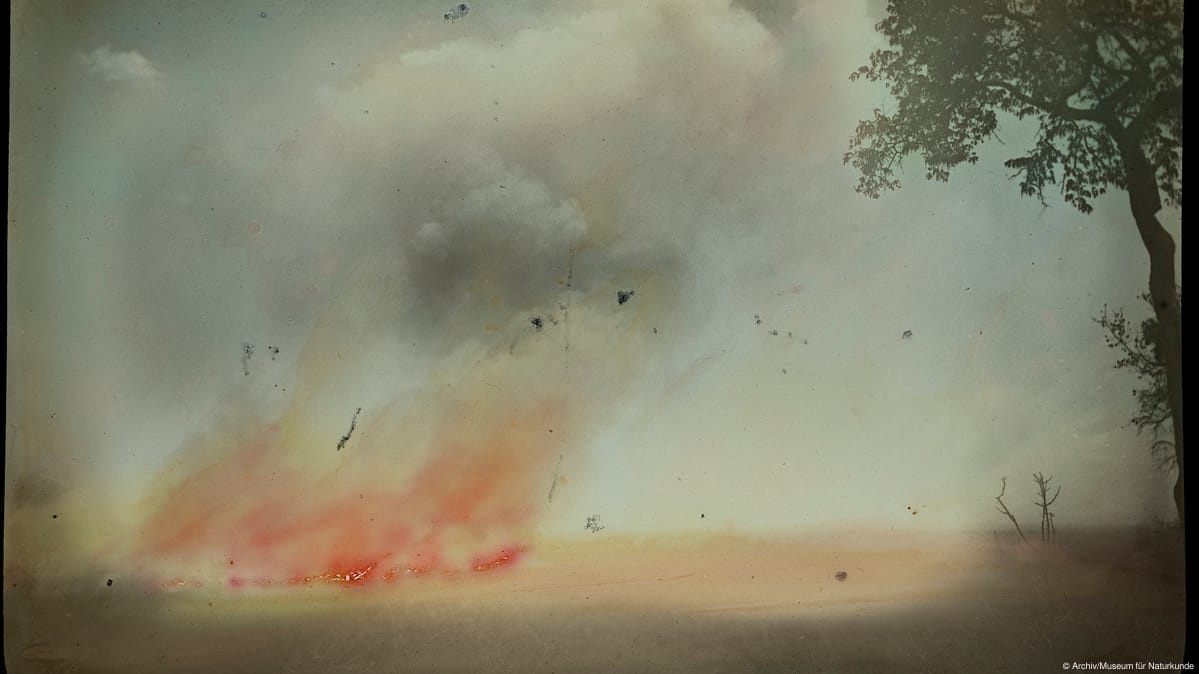
European colonialism was marked by the — often extremely violent — exploitation of people and resources.
 [Pictured: Clearing of land by setting grass on fire during a German research expedition to Tendaguru in German East Africa, 1909–1913]
Image: Archiv/Museum für Naturkunde


Racial hierarchy, dehumanization, concentration camps, settler expansion in the name of "living space," collective punishment and mass violence: At first glance, the continuities between colonial and Nazi violence appear obvious. In 1941, Nazi dictator Adolf Hitler himself compared Eastern Europe to "Germany's India" after the British colonial model, declaring that "like the English, we shall rule this empire with a handful of men."

But the extent to which Nazism was shaped by the age of empire, and whether the two systems of violence can even be compared, remains the subject of intense debate. This is particularly true in Germany, where the fear is often expressed that any comparison risks relativizing or minimizing Nazi crimes, and particularly the Holocaust. Others have argued that the intense focus on the Nazi era has, at least in part, come at the expense of a meaningful reckoning with Germany's colonial history.

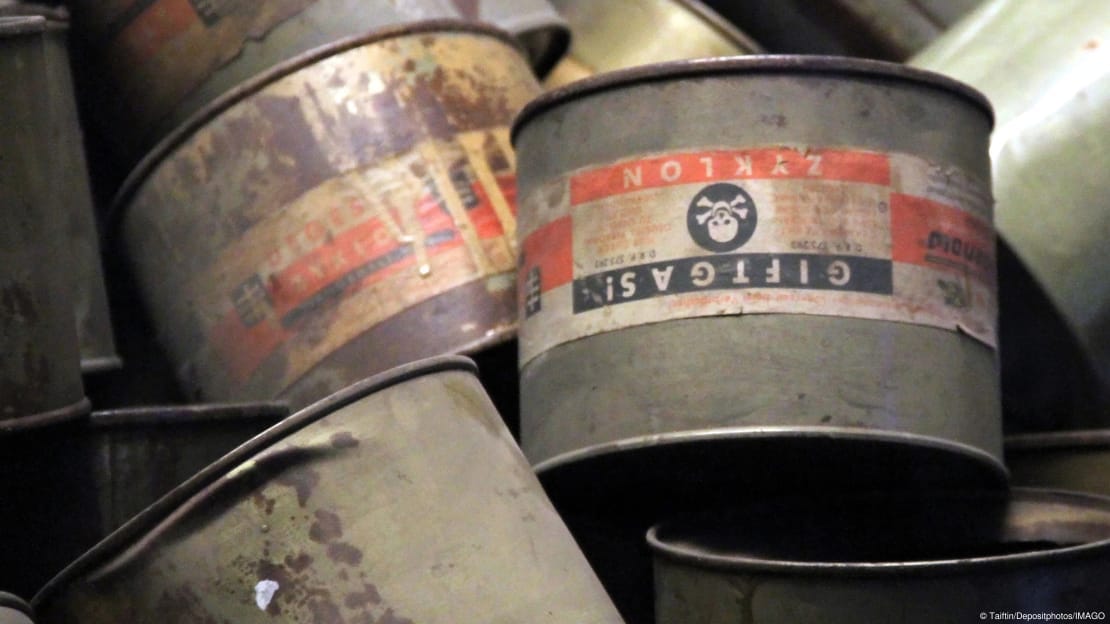
'Murder for the very purpose of murder': The industrialized mass murder carried out in Nazi death camps such as Belzec, Sobibor, Treblinka and Auschwitz-Birkenau had no direct precedent in colonial history. [Pictured: Cans of Zyklon B gas, Auschwitz-Birkenau, German Nazi concentration and extermination camp in Poland]
Image: Taiftin/Depositphotos/IMAGO

"I do think this is nonsense," says Stephan Malinowski, a Professor of Modern European History at the University of Edinburgh. "If it were true, then all other colonial countries who are not discussing the Holocaust, like Great Britain for example, or France or Spain or Portugal, they would then supposed to be very, very attentive to colonial crimes and to colonial history, which it seems to me is not the case."

"Controversial Kinship: Colonial and National Socialist Violence," a new exhibition at the German Historical Museum in Berlin curated by Malinowski, does not aim to settle the debate but to tell its story.

From colonial brutality to Nazi rule

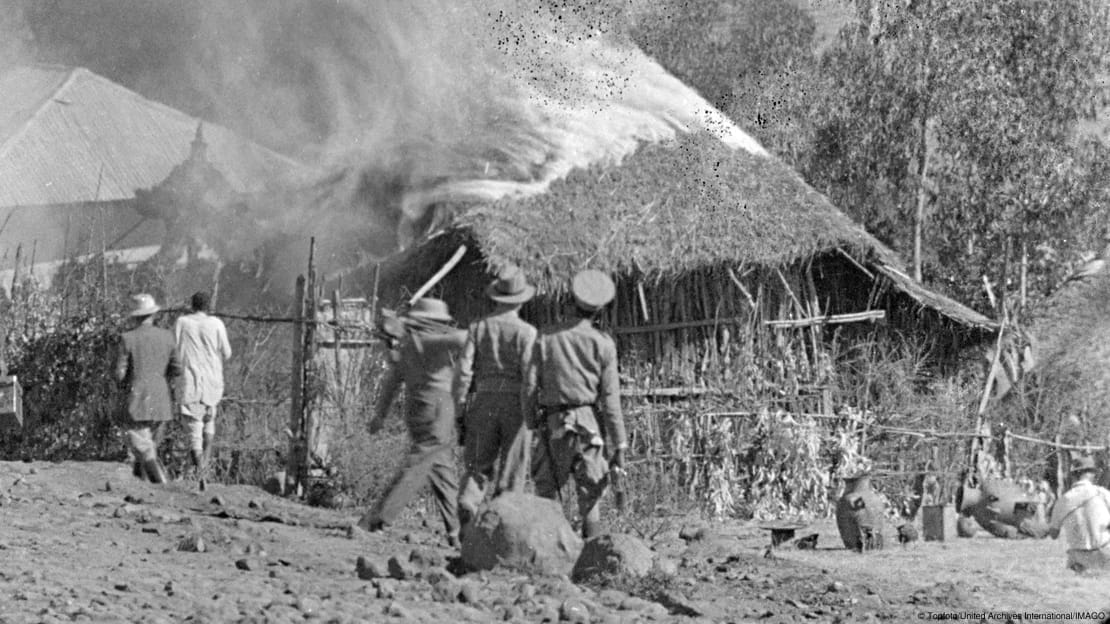
The exhibition begins with a hippopotamus-hide whip used in African colonies displayed alongside a canister of Zyklon B, the poison used in Nazi gas chambers. The juxtaposition highlights the contrast between colonial violence and the industrialized mass murder of the Holocaust. Yet it also points to connections: Whips were used in Nazi concentration camps, while Fascist Italy deployed chemical weapons against civilians and soldiers during its invasion of Ethiopia (then Abyssinia) in 1935-36.

The extreme brutality of Fascist Italy's invasion of Ethiopia, including the use of chemical weapons, caused uproar around the world. [Pictured: The bombing of the Ethiopian village of Dessye by Italian planes]
Image: Topfoto/United Archives International/IMAGO

In the 1930s, anti-colonial thinkers from India to the Caribbean argued that colonialism and fascism were two sides of the same coin. "There is nothing new or original about the blustering exploits of Hitler and Mussolini," observed the Trinidadian journalist and Pan-Africanist George Padmore in 1938. "They have all been used before by the British in their efforts to obtain the subjection of less powerfully armed and more industrially backward people."

European colonial rule was marked by the ruthless exploitation of people and resources, often enforced through extreme violence. In "The Origins of Totalitarianism" (1951), German-American philosopher Hannah Arendt argued that colonial territories served as laboratories for racial ideologies and practices of domination that could be applied beyond the legal constraints of Europe. Arendt described how these later "boomeranged" back into Europe and helped shape totalitarian politics in distinct and unprecedented form.
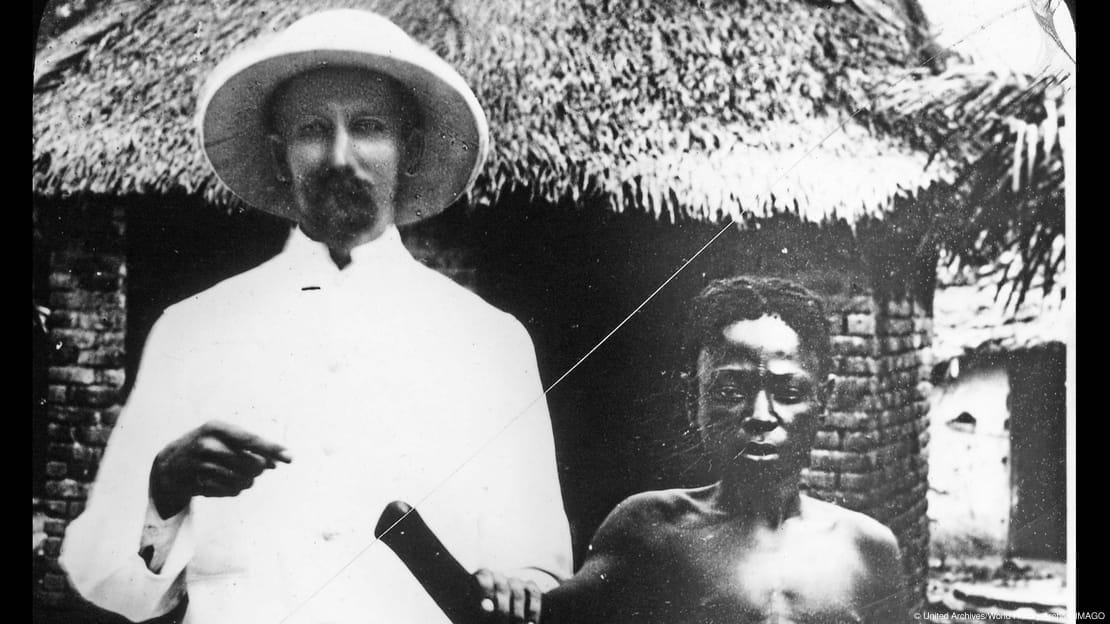
One of the most notorious symbols of King Leopold II's rule was the amputation of hands, inflicted on men, women and children who failed to meet rubber production quotas. [Pictured: A Congolese child with an amputated hand, circa 1900]
Image: United Archives/World History Archive/IMAGO

The Congo Free State, King Leopold II of Belgium's private colony from 1885 to 1908, became notorious for its extreme brutality, as colonial authorities used executions, amputations and sexual violence to ensure rubber production quotas were met. Forced labor was also central to Nazi rule, with millions of Poles, Ukrainians, Russians and others from the Soviet Union, and Jews, subjected to exploitation and "Vernichtung durch Arbeit" ("extermination through work"). Within a few years, the regime mobilized around 13 to 14 million forced laborers, a scale comparable to the transatlantic slave trade over more than three centuries. The Nazis sought to extract value from their victims at every stage, confiscating their property, exploiting their labor, and even harvesting gold teeth and hair from the dead.

Racism, antisemitism and extermination

While racism underpinned both colonial empires and Nazism, Malinowski says the goals were different. The colonial powers tended to present assimilation as a path to advancement, forcing colonized people to adopt European culture, serve imperial interests, and suggesting that a select, educated few could gain opportunities at elite institutions such as Oxford or Cambridge. "This is definitely not something that the Nazi regime is offering to Poles or to Russians or let alone to Jews," added Malinowski.

"In terms of violence, colonial violence was just as extreme as Nazi violence. But Nazi violence was annihilatory and exterminatory compared to colonial violence in the colonies," says Edward Kissi, a historian at the School of Interdisciplinary Global Studies at the University of South Florida. He points to the example of how, unlike European colonial powers in Africa, the Nazis pursued the elimination of Black-Germans or peoples of African descent in Germany through forced sterilization. "Even in racism, colonial color-based racism and colonial anti-Jewish sentiments were fundamentally different from what the Nazis pursued."

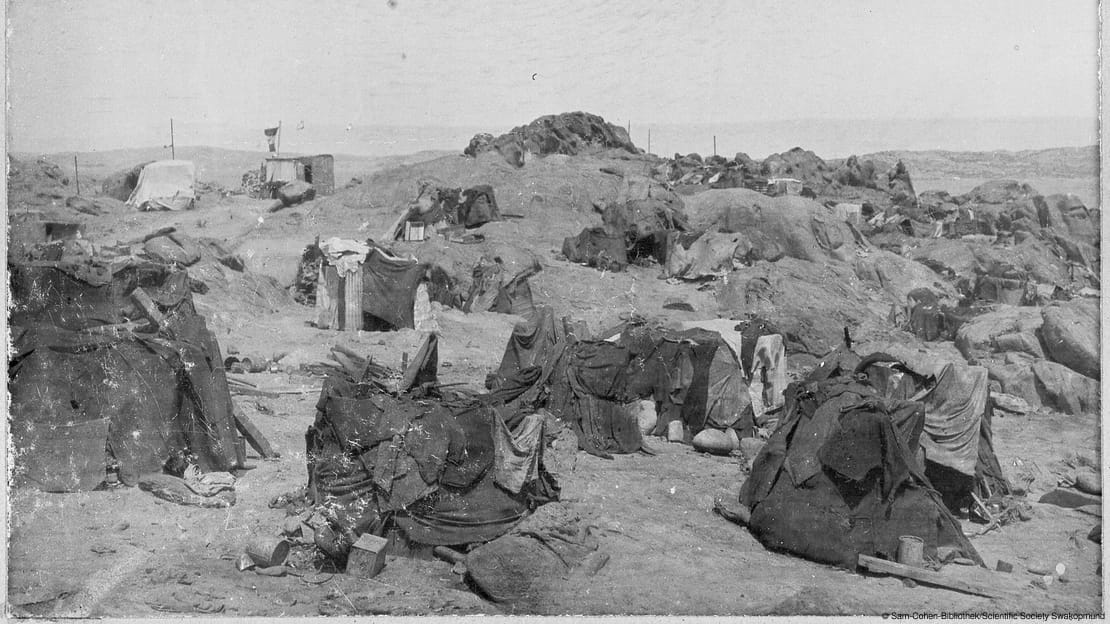
From 1904 to 1908, German colonial rule in present-day Namibia culminated in the genocide of the Herero and Nama, in which tens of thousands died. [Pictured: Concentration camp for Herero and Nama in German South West Africa in 1905]
Image: Sam-Cohen-Bibliothek/Scientific Society Swakopmund

On October 2, 1904, German General Lothar von Trotha issued the "Vernichtungsbefehl" ("extermination order") following the Herero uprising in German South West Africa (present-day Namibia). Historians generally attribute the order to a combination of racial ideology, a desire to terrorize the population into submission, and efforts to secure colonial control over land, labor and resources. Between 1904 and 1908, an estimated 60,000 to 80,000 Herero (around 80% of the population) and 10,000 (around half the population) Nama died.

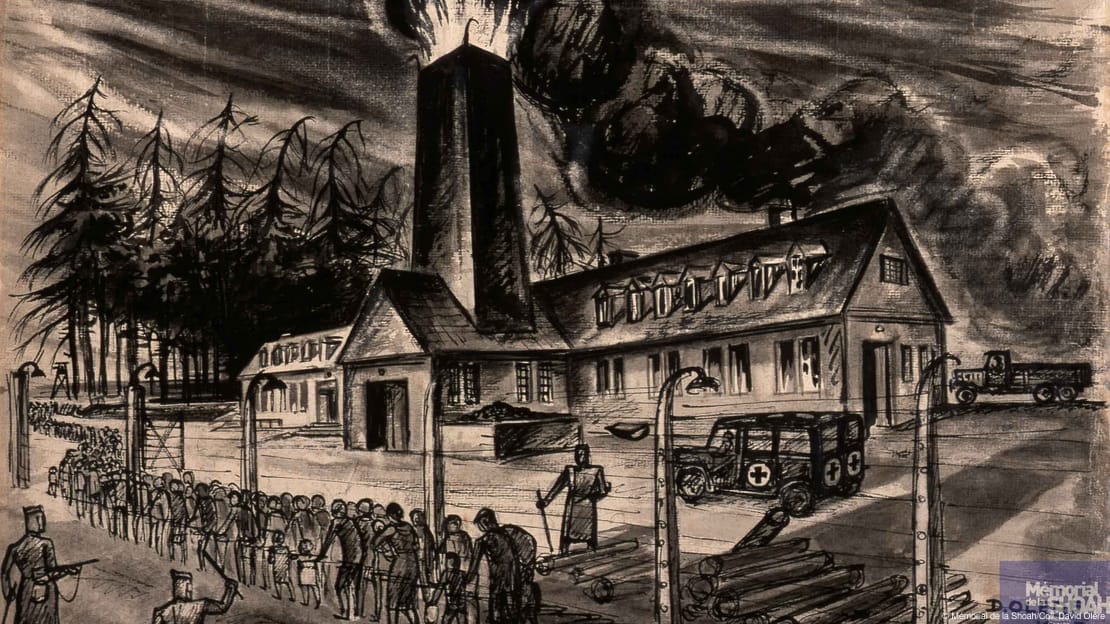
One area where the exhibition draws no direct parallel is the industrialized killing carried out in Nazi death camps such as Belzec, Sobibor, Treblinka, and Auschwitz-Birkenau. "Where the two things really diverge is the Holocaust and is the systematic mass murder of the European Jews and it's murder for the very purpose of murder," explains Malinowski. The deportation of around 1,800 Jews from the Greek islands of Rhodes and Kos in July 1944 illustrates how Nazi persecution often defied military or economic logic. Even after the war was effectively lost, the community was transported to Auschwitz, where most were murdered immediately upon arrival.

The politics of historical comparison

The issue of the "singularity" of the Holocaust came to the fore during the 1980s "Historikerstreit" ("historians' dispute"). Historian Ernst Nolte argued that Nazism should be understood in the wider context of 20th-century political violence, and as a response to Bolshevik terror in particular. Critics accused him of downplaying German responsibility for Nazi crimes.

Since 2020, a renewed debate dubbed the "Historikerstreit 2.0" has focused on whether the Holocaust should be viewed as a unique reference point in German memory culture or be understood alongside the histories of colonialism, racism and empire. The dispute now is less about the legitimacy of comparison than about its implications.

After being deported to Auschwitz-Birkenau in 1943, French artist David Olère depicted scenes he witnessed. Here, deportees arrive at a crematorium shortly before their murder. [Pictured: David Olère, 'Vers la mort' ('On the Way to Death'), Paris, 1945]
Image: Mémorial de la Shoah/Coll. David Olère

The mass murder of tens of thousands of the Herero and Nama during four years of German colonial rule is now regarded as the first genocide of the 20th-century. In 2016, Nama representatives walked out of talks after Germany's chief negotiator said what happened was "incomparable" to the Holocaust. The German government has since recognized the events as genocide "from today's perspective," but it has not yet accepted legal liability or agreed to pay formal reparations.

Rethinking Germany's culture of remembrance

Martinican intellectual Aimé Césaire argued in "Discourse on Colonialism" (1950) that Europe condemned under Nazism forms of violence it had long accepted in its colonies. The exhibition opens amid renewed debates over settler colonialism, the definition of genocide, and the meaning of "never again," sharpened by Nicaragua's case against Germany at the International Court of Justice over German support for Israel during the war in Gaza. These tensions are reflected in visitors' comments in the exhibition's epilogue, even though the exhibition itself does not address Israel or Palestine beyond a reference to Mohammed Amin al-Husseini, appointed Grand Mufti of Jerusalem in 1921.

Germany has unequivocally accepted responsibility for the Holocaust, which is front and center of the country's culture of remembrance. However, Kissi likens Germany's apparent reluctance to reckon with its colonial history to debates in the US over slavery, in Cambodia over the Khmer Rouge, and in Turkey over the Armenian genocide. According to him, Germany's contemporary identity cannot be fully understood without examining its colonial history and the ways the Nazis appropriated and transformed aspects of that legacy. "I think Germans and all other human beings who have experienced violent pasts and difficult pasts should be very careful not to delink or dissociate those facts from their present," Kissi said. "These are historical patterns. It is better to deal with these historical patterns and discomforts than to just fight them and then say this has absolutely nothing to do with German national identity."

"Controversial Kinship: Colonial and National Socialist Violence" is on show at the German Historical Museum until April 11, 2027.


Helen Whittle British journalist in Berlin
Edited by:Sarah Judith Hofmann