Why Nuclear Power Won't Save Us (But Might Kill Us All)
| |||||||||||||||||||||
| |||||||||||||||||||||
|
Why Nuclear Power Won't Save Us (But Might Kill Us All)
| |||||||||||||||||||||
| |||||||||||||||||||||
|
Remembrance Day highlights the immense power of militarism and imperialism in Canada. Almost every significant political force promotes militarist nationalist mythology, including the primary victims of the Canadian state. To mark Remembrance Day CTV published an article on “A generation apart, these Palestinian Canadians found purpose through the military”. The article quotes George Al-Koura, who became a signals intelligence officer, saying “we have inconveniences, but Canada allows us to be ourselves and gives us the freedom to live without essentially warfare in the background of our lives.” But Al-Koura deployed to the Middle East and the Canadian military bombed Iraq, Syria and Libya as well as occupied Afghanistan. Additionally, since Royal Military College of Canada graduate Charles Macpherson Dobell commanded Britain’s 1917 Second Battle of Gaza and hundreds of Canadians fought with General Allenby in the subsequent successful conquest of Palestine this country has supported violence against Palestinians. Hundreds of Canadians, mostly World War II veterans, fought to ethnically cleanse Palestine in 1948. On Wednesday The Maple reported on briefing documents “showing that a Canadian defence official travelled to Israel for a “strategic dialogue’ at the height of Israel’s genocidal war on Gaza and weeks after Israel killed a Canadian army veteran. The meeting reflected the fact that ‘Israel remains a priority defence engagement country for Canada due to its reliability and mutual commitment to regional security in the Middle East,’ according to the documents.” While it’s absurd for a media outlet to put a Palestinian gloss on a Canadian military celebration, it doesn’t compare to the relatively widespread phenomenon of indigenous leaders promoting militarist nationalism. Rooted in a British force that conquered today’s Nova Scotia by putting the heads of Mi’kmaq soldiers on spikes and suppressed First Nations in British Columbia through ‘gunboat diplomacy’, thousands of Canadian troops were deployed to counter Mohawk opposition to the expansion of a golf course and housing on an Indigenous burial ground in 1990. The Canadian Forces (CF) have played a smaller role in recent conflicts with Indigenous communities at Gustafsen Lake, Ipperwash and Elsipogtog as well as in monitoring Indigenous groups. Canadian military intelligence spied on Idle No More and a draft version of the military’s 2007 counter-insurgency manual highlighted “radical Native American Organizations, such as the Mohawk Warrior Society” as potential military targets. On Wednesday the head of the Assembly of First Nations formally participated in the official Remembrance Day ceremony in Ottawa. After a multiyear battle, the AFN won the right in 1995 to lay a wreath at the National War Memorial as part of a ritual organized by the reactionary, militarist Royal Canadian Legion. For three decades November 8 has been National Aboriginal Veterans Day. At a previous National Aboriginal Veterans Day ceremony, Grand Chief of the Union of B.C. Indian Chiefs Stewart Phillip said Indigenous soldiers were “fighting for the common good” and were “on the right side of history.” But Canadian soldiers have only fought in one war that could be considered morally justifiable: World War II. Ignored in the Remembrance Day style commemoration are the Afghans or Libyans killed by Canadians in recent years, the Serbians and Iraqis killed two decades ago, and the Koreans killed in the 1950s and the Russians, South Africans, Sudanese and others killed before that. With large numbers of Indigenous people having fought in Sudan, South Africa, World War I, World War II and Korea, cenotaphs in many Indigenous communities commemorate those who fought in Canadian/British wars. The Millbrook band council placed 27 Millbrook Remembers banners to “honour and remember our veterans who served in the First World War, Second World War, Korean War, Vietnam War, NATO conflicts; Bosnia, Kosovo, Afghanistan, Iraq and also those who served during peacetime operations.” A growing number of landmarks bear the names of Indigenous soldiers and most of the books and articles detailing First Nations’ contribution to Canadian/British wars echo the military’s perspective of those conflicts. So, ironically, while First Nations have more reason than most to reject the Canadian state’s use of force to enforce a neo-colonial world order, ties to the military have shaped the outlook of many of their organizations. A slew of unions and left politicians also reinforced militarist mythology on Wednesday. In an embarrassing example, former NDP MP Peter Julian posted, “Today at 11:00 AM, Canadians across our nation pause to honour Remembrance Day, and pay tribute to the millions of soldiers throughout Canadian history who have made the ultimate sacrifice in service to our country and in defence of the rights and freedoms we enjoy today.” Is Julian referring to the 2011 destruction of Libya, which he voted for? Or the occupation of Afghanistan, which the NDP backed for several years? Even internally, Canada’s military has undercut Canadians “rights and freedoms”. They have been used to clamp down on social movements with military intelligence in recent years caught spying on Black Lives Matter, Occupy and peace activists. Between 1867 and 1933 the military was involved in suppressing dozens of labour strikes and was later used against Québecois nationalism. They killed at least four anti-conscription protesters in Québec City in March 1918 and thousands of troops were deployed to the streets of Montreal under the repressive War Measures Act in 1970. Among Canadian politicians with some power, BC Green party leader and MLA Emily Lowan released the best (least bad) statement I saw. But leftist French leader Jean-Luc Mélenchon, who is polling second in that country’s presidential race, puts them all to shame. On Wednesday Mélenchon travelled to a memorial inscribed with “Maudite soit la guerre” (Cursed be war) and depicting an orphan raising his fist towards the names of soldiers killed in combat. Mélenchon stated, “Down with war! We will not wage it, we will not organise it, we will not prepare it!” If we work at it maybe at a Remembrance Day ceremony next year a major Canadian politician could say the same. |


Canada’s miners are the best-paid workers in the country by a wide margin. They are also, this fall, among the worst-rewarded for staying loyal.

New payroll data from ADP Canada, drawn from the paycheques of roughly 1.6 million private-sector workers, shows gross pay for workers who stayed in their jobs in natural resources and mining rose 4.1% year-over-year in October.
Pay increases were unchanged from September and tied for eighth of the ten sectors ADP tracks. It also came in below the national figure of 4.5% for job-stayers. Only “other services” (3.3%), which includes everyone from barbers to pastors, did worse. The sector sharing eighth place with mining and the oil patch is information, the closest thing in the data to tech (but it also includes journalists, for better or worse). Tech may be feeling the first effects of growing AI use especially for junior positions, but finance, which also looks ripe for superintelligence disruption, fared much better, at 5.0%.

Statistics Canada’s payroll survey, which lags the ADP data by two months, puts average weekly earnings in mining, quarrying and oil and gas at C$2,584 in August, against C$1,355 across all industries and C$531 in accommodation and food services. A 5.4% raise on C$531 is about C$29 a week and 4.1% on C$2,584 is about C$106, so any concierge thinking of swapping a Whistler lobby for a Uranium City core shack may want to consider whether C$77 is worth it.
StatCan also shows a significant slowdown in average weekly earnings for those who arrive at work in a cage and carry a self-rescuer – up only 0.8% year-over-year. The all-industry figure rose 3.7%.
ADP’s natural resources (mainly oil and gas and a few farmworkers and loggers) and mining category has been the most volatile pay sector in the country over the past three years. It is roughly four times as volatile as manufacturing on the standard deviation of its monthly readings. In July 2023, powder monkeys and rig pigs were living high on the hog, enjoying gross pay growth of 11.5%.
The sector held the top spot for eight straight months. By March 2026 the same series had sunk to 2.9%, the lowest of any sector, where it stayed for five months. Manufacturing’s entire four-year range is no more than 2.4 percentage points while mining’s swings and roundabouts come to 8.6 points. A quick glance at NYMEX or COMEX will explain why.

Base pay – the hourly rate or salary, stripped of overtime, bonuses and commissions – for mining job-stayers is growing at 3.0%. So is base pay in every other sector: all ten are at 3.0% or 3.1%. ADP’s technical notes explain that employers hand out raises in round numbers, and after the inflation tantrum of 2022–2023, the round number Canadian employers have settled on is three.
That matches Canada’s most recent inflation rate of 3.1%, but if you’re planning to escape winter, three won’t do: in September gasoline was 27.8% and air fares 19.4% more expensive than a year earlier. It’s cheaper to party at camp (in between operating heavy machinery, of course): StatCan says alcohol, tobacco and cannabis are only 1.6% dearer.
It’s all boom and bust in mining and gross pay follows the up and down (super)cycles. In October 2023 the sector’s gross pay growth (11.0%) outran its base pay growth (4.5%) by 6.5 points, a bonus-and-overtime gap no other sector came close to. In October 2026 the wedge is 1.1 points, and it has turned negative three times in two years, most recently in March.

Compound the October readings from 2023 through 2026 and miners have seen gross pay grow about 27% since October 2022, the base of ADP’s first Canadian reading. That’s more than any other sector, but only just ahead of reflective-strip-free finance and leisure people, and well clear of the roughly 22% for job-stayers nationally. That one 11% year did a lot of lifting: the best time to be a miner on a fixed payroll was three years ago, the second-best was last summer and the worst was this spring. The minerals may now all be critical, more money for muckers not so much.

ADP doesn’t break out job-hopping by sector, but gut feel tells you swapping one cold and remote mine for another is probably less of a temptation than crossing Bay Street to join Frobisher, Quibble & Chase because Whitcomb, Clench & Doolittle won’t make you partner.
Nationally, job-changers saw gross pay rise 10.4% in October against 4.5% for stayers, a 5.9-point premium for switching, the widest since February 2024 and more than three points wider than a year ago, when switchers’ raises bottomed at 7.1%. Base pay tells the same story: 6.0% for changers, 3.0% for stayers.

If the market is paying job-changers 10%, the arithmetic of staying put looks like a grind, least of all for mid-career workers. Among job-stayers across the economy, those aged 35 to 54 saw gross pay rise 4.4% in October, in line with the national average. Those over 55 got 2.9%. Only stayers under 25, at 10.5%, kept pace with switchers, and that is the usual early-career ramp.
For young jobseekers who don’t know what PPE is and won’t mind having it drummed into them for the rest of their working lives, there is good news. Mining is hiring. StatCan’s payroll count for mining, quarrying and oil and gas is up 3.9% year-over-year to 226,600, the fastest growth of any of the 20 sectors it tracks, in an economy where overall payroll employment grew only 0.3%.

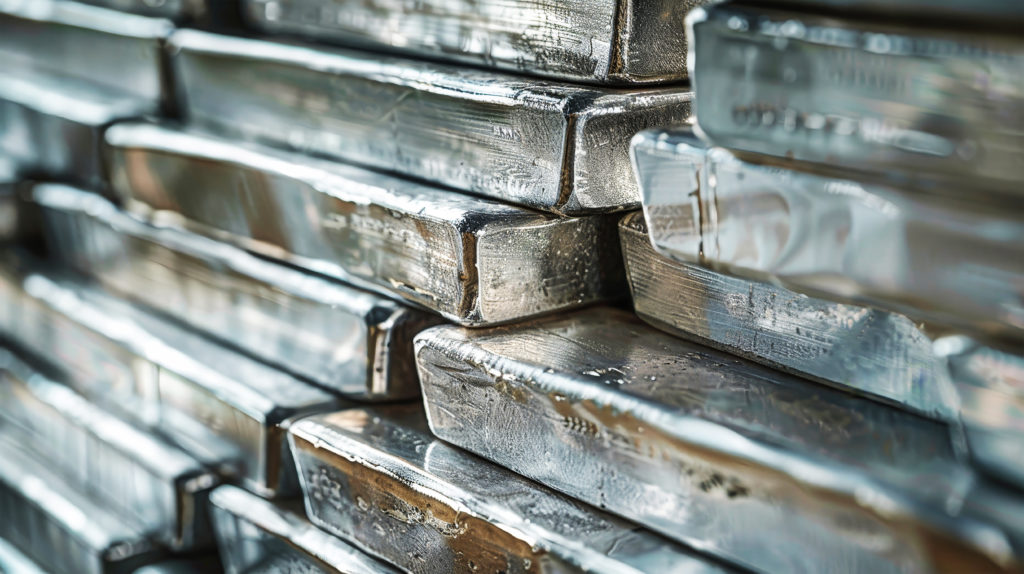
Silver demand is expected to fall by 5% in 2026 due to weaker jewellery demand and lower consumption in solar cells, where high prices have accelerated substitution, research showed on Friday.
Research done by consultancy Metals Focus for the Silver Institute puts demand at 1.08 billion troy ounces this year.
Silver, used in jewellery, electronics, electric vehicles and solar panels as well as for investment, is down 59% to $50 an ounce since retail buying drove prices to a record high of $121.6 in January.
The base for that rally was created in 2025, when silver surged 147%, as massive inflows of the metal to US inventories due to tariff uncertainty and into silver-backed exchange-traded products (ETPs) tightened liquidity in the London market.
This year, expectations for higher interest rates, a stronger dollar and higher bond yields have weighed on investment sentiment.
Silver released through ETP selling, outflows from stocks in the US and a smaller market deficit improved liquidity in the physical market, the Silver Institute and consultancy Metals Focus said on Friday.
Metals Focus sees net ETP outflows of 45 million ounces this year after 278 million ounces of inflows in 2025. As of early November, ETP holdings stood at 1.25 billion ounces.
Industrial demand is expected to fall by 3% in 2026 as installations in photovoltaics have fallen short of expectations, particularly in China, while January’s record silver prices accelerated substitution.
Meanwhile, demand for jewellery and silverware is forecast to decline by 22% and 17%, respectively, as higher prices and weaker rural spending in India encouraged purchases of smaller, lighter products. Demand in China and the US is also subdued.
Strong retail investment in late 2025 and early 2026 gave way to far more subdued buying from March as silver prices fell, Metals Focus said. It expects global bar and coin demand to fall 2% this year, with US retail investment hitting its lowest level since 2010.

(Reporting by Polina Devitt;Editing by Sharon Singleton)


