Thursday, November 05, 2026


Codelco accounting scandal claims eight more employees


Flotation plant at El Salvador division. (Image courtesy of Codelco | Flickr.)

Chile’s state-owned miner Codelco has dismissed eight people, including senior executives, after investigations into over-reported copper production uncovered new evidence of irregularities, deepening the fallout from an accounting scandal at the copper giant.

The dismissals span the Chuquicamata, Ministro Hales and Salvador divisions as well as the Santiago headquarters, the company said. They include Salvador general manager Patricio Viveros and managers responsible for mineral resources and development at the three divisions.

“Transparency and integrity are completely non-negotiable principles in our state-owned companies,” Chilean Mining Minister Daniel Mas said in a statement published on his X account, backing the dismissals.

The widening production-accounting problems risk eroding confidence in Codelco among customers and bondholders as the miner grapples with project setbacks, declining ore quality, rising costs and record-high debt. 

The discrepancies suggest Chile’s copper production has been overstated, although they are unlikely to affect global copper markets, which respond to actual supply and demand, Juan Ignacio Guzmán, CEO of GEM Mining Consulting, told MINING.COM.

“Naturally, a company that lacks credibility could face a very serious impact on its borrowing costs,” Guzmán said.

He added that financial markets generally continue to trust Codelco and that management’s efforts to disclose the irregularities and strengthen reporting controls are steps in the right direction.

The findings also raise questions about internal oversight and the reliability of output figures used to measure operational performance.

“This is a serious issue because it reveals weaknesses in control, traceability and operational validation,” Juan Carlos Guajardo, executive director of Plusmining consultancy, told MINING.COM.

Discrepancies

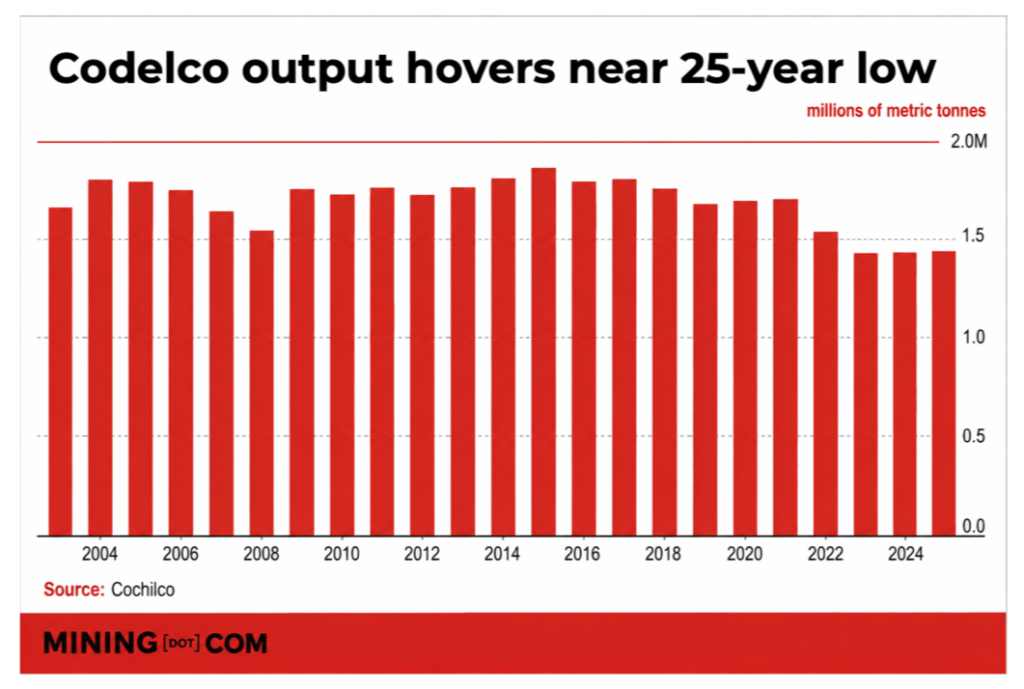
The investigation began after an internal audit found approximately 20,000 tonnes of copper had been included in December 2025 production records without meeting the requirements to qualify as actual output.

The review initially focused on Chuquicamata, where auditors identified inconsistencies in the validation of material classified as finished products. The findings raised concerns about whether production targets had been improperly achieved and how the discrepancies may have affected performance-based bonuses.

A separate audit subsequently identified roughly 27,000 tonnes of copper, equivalent to about 2% of Codelco’s reported own-mine production in 2025, that had been improperly booked as commercially ready material. The findings prompted an earlier executive dismissal, disciplinary measures against other employees and a recalculation of output-linked incentives.

Codelco said the irregularities did not require changes to its audited 2025 financial statements.
In May, Chile’s National Public Prosecutor’s Office appointed Aquiles Cubillos, a regional prosecutor, to lead a criminal investigation following complaints filed by Codelco and Congressman Jaime Mulet.

The case expanded in early October when evidence emerged that the same copper may have been counted as production by more than one division, potentially inflating reported output at Ministro Hales and Salvador during 2024 and 2025.

Codelco hired Ernst & Young to conduct a targeted investigation into the scale of the discrepancies, identify those potentially responsible and assess their economic impact. KPMG is reviewing production records across the company, while Chile’s Comptroller General is conducting a separate audit.

The latest dismissals also include Salvador’s smelter operations superintendent, mineral resources and development managers at Codelco’s corporate offices, the head of quality and metallurgical balance at Ministro Hales, and the head of metallurgical valuation in the corporate accounting department.

Codelco separately announced that Felipe Lagno will take over as Salvador’s general manager, replacing Viveros.

Leadership under pressure

The upheaval comes less than a week before an extraordinary shareholders’ meeting scheduled for Nov. 5 at the request of Mas and Finance Minister Jorge Quiroz to examine inconsistencies in Codelco’s production figures.

The meeting will increase scrutiny of the company’s reporting controls and management oversight as investigators work to determine how the irregularities occurred and whether they extend beyond the divisions already implicated.

New chairman Bernardo Fontaine and chief executive officer Jorge Gómez are shifting the focus toward consolidating existing operations and production levels under a value-over-volume approach, moving away from the growth targets pursued by the previous administration.

The strategy comes as declining ore grades and delays at major projects complicate efforts to sustain production, while mounting debt constrains the company’s ability to finance improvements and expansions.

The final conclusions of the external audits remain pending, leaving the full extent of the accounting discrepancies and any potential financial or criminal liabilities unresolved.

Codelco said the latest dismissals do not preclude further disciplinary measures or legal action as investigations continue.


Michigan mining push tests Lake Superior safeguards


Talon’s Eagle nickel-copper mine in northern Michigan. Credit: Talon Metals.

Michigan is backing a new copper and nickel push near Lake Superior even as it continues cleaning up pollution left by the last mining boom.

Perseverance Metals (TSXV: PMI) announced a nickel-copper sulphide discovery in September, while Talon Metals (TSX: TLO; US-OTC: TLOFF) reported a mineralized magmatic conduit at its Roland target in October. Highland Copper (TSXV: HI; US-OTC: HDRSF) was awarded a $50-million state grant in August for its Copperwood project.

“When you come in as a new operator, it’s like ‘trust us it’s going to be great, don’t worry about it,’” Talon CEO Darby Stacey told The Northern Miner. “But mining’s got enough of a reputation and a legacy where that’s not good enough.”

The region once supplied 96% of U.S. copper. At Torch Lake, copper still contaminates sediments about six decades after mining ceased. With exploration accelerating and proposed mines advancing near a lake that holds nearly 10% of the world’s surface fresh water, Michigan’s rules for modern mines could soon face a test across an entire district.

Environmental footprint

Indigenous peoples had mined and used copper on the Keweenaw Peninsula for more than 7,000 years, including float copper, loose pieces of native copper carried and deposited by glaciers.

The native copper industry declined as lower-cost western mines took market share, although the White Pine sulphide mine farther west continued until 1997. About 181 million tonnes of stamp sands and other tailings were deposited in Torch Lake, displacing about 20% of its original volume.

Copper concentrations in Torch Lake sediments were about 200% higher than in a nearby reference lake, with all measurements exceeding a threshold for predicted harmful effects by at least ninefold, researchers including scientists from the U.S. Geological Survey found in a 2025 study. Concentrations in larval insects were 160% higher, underscoring copper’s persistence in the food web.

Talon’s Eagle mine is the only operating primary nickel mine in the U.S. and the first operation permitted under Michigan’s Part 632 nonferrous metallic mining law. Commercial production began in 2014. Lundin Mining (TSX: LUN), which acquired Eagle in 2013, operated it until Talon bought the mine and Humboldt Mill in January. Talon plans to use the mill to process ore from its Tamarack project in Minnesota.

Getting Eagle into production was contentious. Researchers writing in Resources Policy in November 2025 documented legal challenges between 2006 and 2014 by environmental groups and the Keweenaw Bay Indian Community. Opponents set up a month-long protest camp in May 2010, and about 500 community members demonstrated at the state capital as they challenged the permitting process.

Cleanup and trust

The U.S. Environmental Protection Agency added Torch Lake to the Superfund National Priorities List in 1986. The cleanup has included covering more than 900 acres (364 hectares) with topsoil and vegetation to reduce exposure to mining waste and limit erosion into nearby rivers and lakes, Scott Dean, a spokesperson for the Michigan Department of Environment, Great Lakes, and Energy, said by email.

“There are indications that the Torch Lake macroinvertebrate community is bouncing back,” Dean said. The department remains concerned about how long full restoration of the lake’s sediments could take, he added.

“How do you establish trust?” Stacey said. “We’re going to do all the sampling per the regulation but who’s to say, ‘we’re going to trust the company’s numbers, we are going to trust that those are all the right sampling spots,’ those types of things? Before you’ve been there, been a good operator, there’s just a lot of uncertainty.”

Eagle provides up to $300,000 a year for an independent Community Environmental Monitoring Program. The Superior Watershed Partnership and the Keweenaw Bay Indian Community carry out the monitoring, while the Community Foundation of Marquette County manages the funding at arm’s length.

The program says there have been no state permit violations at Eagle or Humboldt. The Resources Policy researchers found that local attitudes towards Eagle had shifted from early opposition towards conditional acceptance, tied in part to independent monitoring and the operation’s environmental record.

New concerns

The historical Keweenaw boom focused largely on native copper, metal occurring in nearly pure form. Eagle and the new generation of nickel-copper targets are magmatic sulphide systems. Their sulphur-bearing minerals can generate acidic drainage if exposed to air and water.

“You know there are multiple ways where you can store tailings, high sulphide tailings, and have those be environmentally safe,” Stacey said. “One of the great ways to do it is to use an old pit, so they aqueously store that taking oxygen out of the equation and stopping that reaction before it happens.”

Humboldt stores sulphide-bearing tailings underwater in a former open pit, limiting their exposure to oxygen. The Keweenaw Bay Indian Community said in a 2025 update that it supported Eagle’s proposal to use more tailings as underground backfill, which would reduce the amount stored at surface.

The community’s Natural Resources Department said in July it had begun a state-funded baseline metals study at 19 stream sites in three watersheds to establish natural ranges before more mining takes place. The work is expected to continue through September 2027.

District-wide test

An April technical report extended Eagle’s reserve-backed mine plan into the second half of 2030, largely through the Keel deposit. Talon reported a mineralized magmatic conduit at Roland in October and is drilling Boulderdash as part of a 1,600-sq.-km Upper Peninsula exploration package.

Copperwood is the only other Upper Peninsula project to have received a Part 632 mining permit, although the state lists it as issued and still awaiting effect. Highland received a non-binding $250-million letter of interest from the U.S. Export-Import Bank in September 2025 towards an estimated $400-million initial capital requirement. Protect the Porkies, a local opposition group named after the nearby Porcupine Mountains, is challenging the state grant in court.

Perseverance completed a C$11.8-million ($8.42-million) private placement on Oct. 2, less than a month after its Voyageur discovery. The financing gives the company at least 12 to 18 months to trace the mineralization towards a potential sulphide deposit, CEO Michael Tucker said in an interview.

“The good thing is with this style of deposit, if you can get to where you’ve demonstrated economic grade, you can get to actual deposit definition pretty quick,” Tucker said.

White Pine North

Kinterra Capital submitted a Part 632 mining permit application in September for White Pine North and released a prefeasibility study the same month. It outlined a 26-year mine plan, initial capital costs of $905.5 million and an after-tax net present value of $1.38 billion at an 8% discount rate.

Part 632 requires groundwater and surface water monitoring during operations and for 20 years after mining ends. The state can extend monitoring in 20-year increments if contamination risk remains. With Copperwood holding a permit, White Pine North under review and exploration accelerating, the rules that have governed a single operating nonferrous mine could soon apply across the district.

“I’d rather not see anybody come in there with fairly good financial backing and start making a mess of things,” Tucker said. “But, I don’t think it’s going to happen. I think the way the younger crowd is now, I suspect we’re all trying to do things the right way.”


Earthquake rattles Mosaic potash mine in Saskatchewan


Esterhazy is the world’s largest potash operation. (Image courtesy of Mosaic.)

Mosaic (NYSE: MOS) says a magnitude 3.4 earthquake near its Esterhazy potash operations in the Canadian province of Saskatchewan on Tuesday is not expected to disrupt production, despite striking an area previously affected by mining-induced seismic activity.

The earthquake occurred at 7:04 a.m. CST on Nov. 3, about nine kilometres east-northeast of Esterhazy, according to Natural Resources Canada’s Earthquakes Canada website. Workers felt the tremor in a mined-out section of the K3 underground mine, but all employees were accounted for and safety inspections have been completed, the company said.

“Mining induced seismic activity in this area is common, and our facilities are engineered with seismic loading in mind,” Mosaic said in a statement. “While the recent event occurred far from current mining areas and presents no immediate safety concerns, we continue to advance our understanding of the geological properties of the K3 ore body and will work with external experts to review seismic activity.”

The incident comes as Mosaic grapples with geological challenges at Esterhazy that have already weighed on potash production. In third-quarter results released the same day, the US fertilizer producer said lower-than-expected ore grades at the mine contributed to reduced output and a downward revision to its full-year production forecast.

Seismic history

Earthquakes Canada classified Tuesday’s tremor as a “suspected mining-induced event.” The region experienced three earthquakes in 2025, including two within three months, which the federal agency also linked to possible mining activity.

The latest event follows a fatal accident at Esterhazy’s K3 mine late last year, when a worker died following an underground collapse.

Esterhazy is one of Mosaic’s key potash production centres, with a nameplate capacity of 7.8 million tonnes annually. The complex comprises the K1, K2 and K3 mines, with construction of K3 completed in 2022.

About 1,200 people work above and below ground at the site, according to the company’s website.

Production pressures

News of the seismic event came on the same day Mosaic reported a third-quarter net loss of $72 million, or 23¢ per share, compared with net income of $411 million, or $1.29 per share, a year earlier. Revenue fell about 10% to $3.1 billion, while adjusted earnings before interest, taxes, depreciation and amortization (EBITDA) declined to $324 million from $806 million.

The company’s potash division generated $643 million in sales, down from $695 million a year earlier, as sales volumes slipped to 2.1 million tonnes from 2.3 million tonnes. Segment adjusted EBITDA fell to $284 million from $329 million.

Mosaic said abnormal geological conditions at Esterhazy reduced ore grades during the quarter, prompting it to lower its 2026 potash production forecast to 8.6 million tonnes. The company expects the grade issues to be temporary and continues to target annual output exceeding 9 million tonnes over the longer term.

Despite the challenges, potash production costs improved from the previous quarter, falling to $73 per tonne from $84 as higher operating rates at Esterhazy and Colonsay helped spread fixed costs across greater output.

Mosaic expects fourth-quarter potash sales of 2.3 million to 2.6 million tonnes, with realized mine-gate prices ranging from $255 to $275 per tonne.

The company said it would continue studying the geological properties of the K3 ore body with external experts, as it works to manage seismic activity and improve production performance at Esterhazy.


Rolls-Royce Showcases Naval Diesel Engines at Euronaval 2026

Rolls-Royce highlights its naval technology innovations at Euronaval 2026.

Rolls-Royce Showcases Naval Diesel Engines, Gas Turbines and Automation at Euronaval 2026

[By Rolls-Royce]

Rolls-Royce presents its combined naval portfolio at Euronaval 2026 in Paris (3 to 6 November, Hall 6, Booth J46): well-established mtu diesel engines, marine automation and MT30 gas turbines, all mission-critical components. The focus is on matching propulsion and electrical power to the vessel’s requirements.

Knut Müller, Senior Vice President for Government Business at Rolls-Royce Power Systems, said:
“The vessel’s mission defines its power and propulsion requirements. By bringing together our combustion engine, gas turbine and automation expertise, we help naval customers meet these requirements.”

Autonomy raises the requirements

Navies are preparing for longer deployments with smaller crews. This places new demands on propulsion and power generation. In September, Rolls-Royce announced that the U.S. Navy has certified its mtu Series 4000 and mtu Series 2000 marine diesel engines for autonomous naval vessel operations, marking a significant milestone in the advancement of unmanned maritime capabilities. Certification requires specified systems to operate without human intervention, preventive or corrective maintenance, or repairs. Successful testing qualifies the propulsion systems for 30-day deployments at sea. Rolls-Royce is already working to extend this deployment period in response to customer requests.

Fifty years of naval propulsion

In 2026, the mtu Series 1163 marks 50 years of naval service. Continuous development keeps it up to date. Rolls-Royce has delivered more than 1000 units, almost all for naval vessels, including frigates and corvettes worldwide.

A naval engine and its automation have to work together. Rolls-Royce therefore delivers propulsion, automation and control as one mtu system. The mtu NautIQ portfolio provides the automation. Its Equipment Health Management System, mtu NautIQ Foresight, enables continuous real-time monitoring of technical equipment on board.

From engine room to platform

At the upper end of the power range, Rolls-Royce offers the MT30 gas turbine. Designed, assembled and tested at the Rolls-Royce site in Bristol, UK, the MT30 is the engine of choice for some of the world’s most advanced naval platforms. It is the world’s most power-dense marine gas turbine in service today, delivering power margin and greater platform design flexibility. Proven at sea, it delivers efficiency, reliability and excellent power retention through-life for operators.

New naval platforms need power optimised for the vessel as a whole. A power and propulsion model at the Rolls-Royce stand (Hall 6, Booth J46) presents the MT30 in this context.

Visitors to Euronaval can discuss with Rolls-Royce specialists how mtu diesel engines, gas turbines and marine automation come together for a given vessel.

The products and services herein described in this press release are not endorsed by The Maritime Executive.


KR Releases 14th Issue of Decarbonization Magazine

The latest issue addresses regulatory frameworks for marine SMRs and compliance trends for FuelEU Maritime.

KR Releases 14th Issue of Decarbonization Magazine, Covering Marine Small Modular Reactors and First-Year FuelEU Maritime Compliance Trends

[By Korean Register]

Korean Register (KR) released the 14th issue of its quarterly KR Decarbonization Magazine on October 29. The latest issue covers emerging marine SMR regulation, the first-year results of FuelEU Maritime, and technologies to cut methane slip from LNG-fueled engines.

The issue opens with an examination of the regulatory frameworks for marine SMRs and the challenges of installing reactors on vessels, including safety assurance, maintenance requirements, and the cost and complexity of obtaining approvals. The article also reviews recent IMO revision work, the IMO–IAEA collaboration and KR’s own technical projects.

While the regulatory framework for marine SMRs is still under development, FuelEU Maritime, by contrast, is already in effect, and the magazine analyzes its first year of compliance. Ships that fail to meet the mandatory greenhouse gas intensity limits can avoid penalties by pooling their compliance balances with over-compliant vessels. According to KR’s analysis, approximately 92% of ships used pooling in the first year, while the price of compliance surpluses gradually declined to approximately 80% below the penalty level.

Turning from regulation to technology, the issue also features an interview with Minho Kang, Senior Vice President at HD Hyundai Heavy Industries, on engine optimization and exhaust aftertreatment technologies. He discusses the company’s Methane Oxidation Catalyst System (MOCS), which oxidizes unburned methane escaping from LNG-fueled engines.

Dr. Kanghyun Song, Head of Decarbonization Ship & Offshore Research, said: “The delay in the adoption of the IMO Net-Zero Framework has created uncertainty around green technologies. However, EU regulations are already in effect, while shipowners and financial institutions continue to drive demand for decarbonization. Rather than waiting for regulatory clarity, shipowners should maintain flexibility and strengthen their decarbonization strategies.”

Published quarterly since 2022, KR Decarbonization Magazine is available at kr-decarbonization.co.kr.

The products and services herein described in this press release are not endorsed by The Maritime Executive.


Lobbying Over Jones Act Waiver Heats Up As Renewal Approaches

iStock
iStock

With Democrats back in control of the House and the Senate, American shipping stakeholders will have a new set of leaders to petition on the issues that matter most - starting with the Jones Act, a perennial point of contention between the American petroleum industry and the American domestic shipping industry, including its shipowners, mariners and shipbuilders. 

In parallel with the Iran conflict, the Trump administration enacted a historically-long waiver of the Jones Act for domestic energy cargoes, arguing that it could reduce the price of fuel at the pump. Independent analyses suggest that - while retail gas and diesel prices have fluctuated dramatically over the course of the year - the practice of allowing oil companies to charterer foreign-flag tankers for domestic routes has had no discernible effects on the American consumer. Critics have also questioned the national security waiver's legality, as it is unclear if the cargoes have been delivered to solve an "immediate adverse effect on military operations," as is required by the text of the statute.

Authority over the waiver lies in large part with the White House, and advocacy efforts have centered on attempting to prevent each periodic extension (now totaling 250 days). The administration's waiver comes up for renewal on November 15, and an campaign is under way to ask the White House to allow it to lapse.

"Allowing the waiver to expire is essential to avoid unintended consequences that constrain investment in the recapitalization of the American maritime industry and the growth of the American maritime workforce," said the American Maritime Partnership's Jennifer Carpenter in a statement on Tuesday. "More than 28 percent of reported waiver voyages were on vessels or companies directly tied to China, including COSCO vessels linked to alleged intelligence-gathering activity. Foreign vessels gained access to sensitive U.S. waterways and critical American cargo, while foreign companies profited and Americans saw no benefit at the pump."

On the other side of the question, the American Petroleum Institute (API), the voice of oil and gas in Washington, has "applauded" the long waiver period. Its policy platform calls for easing the emergency-waiver process and creating legal "triggers" that would turn on a new waiver whenever there are "prolonged regional fuel supply shortages, significant inventory drawdowns, refinery outages, transportation disruptions, or sustained price spikes."

Policy decisions about the Jones Act - and the power for detailed scrutiny of its implementation - also lie with Congress. After the current session of Congress ends in December, the Democratic Party will assume control of the House and Senate. One of the most active voices in questioning the wisdom of the waiver, Rep. Salud Carbajal (D-WA), is set to inherit the chairmanship of the Subcommittee on Coast Guard and Maritime Transportation in January. As chairman, Carbajal will have the power to set the subcommittee's agenda.

Carbajal's recent advocacy could provide a preview of the line of questioning the subcommittee might pursue next year. His staff began reaching out to foreign owners and operators in June, asking for details on how they were using the waiver process. In mid-October, Carbajal wrote to the Department of Homeland Security to ask about the non-disclosure of at least 25 waivered voyages, raising questions about "whether DHS and its component agencies are adequately enforcing federal law with respect to foreign vessels operating in U.S. domestic commerce." He has also raised questions about whether waivered-voyage operators have fully complied with U.S. tax law and immigration regulations. 

Xi Jinping Completes His Military Purge, Including PLA Navy's Top Admirals

Huazhi
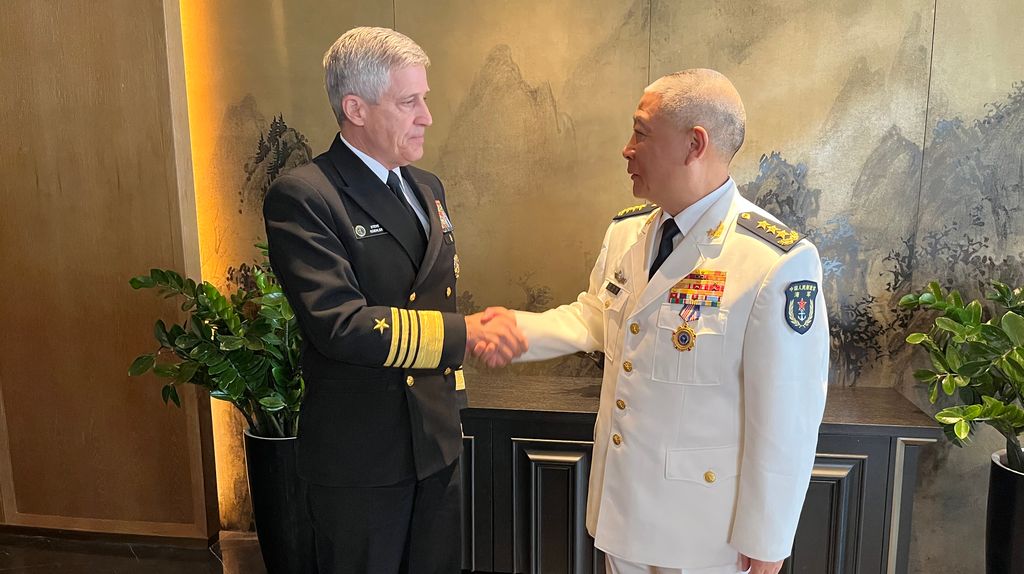
Adm. Yuan Huazhi (right), then-political commissar of the People’s Liberation Army Navy, 2024. He was ousted in a purge earlier this year. (USN)

In the latest issue of the Maritime Executive magazine, the thorough-going purge of China’s Peoples’ Liberation Army (PLA) was described, a clean-out so comprehensive that it was uncertain if there was anyone left in the high command of the PLA with the necessary experience to prepare for and to execute an invasion of Taiwan. President Xi himself has said repeatedly that the PLA must be equipped and ready to ‘recover’ Taiwan by 2027, the year in which the PLA attains its 100th anniversary and President Xi presents himself for an unprecedented fourth term in office at the 21st Chinese Communist Party (CPC) Congress.

But rather than culminating with the recently-confirmed dismissal of General Zhang Youxia, who as Vice Chairman of the Central Military Commission (CMC), the equivalent of the US Joint Chiefs of Staff, was the CMC’s most senior officer, the purge has continued. There is almost no officer left in the senior PLA hierarchy to purge – and often replacements have not been appointed, so many posts have now been left open and further purge opportunities are now limited. The PLA Navy has been particularly hard-hit.

The continuing purge was the central theme of the CPC’s Fifth Plenary Session, which concluded in Beijing this week. With President Xi Jinping speaking to an auditorium with dozens of empty seats, the communique issued afterwards stressed the importance of adopting ‘Xi Jinping Thought on Party Building’ and on taking ‘systematic steps to address both symptoms and root causes of corruption, adopting a holistic approach that combines severe punishment, targeted remedy, and effective prevention, carrying this fight through to the end." The surviving delegates voted unanimously in favor of the supporting resolutions.

President Xi railed against a lack of Party spirit amongst CPC members, and malpractices such as ‘cultivating connections’, the use of proxies to make back-room deals, contractor collusion with recently-retired officers, and the illicit use of the internet, blockchain technology and foreign currency exchanges.

Those known to have been purged earlier this year included General Zhang Youxia, CMC Deputy Chairman, and General Liu Zhenli, Chief of Staff for Joint Operations, now announced as not just dismissed but up for trial on what could be capital charges. Both were previously close friends and long-standing political allies of President Xi. 

Also dismissed earlier this year were:

General He Weidong, head strategic planner for operations against Taiwan.

Admiral Miao Hua, Head of the CMC Political Works Directorate

Admiral Yuan Huazhi, Head of the PLA Navy Political Works Department.

Admiral Wang Houbin, Commander PLA Rocket Force

Vice Admiral Li Hanjun, former Commander PLA Navy

Lieutenant General Lin Xiangyang, Commander of the Eastern Theatre facing Taiwan

Vice Admiral Wang Zhongcai, Commander East Seas Fleet facing Taiwan.

Major General Ding Laifu, Commander 73rd Army Group, in the Eastern Theatre facing Taiwan

The sixteen new names added during the CPC’s Fifth Plenary Session to the list of those purged included:

Lieutenant General Zhong Shaojun, Director CMC General Office, long-term Xi aide

Lieutenant General Fang Yongxiang, Director CMC General Office,

General Wang Haijiang, Commander Western Theatre

General Huang Ming, Commander Northern Theatre

General Liu Qingsong, Head Political Works Department Eastern Theatre

General Zhao Zongqi, retired and a former Western Theatre Commander

General Zhao Zongqi may perhaps have been targeted because he was a Chinese military hero, renowned for his exploits in the Sino-Vietnamese War and his leadership in the 2020 Galwan Valley clash with India. General Zhang Youxia may also have been dismissed just for being a bit too charismatic and effective – and hence presenting a potential challenger to the somewhat dour President Xi.

Those dismissed include all four theatre commanders, as well as the principal operational commanders in the Eastern Theatre who would be charged with ‘recovering’ Taiwan. There will also have been hundreds of junior officers, subordinates of those dismissed, who will also have been purged. One of the few senior officers to remain in post is Admiral Hu Zhongming, PLA Navy Commander since December 2023 and previously Commander North Sea Fleet. But he has not been elevated to membership of the CMC.

All were variously dismissed for ‘forming political cliques and factions, disloyalty and dishonesty toward the ruling party, abuse of office and illicit promotion assistance, and for accepting large sums in defense-related corruption’. They may also have posed a perceived political threat to Xi in the run-up to his expected bid for an unprecedented fourth term as the CCP’s top leader.


US Sanctions False-Flag Network Run from India Used for Iranian Shipping

Eswatini flag
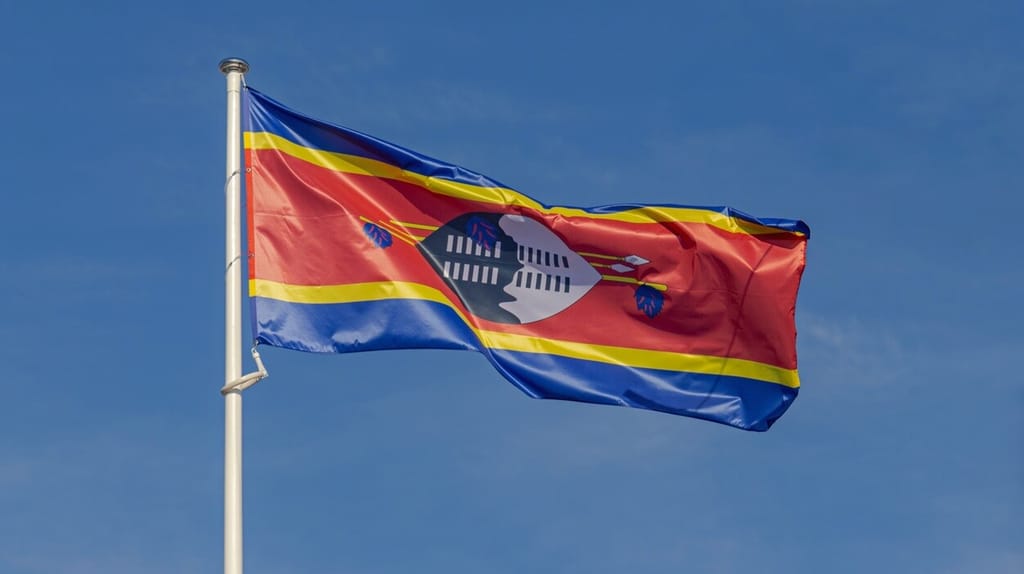
Among the false flag operations the US reports the Indian network operates the false Eswatini Maritime Affairs registry (iStock photo)

Continuing its efforts to shut down all the avenues supporting Iran’s shadow fleet, the U.S. Treasury announced new sanctions targeting a network that it says is behind a broad range of false flag operations. Treasury accuses an Indian husband and wife, Suniel Kumar Sharma and Jaspreet Preeti Shahid, of running a web of maritime fraud that provided false flags and certifications to sanctioned vessels involved in transporting Iranian petroleum.

The Treasury Department began the initiative under the name “Operation Economic Outcast” in August 2026, aiming to further go after the networks supporting the Iranian regime. It has included additional targeting of tankers as well as other elements such as money laundering and sanctions evasion. The Treasury Department reports it is working with partners, including the European Union, United Kingdom, and Gulf state partners, to map the networks, facilitators, and financial channels that Iran uses to smuggle oil, evade sanctions, and fund terror.

The U.S. says the husband-and-wife operation based in Chandigarh, India, is responsible for establishing false flagging authorities and maritime certification societies ranging from Aruba to Guyana, Mali, Mozambique, Malawi, and Sint Maarten and Timor-Leste, as well as the current false organization called Eswatini Maritime Affairs and International Ship Registry, which is actually operated from Singapore. It highlights that Eswatini authorities have publicly disavowed this organization, as have other nations for similar operations. Many of the flags listed are well-known for being associated with false flag tanker operations, both supporting Iran and Russia.

The Indian couple was accused of starting their operation as early as 2014, when the U.S. asserted the couple sought to impersonate the flagging authority of the Caribbean nation of Dominica. They assert that the Sharma network purchases web domains, creating websites that claim to offer a variety of services on behalf of a country that has not authorized it to provide any of those services. The services often include flagging, seafarer training and certification, and vessel classification, all of which are traditionally handled by legitimate organizations that hold vessels to strict international standards.

Sharma, the U.S. reports, established the Singapore-based Eswatini Maritime Affairs and International Ship Registry in 2023. They highlight that despite being publicly disavowed by Eswatini authorities, the group continues to provide flagging services for vessels transporting Iranian petroleum. They also report that the Sharma’s network can be tied to multiple active websites that purport to belong to legitimate flagging registries.

Suniel Kumar Sharma and Jaspreet Preeti Shahid are being listed along with their company, Aryavart Ship Management Private Limited. The United States is also designating Eswatini Maritime Affairs and International Ship Registry.

In addition, the Treasury Department’s Office of Foreign Assets Control (OFAC) issued a new alert to the maritime industry to warn of the sanctions risks of dealing with potentially falsely flagged vessels. It reemphasized previous warnings from Treasury to the maritime industry to screen against unscrupulous actors such as Sharma and the vessels his network supports.

Turkish-based Fugo Ground Services was also sanctioned today by OFAC for its ongoing services in support of Iran’s aviation sector. Treasury said it has repeatedly warned that it will take action against those who continue to support Iran’s aviation industry, and it renewed its warning of “serious consequences” for supporting Iranian efforts.


EU Court Upholds Restrictive Measures Imposed on Russian Maritime Register

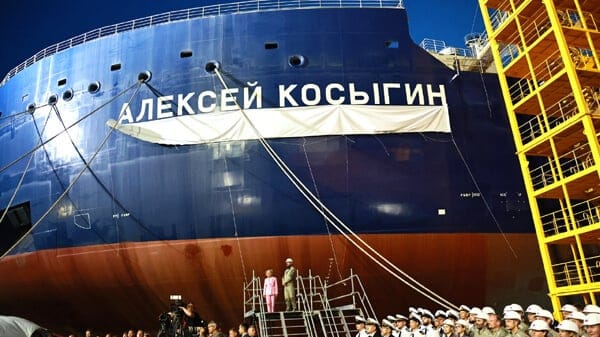
naming Russian tanker
Court upheld the restrictive measures against the Russian Maritime Register of Shipping

The Court of Justice of the European Union handed down a decision on November 4, upholding most of the restrictive measures the European Council has imposed against the Russian Maritime Register of Shipping. It found that the European Council was acting within its powers to sanction the operator of the registry as part of the Russian state and the efforts to pressure Russia to stop the war in Ukraine. 

The case was brought by the Russian Maritime Register of Shipping to challenge the restrictions imposed starting in 2014 and increased after the invasion in 2022. At issue was the authority of the European Council to impose transaction restrictions and bans on the corporation and ships in the registry, as well as its withdrawal of recognition as a classification, inspection, and certification entity for shipping.

The Russian Maritime Register of Shipping had been recognized by the European Union since 1998. It was authorized to conduct inspections, surveys, and certification activities for ships flying either the Russian flag or foreign flags.

The first sanctions were imposed in 2014 after Russia invaded, occupied, and annexed the Crimean Peninsula from Ukraine. Those restrictions were further increased after the invasion of Ukraine in February 2022 and have been extended and expanded over the past four years. The European Council imposed financial restrictions on doing business with the Russian Register, including an investment ban. It also prohibited transactions with the organization, and ships certified by the organization were barred from accessing ports and locks in the European Union. Additionally, the European Council also withdrew its recognition of the Russian Maritime Register of Shipping and required member states to revoke authorizations they had granted to the organization.

The Court of Justice, in its decision, upheld all the bans, but annulled the measure withdrawing recognition of the organization. While the Court believed the European Commission was within its rights to take actions against the register organization as it is owned by the Russian state, it said the measure withdrawing the recognition was disproportionate, since less onerous steps were available. 

It found that the European Commission could have had the same effect by suspending the recognition of the register organization. Its reasoning is that the withdrawal means that the recognition cannot be automatically reinstated if the restrictive measures are lifted. The court said the register would have to go through a new recognition procedure and the outcome would be uncertain.

The court, however, dismissed most of the action brought by the Russian Maritime Register of Shipping. It found that the European Council had fulfilled its obligation to state reasons for the action with actual and specific justifications. It was able to understand why the investment ban had been extended to the maritime sector and said the European Union was motivated by the Russian state ownership of the organization. The actions fall within the common foreign and security policy mandate of the Council.

The challenge to the blocking of ships within the registry from accessing EU ports was found to be inadmissible by the court. It said these actions only indirectly affected the legal position of the organization, as they targeted the ships and shipping companies. 

The decision was seen as a landmark ruling as it confirmed the authority of the European Council to implement the restrictive measures when clear and justified reasons were established. As of mid-2026, the European Union has sanctioned over 670 ships, largely targeting Russia's "shadow fleet" tankers while also imposing restrictions on other sectors that directly support maritime operations. This has included the Russian Maritime Register of Shipping, as well as restrictions on providing maintenance, repairs, and other services to target shipping and shipbuilding operations.

The European Union asserts the sanctions have a meaningful impact on Russia and its economy. It asserts the sanctions are a key part of the effort to bring an end to the war in Ukraine.