Wednesday, November 04, 2026


Nuclear Aircraft Carrier ex-USS Enterprise Departs for Dismantling
USS Enterprise
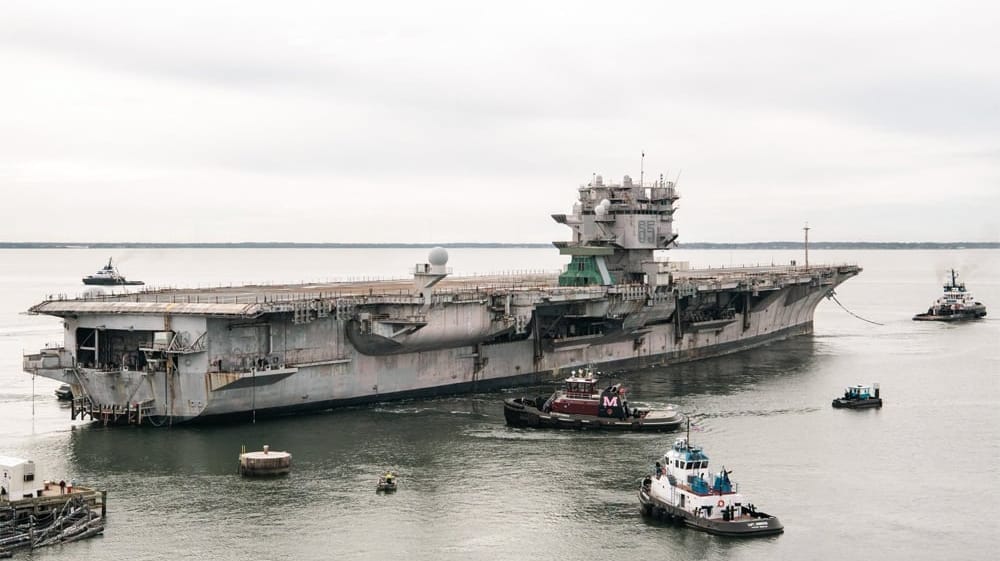
ex-USS Enterprise departing on her final voyage (HII)

The U.S. Navy confirmed that the former aircraft carrier USS Enterprise has begun its final voyage bound for dismantling in Mobile, Alabama. The world’s first nuclear aircraft carrier, she was decommissioned a decade ago after a career that spanned 55 years.

Commissioned in 1961, Enterprise was known by her sailors as “Big E” and is considered a technological milestone in naval history, laying the groundwork for the modern U.S. Navy. She played a central role in U.S. naval operations during the Cold War, Vietnam War, and post-9/11 conflicts in the Middle East but also demonstrated the use of nuclear power and taught the Navy operations for a large nuclear carrier.

“Enterprise will always be remembered for her proud legacy of service, a legacy made possible by the sailors and support personnel whose dedication kept her mission-ready,” said Kevin Cormier, Deputy Portfolio Acquisition Executive Maritime for Aircraft Carriers. “All who served aboard and sustained this historic ship should take pride in the vital role they played in supporting the fleet. Their dedication ensured that Enterprise remained a lasting example of naval excellence. Fair winds and following seas.”

She departed Newport News, Virginia, on November 2, being towed to Mobile 17 months after the dismantling contract was awarded for $536 million in a fixed-price contract to NorthStar Maritime Dismantlement Services. It is a partnership between NorthStar Group Services and Modern American Recycling and Radiological Services, announced in November 2024 as one of the bidders for the contract. The other competitors for the contract were in Newport News, Virginia, and Brownsville, Texas. 

She will be arriving in Mobile around the same time as the former ocean liner S.S. United States is being towed out to begin her final voyage. The hull of the liner is currently expected to depart the MARS yard on November 9 before it is sunk to become a manmade reef. The carrier is expected to take a similar spot in Mobile and likely will become a new tourist attraction for the city.

The eighth naval vessel to bear the name Enterprise, the ship was built by Newport News Shipbuilding and commissioned in 1961. According to the Navy, she steamed more than one million nautical miles under nuclear power during her operational career.
Enterprise was the world's first nuclear-powered aircraft carrier (USN)

Following Enterprise’s inactivation in December 2012, the Navy completed defueling of the ship’s reactor plants and decommissioning in 2017. They spent years studying the best process for disposal of the vessel before announcing in 2023 that it had decided to dismantle the carrier at a commercial shipyard. They said this approach would not tie up vital capacity at the public shipyards needed for the active Navy vessels. 

The government has already removed some elements from the ship and will take control of the radioactive parts, while the partnership will be responsible for the remainder of the vessel. The Department of Defense said last year it expected the dismantling to be completed by November 2029. The Navy considers the established process as a model for the upcoming decommissioning of the first of the Nimtz class carriers. USS Nimitz is now scheduled to end service in the first part of 2027.

While outclassed by the more modern Nimitz class and now the supercarriers of the Ford class, Enterprise remains the longest naval vessel ever constructed, although she has a smaller displacement than the newer carriers. She has a length of 1,123 feet (342 meters) at the flight deck and has a displacement of approximately 94,000 tons. Enterprise had an acknowledged top speed of over 30 knots, although it was rumored she could operate at much faster speeds.

Enterprise’s legacy will continue with the future Ford-class aircraft carrier, Enterprise (CVN 80), the ninth U.S. Navy ship to carry the name.

 

Vermont Eyes Nova Scotia's Offshore Wind Resources

Nova scotia wind energy

Landlocked Vermont wants access to offshore wind power to diversify its grid supply, but the odds of procuring it from the U.S. Eastern Seaboard are limited for the foreseeable future. Given the regulatory and business climate for offshore wind in the United States, Vermont is following Massachusetts' lead and going to Canada for its wind power. Vermont's governor has set up a multiyear agreement with the government of Nova Scotia to look into options for buying and importing Canadian wind power, not unlike a deal signed by Massuchsetts' government in February. 

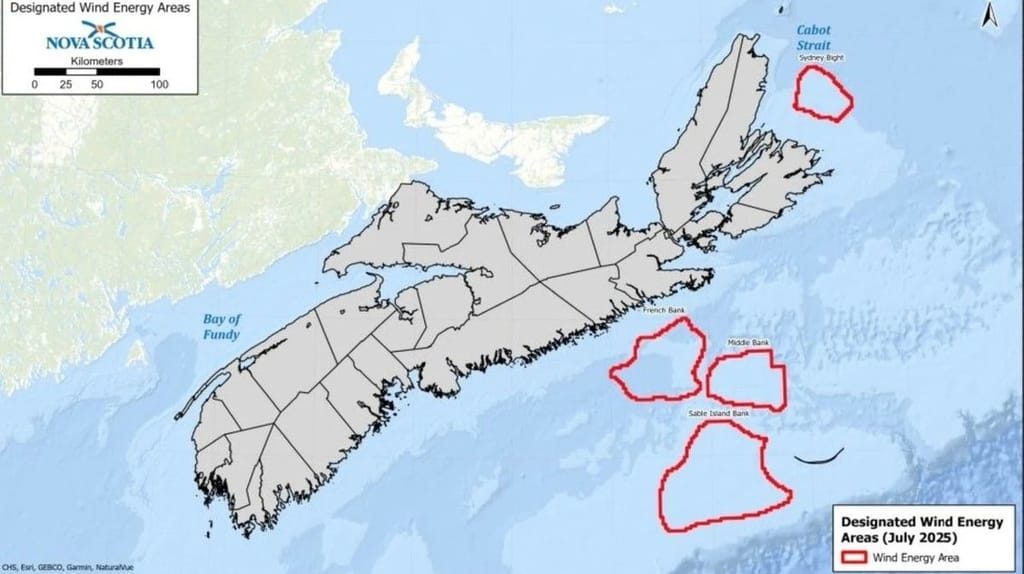
Nova Scotia has suitable conditions for wind power generation, and is planning to put licenses for up to 15 gigawatts of capacity out to tender in the near future. The timeline is as-yet uncertain, as the province has delayed an initial tender expected this year in order to run a new round of consultations with First Nations. 

The province says that it has the capability to supply about one-quarter of Canada's power needs with offshore wind alone - an abundance that would supply Nova Scotia, with enough left over for other provinces and for American consumers. Potential lease areas are located off the island's southeastern and northeastern coastlines; the consultations focus on three blocks located nearer to shore. Nova Scotia's premier, Tim Houston, calls the plan "Wind West" and has secured a CA$100 million support package from Canada's federal government to move the proposal forward. Early efforts include wind-measurement buoys and scoping studies on long distance transmission lines. 

That power is attractive to Canada's southern neighbors. "We need clean, affordable power at scale. We have a shortage of those resources, and Nova Scotia has an incredible resource they are hoping to capitalize on — and they are looking for partners," said Vermont Department of Public Service commissioner Kerrick Johnson, speaking to Vermont weekly Seven Days. If carried out, the deal might see power from Nova Scotia routed over the Canadian grid to the Vermont border, where an existing HVDC interconnection would carry it over onto the American grid. Alternatively, it might require new long-distance transmission infrastructure to move the power to market in New England. 


Tanker Damaged by Russian Attack Breaks Towline Prompting SAR Operation

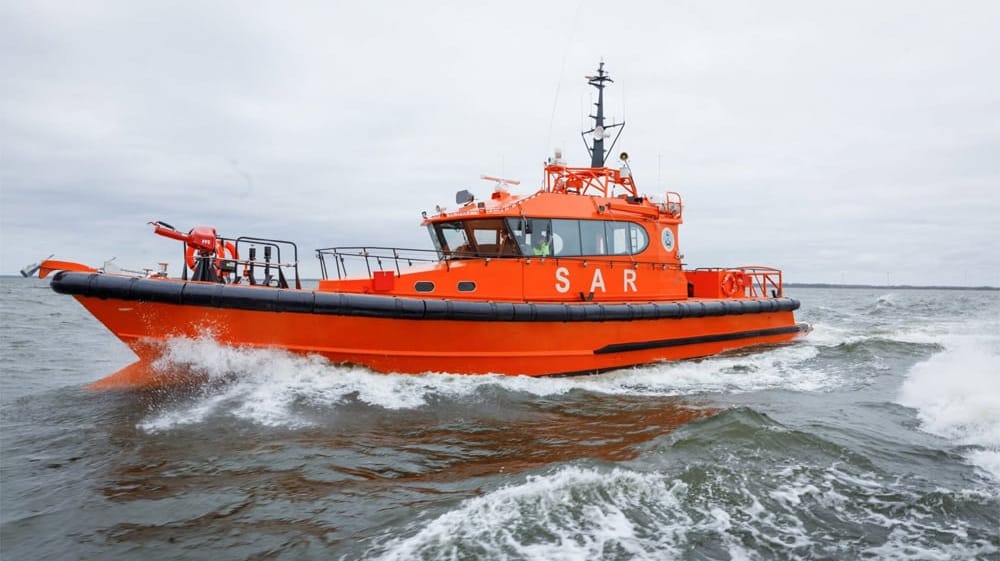
Romanian search and rescue vessel
Romania organzied the search and rescue after the tug was damaged by the derelict tanker it was towing (ARSVOM)

A product tanker damaged in September by a Russian attack has broken free of its tow, prompting a SAR operation and efforts to recapture the drifting vessel. Romanian officials reported the rescue of three crewmembers from one of the towing tugs, while Bulgaria reports it is monitoring the tanker as it drifts in the Black Sea.

The product tanker Mentor (13,000 dwt) was attacked off Odesa on September 24. The Ukrainian master of the vessel was killed in the strike by a Shahed-style drone while Ukraine evacuated the remaining crewmembers. The tanker registered in Antigua and Barbuda had remained at anchor, with reports that its bridge was burnt out from the attack.

Two Turkish tugs, Ramazan Bey (339 gross tons) and Ayaz Bey (317 gross tons), issued a distress call overnight while off the coast of Romania, towing the derelict tanker toward Turkey. According to the reports, the tugs encountered heavy seas during a Black Sea storm, and the towline parted. They reportedly were able to restore the line once, but in the process, the Ayaz Bey hit the tanker and was heavily damaged. Romanian officials said it was in danger of sinking.

The crew of the Ayaz Bey issued the distress call, and Romania dispatched rescue boats. Weather conditions, including heavy wind along with the very rough seas, prevented Romania from launching an aerial rescue. Three crewmembers from the tug were evacuated to a Dutch-flagged tugboat, Odin, which was also operating in the area. The Ministry of Internal Affairs of Romania, however, reports four other crewmembers refused evacuation, saying they did not require assistance. They reportedly brought the damaged tug to an anchorage.

Bulgarian officials, however, report the Mentor is again drifting in the storm and approaching their waters. They ordered the second tug, Ramazan Bey, to stand by the drifting vessel while Bulgarian officials are coordinating a response to the situation.

According to reports from Bulgaria, the abandoned tanker is carrying 11,000 tons of sunflower oil. There is no crew aboard, and it is currently drifting in the Shabla region in northern Bulgaria, near the border with Romania.


Bulgaria Warns of Containers Washing Ashore from Contship Jet

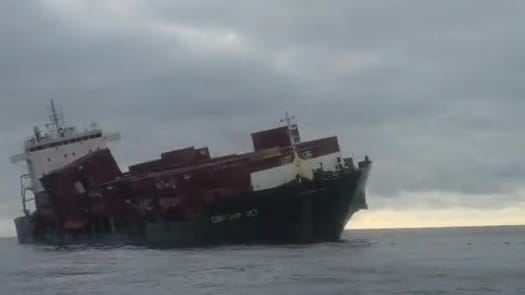
sinking containership
At least 20 containers were thought to have gone overboard and now debris is washing ashore

There are increasing reports of debris coming ashore from the Greek-owned containership Contship Jet that was sailing for Zim when it went down last week in the Black Sea. The ship sank approximately 16 nautical miles offshore on October 29, about 12 hours after it was struck by three sea drones.

The vessel was reported to have 421 containers loaded when it was lost. The manifest showed that flammable liquids and gases, non-flammable gases, and lithium-ion batteries were among the listed hazardous cargo. Other reports said there was general cargo, including Christmas merchandise heading to Romania.

The vessel had taken on a heavy list and was drifting to the south in the hours after the attack. Reports said that more than 20 of the containers had fallen overboard. Rough seas were further complicating the situation in the hours before the vessel succumbed and went down overnight. 

By Sunday, November 1, reports said that at least four containers were seen drifting in the Black Sea, but conditions made it impossible to retrieve them.

The first of the containers crashed ashore on Sunday and became wedged in the rocks. Media reports say it was harmless, containing Christmas trees. Concerns, however, were raised when a second container frame holding a large tank was spotted drifting offshore. Officials said they suspected the tank was empty, but they increased the warnings when it was driven ashore.

Another red container was spotted half submerged, and then late on Monday another container became stuck in the rocks close to shore at Tsarevo. The Navy said it would attempt to inspect the container on Tuesday, but that it is in shallow waters and with rough seas it was difficult to reach. They were still discussing how to move the container to a safer location.

Government officials are warning of the dangers of the containers from the ship, saying that the rough seas make it impossible to recover any of the containers or tanks. They were hoping to begin towing the containers once the sea conditions improve.

For now, they are cautioning ships while saying it is impossible to predict how many containers will float up. 

Concerns were also raised about the fuel still aboard the vessel. Weather conditions, however, have made it impossible to survey the wreck or determine at what depth it lies. 


Russia Plans to Sell Part of its Stake in Sovcomflot

Arctic shuttle tankers on a domestic short-run route (Sovcomflot file image)

Faced with a need for revenue, the Russian Ministry of Finance is making plans to sell down its stake in Sovcomflot (SCF), a state-owned tanker operator with international reach and a Soviet history.  

SCF is under sanctions, so transacting in its shares could be difficult abroad. However, there is no regulatory obstacle to securing private-sector investment within Russia itself. The company is listed on the Moscow Exchange, and at current pricing the sale would bring in about $180 million.

Sovcomflot posted a net loss of about $650 million last year, but returned to profitability in the first half of 2026 on the back of improving tanker rates. The ministry said that the exact timing of the share sale would be determined based on market conditions. 

SCF had more than 120 tankers on the eve of the Ukraine conflict, and it still describes itself as one of the largest tanker owners in the world. But after the rollout of Western sanctions on the firm, ownership of many of its vessels has been transferred to other entities overseas. Under new, opaque management structures, many of these vessels continue to serve the Russian oil trade as part of the "shadow fleet" of below-the-radar tanker operations. 

The Russian state currently owns about 83 percent of SCF, and the planned sale would shrink its holdings to just over 75 percent, leaving the Kremlin with a strong grip on the company. 


Large Russian Military Cargo Convoy Forming Up in the Baltic

Russian port
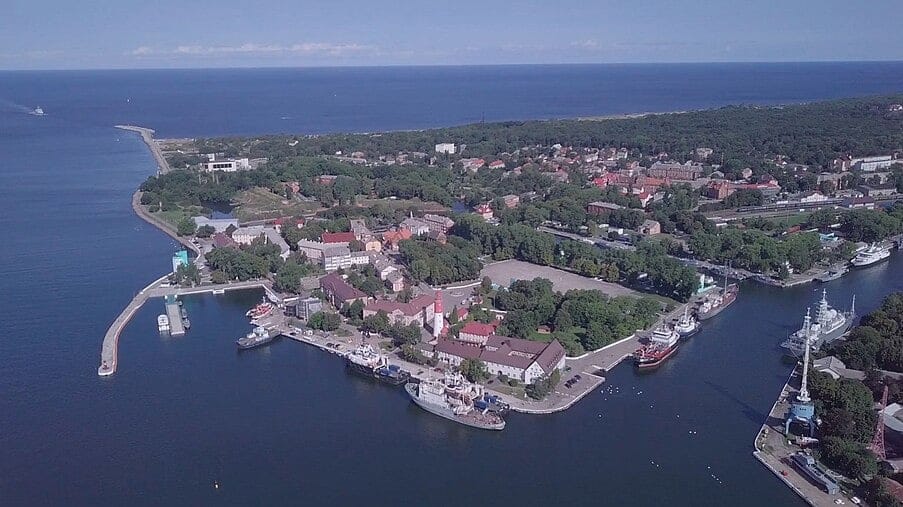
Russia port of Baltiysk, which is used as the staging area (Russian Geographical Society - CC BY 3.0)

An unusually large convoy of cargo vessels, all sanctioned and with well-established histories of moving military cargo for the Russian Ministry of Defense, appears to be forming up at Baltiysk, in the Russian enclave of Kaliningrad. They appear to be readying to depart.

Baltiysk has often been used as an assembly point for escorted cargo ships heading either for the Mediterranean or for West Africa, usually to support the activities of the state-sponsored mercenary group, the Africa Corps, which supports governments in power facing threats from Islamist militants. These governments are generally military-led, having seized power in coups.

The vessels involved are the Lady R (IMO 9161003), Ascalon (IMO 9198226), Lady D (IMO 9349289), Sparta (IMO 9268710), and Anastasiia (IMO 9349291). All are now in Baltiysk or in the anchorage just outside the port, most having beforehand come south from St. Petersburg. It would appear likely that the vessels have taken on cargo in St. Petersburg and are completing loading at Baltiysk.

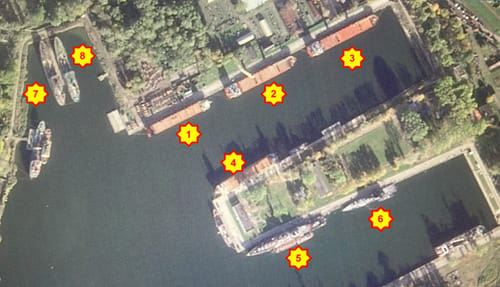
Four military cargo vessels (1-4) loading at Baltiysk in Kaliningrad on October 27 (Sentinel-2)

On October 27, the Sparta (1) was at the dockside loading military vehicles, alongside Anastasiia (2) and the Lady D (3), with the Ascalon (4) on the wharf opposite. By October 30, the Ascalon, Anastasiia, and Sparta had completed loading and had moved to the anchorage just outside the harbor, while the Lady R was approaching Baltiysk from St. Petersburg.

Also in the harbor on October 27 was the Sovremenny class destroyer Nastoychivy (D610) (5), which has been under repair since 2019, flagship of the Baltic Fleet, and not going anywhere soon, but also a Steregushchiy class corvette (6), a class of vessel often used to escort military cargo vessels in the past, and possibly the Stoikiy (F545). Also used for escort duties in the past are vessels from the tank landing Ropucha Class, with the Aleksandr Shabalin (L110) having returned from such a trip to Tobruk in September. Two other vessels (7) and (8) arrived at their jetty, probably for restocking, between October 23 and 27, and could be Ropucha class ships.

[Updated Nov. 1] At least two of the Russian-flagged cargo vessels have been identified sailing together between Rügen and Bornholm, on course for the Langeland Belt, namely the Ascalon (IMO 9198226) and Anastasiia (IMO 9349291). The two sanctioned vessels were being shadowed by the German Coastguard vessel Bamburg (IMO 9830020) and the Danish Coastguard vessel Merkur (MMSI 219167000), a duty then taken over by the Danish naval patrol vessel HDMS Rota (P525).

It remains to be seen if the Russian navy is economizing on the need for escort vessels by sending military cargo vessels all out together, watched over by a single naval warship. In these circumstances, once near the Strait of Gibraltar and past the areas of highest risk for naval interdiction, the cargo vessels could then split and head off in separate directions. It is unlikely that they are either loaded with diesel or all heading for the same destination, unless Russia is planning a major new intervention or is planning to invade somewhere new, with the Africa Corps having won a new contract.

Top photo by Russian Geographical Society - CC BY 3.0


Russia Pressures Royal Navy's Weak Spot

Shabalin
Russian Navy amphib Aleksandr Shabalin seen in the English Channel, October 2026 (Royal Navy)

The expansion of Russian hostile activities in British waters in recent months could not have come at a worse time for the Royal Navy, putting pressure on resources in the particular capability areas where the Royal Navy is critically deficient.

The operations in British waters of Russia's GUGI underwater intelligence-collection submarines and vessels (such as the Vishnya-class intelligence-gathering ship Viktor Leonov) and the posting of a permanent picket ship in the North Sea (currently the frigate RFS Neustrashimy) – come on top of the burden of monitoring the movements of Russian dark fleet tankers and sanctioned vessels carrying military cargoes, which are primarily resupplying the state-sponsored mercenary Africa Corps in West and North Africa.

Clearly, the Russians are concerned about the possible interdiction of their vessels in the North Sea. Some vessels are being sent north and west around the British Isles to avoid territorial waters, and the Russians themselves struggle to field suitable naval escorts for those taking the shorter route through the English Channel. But equally, the Royal Navy does not have sufficient frigates to shadow these Russian movements, and it is having to use valuable Type 45 air defense destroyers or lightly armed patrol vessels instead – or, increasingly, to monitor movements only from the air, courtesy of Fleet Air Arm Merlin helicopters and Royal Air Force Protector surveillance drones.

Currently, only five Type 23 frigates are still in service, slated to remain in the fleet until the first of the Type 26 and Type 31 frigates come into service. The first two Type 26 frigates, HMS Glasgow (F88) and HMS Cardiff (F89), are being fitted out, as is the first Type 31, HMS Venturer (F12). But there is a long way to go before the ships will be fit to join the fleet, and it has emerged that insufficient resources have been allocated to the task of certifying the ships as ready for service. Nor has the certification process itself been modernized.

At the same time, two of the remaining Type 23 frigates look as if they are about to be declared unseaworthy because of hull corrosion problems, further jeopardizing frigate availability over the next three years. The perilous state of the frigate fleet poses problems not just for monitoring the increased Russian activity in home waters, but also for the ability of nuclear submarines and the two Queen Elizabeth-class aircraft carriers to operate with proper protection.

The British press has revealed that despite the alarming capability gap, the yards building the new frigates are still working “peacetime” hours, with no night shifts, overtime or weekend work. Whereas the Royal Navy is intensely agitated at its inability to meet its operational tasking, a more relaxed attitude appears to be prevailing in the Ministry of Defence’s procurement organization.

It is not all bad news for the Royal Navy, however. Some of the Type 45 destroyers are coming back into service after performance upgrades, and last week three Vanguard-class nuclear ballistic missile submarines were at sea, as were both aircraft carriers – HMS Queen Elizabeth (R08) in the Atlantic and HMS Prince of Wales (R09) off Gibraltar.


EU Court Upholds Restrictive Measures Imposed on Russian Maritime Register

naming Russian tanker
Court upheld the restrictive measures against the Russian Maritime Register of Shipping

The Court of Justice of the European Union handed down a decision on November 4, upholding most of the restrictive measures the European Council has imposed against the Russian Maritime Register of Shipping. It found that the European Council was acting within its powers to sanction the operator of the registry as part of the Russian state and the efforts to pressure Russia to stop the war in Ukraine. 

The case was brought by the Russian Maritime Register of Shipping to challenge the restrictions imposed starting in 2014 and increased after the invasion in 2022. At issue was the authority of the European Council to impose transaction restrictions and bans on the corporation and ships in the registry, as well as its withdrawal of recognition as a classification, inspection, and certification entity for shipping.

The Russian Maritime Register of Shipping had been recognized by the European Union since 1998. It was authorized to conduct inspections, surveys, and certification activities for ships flying either the Russian flag or foreign flags.

The first sanctions were imposed in 2014 after Russia invaded, occupied, and annexed the Crimean Peninsula from Ukraine. Those restrictions were further increased after the invasion of Ukraine in February 2022 and have been extended and expanded over the past four years. The European Council imposed financial restrictions on doing business with the Russian Register, including an investment ban. It also prohibited transactions with the organization, and ships certified by the organization were barred from accessing ports and locks in the European Union. Additionally, the European Council also withdrew its recognition of the Russian Maritime Register of Shipping and required member states to revoke authorizations they had granted to the organization.

The Court of Justice, in its decision, upheld all the bans, but annulled the measure withdrawing recognition of the organization. While the Court believed the European Commission was within its rights to take actions against the register organization as it is owned by the Russian state, it said the measure withdrawing the recognition was disproportionate, since less onerous steps were available. 

It found that the European Commission could have had the same effect by suspending the recognition of the register organization. Its reasoning is that the withdrawal means that the recognition cannot be automatically reinstated if the restrictive measures are lifted. The court said the register would have to go through a new recognition procedure and the outcome would be uncertain.

The court, however, dismissed most of the action brought by the Russian Maritime Register of Shipping. It found that the European Council had fulfilled its obligation to state reasons for the action with actual and specific justifications. It was able to understand why the investment ban had been extended to the maritime sector and said the European Union was motivated by the Russian state ownership of the organization. The actions fall within the common foreign and security policy mandate of the Council.

The challenge to the blocking of ships within the registry from accessing EU ports was found to be inadmissible by the court. It said these actions only indirectly affected the legal position of the organization, as they targeted the ships and shipping companies. 

The decision was seen as a landmark ruling as it confirmed the authority of the European Council to implement the restrictive measures when clear and justified reasons were established. As of mid-2026, the European Union has sanctioned over 670 ships, largely targeting Russia's "shadow fleet" tankers while also imposing restrictions on other sectors that directly support maritime operations. This has included the Russian Maritime Register of Shipping, as well as restrictions on providing maintenance, repairs, and other services to target shipping and shipbuilding operations.

The European Union asserts the sanctions have a meaningful impact on Russia and its economy. It asserts the sanctions are a key part of the effort to bring an end to the war in Ukraine.


New research reveals how cattle linked to forced labor evade supply-chain safeguards in Brazil


Study finds ranchers on Brazil's “Dirty List” rerouted cattle through intermediary ranches, allowing products linked to modern slavery to remain in domestic and international supply chains


University of Wisconsin-Madison


Brazil’s “Dirty List,” a public registry that names employers found to have violated anti-slavery laws, is a key component of the country’s efforts to combat forced labor. Major meatpackers in Brazil signed sustainable sourcing commitments promising to not purchase cattle directly from ranchers on the Dirty List. But new research shows that ranchers have found ways around these restrictions, rerouting cattle through intermediaries and allowing cattle linked to forced labor to remain in domestic and international beef and leather supply chains.

Brazil is the world’s largest beef exporter, and its cattle sector is also one of the country’s biggest perpetrators of slave labor. Public pressure helped push a group of companies, including the three largest meatpackers in the Amazon, to sign binding agreements not to buy cattle directly from ranchers who have been added to the Brazil’s Dirty List.

“In many ways, Brazil leads the world in tackling this problem,” says Holly Gibbs, a UW–Madison professor of environmental studies who has studied Brazil’s cattle supply chain for more than 15 years. “Having a public list that companies can use to avoid doing business with offenders is remarkable. But we’ve found the effects on ranchers’ overall business outcomes are limited, because the cattle didn't disappear from the supply chain. They just changed hands.”

Modern slavery is illegal and hidden. In Brazil, workers may be lured from cities to very remote ranches where they can be pressed into forced labor. That makes it notoriously difficult to study, according to Tara Mittelberg, a UW–Madison graduate student and lead author of a new study of Brazil’s beef industry, published recently in the journal Proceedings of the National Academy of Sciences.

“We can't directly measure slavery at this scale to see if policies like the Dirty List are reducing it,” Mittelberg says. “But we can take a big-data approach to estimate how employers who used forced labor responded to sanctions that aim to punish them. We find that they evade many of the consequences of sanctions, and the costs of this evasion are relatively low.”

Researchers from Gibbs’s lab and a collaborator at the University of Illinois Urbana-Champaign tracked cattle sales using data on tens of millions of cattle transactions in the Brazilian Amazon.

“This kind of detailed transaction data gave us an unusual opportunity,” says Holly Gibbs, professor at UW–Madison and director of the Global Land Use and Environment Lab. “Instead of simply asking whether companies stopped buying directly from ranchers on the Dirty List, we could track sales by those ranchers to understand how the cattle linked to forced labor moved through the supply chain.”

The records revealed that while on the Dirty List, ranchers sharply reduced their direct sales to slaughterhouses that have commitments to avoid suppliers implicated in labor and environmental violations. However, because the agreements only prohibit direct purchases from Dirty-Listed ranchers, the listed ranchers shifted cattle sales to other ranchers, many of whom went on to supply the same slaughterhouses. The costs of this rerouting are low – a decline in revenue of roughly 1% to 14%, according to the study.

The researchers also show that many of these slaughterhouses sold beef and leather products into international supply chains around the same time they bought directly or indirectly from Dirty Listed ranchers.

“Under current monitoring systems, international supply chains are vulnerable to contamination with modern slavery,” Mittelberg says. “If we're serious about eliminating forced labor from agricultural supply chains, we need traceability that follows cattle through the entire production system, including the ranches that never sell directly to the slaughterhouse.”

The analysis of sales data also reveals that when ranchers go on the Dirty List, they tend to increase their sales of animals that are close to slaughtering age, but don’t change their sales of younger animals. Because it takes just two years of good behavior to be removed from the Dirty List, the researchers think it’s likely that ranchers are sitting on younger animals for the relatively brief wait until they can regain access to the full pool of buyers.

Two kinds of changes could help keep Brazilian beef linked to slave labor from finding its way to meat markets overseas, according to Gibbs. Greater transparency — especially better access to the sort of data her lab has extracted from cattle health records — could help buyers trace animals further back through the supply chain, beyond just the most recent owner. 

“Modern slavery is deliberately difficult to see, but better data and better monitoring can make it much harder to hide,” Gibbs says. “We developed a tool, called Visipec, in collaboration with partners to help companies assess indirect suppliers. And efforts in Brazil to establish animal-level traceability could make this self-monitoring even more accurate.” “

Gibbs is also working with other scientists to use satellite imagery and AI to map cattle across the Amazon, potentially opening new avenues for monitoring cattle production, strengthening traceability, and building confidence in companies’ efforts to source cattle responsibly.

International meat buyers can also play a role, Gibbs says, by using their purchasing decisions send signals to producers and incentivize better supply chain monitoring.

“Brazil's cattle sector continues to work towards solutions to manage its complex supply chain,” Gibbs says. “But we need to provide greater incentives for those companies that are taking steps forward.”

When President Donald Trump proposed tariffs on Brazilian imports, including beef, in June, he pointed to slave labor as a reason. In August, he announced that the United States would buy more than 600 million pounds of Brazilian beef without tariffs. “We hope this information can also help U.S. consumers become more aware of the practices that may have gone into the beef they are buying,” said study author Marin Skidmore, a professor of agricultural economics at the University of Illinois and alumna of UW–Madison. 

“If we're going to start buying more beef from Brazil, it creates an opportunity to think about how we can incentivize more reliable supply-chain monitoring,” Gibbs says. “Sending the right message through our purchasing decisions could help close the door on forced labor.”