Tuesday, November 24, 2026

'It's liberating': GA governor-elect opens up about Black hair and politics


(Screenshot/ MS Now)

November 24, 2026
ALTERNET


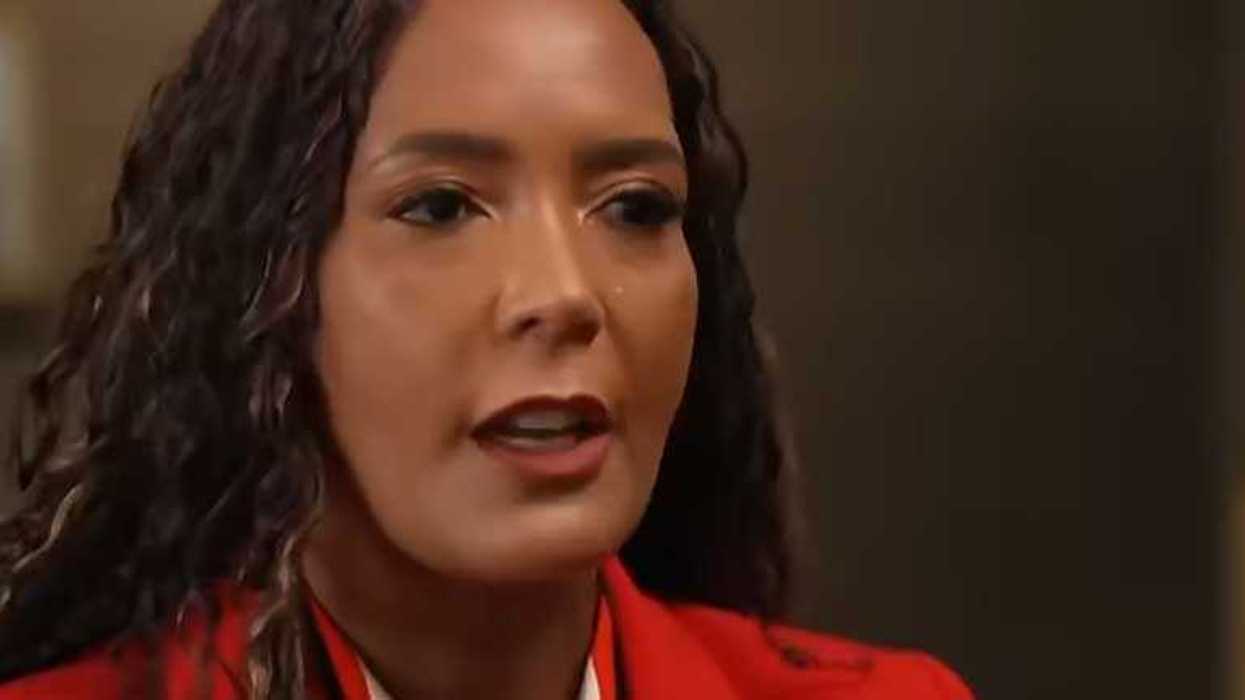
Keisha Lance Bottoms had traded in her long tresses for a fresh set of braids, and she’s loving it. The Georgia governor-elect says there’s a newfound freedom in her natural hairstyle. The change comes after Bottoms admits she had to shape her appearance for months to manage how voters perceived her while pursuing one of the most powerful political positions in the country.

Bottoms opened up in a recent interview with MS NOW’s host Symone Sanders Townsend. She spoke about having to conform to certain beauty standards to align with what is perceived to be professionalism, especially in corporate America and in politics. Bottoms explained that she stuck to one aesthetic during the campaign because her appearance was already challenging some people’s expectations of what a gubernatorial candidate should look like.

“I got wed to a certain look just because it was already confusing to people that I didn’t have short hair,” she said. But wearing braids, now, she says, is “liberating.”


“As a Black woman in America, there are things that you are just told—sometimes verbally, sometimes nonverbally—growing up about what is and is not acceptable,” she said. Hairstyles like braids or locs have often been viewed as unprofessional in the workplace.

“For so many years, I think that there are many things like braids, nails, lashes that folks would say, ‘Ah, that’s not professional. You have to look a certain way,’” Bottoms explained.


Sanders Townsend explained the significance of Bottoms appearing in braids and a suit as she prepares to lead Georgia, becoming the first Black woman elected governor of a U.S. state and what that representation means. Bottoms reflected on her upbringing, noting that a Black woman’s hair is one of her greatest accessories, and it’s something she wants to continue to share with the world. “I grew up in a hair salon—my mom owned the hair salon. So every week it was a different hairstyle,” she recalled. “And I’m trying to make a statement. This is just what you do.”

Bottoms is making a statement, one former First Lady Michelle Obama understands. While promoting her coffee table style book The Look, she spoke about her decision to never wear braids during her eight years in the White House, and what changed for her after.

"It's freedom," she told PEOPLE of wearing braids post White House, her favorite hairstyle. "Braids allow me to get them done, and then that’s one less thing that I have to think about. When I’m out of the public eye, I am swimming, I am playing tennis, and braids represent that kind of freedom for me."


She admitted she did not feel liek wearing braids as a First Lady was an option. "I wasn’t sure whether the country was ready for it," she said. "The Crown Act [which protects employees and students from race-based hair discrimination] hadn’t been passed yet, and just like fashion, I didn’t want my hair to become a distraction."


A deadly disease from the past returns — and Trump could make it worse

November 23, 2026

Coal mining is dangerous and takes a toll on the body, but a miner working underground can earn enough to buy a house, drive a nice car, and send the kids to college. There was a time when John Robinson thought the trade-off was worth it. No longer. He was diagnosed with black lung disease at age 47, a consequence of inhaling toxic silica dust in the mines of Virginia.

This story was originally published by Grist. Sign up for Grist's weekly newsletter here.

“These companies will bait you in with this big money,” said Robinson, who is now 60 and vice president of the National Black Lung Association. “When you get down and out, well, guess what? You’re like an old wore-out tire on the car or something. They’ll throw you to the side ’cause you ain’t worth nothing.”


For more than 50 years, coal miners, their families, and advocates have pressed the federal government for stricter limits on silica exposure, stronger enforcement of rules meant to protect miners, and improved health benefits for those disabled by the disease. In 2024, the Biden administration set the permissible exposure limit for respirable crystalline silica at 50 micrograms per cubic meter of air, matching the Occupational Safety and Health Administration threshold for workers in other industries. The rule was finalized in 2024, with coal companies required to comply beginning in April 2025.

That regulation was meant to update protections in coal mines and in what regulators call metal and nonmetal mines, which extract everything from copper and critical minerals to stone, sand, and gravel. All of them carry a risk of inhaling silica dust, whose fine particles can lodge deep in the lungs. But research over the past two decades has shown that Central Appalachian coal miners have experienced an acute increase in exposure and the most severe forms of lung disease associated with it, including progressive massive fibrosis.


Though the Biden-era revision wasn’t perfect, advocates like Robinson and his wife Vonda Robinson, who is president of the National Black Lung Association, were hopeful. It seemed as though decades of organizing for a stronger standard were finally coming to an end. But a federal appeals court put the rule on hold last year while it considered legal challenges filed by the mining industry. Now the Mine Safety and Health Administration wants to revise the rule.

Its proposal would retain the 50-microgram silica limit while changing several requirements governing how mines monitor exposure and protect workers. Brendan Muckian-Bates, a policy analyst with Appalachian Citizens’ Law Center, said those revisions could substantially weaken the protections behind the stricter limit.

Black lung is the common name for coal worker’s pneumoconiosis, an incurable, progressive, and fatal respiratory disease caused by inhaling coal dust and fine silica particles, which can cause severe inflammation in the lungs. Over time, that irritant scars and stiffens lung tissue, making respiration increasingly difficult until many of those afflicted with it cannot breathe at all.


In the 1960s and 1970s, according to the National Institutes of Health, as many as 1 in 3 miners with more than 25 years of work experience were testing positive for black lung. The United Mine Workers of America agitated for stricter protections again the disease, and in 1969, Congress passed the Federal Coal Mine Health and Safety Act, which required regular inspections. Disease rates plummeted to a historic low in the 2000s, only to begin climbing again.

Rates of black lung are now at a 50-year high and still climbing. A study led by the National Institute for Occupational Safety and Health, or NIOSH, found these increases across all age groups, including miners in their 20s and 30s, although rates remained highest among those who had spent decades underground. In routine health screenings by the agency during the past three years, more than 1 in 3 miners in Central Appalachia once again tested positive for the disease, making the epidemic into a U-shaped curve.

The new rule was published in the Federal Register on November 12 and will be open for public comment until January 11. Although the stricter limit of 50 micrograms remains, Muckian-Bates said the fine print matters: Other changes in the rule undermine that threshold and give mine operators greater control over how it is enforced.

“On the one hand, it looks on the surface like the administration is saying, ‘Yes, we agree that silica is the leading cause of the black lung right now,’” Muckian-Bates said. “However, they’ve provided these measures to effectively nullify that.”

Among them is a 21 percent margin of error in testing, meaning companies would only be fined if a sample exceeded the 50 microgram limit by at least that amount. That effectively gives companies a 10 microgram increase in the amount workers can be exposed to, according to Muckian-Bates.


The 2024 rule enforced regular silica monitoring by requiring air sampling in each underground mine every six months. The proposal eliminates that schedule, instead requiring mine operators to assess when changing conditions could increase exposure and test “as frequently as necessary.” Mines could therefore go longer than six months without being sampled if operators determine additional testing isn’t needed, as long as they remain below the exposure limit.

The proposed rule also would also make medical exams voluntary for new metal and nonmetal miners; the 2024 rule made them mandatory. Advocates and health professionals say those initial exams establish a baseline that can later help determine whether lung disease developed from workplace exposure rather than an earlier condition or exposure. That is particularly important because the consequences of silica exposure may not become apparent for decades.

“What we have in the pipeline right now is not going to show up until like 20 years later,” Muckian-Bates said. “That just means we’re going to have a new crop of sick miners who we don’t know are getting sick, and they don’t know they’re getting sick, until it’s too late.”

The Mine Safety and Health Administration did not respond to questions. A spokesperson for the Department of Labor said in an email that anyone interested in offering feedback can do so within the 60-day window that opened on November 12, or during a virtual meeting on December 15.


“MSHA looks forward to reviewing all stakeholder comments before publishing a final rule to better protect the health of the Nation’s miners,” the email stated. The agency noted in the Federal Register that “this rule, if finalized, is expected to be a deregulatory action,” quoting President Donald Trump’s executive order titled “Unleashing Prosperity Through Deregulation.”

MSHA estimates the proposed rule will save the industry $28.7 million per year, mostly from changes in monitoring. Of that, coal companies would save $2.43 million.

With the 2024 rule on hold, miners remain subject to silica standards whose basic framework dates to the early 1970s and effectively allows exposures of roughly 100 micrograms per cubic meter of air. Virginia Tech mining expert Emily Sarver said a tighter limit is so overdue that she would rather see the proposal move forward than face years of further delay.

“I don’t think our current legacy rule is sufficiently protective,” Sarver said. Among other things, she considers the 2024 rule’s sampling scheme, involving many different labs rather than MSHA labs, chaotic, making enforcement difficult. “I think the new rule that was passed in 2024 on paper looks more protective, but I think there’s certain problems with it.”

As for John and Vonda Robinson, they plan to keep fighting for stronger protection of those who work the mines.

“If us older coal miners don’t get nothing out of this,” John Robinson said, “we can help the next batch of coal miners [that] is going to come up, that’s going to be extremely sick. This don’t go away. This is going to last for years and to [their] death.”

Grist is a nonprofit, independent media organization dedicated to reporting on climate change.


MAGA Americans who fled to Texas from California are on the run again


(REUTERS)

November 24, 2026
ALTERNET


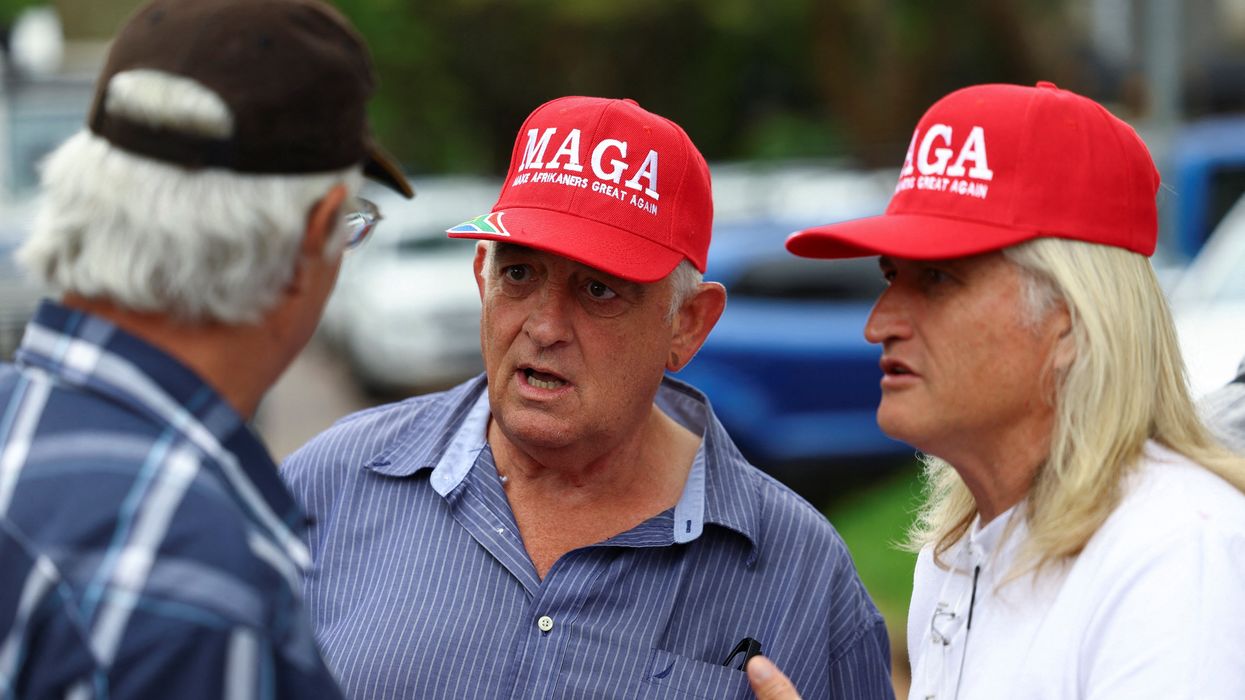
The Wall Street Journal reports Republicans who fled California to Texas are now considering another relocation after California’s blue trend followed them to Texas this month.

“I’m terrified that Texas is going to turn into California,” said Cara Jensen, a 63-year-old auto-damage appraiser who fled California and its “piece of crap governor” for North Texas, an area she saw as “patriotic, pro-family” and a solid fit for her conservative Christian values.

The recent election results also stunned California refugee and Texas resident Karen Gebhart: “My heart sank to my feet, and I said, ‘Where am I going to go next?’”


But after the state embraced Democrat teams in statewide government as a repudiation of President Donald Trump, the Wall Street Journal reports they now have few qualms about still-red Oklahoma and other red bastions.

“For years, relocation firms have helped right-leaning families escape California, New York and Illinois for seemingly safe red havens,” reports WSJ. “The Democratic wave scrambled that calculus overnight, and many conservatives are fretting about their dwindling options. It isn’t just Texas. Arizona, North Carolina and Georgia all got notably bluer, too.”


Already, real-estate agents and elected officials in Louisiana, Idaho, Tennessee and elsewhere are making overtures to conservatives.

“Did the election have you looking north?” one agent posted in a recent ad spotted by the WSJ. “Ready to get the heck out of Texas? Oklahoma’s up I-35.”

Conservative Move, a real estate referral service that helps clients find “the right red state” to relocate to, “felt the shock wave immediately,” said Paul Chabot, co-founder of the Dallas area company.


“Our Texas leads largely evaporated,” said Chabot. Almost immediately Chabot’s organization tweaked its argument after Texas Democrats captured a U.S. Senate seat, the governor’s office, other statewide posts and the state House. The company updated its website to declare Texas less a safe destination and more of “a battleground,” and that “conservatives who move there help keep it in the fight.”

On Thursday evening, the WSJ reported the firm hosted a webinar featuring real-estate agents from five states, including Texas.

“Now, I want to just address the thousand-pound gorilla in the room,” Chabot said early in the meeting. “The elections we had just now were a little crazy.” He then framed the outcome as a fluke and cast conservatives heading to Texas and elsewhere as political reinforcements: “We’re the cavalry coming.”


But Chabot added that almost immediately after the election “a spigot opened almost exclusively for Florida.”

Other conservative California refugees are now heading back to California, reported the WSJ, “figuring that if they have to live under Democratic rule, they might as well enjoy the weather.” For other newly-minted blue-state Republicans, Florida appears to be lining up as “the new Texas.”

During the webinar, a live poll asked attendees which state interested them most, and conservative Tennessee (which managed to beat down a blue wave thanks to gerrymandering efforts there) ranked first at 43 percent, followed by 10 percent each for South Dakota, Nevada and “another state.” But Texas logged in a “Goose egg,” reported the WSJ.

Gebhart told the WSJ that she likes the idea of ruby-red Arkansas and admires Gov. Sarah Huckabee Sanders.


“I’ll live in a tent on her front yard, I don’t care,” Gebhart said.


WSJ faces backlash over belated critique of Trump’s pro-China policy


FILE PHOTO: U.S. President Donald Trump and Chinese President Xi Jinping talk as they leave after a bilateral meeting at Gimhae International Airport, on the sidelines of the Asia-Pacific Economic Cooperation (APEC) summit, in Busan, South Korea, October 30, 2025. REUTERS/Evelyn Hockstein/File Photo
November 24, 2026
ALTERNET

As President Donald Trump and his administration continues to be embroiled in scandal over his role in reinstating disgraced Nvidia CEO Jensen Huang, the conservative newspaper The Wall Street Journal warned that it appears America's president is willing to betray his own country's interests to help China.

Never Trump conservatives reading that editorial on Tuesday found it quite amusing.

"Who are the people that are most receptive right now to the big tech arguments around this?" The Bulwark's Tim Miller said about why the Journal was slow to realize that Trump's pro-tech talk might conceal a lack of fidelity to American interests. "It's kind of the old-school Republicans, right? … It's kind of the Wall Street Journal Republicans. It's the people who care about the stock market. … You would think that those folks would be the ones that this would appeal to. But we're seeing this isn't even appealing to them because of the way that it intersects with China."

Miller then turned to quoting the Journal's editorial.

"Wall Street Journal ed page this morning talking about this," Miller said. "I love this quote: 'We are beginning to understand why Mr. Trump so admires Xi Jinping. He likes the way China's Communist Party boss can give orders to private companies and ignore the law when it suits his purpose.'"

He sarcastically asked, "Who could have known?"

More seriously, he continued, "Welcome aboard, Wall Street Journal editorial page. Yes, we've been talking about this. … That's something that some people have been saying in certain other outlets."

This is not the first time that the conservative Bulwark has held Trump and his administration to the fire over the scandal. Speaking at The Bulwark on Tuesday, conservative commentator William Kristol argued Secretary of State Marco Rubio should resign to protest Trump's support of Huang despite Huang allegedly posing a national security threat.


"I think the initial reporting suggested that the Rubio memo, the national security memo alerting everyone at the senior level of the government to this relationship and this problem, to say the least, was based on intercepts," Kristol wrote on Monday. "So again, this is not like third-party rumors, right? Clearly our intelligence community had extremely good reason to believe this was the case, and to know this was the case, I would believe."

Kristol went on, "And yeah, so Trump doesn't care. And I guess the board of NVIDIA doesn't care. I don't know anything about corporate law, but surely there are shareholder lawsuits and emergency lawsuits and all kinds of things that could be brought here. Really? Is the board acting in accord with its fiduciary responsibility?"

Overall, he said that "I do feel like Rubio should resign. I mean, really, it's unbelievable that he wouldn't."
Fonda, De Niro Among Celebrities Backing Van Hollen Over Schumer in Senate Leadership Race

“We call on all senators who caucus with the Democrats to... commit to supporting candidates who are dedicated to accountability, transparency, and the bold agenda voters demanded.”


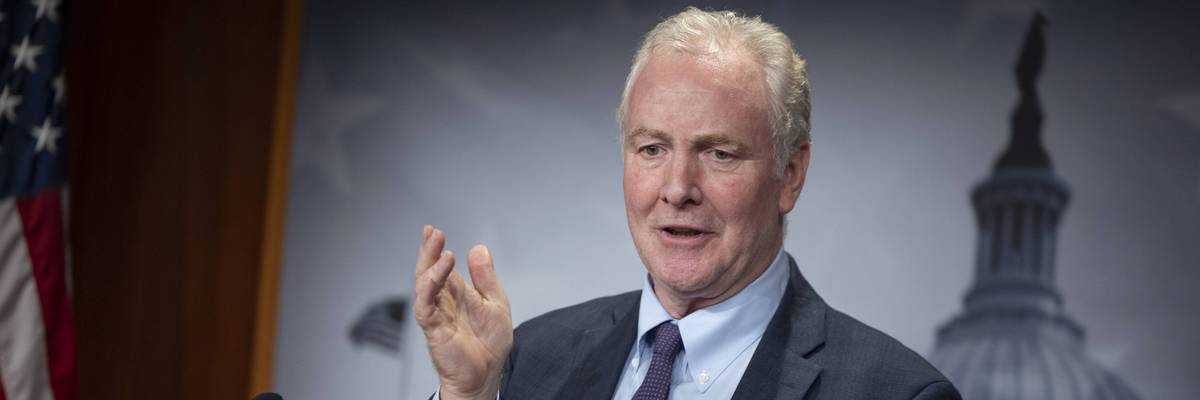
US Sen. Chris Van Hollen (D-Md. ) speaks at a press conference with other Senate Democrats at the Capitol in Washington, DC on November 20, 2026.
(Photo by Nathan Posner/Anadolu via Getty Images)

Jessica Corbett
Nov 24, 2026
COMMON DREAMS

Around three dozen Hollywood stars and Democratic donors have signed a joint statement supporting Sen. Chris Van Hollen over Senate Minority Leader Chuck Schumer to lead the party’s caucus when it takes over the chamber next month.

“When someone is too old, in power too long, their ability to truly understand and relate to everyday people becomes impossible,” Alexis Bittar, a Brooklyn-based jewelry designer and political bundler who helped organize the letter, told New York Times correspondent Benjamin Oreskes. “Chuck Schumer has hit that point.”


‘This Is a Wide Open Race,’ Says Van Hollen as Support for His Majority Leader Bid Grows

Working Families Party Joins Call for Schumer to Step Aside in Senate Leader Race

Schumer (NY) has signaled he has the support needed to win the secret vote scheduled for December 1, but Van Hollen (Md.) has continued to pick up backers—particularly progressive senators and newcomers, as well as advocacy groups and organizers—since Democrats reclaimed both the Senate and House of Representatives in the midterm elections earlier this month.

“We are donors, fundraisers, and artists who have invested in electing Democrats to the US Senate,” states the letter, which Oreskes, posted on social media. On November 3rd, voters delivered not only a mandate but an opportunity for change: a government that delivers real value in the daily lives of working families.“

“That change will only come from renewed leadership with a vision for the future,” the signatories argued. “The Democratic Party has a trust and credibility problem, and fixing it requires Senate leaders willing to challenge the entrenched interests and power structures that protect those in power, in both parties.”

The letter notes that “the Senate Democratic leader will be chosen behind closed doors, by secret ballot. No senator will ever have to tell voters, or us, how they voted. We believe a decision this consequential deserves public accountability.”

“We call on all senators who caucus with the Democrats to publicly support Sen. Chris Van Hollen to be the next Senate majority leader and commit to supporting candidates who are dedicated to accountability, transparency, and the bold agenda voters demanded,” it concludes.


Hollywood figures who signed on include Robert De Niro, Jane Fonda, Chelsea Handler, David Mandel, Marisa Tomei, and V, previously known as Eve Ensler. Others include software engineer and angel investor Ross Boucher, Chuck Collins of the Institute for Policy Studies, and human rights attorney Steven Donziger.

The celebrities and donors behind the new letter “say they have donated or helped to raise about $23 million for Democratic Senate and House candidates this cycle,” according to Oreskes.

Democrats secured 56 seats in the Senate and at least 259 in the House, where a few races have not been settled yet. They will have to contend with Republican President Donald Trump, who has both suggested there may be policies on which they can make progress together but also promised to be “Mr. Veto.”

“Americans voted for the change necessary to fight the corruption, cruelty, and policies of Trump and his Epstein-class cronies,” De Niro said in a statement to the Times, referring to deceased sex criminal Jeffrey Epstein, a former friend of the president.

“That’s why I’m supporting change in Senate leadership,” he added, calling Van Hollen “a fierce fighter.”


In an interview with the Vox podcast “America, Actually” this week, Van Hollen explained his decision to run for the leadership post—after his office was flooded with calls urging him to do so: “When I saw the results of this election, which was a sweeping crying out from the American people about the need for change, my view was that this was clearly a rejection of the policies of Donald Trump.”

“But Democrats were still on probation, and I don’t think we earned people’s trust by simply going back to the status quo,” he asserted. “We’ve been given this big opportunity, with 56 senators. We cannot blow it, and we need to show people that we’re going to deliver and fight for them.”

He also said that “this election, in my view, was a message of economic populism: People saying they want to take on a system that’s rigged in favor of the very wealthy, against working people, and fueled by political corruption. My record has been taking on big money special interests for the public good.”

“If you look at all the issues our candidates ran on, there’s going to be an army of lobbyists descending on Washington, DC, in the Capitol to eat away at what Democrats said they wanted to do,” he added. “My view is you need someone with a record of taking on those interests at this very important moment.”
Global Landmine Ban Treaty Faces Greatest Threat in Decades as Casualties Surge

“It is civilians, especially children, who continue to suffer terrible harm from landmines. This harm is avoidable, but only if all countries commit to preventing any further use.”


A sapper wearing protective gear uses a metal detector at a training ground near Kharkiv, Ukraine on October 29, 2026.
(Photo by Viacheslav Madiievskyi/Ukrinform/Future Publishing via Getty Images)

Jake Johnson
Nov 24, 2026
COMMON DREAMS


An advocacy coalition working to eradicate the production and use of antipersonnel landmines worldwide said Tuesday that such weapons killed or injured at least 6,929 people last year, the highest toll since 2020 and a sign of growing cracks in the 1997 treaty banning the mines.

Civilians made up at least 84% of those killed or injured by landmines in 2025, according to the International Campaign to Ban Landmines (ICBL). The campaign’s latest “Landmine Monitor” report estimates that, in cases where the age group of victims was known, children made up 50% of the casualties. Afghanistan was the most-impacted state party to the 1997 ban, with nearly 500 casualties last year. Myanmar, whose government was found guilty of genocide earlier this month, recorded the most landmine casualties for 2025 overall, with 1,891.

“It is civilians, especially children, who continue to suffer terrible harm from landmines,” said Loren Persi Vicentic, an editor of the new report. “This harm is avoidable, but only if all countries commit to preventing any further use.”

ICBL said that the Mine Ban Treaty faces its “greatest test” in nearly three decades, noting that five countries—Estonia, Finland, Latvia, Lithuania, and Poland—ditched the convention over the last year, “the first withdrawals in its history.”

“Poland and Finland are preparing to bring antipersonnel mines back into their arsenals,” the report says. “Poland is moving to acquire almost 15 million antipersonnel mines from domestic manufacturers, with production poised to begin as early as the end of 2026.”

Ukraine, a state party to the 1997 agreement, used landmines against invading Russian forces, in violation of its treaty obligations, the new report observes. The report also found that countries not party to the treaty—Iran, Myanmar, North Korea, Russia, and “possibly” the US—have recently used landmines.

“Open-source researchers reviewed and geolocated visual evidence that indicates US forces may have used antivehicle mines from the air-delivered GATOR Mine Scattering System in or near populated areas of Iran in March 2026,” the report states, noting that the Trump administration last year reversed earlier US limits on landmine use.

Tamar Gabelnick, ICBL’s director, said that while the “withdrawals, new use, and new production” of landmines “are dangerous steps backward” for the 1997 ban, “they do not define the treaty.”

“We urge all states to reject the production and use of antipersonnel mines, by any actor, under any circumstances,” said Gabelnick.
‘Landmark’ Ruling Bars Trump From Punishing Americans Who Work With ICC

“This victory means that others can join us in challenging these crimes without fear of punishment for exercising their First Amendment rights.”


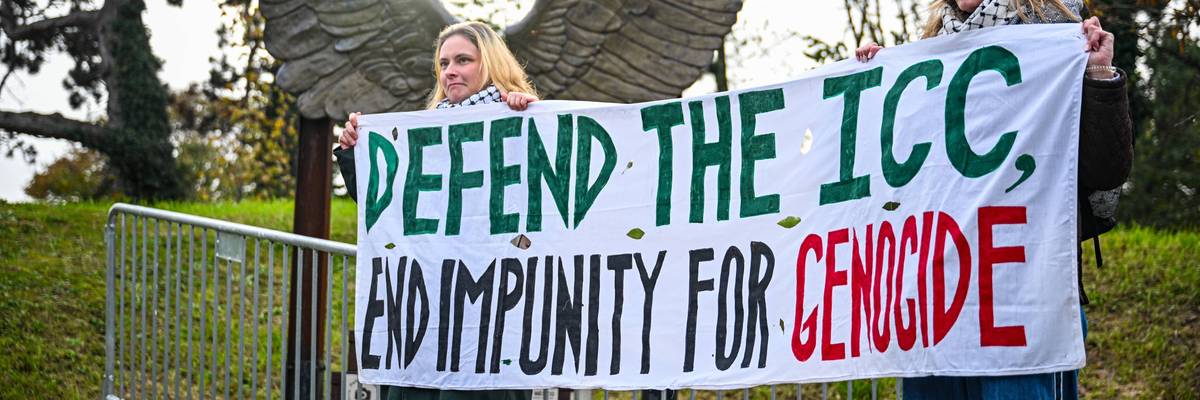
Activists marched to the International Criminal Court (ICC) to submit formal requests and evidence seeking arrest warrants for US President Donald Trump and Secretary of State Marco Rubio on November 11, 2026 in The Hague, Netherlands.
(Photo by Mouneb Taim/Anadolu via Getty Images)

Jessica Corbett
Nov 24, 2026
COMMON DREAMS

A federal district judge this week delivered another blow to US President Donald Trump’s war on the International Criminal Court, blocking the administration from punishing Americans who provide evidence to or otherwise engage with the ICC, as well as a United Nations expert and Palestinian human rights groups.

“This landmark ruling dismantles a core part of Trump’s ICC draconian sanctions regime,” Omar Shakir, executive director at Democracy for the Arab World Now (DAWN), declared Tuesday. “The court has affirmed that every American has the constitutional right to advocate for justice on Palestine without fear of reprisal.”

US Taxpayer Coalition Urges ICC to Issue Arrest Warrants for Trump, Rubio Over Gaza Genocide

DAWN and Taxpayers Alliance Against Genocide (TAAG) sued over Trump’s February 2025 Executive Order 14203, which allows sanctions against foreigners who support ICC probes into US and Israeli nationals, and bars the provision or receipt of “services by, to, or for the benefit of” a targeted entity or person.

Under the order, the administration has sanctioned the ICC as well as its prosecutors and judges; the groups Al-Haq, al-Mezan, and the Palestinian Center for Human Rights (PCHR); and Francesca Albanese, the UN special rapporteur on the situation of human rights in the Palestinian Territory occupied since 1967.

Last month, Judge Jesse Furman, appointed to the Southern District of New York by former President Barack Obama, found that the “services” ban violates the First Amendment to the US Constitution and blocked the Trump administration from enforcing that prohibition against DAWN and TAAG—which convinced the judge to expand his injunction on Monday.

“The court holds that plaintiffs are entitled to an injunction that bars enforcement of the services prohibition against anyone who provides or receives speech-based services, thereby engaging in First Amendment-protected speech and association,” Furman wrote, noting that the government tried to use a 2025 US Supreme Court decision to prevent the expansion.

In Trump v. CASA, the majority “held that a federal court generally may grant injunctive relief only to the parties before it,” but that “does not necessarily overrule its earlier precedents approving of broader injunctions where, as here, a First Amendment facial overbreadth challenge succeeds,” the judge explained.


Earlier this month, after Furman’s first ruling, TAAG held a press conference during which American taxpayers, including human rights activists and lawyers, formally submitted video footage, firsthand eyewitness accounts, and other evidence to the ICC, and called on the court to issue arrest warrants for Trump, Secretary of State Marco Rubio, and other top US officials over their alleged complicity in Israel’s ongoing genocide in the Gaza Strip.

“We challenged Trump’s executive order on the ICC because we refused to let his regime intimidate us into silence while it used our tax dollars to fund crimes against humanity,” Anna Marie Stenberg of TAAG said Tuesday. “This victory means that others can join us in challenging these crimes without fear of punishment for exercising their First Amendment rights.”

“Ordinary people have a right to seek justice, and our government cannot take that right away,” she added. “We must always stand up to a bully!”

DAWN said Tuesday that it will “hold a press conference in The Hague on December 1, 2026 to announce its next steps as ICC member states meet there under a US ultimatum to rein in the court.”
160+ Climate Scientists Call On US House to Block BAAJA After Senate Passage


The Bipartisan American Affordability and Jobs Act would create a regulatory regime that “runs counter to what science shows we need to do to resolve climate change,” said the scientists.


An aerial view shows single-family homes adjacent to a lot being cleared to build a new data center in Stone Ridge, Virginia on August 12, 2026.
(Photo by Brendan Smialowski/AFP via Getty Images)

Julia Conley
Nov 24, 2026
COMMON DREAMS


In copies of a letter that arrived at the offices of every member of the US House of Representatives late Monday, more than 160 climate scientists said they were aware of the need for “trade-offs and compromise when passing bipartisan legislation” like the permitting reform bill being pushed by Democrats including Sens. Sheldon Whitehouse and Martin Heinrich.

“But as scientists we feel strongly that the costs of this bill to the climate are too high,” said the experts, urging lawmakers to vote against the Bipartisan American Affordability and Jobs Act of 2026 (BAAJA).

Whitehouse, Heinrich, and other supporters of the bill have argued the legislation, which passed in the Senate last week with 15 members of the Democratic caucus joining 47 Republicans in approving it, would speed the construction of renewable energy infrastructure.

The bill would limit federal courts’ authority to block a variety of energy projects due to environmental protections, and could stop future administrations from rolling back approvals of projects that have previously been permitted. BAAJA could potentially speed up the modernization of electric grids and transmission lines for solar and wind energy projects.

But with international climate experts warning in recent months that continued fossil fuel emissions have all but eliminated the possibility of avoiding a global temperature rise surpassing 1.5°C over preindustrial levels—and more of the catastrophic, deadly extreme weather that such warming causes—the climate scientists emphasized on Monday that the benefits to renewable energy industries won’t outweigh the dangers embedded in the bill, which would also speed up approvals for oil and gas projects and pollution-causing data centers.

The bill would “prevent the rapid and nearly total phaseout of coal, oil, and fossil gas from the US and global energy systems,” reads the letter. “Without this phaseout, and the subsequent reduction of emissions to (net) zero, the world will be unable to halt global heating. BAAJA represents a step away from the transition to a (net) zero economy.”


The scientists noted that under the “Disparate Treatment” standard in the bill, which creates a right for developers to challenge project delays and denials, “even if Congress passes climate legislation in the future, fossil-energy companies can sue federal agencies and win the full cost of their projects, plus attorney fees and economic damages,” to be paid with public funds.

“This means that agencies may be required, by law, to continue permitting fossil fuel projects, lest they be sued and the government be subject to massive penalties,” wrote the scientists, including Michal Mann of the University of Pennsylvania, Michal Oppenheimer of Princeton University, and J. Timmons Roberts of Brown University. “This Disparate Treatment standard will be, moreover, measured against the collective decisions of six years of the Trump administrations and four of the Biden administration, when clean energy met new demand but did not yet replace fossil energy.”

The legislation, therefore, would create “a regulatory regime that makes the current balance of energy sources permanent” and “runs counter to what science shows we need to do to resolve climate change.”

Along with climate scientists, energy experts have acknowledged in recent years that the world must transition away from fossil fuels to avoid the worst impacts of planetary heating, which has already been linked to deadly heatwaves, flooding, and wildfires.

The scientists questioned an analysis frequently cited by proponents of BAAJA, in which the Rhodium Group projected that the legislation could prevent up to 1.5 billion metric tons of US emissions through 2040.

“But that represents roughly 1/36th of current annual emissions, a tiny fraction of the reductions we need to achieve (net) zero emissions,” they wrote. “In Rhodium’s high-emissions scenario US emissions rise between 2033-2040.”

“Moreover, the Rhodium Group estimate is based primarily on the transmission provisions of BAAJA, and does not take into account what the bill does to the [National Environmental Policy Act] and other environmental laws,” the scientists added, referring to the bill’s exemptions for projects including pipeline expansions from environmental reviews.

The experts urged members of Congress to instead consider modeling from Purdue University engineering professor Kevin Kirchner, who found “that BAAJA likely increases domestic greenhouse gas emissions outright and also increases domestic mortality attributable to air pollution,” and a report from Columbia University’s Center for Global Energy Policy, which warned that “the emissions effects of the bill are ‘highly uncertain.’”

“It is our opinion as climate and Earth scientists that, even if BAAJA reduced emissions to the degree modeled above, those reductions would not offset the bill’s codifying of coal, oil, and natural gas in the US energy mix,” the experts said. “Even reduced emissions continue to make global warming worse so long as they are ongoing.”

In recent weeks, journalist and lawyer Aaron Regunberg said, the public has heard “lots of back-and-forth about whether BAAJA, backed by both the clean energy industry and Big Oil, is good or bad for climate.”

“Climate scientists just weighed in with a very loud ‘BAD,’” he said.

On Tuesday, US Rep. Pramila Jayapal (D-Wash.) explained on social media why she is “a strong NO on the Bipartisan American Affordability and Jobs Act when it comes to the House,” noting that the bill disregards tribal sovereignty and creates “forever permits” for broadly unpopular artificial intelligence data centers.


“Democrats are ready to accelerate the clean energy transition—BAAJA is not how we reach that, though,” said Jayapal. “I am proud to be one of 164 members who support the Energy Bills Relief Act, legislation that we should quickly pass next Congress. Waiting until the next Congress to pass permitting reform would provide a real opportunity to negotiate that never occurred with the current bill. I urge my colleagues to vote NO on this bill and listen to the resounding call of voters across the country to fight for our agenda, not fold.”
‘Clock In, Fain’: Grassroots Movement Urges UAW Leader to Run for US President

“They have billionaires. We have people.”


Brad Reed
Nov 24, 2026
COMMON DREAMS


United Auto Workers president Shawn Fain resoundingly won reelection as the union’s leader last month, and a grassroots movement is already pushing him to set his sights on a bigger office.

“Clock In, Fain,” a campaign started by rank-and-file workers, is urging the UAW chief to seek the presidency in 2028, in what is projected to be a crowded Democratic Party primary.
R
The campaign’s organizers acknowledge that Fain has said he has no interest in running for president, but they are asking him to reconsider.

“Working people don’t wait to be asked,” the group’s website states. “We show up... If he ever thinks about it, he’ll know we’re with him. They have billionaires. We have people.”

The campaign is collecting digital “draft cards,” where supporters sign their names, ZIP codes, and emails to demonstrate their interest in a 2028 Fain presidential run.

Fain rose to national prominence in 2023 when he led strikes at the three biggest US auto manufacturers—Ford Motor Company, General Motors, and Stellantis—which delivered contracts that not only increased pay, but ended two-tiered wage systems.

Even though Fain told Politico in August that “the only presidency I have ever had any interest in is with the UAW,” he has repeatedly talked about politics outside the context of his union.

Fain has called for a broad May Day 2028 strike—right after the three auto contracts are set to expire.

“If we are going to truly take on the billionaire class and rebuild the economy so that it starts to work for the benefit of the many and not the few,” Fain said, “then it’s important that we not only strike, but that we strike together.”

Fain was also a featured speaker at the 2024 Democratic National Convention, where he ripped President Donald Trump and Vice President JD Vance as “two lap dogs for the billionaire class who only serve themselves.”

Fain in October was reelected as union president with 68% of the vote, according to an unofficial tally released last month by UAW.


Billionaires spent $378 million to sink Prop 40. Norway’s 134-year-old wealth tax offers a different model
NOT A GOOD ONE

Norway’s Prime Minister Jonas Gahr Støre.
 Javad Parsa/NTB/AFP via Getty Images

Emma Witman
 · Fortune ·
Mon, November 23, 2026 


When Norway instituted a wealth tax in 1892, the U.S. was in the throes of the Gilded Age. American industrialists like John D. Rockefeller and Andrew Carnegie rocketed to unprecedented levels of wealth, while staggering economic inequality plagued the country.

More than 130 years later, Norway still levies that tax. And once again, the U.S. is experiencing an extraordinary degree of wealth concentration—by some measures, even exceeding Gilded Age levels.

The parallel now sits at the center of a live American debate. On Nov. 3, California voters rejected a one-time tax on billionaires even as they and voters in two other states backed higher income taxes on the rich. In Congress, Sen. Bernie Sanders and Rep. Ro Khanna are pushing an annual 5% federal tax on billionaire fortunes. In Norway, a government-appointed commission recommended this year that the country cut its rate.

The two countries are working from very different blueprints. Norway's tax reaches the middle class at about 1%. The leading U.S. proposals would hit fewer than 1,000 people at 5%. That difference shapes how much a wealth tax would raise, who would leave, and whether it would survive in court.

Norway's model: broad, low, and modest

Unlike the billionaire-centric levies that have dominated the U.S. debate, Norway's wealth tax reaches a much broader slice of the population. For 2026, net wealth above NOK 1.9 million (about $197,000) is taxed at a combined local and national rate of 1%, with the threshold doubled for married couples. Above NOK 21.5 million (about $2.2 million), the rate rises to 1.1%.

Its contribution to government revenue is humbler than some advocates might expect. The tax generated about 0.6% of GDP and 1.5% of the country's total tax revenue in 2024, according to Cristina Enache, an economist at the Tax Foundation. That modest yield is one reason economists caution against treating Norway as proof that a U.S. version would generate enormous sums.

The tax has proved durable nonetheless. Its revenue has climbed despite an exodus of millionaires, Reuters reported last year. In a poll taken before Norway's September 2025 election, 39% of Norwegians wanted the tax kept or raised, 23% wanted it cut, and 28% wanted it abolished.

Norway, though, is rethinking the dose. In June, a government-appointed expert commission proposed cutting the rate to a single level between 0.25% and 0.75%.

Even in Norway, a wealth tax is not the main reason the country has built such a large public balance sheet. Its sovereign wealth fund, the largest in the world, is funded primarily by petroleum revenues, including taxes, licensing fees, and state ownership interests, not wealth-tax receipts. Norway's broader prosperity also reflects strong institutions, natural-resource wealth, high labor-force participation, and good governance, which makes it a hard template for the U.S. to replicate.

Enache said Norway's relatively low threshold means the tax can reach middle-class homeowners and savers, particularly those with substantial assets and little debt. A U.S. policy aimed exclusively at billionaires would be a fundamentally different scheme.

"If U.S. policymakers seek to raise revenue comparable to Norway's wealth tax, they would likely need a much broader tax base reaching well beyond billionaires," Enache said. A narrower tax, she said, would likely raise substantially less and be more vulnerable to avoidance, migration, and changes in taxpayer behavior.


The U.S. versions are narrow and steep

Revenue estimates in the U.S. debate swing widely depending on the rate, the threshold, which assets are included, and how taxpayers respond. The Tax Foundation estimates that a 5% annual tax on net wealth above $1 billion would raise about $1.5 trillion over a decade, assuming roughly a third of the tax would be avoided and before accounting for higher compliance costs.

The Make Billionaires Pay Their Fair Share Act, which Sanders (I-Vt.) and Khanna (D-Calif.) introduced in March, would impose a similar 5% annual tax on Americans worth more than $1 billion, a group of 938 people by the sponsors' count. They cite an estimate by economists Emmanuel Saez and Gabriel Zucman that it would raise $4.4 trillion over a decade, funding everything from $3,000 direct payments to households earning $150,000 or less to affordable housing, expanded health care, and childcare. Assuming more avoidance than Saez and Zucman do, the Tax Foundation trimmed that estimate to about $3.3 trillion, and the American Enterprise Institute has put the figure closer to $2.3 trillion.

Chester Spatt, a professor of finance at Carnegie Mellon University's Tepper School of Business, is among those skeptical that such a steep tax would generate the revenue its proponents expect.

"It would indirectly represent a very heavy tax on investment income," he said. "I suspect it won't raise much revenue and instead lead to the development of devices that would be outside the reach of the tax."

Part of the problem is measurement. Income taxes are generally easier to administer because they rely on annual filings (ahem, unless you're one of the more than 125,000 high earners who stopped filing returns that the IRS flagged in 2024). A wealth tax would require the government to value assets such as private businesses, farmland, artwork, and intellectual property, many of which have no clear market price.
What happens when the wealthy can leave

Norway offers a real-world test of how the rich respond. In 2022, the country raised its base wealth tax rate by 0.1 percentage point, to 0.95%, and added a 1.1% top bracket for net wealth above NOK 20 million. Enache said the increase was followed by an outflow of wealthy individuals to jurisdictions including Switzerland, which has its own wealth tax, albeit at lower rates. Data from the Norwegian think tank Civita, reported by Reuters, shows 261 residents with assets above NOK 10 million left in 2022 and 254 in 2023, more than double the typical pace.

Around 40% of those emigrants were business owners, according to research Enache cites from Princeton University's Christine Blandhol. That research estimates the tax changes could reduce Norway's long-run economic output by about 1.3%. Business owners who relocate may take investment and entrepreneurial activity with them, and governments can also lose income tax revenue from people who leave.

Enache said those behavioral responses can make the net revenue gains from a wealth tax much smaller than expected.

California offered a preview before a single dollar was collected. Proposition 40 would have imposed a one-time 5% tax on the net worth of the roughly 200 billionaires who lived in the state on Jan. 1. Opponents led by Google cofounder Sergey Brin poured about $378 million into defeating it.

Enache argued that the debate itself prompted wealthy residents to begin moving assets out of the state. Google cofounder Larry Page and Uber cofounder Travis Kalanick both moved out of California before the measure's residency cutoff.

The measure failed even as other efforts to raise taxes on high earners succeeded. Washington voters kept the state's new 9.9% tax on income above $1 million. Colorado voters replaced their flat income tax with graduated rates topping out at 8.4%, and Californians made the state's top income tax rates permanent. The results underscore a distinction between taxing what people earn and taxing what they own.

Spatt sees California's vote as a warning sign for broader wealth-tax efforts. Voters, he said, understood that the proposal could encourage high-wealth and high-income individuals to move their tax revenue elsewhere. Although a federal tax would make it harder to avoid the levy simply by moving to another state, he believes voters may also worry that a tax initially limited to billionaires could eventually expand.

Many taxpayers realize, he said, that "the billion-dollar threshold would likely be cut over time" and that the measure's "'one-time' nature" was "likely a mirage."

A hurdle Norway never faced

A federal wealth tax would also face an obstacle with no Norwegian equivalent: the U.S. Constitution. It doesn't stop states from taxing wealth, but it requires "direct" federal taxes to be apportioned among the states by population, and the 16th Amendment carved out an exception only for taxes on income. Whether a federal wealth tax could clear that bar remains unsettled.

Interested parties watched the 2024 Supreme Court case Moore v. United States closely, because the taxpayers argued the law at issue taxed income they had never realized. But the court ruled on narrow grounds, expressly declining to address taxes on wealth or appreciation. Four justices, one short of a majority, signaled that they see realization as a constitutional requirement for taxing income.

Some tax lawyers read that as a warning. Victor Jaramillo, a member of the law firm Caplin & Drysdale and an adjunct professor of international tax controversies at Georgetown University Law Center, is one of them.

"The opinion does not seem to bode favorably on the chances of a wealth tax surviving constitutional scrutiny, in my opinion," Jaramillo told Fortune.

Enache gave a more definitive assessment. "It seems likely that a U.S. wealth tax would be found unconstitutional," she wrote. "That means it would raise $0."

None of that has ended the argument. Some tax experts, including Peter Barnes, a former U.S. deputy international tax counsel and longtime General Electric tax lawyer, argue the U.S. should instead tax a much broader group of households at a far lower rate than the billionaire-only plans propose.

In Norway, the debate is running the other way, with a rate cut now on the table. In California, the health care workers' union behind Prop 40 has vowed to return with another billionaire tax initiative in 2028.

For U.S. advocates, Norway's staying power may be less of a blueprint than it looks. "Longevity should not be confused with success," Enache told Fortune. "Norway's wealth tax has survived largely because it is embedded in a broader political and fiscal system that has traditionally enjoyed strong public support."

This story was originally featured on Fortune.com


Mamdani says wealthy donors killed California’s billionaire tax — but Americans aren't done forcing the rich to pay up

Victoria Vesovski
Moneywise
Mon, November 23, 2026 

Andres Kudacki/Getty Images

California voters may have rejected a one-time tax on billionaires, but New York City Mayor Zohran Mamdani said that vote alone tells us little about how Americans feel about taxing the rich.

Speaking at The New York Times' DealBook Summit on Nov. 22, Mamdani said opponents spent heavily to defeat Proposition 40 in California. He then pointed to other states where voters approved higher taxes on wealthy people.

"There were other ballot referendums that took place across the country calling for what is essentially the same thing, which is higher taxes on the wealthiest," Mamdani said, according to the Times.

In New York, the democratic socialist mayor has clashed with some of Wall Street's biggest names over his own push to raise taxes on wealthy New Yorkers.
Why California's billionaire tax failed

California's Proposition 40 would have imposed a one-time 5% tax on the wealth of residents worth more than $1 billion, with most of the money going to healthcare. The measure lost with 52% of voters voting against it.

One committee fighting the tax raised more than $333 million, with major donations from Google co-founder Sergey Brin and former Google CEO Eric Schmidt. Gov. Gavin Newsom also opposed the measure.

Critics, meanwhile, warned that it could drive billionaires out of California and cost the state income tax revenue. California's top 1% of earners paid nearly 37% of the state's personal income taxes in 2023, according to the governor's 2026–27 budget summary.

"I don't think you're going to see such a good Democratic electorate in the near future," Wesley Hussey, a political science professor at California State University in Sacramento, told the Associated Press. "This was the time to pass something that was pretty lefty and progressive and had a lot of opposition."

Mamdani's efforts to tax the wealthy


In New York, Mamdani took his case for taxing the rich straight to the front door of one of the wealthiest people in the city. "Well, today, we're taxing the rich," Mamdani said in a video filmed outside the Manhattan building where hedge fund billionaire Ken Griffin owns a penthouse.

Mamdani was promoting the pied-à-terre tax, an annual surcharge on New York City secondary homes valued at $5 million or more. Gov. Kathy Hochul signed it into law as part of the state budget, and her office expects it to bring in at least $500 million a year for the city. At the DealBook Summit, Mamdani said the money would help pay for schools and public safety.

The pied-à-terre tax, however, hasn't exactly been a hit with the New Yorkers who'd have to pay it. Griffin, who opposed the tax, recently sold his Park Avenue duplex to New York Jets owner Woody Johnson for $58 million.

Mamdani has also asked state lawmakers in Albany to raise New York City's income tax by two percentage points for people who make more than $1 million a year. During his campaign, he called for raising the state's corporate tax rate from 7.25% to 11.5%. His millionaire tax would be based on how much someone earns in a year, whereas California's proposed one-time tax would have been based on how much a billionaire's assets were worth.

Moneywise reached out to Mamdani's office for comment, but a spokesperson said the mayor's office had nothing further to add beyond Mamdani's remarks at the summit.


This article originally appeared on Moneywise.com 


What a wealth tax looks like in the age of AI billionaires


Anthropic CEO Dario Amodei speaks at the NASDAQ MarketSite in New York City on November 19, 2026. - Brendan McDermid/Reuters

Natasha Chen, CNN
Sun, November 22, 2026

Anthropic's initial public offering has created overnight multi-millionaires (and some billionaires), and the timing is complicated.

They are coming into incredible wealth just as some states are trying different forms of wealth taxes, fueled by a shrinking middle class and growing unease about the concentration of wealth and power.

New York City is about to charge an extra yearly tax on expensive homes that aren't anyone's primary residence. Washington, DC is considering a tax on investment income for wealthier households. Washington state will levy its first modern income tax on households making more than $1 million in 2028.

California's Prop 40 "billionaire tax" failed on Election Day, but Sen. Chris Van Hollen (D- MD) told Politico that the failure of Prop 40 suggests one state can't do it alone. A bill introduced in both the House and Senate already proposes a 5% tax on the net worth of America's billionaires, which could become a flashpoint in the 2028 presidential election.

Prop 40's defeat — and the sudden emergence of a new class of AI elite — has simply launched a more heated national debate about how exactly the rich should be taxed.
Not as much cashflow as you think

"If someone's worth $1 billion, that doesn't mean that they have $50 million of cash around to pay the tax," said Anderson Lafontant, managing director of Blue Zone Wealth Advisors.

Lafontant, whose clients include employees of AI companies, said a lot of this net worth is mostly on paper. Companies in IPO scenarios have restrictions on when shareholders can sell stock after it goes public, so an employee may not hold much liquid cash until their shares are sold. (Lafontant does not currently work with any Anthropic employees or founders.)


Prop 40 would have levied a one-time 5% tax on the net worth of billionaires who lived in California on January 1, 2026, not counting real estate or most retirement accounts.

"That's the point about a wealth tax, is it hits paper wealth," said Tom Steyer, billionaire climate activist and former California gubernatorial candidate. He argues that a person could borrow against stock to pay taxes. He called Prop 40 "imperfect" but "better than nothing."


Tensions with the rich

Megan Lisa Jones, a private wealth and tax attorney at Holland & Knight, said some of her clients have left or talked about leaving California to seek better tax rates and avoid a potential Prop 40. Lafontant also said some of her clients have moved for tax reasons, though not necessarily over a wealth tax.

Both said their high-net worth clients did not want to speak with CNN.

"Some of my clients would say, 'Well, I can't leave now, but I'll leave in four years…and I'm not a billionaire yet, so I don't need to worry about it yet.' But if they tax the billionaires, it's just a question of time before it starts trickling down and taxes everyone," Jones said.

"Yes to 40" and "Save Lives" signs during a "Yes on 40 for Ballots Over Billionaires" rally in San Francisco, California, October 3, 2026. - Jason Henry/Bloomberg/Getty Images

Steyer has said a national wealth tax would be better, so the wealthy don't keep moving to find tax havens.

"I'm not mad at people for being rich. It's just that people are really suffering on the other end," he said.

California Governor-elect Xavier Becerra has called Prop 40 "sketchy policy" and said the state needs a long-term solution instead of a one-time affair.


His spokesperson told CNN in a statement that the success of Prop 3, a state measure that made extra taxes on high-income earners permanent, is proof that California voters support taxing the rich.
Beyond the Golden State

Washington state voters upheld a so-called "millionaires' tax" on Election Day, where any income over $1 million will get taxed. This means two spouses each making more than $500,000 would be taxed like millionaires.

There is currently no income tax in Washington state. Pending a constitutional challenge, this tax of 9.9% goes into effect in 2028.

That has prompted Michelle Dellino, a family law attorney in Seattle, to advise her clients to think through big life decisions.

"Some of those choices — like marrying, signing a prenup or moving — can't really easily be undone," she said.

Some of her clients might also be subject to a "scary" tax bill when company stock vests and is taxed like salary, even if the employee doesn't have cash from selling those shares.

What 'rich' really means

The soaring cost of living nationwide raises questions about whether being a millionaire still holds the financial significance it once did. For example, the median single-family home in Seattle sold for about $1.1 million in October, according to an analysis by JanusGroup Real Estate.

Lafontant said those who own assets in America are winners, "and if you're not an asset owner, you are just getting gobbled up by inflation."

If a "wealth tax" is implemented she said she'd prefer to see taxes levied when people sell assets, not when they're holding them.

As AI changes society, Jones poses a broader question about the American tax policy relying heavily on ordinary income.

"If we don't have people working the same way, if AI really does replace jobs, then we're going to have another big challenge with our tax system and how we're going to fund things," she said.