NTSB Shares Hard Lessons From Dali, Grande Costa D'Avorio, Titan and More
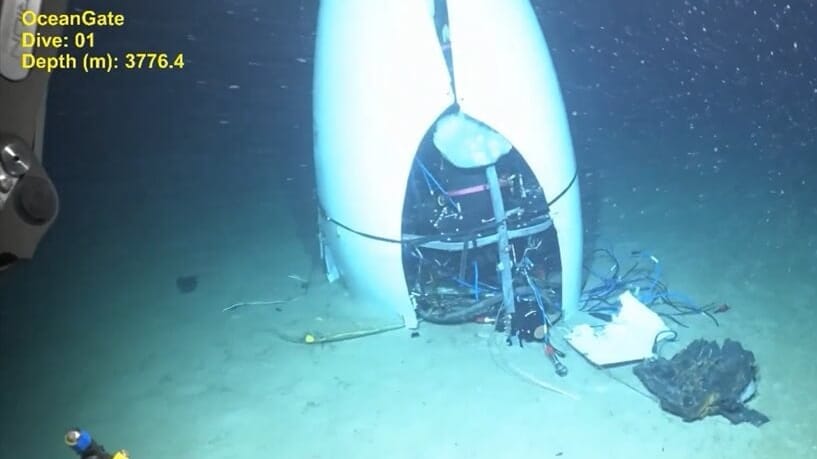
The NTSB has released its annual compendium of prior-year casualty reports, and for 2025, the list includes some of the highest-profile accidents in recent maritime history. NTSB incorporated details and lessons-learned from no fewer than 49 investigations, including the boxship Dali's allision with the Francis Scott Key Bridge in Baltimore, the deadly fire on ro/ro Grande Costa D'Avorio, and the implosion of the private submersible Titan - all major marine casualties that grabbed headlines for months.
These reports are in the public domain and many have been previously covered, but the annual compendium puts them all in one place, in an accessible, abbreviated format for education and public awareness. Some of the smaller events have previously received little notice.
"It is our sincere hope that others will apply the knowledge uncovered by our world-renowned investigators to prevent future marine casualties and save lives," said NTSB Chairwoman Jennifer L. Homendy. "Stakeholders at all levels can voluntarily implement the
lessons learned from our investigations to ensure safety."
This year, NTSB is highlighting a dozen perennial safety factors that operators and agencies need to consider. All will be familiar to the prudent mariner, but the details in the report lay out when and why these factors matter - and why they arise again every year:
• Performing maintenance effectively
• Effective voyage planning and management
• Detecting and containing vessel fires
• Assessing the condition of waterfront infrastructure
• Ensuring watertight integrity
• Accounting for bank effect
• Combating fatigue and distraction
• Properly securing and monitoring lithium-ion batteries
• Mitigating the risks of a loss of electrical power
• Planning and training for emergencies
• Operating in strong currents or heavy-weather conditions
• Operating equipment and machinery systems as designed.
Beyond the big headlines - the cascading power failure aboard Dali, the runaway vehicle fire on Grande Costa D'Avorio, the unique construction and certification practices on the Titan - the report includes dozens of case studies applicable to operators of all kinds. Tug girtings, mistaken steering-control console assignments, undetected gradual flooding events, o-ring failures, engine room fires, parted lines, lithium ion battery cargo fires - casualties on every kind of vessel, all extending for more than 130 pages.
A summary detailing the 12 primary lessons-learned is appended at the end, along with a recommendation to operators to consider how to apply the findings to their own operations.
Its final note is a special alert to land-based firefighters, with lessons learned the hard way. Two shore-based firefighters died and six were injured on the Grande Costa D'Avorio response, and nine more were injured in 2021 on the Hoegh Xiamen. Local first responders need to understand the specifics of marine firefighting, NTSB said, including the right ways to use shipboard structural fire protection and fixed firefighting systems, which do not exist in a shoreside context.
"Fire departments that serve ports can improve the safety of their firefighters and achieve better outcomes when responding to vessel fires by sending personnel to advanced shipboard firefighting training; developing shipboard firefighting standard operational procedures and training personnel on them; and working with local ports to coordinate vessel firefighting response preparedness and training in conjunction with drills," NTSB concluded.

No comments:
Post a Comment