Belgian nuclear power plant negotiations extended
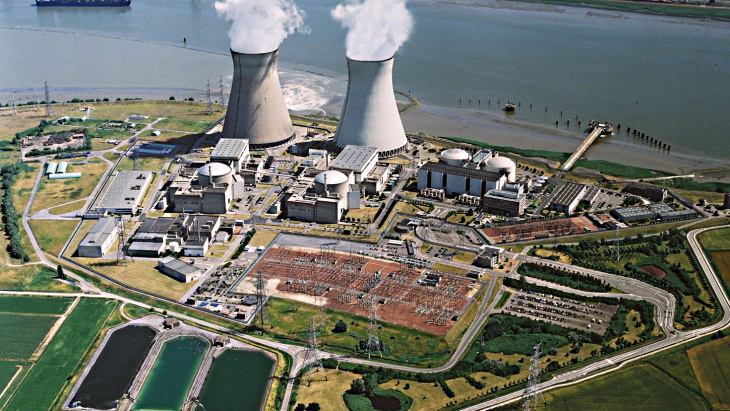
Engie, the French parent of Belgian power company Electrabel, and the Belgian government began negotiations in late April. At that time, they said their Letter of Intent covered a proposed transaction which "encompasses the full scope of the nuclear activities currently owned and operated by Engie and Electrabel and their affiliates, including the complete nuclear fleet of seven reactors, the associated personnel, all nuclear subsidiaries, as well as all associated assets and liabilities, including decommissioning and dismantling obligations". The joint statement said: "This initiative reflects the Belgian Government's strategic decision to assume direct ownership of the country's nuclear assets, in line with its ambition to extend the operation of existing nuclear reactors and to develop new nuclear capacity in Belgium."
The two sides had aimed to conclude the heads of terms by 1 October. However, they subsequently agreed to postpone to 4 November the target date "to allow the parties to finalise their ongoing analyses and discussions".
The Belgian government, Engie and Electrabel have now agreed to extend the target date to 12 December.
"Given the current circumstances, the complexity and scale of the envisaged operation, the parties have agreed to an additional period to continue their discussions," they said in a joint statement. "Indeed, the in-depth discussions held over the past few months between Engie and the Belgian State have led to progress and strengthened mutual understanding of the issues. However, significant differences remain, particularly regarding the valuation of the transaction, and the parties wish to take the necessary time to try to reconcile their positions.
"The parties have therefore given themselves a maximum period of one additional month."
Background
Belgium's federal law of 31 January 2003 required the phase-out of all seven nuclear power reactors in the country. Under that policy, Doel 1 and 2 were originally set to be taken out of service on their 40th anniversaries, in 2015. However, the law was amended in 2013 and 2015 to provide for Doel 1 and 2 to remain operational for an additional 10 years. Doel 1 was retired in February 2025. Doel 3 was closed in September 2022 and Tihange 2 at the end of January 2023. Tihange 1 was disconnected from the grid on 30 September 2025. The fifth closed unit, Doel 2 in the Flanders region, was taken offline for the final time after 50 years of operation and disconnected from the grid in December.
Belgium's last two operating reactors - Doel 4 and Tihange 3 - had also been scheduled to close at the end of 2025. However, following the start of the Russia-Ukraine conflict in February 2022 the government and Electrabel began negotiating the feasibility and terms for the operation of the reactors for a further ten years, to 2035. A final agreement was reached with a balanced risk allocation - equal ownership of Doel 3 and Tihange 4 between the Belgian state and Engie, and the transfer of nuclear waste liabilities from Engie to the Belgian state for EUR15 billion (USD16 billion) payable in two instalments.
For the continued operation of Doel 4 and Tihange 3, Electrabel had to submit an extensive LTO (Long Term Operation) file with safety studies and an action plan to further increase the safety of the youngest reactors. This file was submitted in December 2024 for both units. Tihange 3 was taken offline on 5 April 2025 for a so-called 'LTO overhaul' - an extensive inspection and maintenance period with a view to safe long-term operation of the reactor. After a thorough analysis, regulator FANC and its technical subsidiary Bel V determined that the reactor met the conditions for a safe restart and the 1020 MWe PWR resumed operation on 10 July. Doel 4 was taken offline on 30 June for its LTO overhaul and was restarted on 8 October.
In February 2025, Belgium's new coalition government announced plans to operate the two units for a further 10 years beyond 2035. In May 2025, Belgium's federal parliament voted by a large majority to repeal the 2003 law which set out a phase-out of nuclear power and ban on the construction of new nuclear generating capacity.
Helen to assess environmental impacts of SMR in Helsinki

Helen - which currently produces heat, electricity and cooling in power plants and heating plants in different parts of Helsinki - is aiming for carbon-neutral energy production by 2040. In September 2024, the company launched the first phase of its nuclear programme, aimed at constructing a small nuclear power plant for producing heat for Helsinki city. Its nuclear energy programme will evaluate small modular reactors (SMRs) based on proven solutions, which can be used to produce just heat or both electricity and heat. During the initial phase of its nuclear programme, Helen said it will negotiate with potential partner shareholders, evaluate plant suppliers and determine potential plant sites.
The company has now published its Environmental Impact Assessment (EIA) Programme for the planned plant for public consultation, marking the start of the project's statutory environmental impact assessment procedure in Finland. The purpose of the EIA procedure is to identify and assess the project's impacts on the environment, people, and society, and to provide information to support planning and decision-making. The process also gives authorities, stakeholders, and the public access to information and opportunities to participate.
Possible locations for the SMR plant include the Salmisaari and Vuosaari power plant areas and Norrberget in Östersund. The EIA procedure evaluates five possible implementation options, depending on the chosen plant technology and location. Both a heat-only plant and a combined heat and power plant are to be considered. In addition, an alternative is assessed in which the project is not implemented. The impacts of the construction of a cogeneration plant producing electricity and heat are only being assessed in Vuosaari and Norrberget. Helen said the cogeneration plant requires new connections to be built due to the production of electricity, such as cooling water arrangements and electricity transmission lines. Due to limited space, it is not possible to implement a cogeneration plant in Salmisaari, it said.
The environmental impact assessment will examine the maximum capacities of the plants: the thermal capacity of the heat generating plant is 600 MW (reactor capacity 630 MW) and the thermal capacity of the cogeneration plants is 700 MW and the electrical capacity is 500 MW (reactor capacity 1,400 MW). The characteristics of the final plant will be specified as the design progresses and may be smaller in size.
The EIA will proceed in two stages. The programme stage explains which impacts will be assessed and how the assessment will be carried out. The results of the assessments will be compiled into an environmental impact assessment report, which will be published in 2028. Statements and opinions will be collected on both the EIA programme and the EIA report.
Sweden-based engineering, project management and advisory company AFRY is acting as the EIA consultant for the project and is also supporting Helen's nuclear energy programme with studies related to potential plant locations and technical solutions. Helen said its goal is to make a decision on a potential plant location in 2028.
"Helen wanted to launch the environmental impact assessment as early as possible so that the impacts and implementation conditions of the project can be thoroughly investigated before further planning," said Helen's Nuclear Siting Manager, Melina Laine. "The environmental impact assessment produces key information to support decision-making and permit procedures on the impacts the project will have on the environment and residents of the surrounding area."
The SMR plant would reduce the load on electricity transmission connections and strengthen the energy self-sufficiency of Finland and Helsinki, the company said.
Helen Ydinvoima Oy CEO Pekka Tolonen added: "We are investigating the possibilities of nuclear power for the needs of a growing and vibrant city. With low-emission and weather-independent nuclear power, it is possible to curb fluctuations in energy prices and ensure the availability of energy in all situations."
Initial fuel loading completed at second San'ao unit
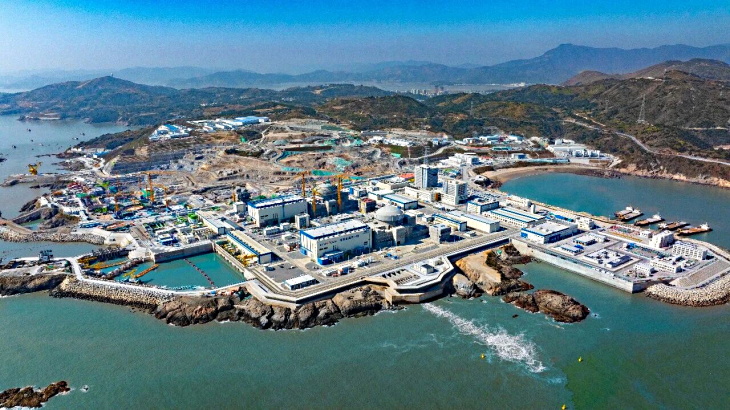
China General Nuclear (CGN) said the milestone, completed on 2 November, marks "the official entry of the unit into a new stage of nuclear-powered operation and commissioning. This is another key step for San'ao Nuclear Power towards the goal of achieving full completion and commissioning of the first phase of the project".
The company noted that the fuel loading operation at San'ao 2 utilised semi-automatic equipment. "After the staff completed the fuel loading sequence programming, the programme was imported into the refuelling machine's control system," CGN said. "Specialised fuel operators then controlled the equipment, sequentially transferring 177 fuel assemblies from the spent fuel pool's fuel racks to the reactor core. Notably, this loading operation also utilised a floating light gun independently developed by CGN, providing underwater illumination for the core operations and effectively ensuring the smooth progress of the loading process."
The background
On 2 September 2020, the executive meeting of the State Council approved the construction of units 1 and 2 as the first phase of the plant. China's National Nuclear Safety Administration issued a construction permit for the two units on 30 December that year and first concrete for unit 1 was poured the following day. The first concrete for San'ao 2 was poured on 30 December 2021.
Unit 1 achieved first criticality in February this year and was connected to the grid in March. The reactor was declared to be in commercial operation on 29 April.
Cold functional tests - which are carried out to confirm whether components and systems important to safety are properly installed and ready to operate in a cold condition - were completed at San'ao 2 in October last year. Hot functional tests - which simulate the temperatures and pressures which the reactor systems will be subjected to during normal operation - were completed in April this year. San'ao 2 is scheduled to begin supplying electricity in 2027.
The San'ao plant is the first nuclear power project in China's Yangtze River Delta region to adopt the Hualong One reactor design.
The construction of two Hualong Ones as units 3 and 4 of the San'ao plant was among plans for 11 reactors approved by China's State Council in August 2024. The first concrete was poured for the nuclear island of unit 3 on 19 December last year. A further two Hualong One units are planned as units 5 and 6.
Upon completion, the project will provide more than 54 TWh of electricity annually to Zhejiang Province and the Yangtze River Delta region, reducing standard coal consumption by more than 16 million tonnes and carbon dioxide emissions by more than 51 million tonnes annually, CGN noted.
The San'ao project marks the first Chinese nuclear power project involving private capital, with Geely Technology Group taking a 2% stake in the plant. CGN holds 46% of the shares of the project company Cangnan Nuclear Power, with other state-owned enterprises holding the remainder.
FANCO expands cooperation with Hyundai E&C on EAGL-1
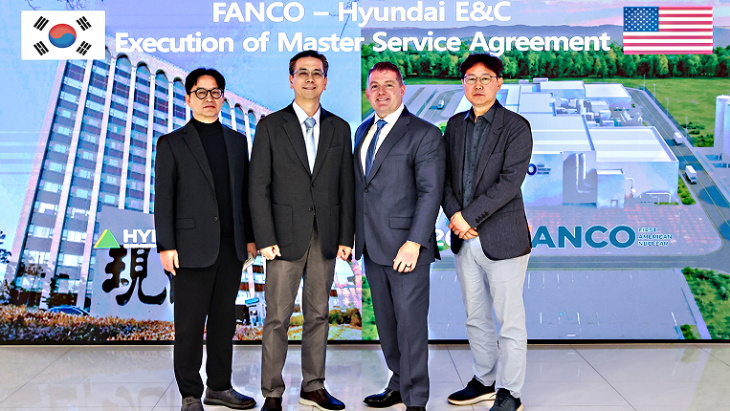
The master service agreement - signed at Hyundai E&C's headquarters in Gye-dong, Jongno-gu, Seoul, on 30 October - advances to the contract stage a framework agreement the two companies signed in July on First American Nuclear Co's (FANCO's) EAGL-1 project. A master service agreement is a basic agreement that predetermines common contractual conditions and responsibilities to be applied for continuous cooperation between companies; subsequently, whenever specific tasks arise, details such as the scope of work, duration, and contract amount are finalised through individual task orders.
EAGL-1 is a lead-bismuth cooled fast-spectrum small modular reactor (SMR) designed for factory fabrication and scalable, multi-unit deployment. It can operate in a closed-fuel cycle in which used fuel is continuously reprocessed and reused. FANCO submitted a regulatory engagement plan for the 240 MWe SMR to the US Nuclear Regulatory Commission in April, marking the start of its pre-application engagement with the regulator.
FANCO says its system will focus on mixed-oxide fuel and other transuranic fuels sourced from existing US Department of Energy stockpiles, although the EAGL-1 system is also capable of operating on high-assay low-enriched uranium. This "fuel-agnostic" approach means it can avoid major supply chain bottlenecks while helping reduce the nation's stockpile of long-term nuclear waste, the company says. Its BridgePower solution offers customers the ability to generate immediate power using off-the-shelf package boilers that feed steam turbines, and later seamlessly transitions to nuclear energy by replacing the boilers with the EAGL-1 reactor, using the same turbine infrastructure, with minimal equipment and modification costs.
Under the framework agreement signed in July, Hyundai E&C and FANCO were to collaborate on the early stages of the project, including the design of the balance of plant (all support components and auxiliary systems of nuclear power generation necessary to deliver energy) for the EAGL-1 nuclear power plant, support for BridgePower solutions, constructability reviews, and modularisation strategies. The partners also planned to explore implementation measures to participate as an engineering, procurement, and construction (EPC) partner in the EAGL-1 Project in the future.
The master service agreement signed between Hyundai E&C and FANCO is valid for five years, but can be extended by mutual agreement. During the contract period, Hyundai E&C will perform tasks related to FANCO's EAGL-1, including: constructability reviews; design and engineering technical consulting; and provision of technical feedback in the construction sector.
"In particular, it is evaluated that the possibility of future participation in the project construction has been increased by incorporating Hyundai E&C's EPC know-how from the design stage," the Korean company said.
In May, FANCO and Canadian engineering firm AtkinsRéalis formed a strategic alliance to establish a scalable framework for deploying FANCO's EAGL-1 SMR and associated fuel facilities, with AtkinsRéalis providing engineering services.
In a statement, Hyundai E&C said: "Hyundai E&C is expanding its global achievements not only in large-scale nuclear power plants but also in the next-generation energy construction market. Through this contract with FANCO, we will lead the commercialisation of the EAGL-1 Project and further solidify our leading position in the US SMR market."
Last month, Hyundai E&C announced the signing of memorandums of understanding with US SMR developers NANO Nuclear Energy and ARC Clean Technology.
Texas SMR plant moves to final permitting stage
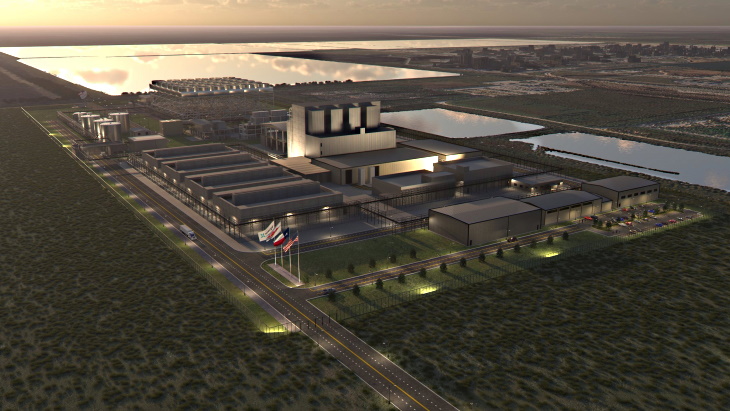
The Nuclear Regulatory Commission (NRC) released its Final Safety Evaluation Report for the Long Mott Generating Station construction permit application on 30 October, after a comprehensive review of the Xe-100 plant's principal design criteria, preliminary design, safety analyses, probabilistic risk assessment, and research and development programmes. The report documents the conclusion of the NRC staff that the proposed plant and site provide the safety basis to begin construction under US nuclear regulations.
The NRC completed its environmental review for the project in May, when it issued an Environmental Assessment and Finding of No Significant Impact. This means that both of the primary reviews needed for the NRC to approve the construction permit application have now been completed, X-energy said. With both primary reviews complete, the project moves to the final stages of the NRC's construction permit review. On its social media channels, the regulator said its followers should "stay tuned for a construction permit announcement soon".
Long Mott Energy, a wholly owned subsidiary of The Dow Chemical Company, submitted the construction permit application for the proposed plant - consisting of four Xe-100 high-temperature gas-cooled reactors, capable of generating a total output of 800 MWt or 320 MWe - in March 2025. The plant would be used to generate electricity and process steam for the Dow Chemical Company's Seadrift Operations, exporting any excess power to the electrical grid: X-energy says this would make it the first grid-scale advanced nuclear reactor at an industrial facility in US history.
The commercial licensing effort for X-energy's technology is supported by pre-application engagement with the NRC dating to 2018, as well as decades of US Department of Energy research on high-temperature gas-cooled reactor (HTGR) technology. The Xe-100 is the first HTGR construction permit application to use the NRC's technology-inclusive, risk-informed, and performance-based licensing framework.
"Licensing a new reactor is earned through the quality of the application and the rigor of the regulator's review," said Dragan Popovic, Chief Global Operating Officer at X-energy. "The NRC's completion of its safety review reflects years of disciplined work by our team and the NRC staff, establishing the foundations to support every Xe-100 application that follows on the path to scale."
Kazakhstan aims for 100-year uranium reserve
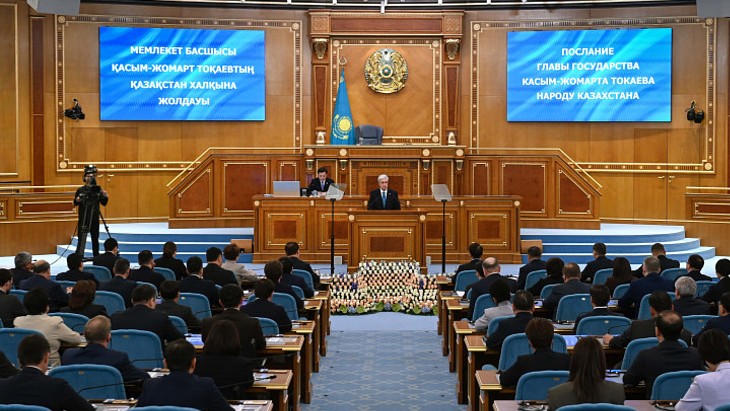
President Kassym-Jomart Tokayev set out the ambition in an address to the nation last week, saying: "As a result of a nationwide referendum, the right decision was made to build several nuclear power plants in our country. We need to start thinking now about how we will supply these stations with uranium raw materials in 50 years, and even beyond.
"The proposal to create a state strategic reserve of uranium for the next 100 years to meet the needs of nuclear power plants in Kazakhstan is very reasonable. I believe that this initiative needs to be comprehensively developed."
On Tuesday, according to the official presidential press service, he was briefed by Kazatomprom's Chairman Meirzhan Yusupov "on the measures to create the State Strategic Uranium Reserve". This includes the company "conducting geological exploration in six areas with a total area of more than 1,000 square kilometres. It is also planned to explore the promising Kyzyltu area with an area of 124 square kilometres".
The official Kazinform news agency reported that the Chairman of the Atomic Energy Agency, Almassadam Satkaliyev, told a committee on economic policy, industry, and energy that the country's development strategy calls for the reserving of at least 150,000 tonnes of uranium by 2050, and work was on-going to develop and approve a conceptual framework for establishing the strategic reserve.
He added: "The strategic reserve is expected to be developed as a comprehensive, multi-level system covering the entire nuclear fuel supply chain, from reserving uranium deposits underground to building physical stockpiles of natural uranium, reserves of ready-to-use nuclear fuel, and other mechanisms."
New nuclear capacity
An intergovernmental agreement setting out the key principles - and export loan financing - for Kazakhstan's first nuclear power plant project - the Balkhash Nuclear Power Plant - was signed in May during Russian President Vladimir Putin's state visit to the country.
Further details of the financing was not included in the official announcements, although Kazinform said that preliminary estimates put the cost of the two units at about USD14.4 billion, with another USD2 billion earmarked for physical security systems and social infrastructure. It reported that the construction start was targeted for 2027, and the aim was for operation of the first unit in 2034.
An engineering, procurement and construction contract was signed by Russia's Rosatom in September for the plant, which is set to feature two of its VVER-1200 pressurised water reactors.
Kazakhstan has been preparing for a nuclear power programme to reduce its reliance on fossil fuels, diversify its energy mix and reduce CO2 emissions for some time. Kazakhstan Nuclear Power Plant, a subsidiary of Kazakhstan's Samruk-Kazyna National Welfare Fund JSC, was set up in 2014. In a referendum in 2024 more than 70% of the 7.8 million people who voted answered 'yes' to the question: "Do you agree with the construction of a nuclear power plant in Kazakhstan?"
In addition to the initial nuclear power plant, China National Nuclear Corporation is lined up to build a second one, at a site also in the Zhambyl district, adjacent to the site selected for the first plant. The government has set a target for nuclear to produce a 5% share of the national generation mix by 2035.
According to the Kazinform report on Satkaliyev's comments, sites are currently being examined for a third nuclear power plant in the country. It said that in terms of technology, "medium-sized nuclear power plants are considered - from 300 to 600 MW ... in addition to electricity production, such plants can provide heat supply and desalination".
Kazakhstan has 14% of the world's uranium resources and has been the world's leading uranium producer since 2009. In 2025 Kazakhstan produced about 25,839 tU, which was about 40% of the world’s total.
Eagle Nuclear Energy to acquire Noble Plains Uranium

Eagle Nuclear Energy (NASDAQ: NUCL) announced Wednesday it has signed a binding Letter of Intent (LOI) to acquire 100% of Noble Plains Uranium (TSX-V: NOBL, OTCQB: NBLXF, FSE: INE0) in an all-stock transaction.

The deal will expand Eagle’s resource footprint beyond Oregon, where it is advancing its Aurora uranium project, which it says is the largest mineable uranium deposit in the US. The company’s land package spans the Oregon-Nevada border, with the mine on the Oregon side and the plant on the Nevada side.
Under the LOI and subject to a definitive agreement, Eagle will acquire 100% of Noble Plains’ issued and outstanding common shares at a deemed price of C$0.125 per Noble Plains’ share. Based on the Exchange Ratio of 0.0167 Eagle shares for each Noble Plains share, the offer price represents a premium of approximately 92% to the closing price of Noble Plains shares on the TSXV on October 29 of C$0.065.
Upon closing it is anticipated that existing Eagle stockholders will hold approximately 95.22% and former Noble Plains shareholders will hold approximately 4.78% of the equity of Eagle, on an issued and outstanding share basis.
Noble Plains is a U.S.-focused uranium exploration and development company advancing two In-Situ Recovery (ISR)-amenable projects strategically located within two of the country’s most prolific uranium districts in Wyoming.
Noble Plains’ ISR portfolio combines brownfield projects covering ~5,965 acres of demonstrated ISR geology in close proximity to established operators.
Noble Plains has an option to acquire an 80% interest in its flagship Duck Creek project located in the Powder River basin of Wyoming that hosts a U₃O₈ resource, reported on a 100% basis, containing 5.32M lbs in the Indicated category and an additional 1.04M lbs in the Inferred category, as reported by Noble Plains under the Canadian NI 43-101 regulatory standards.
Eagle said its technical team believes this current resource estimate represents a relatively small portion of the total resource potential at Duck Creek, as it covers only 2.5 miles of a total 5.25-mile trend, and sits entirely in the shallower of two prospective mineralized formations.
The company said it plans to unlock significantly more value at Duck Creek through the execution of a systematically phased exploration program over the next 12-18 months.
Noble Plains’ Shirley Central is an earlier-stage uranium project that represents additional prospectivity for developing U₃O₈ resources in the strategically prominent Shirley basin of Wyoming.
“This transaction gives Eagle greater scale at a time when demand for U.S. uranium is growing,” Eagle Nuclear Energy CEO Mark Mukhija said in a news release.
“Noble Plains adds established resources in Wyoming and strengthens our portfolio with favorable ISR geology. We believe we can move these assets forward efficiently while we continue to work towards development of an integrated nuclear energy platform combining domestic uranium resources with advanced SMR technology,” Mukhija said.
“We’ve proven we can acquire uranium assets with historical data, move them forward quickly and add value without having to recreate decades of work,” Noble Plains CEO Drew Zimmerman added. “Combining with Eagle gives us more scale and the capital to keep executing that strategy. We have a strong resource at Duck Creek, more opportunity across the portfolio and existing uranium infrastructure all around us.”
Eagle’s stock was down 2.8% on the NASDAQ at Wednesday’s closing. The company has a $123.5 million market capitalization. Noble Plains stock closed the day up 13% on the TSX.

No comments:
Post a Comment