Sunday, October 19, 2025

US court bars NSO Group from installing spyware on WhatsApp

By AFP
October 18, 2025


Image: — © AFP Lionel BONAVENTURE

A US judge on Friday granted an injunction barring Israeli spyware maker NSO Group from targeting WhatsApp users but slashed a $168 million damages award at trial to just $4 million.

District Judge Phyllis Hamilton ruled that NSO Group’s behavior fell short of a “particularly egregious” standard needed to support the jury’s calculations on a financial penalty.

But in the ruling, seen by AFP, she said the court “concluded that defendants’ conduct causes irreparable harm, and there being no dispute that the conduct is ongoing” the judge granted WhatsApp owner Meta an injunction to stop NSO Group’s snooping tactics at the messaging service.

Evidence at trial showed that NSO Group reverse-engineered WhatsApp code to stealthily install spyware targeting users, according to the ruling, which called such access to user data “unlawful.”

The spyware was repeatedly redesigned to escape detection and bypass security fixes at WhatsApp, the court concluded.

The lawsuit, filed in late 2019, accused NSO Group of cyberespionage targeting journalists, lawyers, human rights activists and others using the encrypted messaging service.

Hamilton ruled however that the $168 million damages verdict awarded to Meta earlier this year was excessive.

“There have simply not yet been enough cases involving unlawful electronic surveillance in the smartphone era for the court to be able to conclude that defendants’ conduct was ‘particularly egregious’,” Hamilton wrote in the ruling which was seen by AFP.

“As time goes on, more of a shared societal consensus may emerge about the acceptability of defendants’ conduct.”

Founded in 2010 by Israelis Shalev Hulio and Omri Lavie, NSO Group is based in the seaside high-tech hub of Herzliya, near Tel Aviv.

Media website TechCrunch reported Friday that a US investment group has acquired controlling interest in NSO Group.

The Israeli firm produces Pegasus, a highly invasive tool that can reportedly switch on a target’s cell phone camera and microphone and access data on it, effectively turning the phone into a pocket spy.

The suit filed in a California federal court contended that NSO tried to infect approximately 1,400 “target devices” with malicious software to steal valuable information.

Infecting smartphones or other gadgets being used for WhatsApp messages meant the content of messages encrypted during transmission could be accessed after they were unscrambled.

The complaint said the attackers “developed a program to enable them to emulate legitimate WhatsApp network traffic in order to transmit malicious code” to take over the devices.

The software has been pinpointed by independent experts as being used by nation states, some of them with poor human rights records.

NSO Group has maintained it only licenses its software to governments for fighting crime and terrorism.


Cyberaware: Ransomware attacks continue to rise in 2025


ByDr. Tim Sandle
SCIENCE EDITOR
DIGITAL JOURNAL
October 17, 2025


The number of ransomware attacks has exploded around the world in recent years - Copyright AFP/File PAUL FAITH

Ransomware incidents continued to grow in Q3 2025. As a result, the total number of ransomware cases in 2025 is up by 47% so far compared to last year. These findings come from NordStellar, a threat exposure management platform. The data has been shared with Digital Journal.

Between January and September 2025, 6,330 ransomware cases were exposed on the dark web. A focused look reveals that between July-September 2025, 1,943 ransomware cases were exposed on the dark web, a 31% increase compared to the same period in 2024.

“So far this year’s results are highlighting a worrying trend — the number of ransomware cases continues to grow steadily,” Vakaris Noreika, cybersecurity expert at NordStellar tells Digital Journal.

“The majority of the growth we’re witnessing right now is most likely a direct result of the increase in ransomware-as-a-service (RaaS) that allows cybercriminals to scale their attacks and has lowered the entry barrier for bad actors. Another key factor is the significant increase in the number of active ransomware groups, which has reached an all-time high.”

Noreika explains that the number of active ransomware groups has been consistently increasing over the past five years. In September alone, NordStellar traced back the ransomware incidents to 66 different groups.

Prime targets in Q3 2025

In July-September 2025, 1,943 ransomware cases were exposed on the dark web, a 31% increase compared to the same period in 2024 (1,484 cases). US businesses were the most targeted, accounting for 54% of the 1,274 cases that could be traced to specific victim countries. Canada holds the second spot with 62 incidents, followed closely by Germany (60), the United Kingdom (54), and France (35).

“The findings mirror the results we have been seeing all year,” explains Noreika. “The US is home to numerous profitable public businesses, and this, coupled with strict regulations, makes them an attractive target for cybercriminals. Their potential for high profitability, combined with a higher likelihood of meeting ransomware demands to resolve incidents quickly, increases the chances of success for attackers.”

Ransomware data from July to September 2025 revealed that the manufacturing industry was the most affected by ransomware, with 245 cases, mirroring the results of the previous quarters. It was followed by professional, scientific, and technical services (107), information technology (103), construction (91), and financial services (69).

“Companies operating in the manufacturing industry experience high operational downtime costs, making them more inclined to give in to ransomware demands to resolve the incident as soon as possible. They also often rely on outdated or unpatched software and systems and are more likely to experience supply chain vulnerabilities due to reliance on third-party vendors, partners, and logistics providers,” Noreika adds.

He explains that companies operating in the professional, scientific, and technical services industry often work with confidential customer data, intellectual property, and critical business tools, making them an attractive target for ransomware actors. According to Noreika, businesses in the information technology industry are targeted because they handle large volumes of valuable data and are key components of the supply chain. This means that attacking them can spread ransomware to multiple businesses simultaneously.

Small and medium-sized businesses (SMBs) were the most affected. The data revealed that organizations with up to 200 employees and revenues of up to $25 million experienced the most attacks.

“As in the first half of 2025, SMBs continue to remain the primary targets for ransomware. Ransomware actors usually perceive smaller businesses as lower-risk targets because they might lack a sophisticated IT infrastructure, operate on low cybersecurity budgets, and not have the means to investigate or report attacks to authorities,” says Noreika.

He adds that smaller revenue companies may also be more likely to meet attackers’ demands since the cost of downtime, data loss, or reputational damage from a full-blown ransomware attack could devastate the business financially. As a result, many of them could view paying the ransom as the only option, making them a higher success target for ransomware attackers.
Op-Ed: China vs US trade — The US is always reactive, no clear picture of future planning

A PLANNED ECONOMY, OH MY


By Paul Wallis
EDITOR AT LARGE
DIGITAL JOURNAL
PublishedOctober 17, 2025


China's exports rose more than expected in June, and imports were also up, despite a bruising trade war with the United States, official data showed - Copyright AFP/File GREG BAKER

To say that the China-US trade war is scraping the bowels of tired old trade ideas would be flattery. China’s exports are pressing on regardless.

The US doesn’t seem to realize that there are 8 billion customers for China, not just the 340 million or so in the US. The rest of the world is keeping its trade options with China open. That’s a few trillion dollars of rebuttal to the American approach on all fronts.

Ramping up its chip industry is a way for Beijing to beat restrictions imposed by Washington on exports of the most advanced chips — used to power AI systems — to China – Copyright AFP/File STR

US trade “initiatives” are almost always purely melodramatic responses to China. These responses are usually mechanical, like the ridiculous imposition port fees on shipping. This absurdity is yet another cost added to tariffs and other fundamental trade operations. The net effect is domestic inflation at a time when so many Americans are struggling with the cost of living.

There doesn’t appear to be any clear long-term plan for anything like the sort of absolute global dominance the US used to have.

This is no longer the almost completely crippled world of the late 1940s.

The US has major economic rivals on its own level now. There’s no USSR as a threat.

The cross-trade environment is sending mainly negative signals for US trade policy.

The China/US trade dichotomy couldn’t be starker or blacker and whiter in contrast. The US doesn’t have much on the ball but the AI mythos. China is picking up new markets for its own exports and imports as US tariffs repel imports.

Made in the USA will take at least a decade to even begin to approach the scale and depth of China. Full automation will be very costly. The Chinese are on their second or third generation of automated production.
Robots weld chassis of electric cars at a Zeekr factory in Ningbo, in China’s eastern Zhejiang province – Copyright AFP HECTOR RETAMAL

Which leads to one large, unavoidable question – Where is the US going? At any rate, where does it think it’s going?

Not to overstate the case:

This administration will come and go.

Unworkable trade is usually circumvented, legally or otherwise. See Adam Smith for details.

US offshore money, and there’s a lot of it, can respond from outside the disaster area.

US investment can also move to less neurotic environments.

Large black markets usually appear when any trade is made difficult or too expensive.

If you’re thinking that a big capital vacuum could happen on Main Street and Wall Street, bingo. That’s the problem.

It’s actually a cultural problem rather than purely economic. The good old days have become today’s hallucinations. America is used to lots of free, agile, private capital. The constant casual mention of billions is symptomatic of America’s approach to money. It’s totally unrealistic and arguably beyond idiotic, but the money moves fast and in high volumes.

That capital invariably acts solely in its own interests. That’s where the money is likely to get sucked out of the mainstream. An unstable, chronically underperforming America can’t be a great place to put your money.

Whether the US government spends a lot or not, it’s not the same range of types of expenditure as the big private money. The political idiotscape isn’t much of a place for rational discussion, either.

Let’s be unambiguous, shall we?

The other side is talking about domestic politics. They’re not talking about damage control, rebuilding, or the future of trade. That’s not good enough. Total lack of leadership and even a sense of direction from both sides isn’t a good look.

America isn’t even talking about fixing its huge, entrenched problems. The rust is coast to coast. Obsolescence, in fact, is now being matched by obsolescence in mindsets. China has simply highlighted how few working brain cells are functioning in the US.

History isn’t waiting for America. Neither is anyone else.

__________________________________________________

Disclaimer
The opinions expressed in this Op-Ed are those of the author. They do not purport to reflect the opinions or views of the Digital Journal or its members.


China’s power paradox: record renewables, continued coal


By AFP
October 18, 2025


Clean energy contributed a record 10 percent to China's GDP last year, and drove a quarter of growth, the Centre for Research on Energy and Clear Air estimates. — © AFP
Sara HUSSEIN

Call it the China power paradox: while Beijing leads the world in renewable energy expansion, its coal projects are booming too.

As the top emitter of greenhouse gases, China will largely determine whether the world avoids the worst effects of climate change.

On the one hand, the picture looks positive. Gleaming solar farms now sprawl across Chinese deserts; China installed more renewables last year than all existing US capacity; and President Xi Jinping has made the country’s first emissions reduction pledges.

Yet in the first half of this year, coal power capacity also grew, with new or revived proposals hitting a decade high.

China accounted for 93 percent of new global coal construction in 2024, the Centre for Research on Energy and Clear Air (CREA) found.


China continues to commission high levels of new coal power capacity. — © AFP

One reason is China’s “build before breaking” approach, said Muyi Yang, senior energy analyst at think tank Ember.

Officials are wary of abandoning the old system before renewables are considered fully operational, Yang said.

“Think of it like a child learning to walk,” he told AFP.

“There will be stumbles — like supply interruptions, price spikes — and if you don’t manage those, you risk undermining public support.”

Policymakers remain scarred by 2021–22 power shortages tied to pricing, demand, grid issues and extreme weather.

While grid reform and storage would prevent a repeat, officials are hedging with new coal capacity, even if it sits idle, experts said.

“There’s the basic bureaucratic impulse to make sure that you don’t get blamed,” said Lauri Myllyvirta, CREA co-founder and lead analyst.

“They want to make absolutely sure that they don’t block one possible solution.”

– Grid and transmission –

There’s also an economic rationale, said David Fishman, a China power expert at Lantau Group, a consultancy.

China’s electricity demand has increased faster than even record-breaking renewable installations.

That may have shifted in 2025, when renewables finally met demand growth in the first half of the year. But slower demand played a role, and many firms see coal remaining profitable.

Grid and transmission issues also make coal attractive.

Large-scale renewables are often in energy-rich, sparsely populated regions far from consumers.

Sending that power over long distances raises the cost and “incentivises build-out of local energy capacity,” Fishman told AFP.

China is improving its infrastructure for long-distance power trading, “but it’s definitely not where it needs to be”, he added.

Coal also benefits from being a “dispatchable resource” — easily ramped up or down — unlike solar and wind, which depend on weather.


China is installing solar and wind power at a rate that outstrips the rest of the world combined. — © AFP/File GREG BAKER

To increase renewables, “you have to make the coal plants operate more flexibly… and make space for variable renewables,” Myllyvirta said.

China’s grid remains “very rigid”, and coal-fired power plants are “the beneficiaries”, he added.

– ‘Instrumental’ economic driver –

Other challenges loom. The end of feed-in tariffs means new renewable projects must compete on the open market.

Fishman argues that “green power demand is insufficient to keep capacity expansion high”, though the government has policy levers to tip the balance, including requiring companies to use more renewables.

China wants 3,600 gigawatts of wind and solar by 2035, but that may not meet future demand, risking further coal increases.


Infographic illustrating changes in China’s energy mix, highlighting the growth of renewables, and at the same time showing the continued dominance of coal, according to data from Ember, a UK-based think tank. — © AFP

Still, coal additions do not always equal coal emissions — China’s fleet currently runs at only 50 percent capacity.

And the “clean energy” sector — including solar, wind, nuclear, hydropower, storage and EVs — is a major economic driver.

CREA estimates it contributed a record 10 percent to China’s gross domestic product last year, and drove a quarter of growth.

“It has become completely instrumental to meeting economic targets,” said Myllyvirta.

“That’s the main reason I’m cautiously optimistic in spite of these challenges.”

Microchip factory in Netherlands caught in tussle between Europe, China and US

Dutch authorities have, for the first time ever, invoked Cold War-era legislation to take control of a Chinese-owned microchip factory – prompting backlash from China. The move underlines the intensifying competition between the United States, China and Europe for global leadership in semiconductor technology.


Issued on: 17/10/2025 - RFI

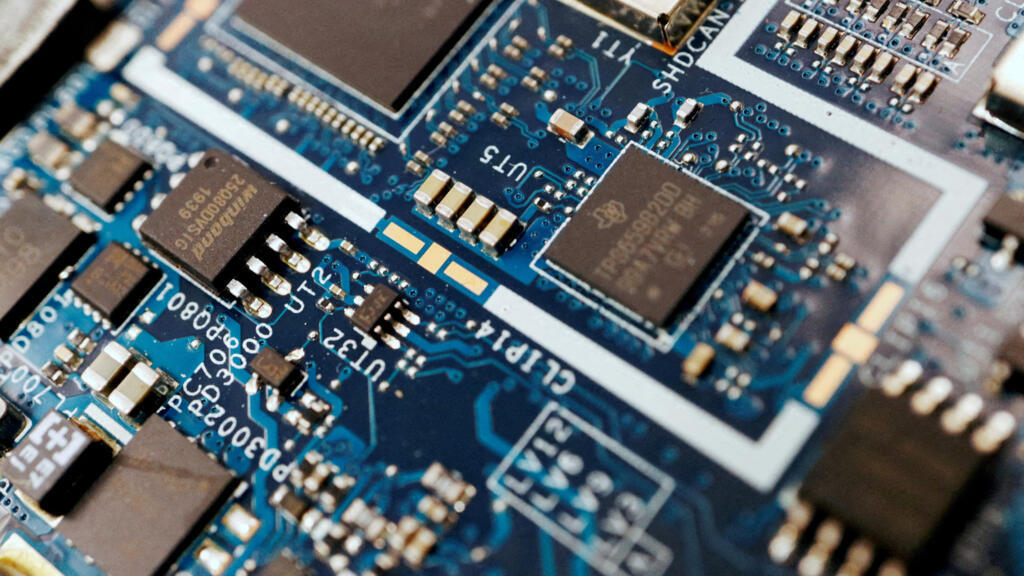
Semiconductor chips are seen on a circuit board of a computer in this picture taken on February 25, 2022. © REUTERS - Florence Lo

By:Jan van der MadeFollow

On 30 September, the Netherlands invoked the Goods Availability Act to take control of Nexperia, a European subsidiary of the Chinese chip giant Wingtech headquartered in the Dutch city of Nijmegen, citing risks to national and European economic security.

Both Wingtech and China’s leading state-backed semiconductor association say they firmly oppose the move, which was only announced this week.

The Goods Availability Act dates back to 1952, a period of post-World War II reconstruction and rising geopolitical tensions that would culminate in the Cold War. The legislation was designed to give the Dutch government authority to manage national resources and safeguard economic stability in times of crisis.

Until now, the Act had never been used.


In a statement on 12 October, the Dutch Ministry of Economic Affairs cited “serious governance shortcomings” and declared its aim to ensure that goods produced by Nexperia – both finished and semi-finished – remain available during an emergency.

Parent company Wingtech called the move "excessive intervention based on geopolitical bias rather than a fact-based risk assessment".

Wingtech also suggested that Nexperia had suffered an internal coup, with "certain foreign members of its management" attempting to forcibly alter the company’s ownership structure under the guise of complying with Dutch directives.

The China Semiconductor Industry Association said in a statement it opposed "the abuse of the concept of 'national security'", as well as "the imposition of selective and discriminatory restrictions" on Chinese-owned companies overseas.

Nexperia declined to comment when approached by RFI, and the Dutch Ministry of Economy did not provide further details beyond its official statement.

But according to Alexandre Ferreira Gomes, a research fellow with Dutch think tank Clingendael, Dutch authorities are concerned "that some of the technology that is developed by Nexperia is being shared or leaked to Chinese counterparts".


This extends the scope in which governments will, from now on, more clearly interfere in private sector companies that operate in "critical sectors".

03:17

INTERVIEW with Alexandre Ferreira Gomes


There are additional concerns. A 2022 investigation by the UK’s Royal United Services Institute revealed that some of Nexperia’s chips had been used by Moscow in Russian military drones and cruise missiles deployed in the Ukraine conflict, despite sanctions in place after Russia’s invasion. Dutch broadcaster NOS later found recent Nexperia microchips on battlefields in Ukraine.

As a consequence, the UK government forced Nexperia to divest its Newport chip manufacturing facility in November 2022 under the National Security and Investment Act. Nexperia expressed shock at the decision, but sold the facility in 2023 to US-based Vishay Intertechnology.

Nexperia admitted in 2024 it was aware of “incidents where our products have ended up in applications which our chips were not developed or sold for, including in countries where we do not do business”.

While the company said it condemned the Russian invasion and complied with international sanctions, Gomes suggests that Western governments are wary.

“China has been supporting Russia’s war efforts in Ukraine,” he said. “By restricting access of Chinese stakeholders or companies to Nexperia, [governments] also hope to limit the military use of these technologies, particularly by Russia.”
Trade wars

Underlying all this is the fierce competition for microchip supremacy – a complex struggle involving China, the US and Europe.

“There is an increasingly overt conflict between China and the US, with the US imposing export controls on certain technologies that cannot be sold to China,” Gomes explained. “China responds with export controls on key materials, such as gallium and germanium, necessary for chip production.”

The Netherlands has been swept up in these tensions before. In 2018, pressure from Washington led the Dutch government to block sales of high-definition scanners produced by a Dutch-owned company, ASML, that produces printers for semiconductor wafers.

Amsterdam also withheld an export licence for the products on the grounds that they fell into the category of dual-use technologies which can serve both civilian and military purposes, and were therefore subject to special restrictions.

Netherlands lands in crossfire in US-China trade war

Last year, the US Department of Commerce’s Bureau of Industry and Security put Nexperia's parent company Wingtech on a blacklist, claiming that the company was helping China to acquire semiconductor factories in the US and in countries allied with Washington in order to improve its own chip industry.

According to Gomes, it is not clear if the US directly pressured the Netherlands into taking over Nexperia, but “given the perception that the position of Nexperia is sensitive, also in relation to the discussion of Russian military applications”, he says, they may have preempted any US action.

Today, things are changing rapidly, according to the researcher. “Just a few years ago, China was considered an important partner for a country like the Netherlands. Now, they are keen to protect what they have left.”

Beijing views the Dutch government’s move as anti-Chinese, further straining already fragile EU-China relations, which have been in a downward spiral since 2021 following Brussels’ suspension of a major investment deal over human rights concerns.

EU puts massive China investment deal on hold


French alternative

While the Netherlands resorts to emergency legislation, France is opting for a different strategy. According to Gomes, Paris has "traditionally been more attentive to sovereignty issues" and has established several funds and initiatives to invest in high-tech startups.

For example, the French public investment bank BPIFrance "intervenes and acquires companies itself rather than allowing them to be taken over by Chinese or American firms", he says.

These policies align with the European Chips Act, which focuses on collaboration within the EU semiconductor ecosystem and building EU-wide resilience, rather than the more defensive approach taken by the Dutch government.
ANOTHER EPSTEIN PAL
UK police 'looking into' claims Prince Andrew tried to smear accuser

London (AFP) – British police said Sunday they were probing claims that Prince Andrew asked an officer to dig up dirt for a smear campaign against his sexual assault accuser Virginia Giuffre.


Issued on: 19/10/2025 - FRANCE24

Andrew has been a considerable source of embarrassment to the monarchy 
© Daniel LEAL / AFP

The development comes after Andrew on Friday renounced his royal title under pressure from King Charles III, following further revelations about his ties to late US sex offender Jeffrey Epstein.

London's Metropolitan Police force said it was looking into allegations in the Mail on Sunday that Andrew tried to smear Giuffre, who accused the prince of sexually assaulting her when she was 17.

Andrew, 65, has long denied the assault accusations, which have caused considerable embarrassment to the British monarchy and seen the prince virtually banished from royal life in recent years.

The Mail on Sunday reported that Andrew passed on Giuffre's date of birth and social security number to his state-funded police protection in 2011 and asked him to investigate.

"We are aware of media reporting and are actively looking into the claims made," a spokesperson for the Met said in a statement emailed to AFP.

Andrew's request came shortly before the publication of a now-infamous photo taken in London appearing to show the prince with his arm around Giuffre's waist, the paper said.

Andrew reportedly emailed the late queen Elizabeth II's then-deputy press secretary and told him of his request to his bodyguard, which the officer is not said to have acted upon.

The newspaper said it obtained the email from documents held by a US congressional committee.

Giuffre, who accused Epstein of using her as a sex slave, says that she had sex with Andrew on three separate occasions, including when she was under 18.

Andrew has repeatedly denied Giuffre's accusations and avoided a trial in a civil lawsuit by paying a multimillion-dollar settlement.

The allegations have received renewed focus ahead of the publication next week of Giuffre's posthumous memoirs.

Giuffre, a US and Australian citizen, took her own life in April. Epstein died by suicide in a New York jail in 2019 while awaiting trial on charges of trafficking underage girls for sex.

Andrew has also given up membership of the prestigious Order of the Garter, the most senior knighthood in the British honours system, which dates to the 1300s.

Giuffre's brother Sky Roberts has urged Charles to go further and strip Andrew of his right to be a prince.

"I think there's more that he could do," Roberts said of the king on ITV News.

© 2025 AFP
Bolivia’s presidential runoff tests how far and fast it veers right

After nearly two decades of one-party rule under the Movement Toward Socialism party and three years of an accelerating currency crisis, Bolivia is lurching to the right. Now, the question is how much change do Bolivians want – and how fast.

Issued on: 18/10/2025 - 
By: FRANCE 24

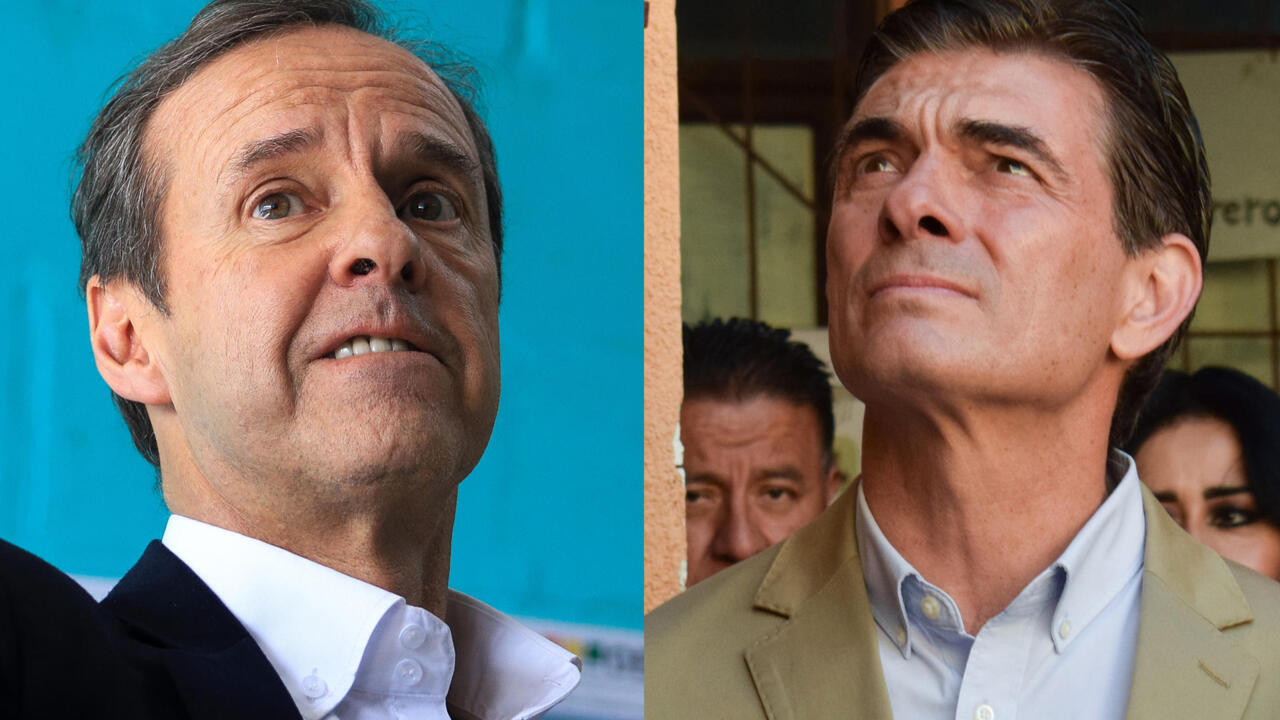
Combo of two photographs featuring Jorge Quiroga (left) and Rodrigo Paz Pereira. © Gabriel Marquez, EFE


After nearly two decades of one-party rule, three years of an accelerating currency crisis and too many months of mind-numbing fuel lines, Bolivia is lurching to the right.

For the first time since Bolivia’s Movement Toward Socialism party, or MAS, rocketed to power in 2005 under the maverick former union leader Evo Morales, Sunday’s presidential runoff pits two conservative, business-friendly candidates against each other. MAS received so few votes in the August 17 elections that it almost lost its legal status as Bolivians expressed a prevailing desire for change.

Now, the question is how much change do Bolivians want – and how fast.

The next president’s immediate task must be to draw dollars into Bolivia and import enough fuel to ease the shortage. Jorge “Tuto” Quiroga, a right-wing former president who has run and lost three times before, envisions a bailout from the International Monetary Fund and a shock fiscal adjustment.


His rival Rodrigo Paz, a centrist senator, says he’ll scrounge up the cash by legalizing the black market, phasing out wasteful subsidies and luring Bolivians' hoarded dollars back into the banking system.

In the midst of the country's worst economic crisis in four decades, several ambivalent voters interviewed Thursday in El Alto, the sprawling city overlooking the capital of La Paz, doubted that either candidate could succeed in digging Bolivia out of its hole.

“It's not going to be solved quickly, it’s going to take time,” said Luisa Vega, a 63-year-old vendor of teddy bears at a frigid open-air market, knitting out of boredom because she had no customers. “Almost no one had confidence in the previous politicians. Who is going to have confidence now?”

Before dawn on the shores of Lake Titicaca, rafts piled high with bread, fuel, cooking oil and eggs slip across the border to Peru, where state-subsidized goods fetch triple what they do at home.

Smugglers in the border town of Desaguadero, two hours from La Paz, make little attempt to hide. Border guards look away.

With the official exchange rate between the boliviano and the dollar all but collapsed, it has become dirt cheap for Peruvians to shop in Bolivia and lucrative for Bolivians to sell in Peru. One Peruvian sol is worth nearly four bolivianos on the black market.

“Crises are opportunities,” said Ronald Vallejos, who travels twice a week to hawk flour and sugar in Peru. Dollars are sold at a steep premium so Vallejos arrives with stacks of bolivianos to trade for soles, later stashing the bills under his mattress and floorboards.

Because of strict price controls and dollar scarcity, Bolivia can't scrape together enough cash for imports. Food shortages have become a part of life. Queues snake outside subsidized bakeries. Empty shelves send shoppers on scavenger hunts for oil and rice.

Authorities blame smugglers for the scarcity and sky-high prices of staples – even as the black market is more a consequence of the shortages than the cause.

“Gratuitous spending, speculation, and smuggling are worsening the situation, increasing prices by up to 300% in some cases,” said Jorge Silva, the deputy minister of consumer protection. It’s a tough job in this bankrupt country; Silva said he was recently chased out of a street market when he tried to monitor prices.

Paz, 58, is struggling to strike the balance between appeasing Bolivians' desperation for change and courting working-class voters, many of whom are disillusioned MAS supporters who see Quiroga's austerity as a recipe for recession.

Rather than focusing on foreign investors as the key to development, Paz hopes to uncover hidden cash by cracking down on corruption and formalizing the black market. He proposes legalizing smuggled vehicles, offering tax amnesties to Bolivians who declare their stashed dollars and allowing the cross-border smugglers to register as vendors.

“There will be no more smuggling, everything will be legal,” he declared at his closing campaign rally Wednesday.

Paz's running mate, Edman Lara, has emerged as the real star of the campaign, helping the senator pull off a shock victory in the first round of elections. He captured first place after weeks of polling far behind Quiroga.

Ahead of Sunday’s vote, Quiroga is again leading opinion polls.

The underdog status has helped endear the privileged son of former president Jaime Paz Zamora (1989-1993) to the public.

“Everyone is against him, the mainstream media, the pollsters, they want him to lose,” said Salomé Ramírez, 37, waiting at a bus stop in downtown La Paz. “That means he gets my vote.”

Captain Lara, as the vice presidential candidate is known, became something of a folk hero a few years ago after being fired from the police for denouncing corruption in viral TikTok videos.

The ex-officer has no political experience and an awkward habit of making populist promises – like universal income for women – in rousing speeches that contradict Paz's goal of restoring fiscal order.

Although Paz has walked back some of Lara's more expensive proposals like fivefold increases to pensions, they both insist on balancing tough, free-market reforms with MAS-style social protections.

“Paz and Lara are visiting places that other presidents haven't, they're reaching the poorest people who need their help the most,” said José Torres Gómez, a 28-year-old student in El Alto.

As the country's inflation rate hits its highest level since 1991, Quiroga, 65, is betting that Bolivians want whatever the complete opposite of MAS looks like.

“We will change all the laws,” he told supporters at his final campaign rally. “We will change Bolivia.”

If elected, Quiroga – who graduated from Texas A&M University and worked for IBM in Austin, Texas – would trigger a major geopolitical realignment in a country that for the past two decades has shunned the US and cozied up to China and Russia.

Last month, Quiroga flew to Washington for what he said were meetings with “people who can get us out of this rut,” promising progress in talks on a $12 billion bailout from the IMF, Inter-American Development Bank and World Bank that would restore public confidence in the boliviano and allow Bolivia to immediately source more fuel.

At rallies, he pitches the potential windfalls from foreign investment in Bolivian gas exploration and lithium production, a contentious issue due to Indigenous communities’ opposition to water-intensive extraction on their lands.

Some Bolivians, wary of American meddling in their affairs since the bloody US-led war on drugs, balk at these gestures. Others feel reassured by Quiroga's commitment to 180-degree change and speak of Paz and Lara as the latest incarnation of ruinous left-wing populism.

“There are big differences between the candidates," said Antonio, 58, a struggling textile importer who declined to give his last name for fear of reprisals from the outgoing government. “With Paz and Lara, we’ll continue the past 20 years of economic disaster.”

(FRANCE 24 with AP)

Mexico: Giant monsters dazzle crowds on Alebrijes parade, ahead of Day of the Dead

Giant monsters, local craftsmanship, and colorful folk costumes were on full display in Mexico City for the 17th edition of the Alebrijes Parade. The fantastical parade originated from a fever dream, but has now become a staple of the Mexican cultural calendar. The event kicks off ‘El Dia de los Muertos’ season of festivities in Mexico. 


Story by Emily Boyle.


Ivory Coast opposition slams protest ban ahead of controversial presidential poll

Opposition parties and NGOs in Ivory Coast have condemned a two-month ban on political rallies announced late Friday, just a week before a controversial presidential election from which two top opposition figures have been excluded as incumbent President Alassane Ouattara seeks a fourth term in office.


Issued on: 18/10/2025 
By: FRANCE 24


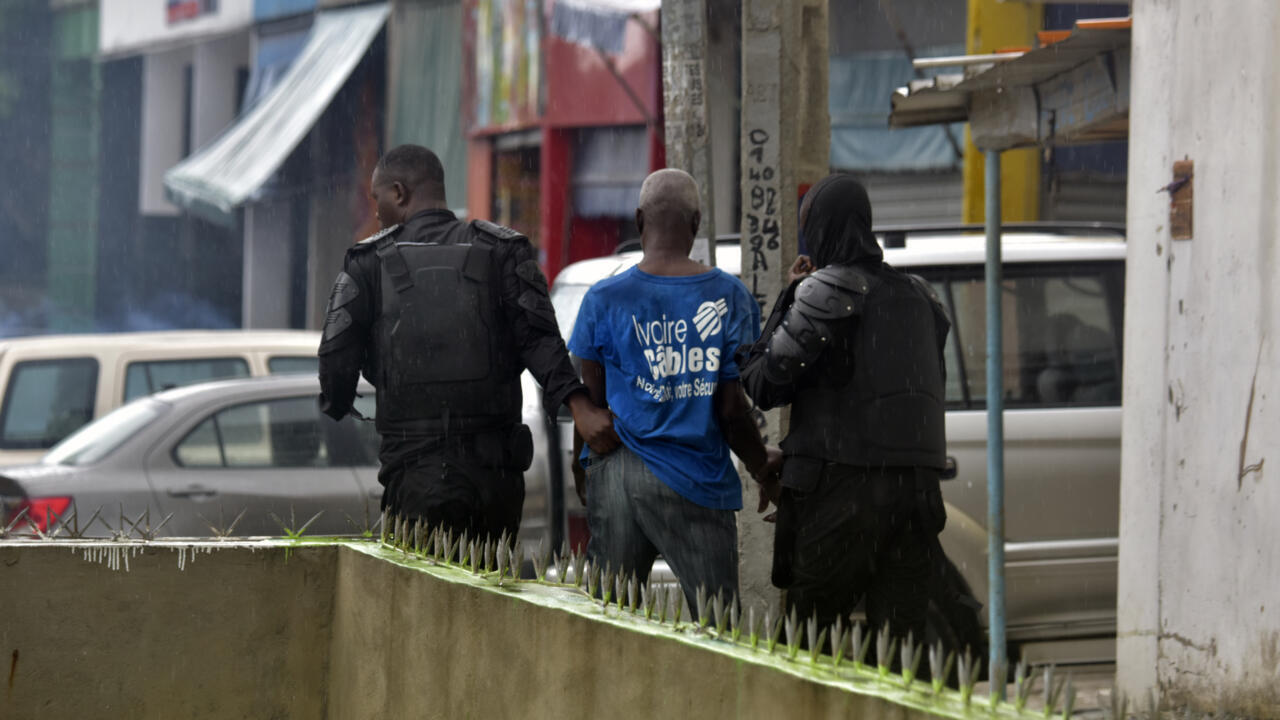
Police arrest a protester during clashes with opposition supporters in Abidjan, Ivory Coast, Saturday, October 11, 2025. © AP


Ivorian opposition parties and NGOs slammed a ban on political rallies just a week before a controversial presidential election in which two top opposition figures have been barred.

The two-month ban, announced late Friday by the interior and defence ministries, applies to all political parties and groups except the five candidates officially approved to contest the October 25 vote.

It comes amid rising tensions following the exclusion of opposition heavyweights Laurent Gbagbo, a former Ivory Coast president, and Tidjane Thiam, who earlier headed Swiss banking giant Credit Suisse, from the race.

Incumbent President Alassane Ouattara, in power since 2011, is vying for a fourth term in office.

TÊTE À TÊTE © FRANCE 24
11:01


The opposition coalition Common Front, made up of Gbagbo's African Peoples' Party – Ivory Coast (PPA-CI) and Thiam's Democratic Party of Ivory Coast (PDCI), has denounced Ouattara's bid for a fourth term.

"Saying no to the fourth term is not a crime," said Common Front spokeswoman Habiba Toure in a video late Friday.

"We are not calling for war – we want democracy. Do not let yourselves be intimidated," she said.

Hundreds of people rallied at protests in Abidjan last weekend, with security forces dispersing crowds. Sporadic unrest, including road and school blockades, has been reported in several regions.

On Saturday, the NGO Turn the Page called protest bans "blatant violations of the right to peaceful assembly".

It added that it "condemns police oppression against peaceful demonstrations" and "urges the government to reengage in political dialogue".


The Ivorian League of Human Rights (LIDHO) meanwhile called on the authorities to "avoid any excessive use of force".

Around 700 people have been arrested over the past week, according to public prosecutor Oumar Braman Kone, who said phone data revealed calls for attacks on public institutions which he described as "acts of terrorism".

On Thursday, 26 protesters were sentenced to three years in prison for public order offences, and another 105 are due to stand trial next week.

Amnesty International urged authorities to stop "repressing" protests, but Justice Minister Sansan Kambile defended the crackdown, citing national security concerns.

Ouattara faces four challengers, including former minister Jean-Louis Billon and ex-first lady Simone Gbagbo.

(FRANCE 24 with AFP)


Bangladesh probes cause of massive airport fire


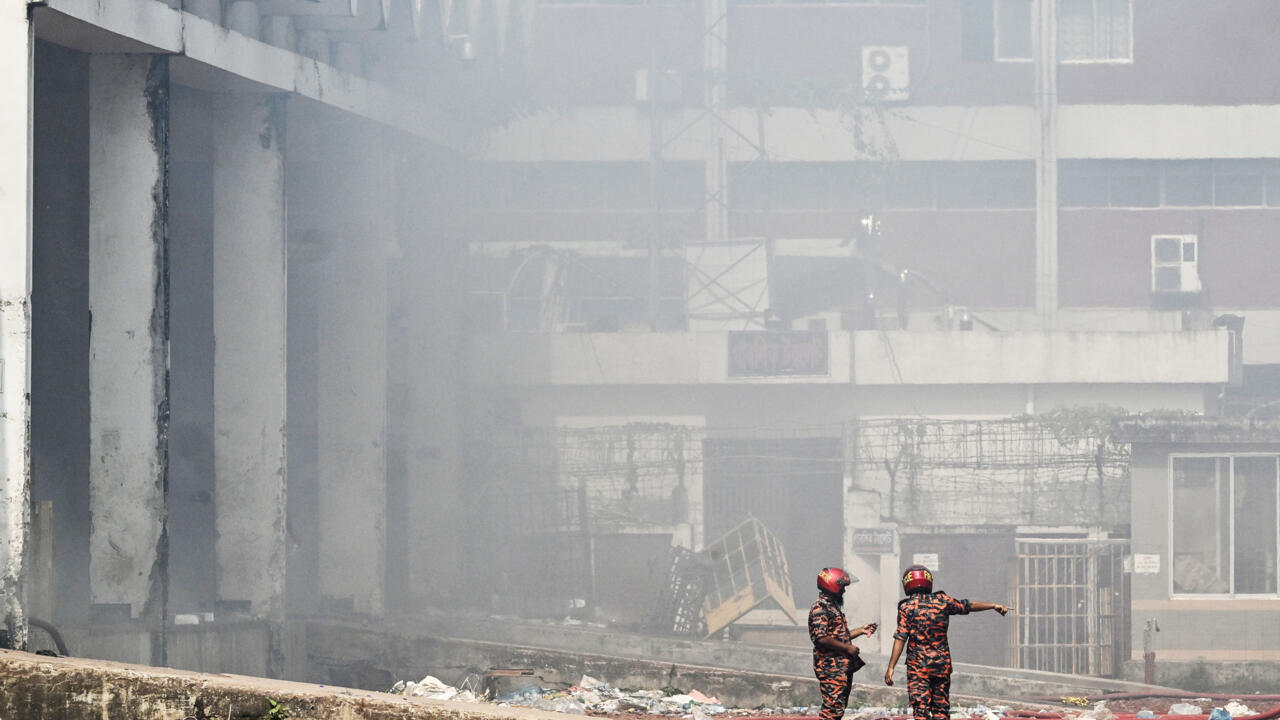
Dhaka (AFP) – Bangladeshi traders on Sunday assessed heavy losses after a devastating fire tore through the cargo complex of the country's main international airport, as the government opened an investigation into possible arson.


Issued on: 19/10/2025 - FRANCE24


J
Firefighters inspect the fire-damaged cargo terminal of Hazrat Shahjalal International Airport in Dhaka on October 19, 2025, a day after the blaze © Munir UZ ZAMAN / AFP


Firefighters had brought the blaze under control and flight operations resumed late Saturday, airport executive director S. M. Ragib Samad told AFP, after thick black smoke swept across the runway, forcing authorities to briefly suspend flights.

But Hazrat Shahjalal International Airport's cargo complex -- which stores fabrics, garment accessories, pharmaceuticals, chemicals and other imports -- was left in ruins.

The National Board of Revenue (NBR) said it had begun assessing the damage, with business groups warning that direct losses and subsequent impacts on trade could run into the millions of dollars.

Bangladesh is the world's second-biggest garment manufacturer, and textile and garment production accounts for about 80 percent of exports.


"We have started our assessment," NBR official Moshiur Rahman told AFP.

The fire was intense, with 37 firefighting units and security forces battling the flames for hours.
'Resolute response'

Smoke was still rising from the charred remains on Sunday.

"The fire spread to every corner -- I don't know if any consignment could escape," said one exhausted firefighter, whose uniform was greyed and hands blackened.

"We were supposed to deliver the consignments to our clients today. All burnt to ashes, I guess," said importer Anand Kumar Ghosh, who said he had lost 52 consignments.

Moinul Ahsan, a senior official at the Directorate of Health, said four people had been taken to hospital with minor injuries.

The cause of the blaze was not immediately known.

But the government said it was aware of growing public concern following a string of major fires in recent days -- including in Chittagong's export processing zone and a chemical and garment factory in Dhaka, where 16 people were killed.

The government said the security services were investigating all incidents "thoroughly", and warned that "any credible evidence of sabotage or arson will be met with a swift and resolute response."

"No act of criminality or provocation will be allowed to disrupt public life or the political process," it said, urging calm.

The South Asian nation of 170 million people has been in political turmoil since Sheikh Hasina was ousted as prime minister by a student-led revolt in August 2024, and is gearing up for hotly contested elections slated for February 2026.

"If these fires prove to be acts of sabotage, and their aim is to sow panic and division, they'll succeed only if we allow fear to overtake our reason and our resolve," the statement added.

"Bangladesh has faced many challenges before, and together we will face any threats to our new democracy with unity, calm and determination. We have nothing to fear but fear itself."

© 2025 AFP
Jammu And Kashmir Grows, But Peace Remains Fragile – Analysis


October 19, 2025

By Sagartirtha Chakraborty and Ankita Chakraborty


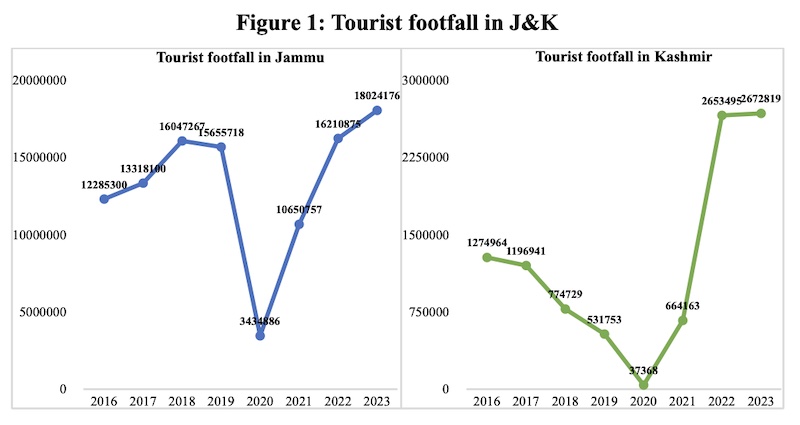
‘Paradise regained, or peril persisted?’ – Widely regarded as the ‘Paradise of Earth,’ Jammu and Kashmir (J&K) has found itself at the heart of a sharp paradox in recent years. The abrogation of ‘Article-370’ in 2019 is pitched as a new economic dawn for the region with promises of integration, development, and an open invitation to the rest of India. This has also led to a record influx of tourists in the region, crossing 15.5 million per annum for the first time since independence.


But beneath this surge, lies an unsettling reality that refuses to fade – the shadow of extremism that continues to induce fear throughout the valley. While both state and central governments have stepped-up efforts to bring stability, the larger question still lingers: ‘Can peace thrive when the guns haven’t fully fallen silent?’
Tourism and economic resurgence of J&K

In the years following the revocation of Article-370, tourist arrivals in J&K skyrocketed from a mere 1.19 million in 2011 to over 23.5 million in 2024. Kashmir alone accounted for nearly 15 percent of the total share in 2024. From Gulmarg to Sonmarg, Pahalgam to Patnitop; the tourism and hospitality sectors have flourished.
Source: Authors’ compilation from Government of J&K

This has resulted in a more than two-fold increase in the tourism-led employment figures from 1.78 million to 4.40 million during 2011-2024. Targeted schemes like‘Sustainable Promotion of Emerging Alternative Destinations’ have also been introduced to boost the tourism industry of the region, under which Rs.3.9 billion has been allocated. Such steps are also expected to push the tourism sector’s contribution in J&K’s GDP from current 7 percent to 15 percent by 2029-30.

Moreover, unemployment has dropped in the region by 0.6 percent after the abrogation of Article-370. This is aided by the establishment of over 40 thousand new business units under various self-employment schemes, and formal registration of over 3.53 million unorganised sector workers on the ‘E-Shram Portal’ till 2024. Complementing this, government programmes like ‘Mission Youth and Mission Yuva’ is also launched to establish 0.14 million new enterprises, which is likely to generate over 0.42 million jobs within next five years. With per-capita income rising at a rate of 8.3 percent, outpacing even Punjab and Delhi, and a projected state GDP growth rate of 7.06 percent in 2024-25, J&K’s economic growth is on an upward trajectory.
A tamer valley?

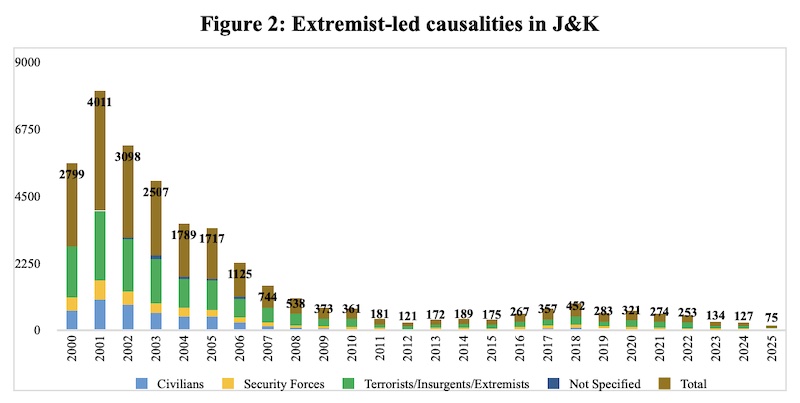
The numbers on militancy tell a cautious tale of hope. The valley has witnessed a noteworthy decline in the total number of extremist-led causalities since the abrogation of Article-370, which has dropped from 2799 to 283 during 2000-2019, and then further fell down to 75 by 2025. The region averaged 1063 casualties annually, including 241 civilians and 171 security personnel between 2000 and 2019. However, these numbers have sharply plunged to an average of 197, marking a decline of nearly 81 percent post-abrogation. Fall in both civilian and security force casualties by over 80 percent reflect an improvement in the region’s security landscape.


Source: Authors’ compilation from South Asia Terrorism Portal

We should note that these numbers are more than just statistics. They are the outcome of Indian government’s assertive zero-tolerance approach, aiming at dismantling the militant ecosystem in J&K through sustained counter-insurgency operations, crackdowns on cross-border militant financing, intensified cordon-and-search operations, and strategic seizure of properties linked to extremist networks. Yet, isolated attacks, though less frequent, continue to haunt the state’s tourism, disrupt livelihoods, and deters economic growth by mounting waves of distress among the mass; making it essential for the government to double down on both counter-extremism and inclusive development.
The aftermath of Pahalgam massacre

The targeted Pahalgam massacre of April 2025 in the Kashmir region claimed 28 lives, including several foreign nationals, leaving behind a trail of grief and disbelief. What unfolded was not just an assault on civilians, but on the fragile sense of normalcy that Kashmir had painstakingly rebuilt over the past few years. Within days, the Valley’s blooming tourist season collapsed with hotel bookings being cancelled on mass, and tourist footfall being plunged by almost 90 percent.

Yet, amid the shock, the response was immediate and assertive from the Indian armed forces. They have successfully launched ‘Operation Sindoor’ and ‘Operation Keller’ within days from massacre. These counter-operations have not only neutralised cross-border extremist camps and infiltration module; but also have restored a sense of control and public confidence in the region’s security framework. This swift response symbolises resilience – a refusal to let terror dictate the rhythm of everyday life in Kashmir once again.
A way forward…

The decline of tourist footfall in Kashmir, immediately following the Pahalgam massacre underscores how fragile recovery remains in the face of violence. While counter-extremist operations have shown reckonable success, with such horrific incidents plummeting from over 2700 to 57 in the last 25 years, yet Kashmir’s recovery is still a tightrope walk, which demands strengthening of local police intelligence units and deploying drone surveillance across high-risk zones.

Equally important is the counter-radicalisation drive in border schools and madrassas, as a substantial share of new tech-savvy educated militant recruits come from vulnerable age groups from these districts. This may be accomplished by bolstering youth employment through tourism-linked entrepreneurship, effective PR-campaigns, and faster rollout of industrial schemes to dry-up recruitment pipelines for insurgents.

With extremist incidents at a 25-year low and infrastructure, investment, and education on the rise, J&K stands at the threshold of a historic transformation. The promise is real, but so is the peril. However, if the guns can fall silent for good, not just in papers, but in reality; then the vision of an extremism-free, prosperous J&K may no longer be a distant hope. Rather, it may well be the next success story of India.

About the author

Sagartirtha Chakraborty

Sagartirtha Chakraborty is a Ph.D. Research Scholar in the Department of Economics at Cotton University, India. He has authored a book, titled ‘Research in Social Science: A Beginners’ Handbook’ and his peer-reviewed articles are published various journals and platforms, including in the London School of Economics & Political Science, Leiden Madtrics, Space & Culture, Statistical Atlas Assam, and over 15 edited volumes.