US announces landmark nuclear deal with Saudi Arabia

The Trump administration did not release details of the deal, but the framework could potentially provide Saudi Arabia with a facility that would allow it to enrich uranium.
The United States and Saudi Arabia signed a nuclear agreement that would allow the kingdom to develop a civilian nuclear programme.
The Trump administration did not release details of the deal, but the framework could potentially provide the kingdom with a facility that would allow Saudi Arabia to enrich uranium.
US Energy Secretary Chris Wright and Saudi Minister of Energy Abdulaziz bin Salman formally signed the agreement, along with "bilateral safeguards" against non-proliferation.
“These agreements reflect our two nations’ shared commitment to strengthening US-Saudi commercial relations, delivering prosperity at home and security to our allies abroad,” Wright said in a statement.
“Rest assured, these agreements uphold the highest standards of nuclear safety and nonproliferation, while relying on the world’s best nuclear technology and scientists, designed right here in the United States.”
Uranium enrichment can produce fuel for nuclear power plants, but the same technology can also be used to build nuclear weapons. Because of this, US lawmakers from both parties have voiced opposition to the idea of a civilian nuclear project for Saudi Arabia.
Earlier, Secretary of State Marco Rubio sought to head off emerging criticism when asked by reporters about the risk of the agreement.
“The US is not going to reach any agreement with any country in the world that leads to the risk of proliferation,” he said, while travelling in the Philippines on Wednesday.
The deal is expected to last 30 years and would involve using American technology to develop the programme.
It does not include the International Atomic Energy's Agency's (IAEA) Additional Protocol, which would allow for more monitoring, inspections and verification, according to a person familiar with the case.
The deal will now be sent to Congress for review, where it is expected to face some opposition. However, Trump's Republican party controls both chambers, and so lawmakers are unlikely to prevent its implementation.
The announcement of the agreement comes as the US, alongside with Israel, launched a war against Iran that began in part over Washington's concerns over Tehran's nuclear capabilities. Iran has repeatedly insisted its nuclear enrichment programme is peaceful.
'No enrichment!': Saudi deal reportedly
threatened by Trump's sudden Truth Social
demand
Tom Boggioni
July 23, 2026
RAW STORY
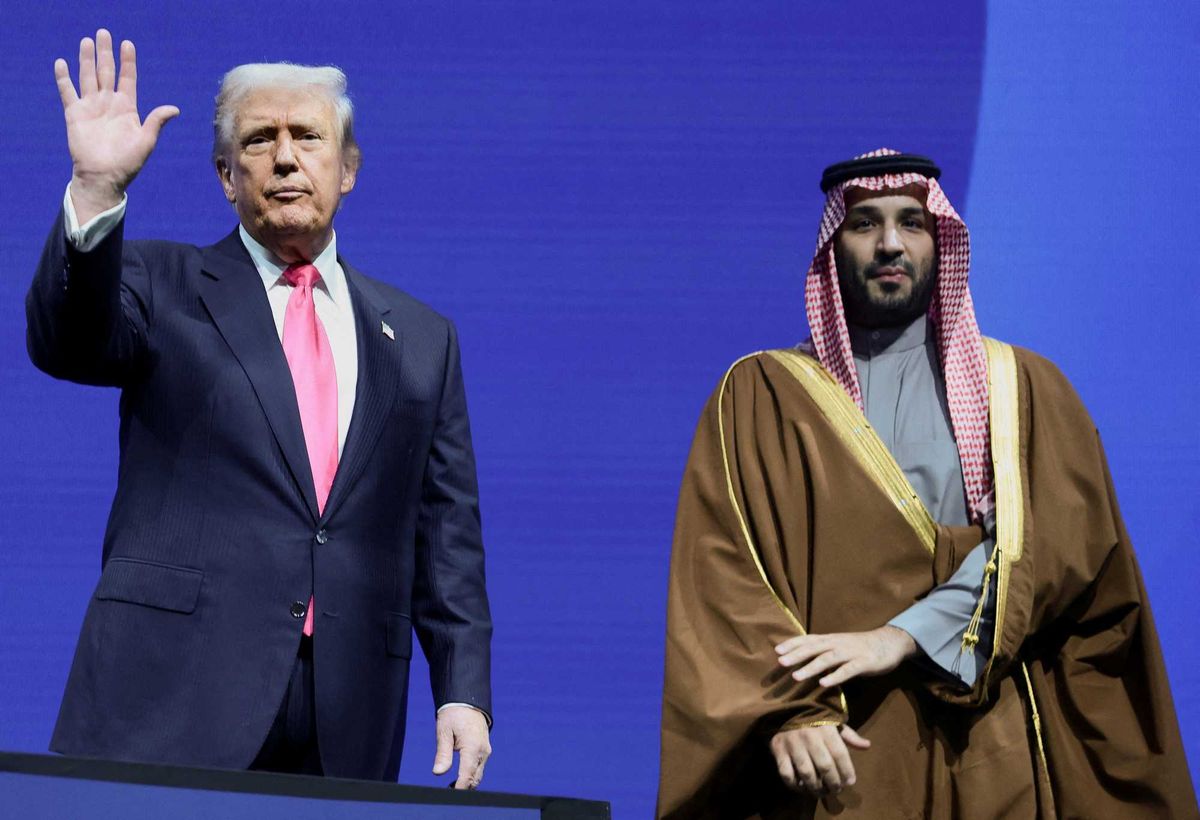
President Donald Trump and Crown Prince and Prime Minister Mohammed bin Salman of Saudi Arabia attend the U.S.-Saudi Investment Forum in Washington, D.C., on Nov. 19, 2025. REUTERS/Evelyn Hockstein
President Donald Trump's controversial nuclear deal with the leadership of Saudi Arabia is now in doubt after the president threw the Middle Eastern nation a curve on Thursday morning.
Trump abruptly inserted a bombshell condition into a nuclear agreement that was supposedly finalized just 24 hours earlier: Saudi Arabia must normalize relations with Israel to receive U.S. nuclear technology, The Washington Post is reporting.
The move has thrown the entire agreement into chaos, according to the report.
Trump announced via Truth Social that the civil nuclear deal—which would allow Saudi Arabia to develop nuclear power plants and pursue enrichment programs—is "totally subject" to Saudi Arabia joining the Abraham Accords, the initiative from his first term designed to normalize Israeli-Arab relations.
“The Civil Nuclear Deal (There will be no enrichment of material!) being made between the United States Department of Energy and Saudi Arabia, which pertains only to non-military use such as the ones that Iran and UAE (and others) already have, will be approved,” Trump wrote on Truth Social Thursday.
“But is totally subject to Saudi Arabia joining the very respected and successful Abraham Accords.”
The problem is monumental: Saudi Arabia has consistently refused to join the Abraham Accords and shows no signs of capitulating now.
According to the Post, "That attaches a major string to the deal. Saudi leaders were nearing a normalization agreement with Israel in 2023, just before the Hamas attack on Israel on Oct. 7 of that year. Since then, however, talks have been paused. Saudi leaders have said they would want guarantees of an eventual Palestinian state, and Saudi public opinion has soured toward Israel because of its handling of Gaza. Any nuclear deal tied to Saudi-Israel diplomatic breakthroughs has seemed remote."
The nuclear technology deal itself has generated controversy in Congress. Lawmakers worry that expanding enrichment programs across multiple nations increases proliferation risks and could eventually result in more countries possessing nuclear weapons capabilities.
Trump's sudden new condition transforms an already contentious agreement into a political landmine—potentially derailing both the nuclear deal and his broader Middle East diplomatic agenda.
Nicole Charky-Chami
July 23, 2026
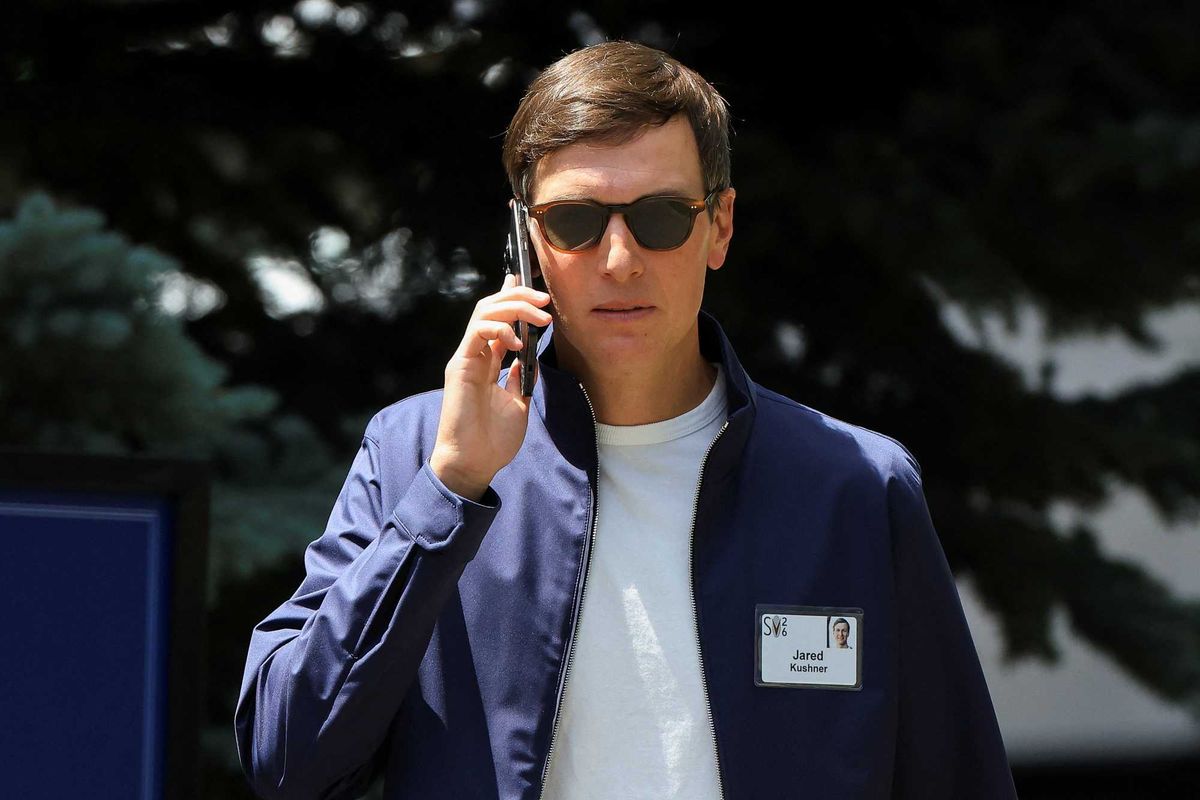
Jared Kushner attends the annual Allen and Co. Sun Valley Media and Technology Conference at the Sun Valley Resort in Sun Valley, Idaho, on July 9, 2026. REUTERS/Brendan McDermid
White House spokesperson Karoline Leavitt should be fielding questions about Jared Kushner's $2 billion tie to Saudi Arabia, a media expert fumed Thursday.
Judd Legum, founder of the Substack Popular.info, took to social media to share his disgust after Leavitt was grilled about President Donald Trump's controversial nuclear deal at a White House press conference.
His frustration appeared in the form of a list of news outlets that covered the US-Saudi nuclear deal without mentioning that Jared Kushner, Trump’s senior White House aide, is getting paid by the Saudi government."
Legum's list included The Wall Street Journal, The New York Times, Associated Press, Reuters, CNN, NBC, ABC, CBS, The Guardian, Semafor, The Washington Post, Fox News, The New York Post, BBC, Newsweek, and MS NOW.
Kushner launched his private equity firm Affinity Partners shortly after leaving the White House in 2021 after Trump's first administration, reports show.
The Florida-based company received a $2 billion investment from Saudi Arabia's Public Investment Fund, chaired by Crown Prince Mohammed bin Salman, multiple reports show.
The deal drew scrutiny from ethics watchdogs given Kushner's role shaping U.S.-Saudi relations, including his involvement in defending MBS after the killing of Washington Post journalist Jamal Khashoggi.
On his Substack, Legum dubbed the coverage, "A media blackout for Kushner’s corruption."

No comments:
Post a Comment