I Learned Many Lessons – Essay

Photo Credit: Andrea Piacquadio, Pexels
November 25, 2026
By Dr. K S Parthasarathy
Key Takeaways:
The author recounts growing up in Arpookara, Kerala, education at St Ephrem’s and Maharajas College, and a 52-year career in India’s atomic-energy establishment, including roles as Secretary of the AERB and Raja Ramanna Fellow.
He concludes that a subset of Gen Z shows genuine interest in oral history, genealogy and learning from older generations rather than dismissing earlier experience as obsolete.
Can I reset time to recover the past and to relive the bygone era
Last week, I had a very unexpected, pleasant experience. That changed my overall impressions about Gen Z! I came across a 21-year-old engineering graduate student. We exchanged some pleasantries. He came to vote in the recent election in the USA. He did not talk about the election, though I was keen to hear about it!
Most of my generation often exaggerate their own achievements and do not realize that others have no interest in them. We do not spend a minute on introspection. Most of us had the luxury of time. Probably, did not live in a very competitive world. The present conditions for GEN Z are very different
What is the definition of Gen Z
Gen Z is the generation born between about 1997 and 2012, known for being digital natives who grew up connected to the internet and social media.
· They tend to value diversity, inclusion, authenticity, and social awareness.
· Many are practical about careers and finances, having grown up during periods of economic uncertainty.
Interview request from my newfound Gen Z
The member of the Gen Z expressed his desire to interview me. I agreed as I believed that I could learn from him. Indeed, I found many of my shortcomings and learnt valuable lessons from him,
He was very professional and sent me 36 questions on my childhood, love and family, being a dad, being a grandfather and my future.
I realized my frailties
I realized my frailties; I could not cogently answer many of his questions; particularly the intensely personal questions. I realized that I may not have spent quality time with my family, children, grandchildren. You cannot reset time to recover the past and to relive the bygone era! I answered him as accurately as possible.
What was your childhood home like?
I grew up in Arpookara, a small village in Kottayam district, Kerala: emerald-green paddy fields swaying in the breeze, coconut palms rustling overhead.
My mother was a home maker. My father retired as the Manager of a temple belonging to Travancore Devaswom Board. I have a sister Geetha (Rtd HighSchool teacher,) and four brothers. Hariharan Nair (retd Professor of English) Ramachandran (Business), Sanalkumar, S. Kumar (Social worker, business)
One story from the village stayed with me forever. A grand old lady named Smt. Kathyayini Amma spent Rs 16,000/-(then a princely sum, Rs1.3 million in 2020 Rs) to dig a public well in a rocky area where families struggled to find clean water. Many years later, I returned and found the well still in use. I saw women draw cool water from the same well. An earlier article described my village (Conflict of interest: Smt Kathyayini Amma is my wife’s grandmother). I am grateful to the Ward Member of the panchayath Deep Jose Thekedam for keeping pristine cleanliness around the well.
What is your earliest memory
My earliest memory is watching a silent procession. Some carried black flags. Others wiping tears, soft sound of footsteps and quiet sobbing. My aunt had tears rolling down her cheeks. I began to cry as well. When I asked, she bent down and whispered, “Gandhiji has died.”
I was too young to understand who Mahatma Gandhi was. But I never forgot the sadness in the crowd, the silence of the procession, or the emotion on my aunt’s face. I had witnessed a nation mourning one of its greatest leaders. I have written about this memory
My early education
My aunt (father’s sister) was a teacher, I accompanied her during my primary school career. I recall making my first speech on the occasion of her transfer from Ettumanoor Primary school studying by heart the sentences my aunt wrote on a slate.
High school education
I joined the St Ephrem’s High school Mannanam. Founded on May 19, 1885, it became a Middle School in 1892, a High School in 1903, and was upgraded to a Higher Secondary School in 1998. Shri N C Mathew, my dedicated English teacher was a role model. I am indebted to him for instilling in me my love for English. He was very stern and seldom praised anyone. When I told him that I got a first class in my SSLC exam he congratulated me. “That should not get into your head”, he cautioned; that was typical of him. I did well in all classes and secured prizes for General Proficiency every year.
Shri M M Joseph who later became M L A and MP nominated me as the secretary of the Literary and Debating Society because I sang a song and made a speech in the first meeting in 6th standard(??). Thereafter, I was nominated secretary of literary and debating society in every class except in the final year. For the final year, Shri N C Mathew sir decided I looked too puny and small, and one P J Joseph was chosen.
Decades later, the school in one of the meetings honored 18 of its alumni including me. Others included Shri Ananda Bose who later became Governor of West Bengal, Navodaya Appachan, well-known film producer, George C Podipra IG (CRPF) among others. I presented to the school a collection of invaluable books from the Department of Atomic Energy.
Graduate and Post graduate Education
Despite financial constraints, my father insisted that I should join the Maharajas College, Ernakulam for my BSc and MSc. That helped me join the erst while Atomic Energy Establishment Trombay (AEET), now BARC Training school. For the support of my father, I pledged that I would not join any student movement, though the temptation was very high. See here. I willfully withdrew from my proclivity to deliver extempore talks unprovoked at short notice. Professor K N Sivaramakrishnan nominated me as the Secretary of the Physics Association.
My tryst with atomic energy
How did you choose my career, did I enjoy it and What decision changed your life the most? Joining the AEET, Department of Atomic Energy (DAE)was my dream since 1960. I kept in touch with a few seniors such as M R Balakrishnan, who was a role model for many of us in Maharajas college. The information on the AEET training school used to come to two or three colleges in Kerala University. Maharajas was one of them. Please see here to learn more about my tryst with atomic energy
The decisions that changed my life the most
Among the decisions that changed my life the most, the first was the decision to join Maharajas. The “bold” decision with uncertain results to join AEET after resigning the lecturer’s post at N S S College Changanassery was the second. The third decision was the acceptance of a Colombo Plan Study Fellowship despite knowing that it may not help me secure a PhD from the UK. That situation changed later.
I enjoyed my career 24/7. From 15 August 1963 to 2015 over 52 years in various capacities including Secretary AERB, BRNS Senior Research Scientist (later renamed as Raja Ramanna Fellow) and consultant to DAE
A different subgroup of Gen Z
We seldom think that a subgroup of Gen Z displays a strong interest in: family history; genealogy; oral history; preserving grandparents’ memories; and understanding earlier generations.
The 36-question interview my newfound GenZ did strongly suggest that he belongs to this subgroup. Most 21-year-olds would ask about career success, money, technology, or politics. Whereas my interviewer devoted considerable attention to childhood memories, parents and grandparents, family traditions, fatherhood and grand fatherhood, life lessons, legacy, and future generations.
Obviously, he is thoughtful, respectful of older people’s experiences, emotionally intelligent, curious about identity and family roots, and interested in preserving personal history.
In fact, after reading his questions my egoistic mind wants to believe that he was trying to understand how anordinary boy from a small Kerala village became a scientist, regulator, writer, husband, father, grandfather, and public intellectual (???).
Such curiosity about a life journey is not typical of every Gen Z member, but it represents one of the most admirable traits found among the best of that generation: a willingness to learn from lived experience rather than assuming that everything old is obsolete.
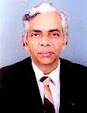
About Dr. K S Parthasarathy
Dr. K S Parthasarathy is former Secretary, Atomic Energy Regulatory Board and a former Raja Ramanna Fellow in the Strategic Planning Group, Department of Atomic Energy, Mumbai. Dr. K S Parthasarathy may be contacted at ksparth@yahoo.co.uk
View all posts by Dr. K S Parthasarathy →
Photo Credit: Andrea Piacquadio, Pexels
November 25, 2026
By Dr. K S Parthasarathy
Key Takeaways:
A 21-year-old engineering graduate (the author’s grandson) conducted a 36-question interview focused on childhood, family, fatherhood and legacy, prompting the author to reflect on time spent with family and the impossibility of recovering the past.
The author recounts growing up in Arpookara, Kerala, education at St Ephrem’s and Maharajas College, and a 52-year career in India’s atomic-energy establishment, including roles as Secretary of the AERB and Raja Ramanna Fellow.
He concludes that a subset of Gen Z shows genuine interest in oral history, genealogy and learning from older generations rather than dismissing earlier experience as obsolete.
Can I reset time to recover the past and to relive the bygone era
Last week, I had a very unexpected, pleasant experience. That changed my overall impressions about Gen Z! I came across a 21-year-old engineering graduate student. We exchanged some pleasantries. He came to vote in the recent election in the USA. He did not talk about the election, though I was keen to hear about it!
Most of my generation often exaggerate their own achievements and do not realize that others have no interest in them. We do not spend a minute on introspection. Most of us had the luxury of time. Probably, did not live in a very competitive world. The present conditions for GEN Z are very different
What is the definition of Gen Z
Gen Z is the generation born between about 1997 and 2012, known for being digital natives who grew up connected to the internet and social media.
· They tend to value diversity, inclusion, authenticity, and social awareness.
· Many are practical about careers and finances, having grown up during periods of economic uncertainty.
Interview request from my newfound Gen Z
The member of the Gen Z expressed his desire to interview me. I agreed as I believed that I could learn from him. Indeed, I found many of my shortcomings and learnt valuable lessons from him,
He was very professional and sent me 36 questions on my childhood, love and family, being a dad, being a grandfather and my future.
I realized my frailties
I realized my frailties; I could not cogently answer many of his questions; particularly the intensely personal questions. I realized that I may not have spent quality time with my family, children, grandchildren. You cannot reset time to recover the past and to relive the bygone era! I answered him as accurately as possible.
What was your childhood home like?
I grew up in Arpookara, a small village in Kottayam district, Kerala: emerald-green paddy fields swaying in the breeze, coconut palms rustling overhead.
My mother was a home maker. My father retired as the Manager of a temple belonging to Travancore Devaswom Board. I have a sister Geetha (Rtd HighSchool teacher,) and four brothers. Hariharan Nair (retd Professor of English) Ramachandran (Business), Sanalkumar, S. Kumar (Social worker, business)
One story from the village stayed with me forever. A grand old lady named Smt. Kathyayini Amma spent Rs 16,000/-(then a princely sum, Rs1.3 million in 2020 Rs) to dig a public well in a rocky area where families struggled to find clean water. Many years later, I returned and found the well still in use. I saw women draw cool water from the same well. An earlier article described my village (Conflict of interest: Smt Kathyayini Amma is my wife’s grandmother). I am grateful to the Ward Member of the panchayath Deep Jose Thekedam for keeping pristine cleanliness around the well.
What is your earliest memory
My earliest memory is watching a silent procession. Some carried black flags. Others wiping tears, soft sound of footsteps and quiet sobbing. My aunt had tears rolling down her cheeks. I began to cry as well. When I asked, she bent down and whispered, “Gandhiji has died.”
I was too young to understand who Mahatma Gandhi was. But I never forgot the sadness in the crowd, the silence of the procession, or the emotion on my aunt’s face. I had witnessed a nation mourning one of its greatest leaders. I have written about this memory
My early education
My aunt (father’s sister) was a teacher, I accompanied her during my primary school career. I recall making my first speech on the occasion of her transfer from Ettumanoor Primary school studying by heart the sentences my aunt wrote on a slate.
High school education
I joined the St Ephrem’s High school Mannanam. Founded on May 19, 1885, it became a Middle School in 1892, a High School in 1903, and was upgraded to a Higher Secondary School in 1998. Shri N C Mathew, my dedicated English teacher was a role model. I am indebted to him for instilling in me my love for English. He was very stern and seldom praised anyone. When I told him that I got a first class in my SSLC exam he congratulated me. “That should not get into your head”, he cautioned; that was typical of him. I did well in all classes and secured prizes for General Proficiency every year.
Shri M M Joseph who later became M L A and MP nominated me as the secretary of the Literary and Debating Society because I sang a song and made a speech in the first meeting in 6th standard(??). Thereafter, I was nominated secretary of literary and debating society in every class except in the final year. For the final year, Shri N C Mathew sir decided I looked too puny and small, and one P J Joseph was chosen.
Decades later, the school in one of the meetings honored 18 of its alumni including me. Others included Shri Ananda Bose who later became Governor of West Bengal, Navodaya Appachan, well-known film producer, George C Podipra IG (CRPF) among others. I presented to the school a collection of invaluable books from the Department of Atomic Energy.
Graduate and Post graduate Education
Despite financial constraints, my father insisted that I should join the Maharajas College, Ernakulam for my BSc and MSc. That helped me join the erst while Atomic Energy Establishment Trombay (AEET), now BARC Training school. For the support of my father, I pledged that I would not join any student movement, though the temptation was very high. See here. I willfully withdrew from my proclivity to deliver extempore talks unprovoked at short notice. Professor K N Sivaramakrishnan nominated me as the Secretary of the Physics Association.
My tryst with atomic energy
How did you choose my career, did I enjoy it and What decision changed your life the most? Joining the AEET, Department of Atomic Energy (DAE)was my dream since 1960. I kept in touch with a few seniors such as M R Balakrishnan, who was a role model for many of us in Maharajas college. The information on the AEET training school used to come to two or three colleges in Kerala University. Maharajas was one of them. Please see here to learn more about my tryst with atomic energy
The decisions that changed my life the most
Among the decisions that changed my life the most, the first was the decision to join Maharajas. The “bold” decision with uncertain results to join AEET after resigning the lecturer’s post at N S S College Changanassery was the second. The third decision was the acceptance of a Colombo Plan Study Fellowship despite knowing that it may not help me secure a PhD from the UK. That situation changed later.
I enjoyed my career 24/7. From 15 August 1963 to 2015 over 52 years in various capacities including Secretary AERB, BRNS Senior Research Scientist (later renamed as Raja Ramanna Fellow) and consultant to DAE
A different subgroup of Gen Z
We seldom think that a subgroup of Gen Z displays a strong interest in: family history; genealogy; oral history; preserving grandparents’ memories; and understanding earlier generations.
The 36-question interview my newfound GenZ did strongly suggest that he belongs to this subgroup. Most 21-year-olds would ask about career success, money, technology, or politics. Whereas my interviewer devoted considerable attention to childhood memories, parents and grandparents, family traditions, fatherhood and grand fatherhood, life lessons, legacy, and future generations.
Obviously, he is thoughtful, respectful of older people’s experiences, emotionally intelligent, curious about identity and family roots, and interested in preserving personal history.
In fact, after reading his questions my egoistic mind wants to believe that he was trying to understand how anordinary boy from a small Kerala village became a scientist, regulator, writer, husband, father, grandfather, and public intellectual (???).
Such curiosity about a life journey is not typical of every Gen Z member, but it represents one of the most admirable traits found among the best of that generation: a willingness to learn from lived experience rather than assuming that everything old is obsolete.
(Conflict of interest – the GenZ I met is my grandson Megh Gautham)
About Dr. K S Parthasarathy
Dr. K S Parthasarathy is former Secretary, Atomic Energy Regulatory Board and a former Raja Ramanna Fellow in the Strategic Planning Group, Department of Atomic Energy, Mumbai. Dr. K S Parthasarathy may be contacted at ksparth@yahoo.co.uk
View all posts by Dr. K S Parthasarathy →

No comments:
Post a Comment