Showing posts sorted by date for query halliburton. Sort by relevance Show all posts

Saturday, September 05, 2026

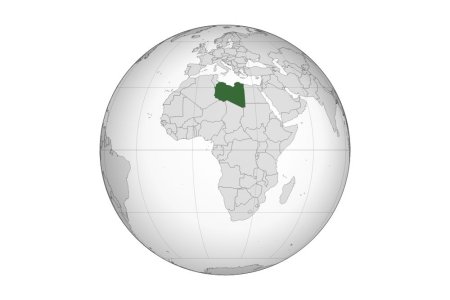
Libya

Trump approves militia law in Libya

Friday 4 September 2026, by Paul Martial


Absent from the Libyan scene since 2012, when its ambassador was assassinated by a jihadist group, the United States is back in force with the plan of Trump’s envoy, Massad Boulos, which aims to reunify the country, divided between two entities: the East and the South for Haftar, and Tripoli and the West for Dbeibah, the current prime minister.

A weakened regime

Both clans are facing significant difficulties. Dbeibah has had to deal with strong popular mobilizations that have taken place in Tripoli, but also in other cities such as Ain Zara or Hay al-Andalus, to protest against electricity cuts and, more generally, against the deterioration of living conditions. Although one of the organisations, Harak Abna’ Souq al-Jumaa, has put an end to the civil disobedience campaign, tension remains high. Especially since Dbeibah’s power is based on different militias, which sometimes clash with each other, as in the oil town of Zawiya.

The Haftar clan is facing other difficulties. Khalifa Haftar has chosen his successor, Saddam, as head of the army, from among his five sons, causing turmoil, particularly within the military apparatus. The attack that cost the life of Fawzi Al-Mansouri, head of the intelligence services, has undermined the discourse on total control by the security forces, which is so popular with European countries. Finally, the alliance between Haftar and the tribes of the south, particularly in the Fezzan region, has been shattered with the creation of an armed militia led by Mohamed Wardougou.

The Boulos plan

At the international level, Turkey, which supports Dbeibah, as well as Egypt and the United Arab Emirates, who support Haftar, have met with the opposing camp on both sides. It is in this context that the United States is making its diplomatic comeback with its plan, which aims to reunify the country from above, with a single administration, government and army.

The program would consist of appointing Saddam Haftar as president, while Dbeibah would retain his position as prime minister. The Haftar clan, favoured by this plan, is showing its goodwill by playing a central role in the release of the American hostage, the missionary Kevin Rideout, in Mali. The Libyan oil company National Oil Corporation has just paid its debts to American companies, including Baker Hughes and Halliburton.

As for Dbeibah, he has to deal with the militias. While some are opposed to the project, others are more circumspect, understanding that their opposition would place them outside the new government.

Financial and strategic gains

The United States is motivated by economic issues: to get its hands on oil reserves and to allow American companies to take advantage of a market with high potential. It is also a question of beating the pawn of the Russian troops of Africa Corps, present alongside the Haftar clan, and of strengthening their military grip on North Africa.

There is a risk that the Boulos plan will further destabilize the country, where everyone will seek to consolidate their power or acquire a new one, including by force. Indeed, power, whether acquired through negotiation or by arms, allows enrichment through smuggling, corruption and human trafficking.

The United States is playing the role of sponsor to establish peace between gangs, while removing the prospect of Libyans deciding the future of their country themselves by profoundly renewing the political offer.

28 August 23026

Translated by International Viewpoint from l’Anticapitaliste.

Tuesday, September 01, 2026


‘Small Interests, Big Politics’: What Defines American Powers – Analysis

Panorama of the west facade of United States Supreme Court Building at dusk in Washington, D.c. CC BY-SA 3.0


By Xia Ri


Key Takeaways:

  • ANBOUND’s Xia Ri says a 5–4 Court, in an opinion by Justice Barrett, required counting compliant mail-in ballots that arrive after Election Day and, with Chief Justice Roberts, also rejected a Trump birthright-citizenship order.
  • The author treats Barrett as an establishment “Bush person” placed in 2020 by McConnell and allies, not as MAGA, and ties that to later Senate fights (Thune, the SAVE Act) and a claimed 35%+ GOP establishment vote break from Trump.
  • The conclusion is that “circle” elite politics, not the textbook separation of powers, explains these rulings; that is the author’s theory, not a Court finding.


Not long ago, the United States Supreme Court delivered a highly controversial election law ruling that sent shockwaves through American politics. Centering on Mississippi’s mail-in voting rules, the Supreme Court ruled by a narrow 5-4 majority that legally compliant mail-in ballots arriving after Election Day must still be counted in the final election results. The majority opinion was authored by Justice Amy Coney Barrett, a nominee of Donald Trump, directly striking down a lawsuit filed by the Republican National Committee attempting to ban the counting of post-Election Day mail-in ballots. This dealt a severe blow to the core electoral demands of Trump and his Make America Great Again (MAGA) faction.

This outcome not only shocked the American public but also left observers abroad baffled: How could a Supreme Court justice nominated by President Trump himself turn against him?

Around the same time, the Supreme Court rejected an executive order from Trump demanding changes to birthright citizenship. On this occasion, Chief Justice John Roberts authored the opinion for the majority, rebuking this “dramatically revisionist view” of the Fourteenth Amendment, with Barrett likewise joining the majority. ANBOUND’s founder Kung Chan believes that such an occurrence is actually unsurprising. The process surrounding Barrett’s appointment as a justice back in 2020 already signaled this outcome, reflecting the long-standing factional rift between the Republican establishment and Trump’s MAGA faction, and offering a true microcosm of American deep-circle politics within the framework of the separation of powers.

Tracing Barrett’s political roots, her core political allegiance has never been to Trump’s MAGA faction, but rather to the Republican establishment led by George W. Bush. Public resumes and historical records show that Barrett is fundamentally a Bush person. During her younger days, she worked for George W. Bush’s legal team. At the critical juncture of the 2000 U.S. presidential election recount in Florida, she assisted Bush, the leader of the Republican establishment.

The sudden passing of Justice Ruth Bader Ginsburg in 2020 provided the Republican Party with an opportunity to quickly seize judicial control of the U.S. Supreme Court, but Barrett’s nomination and appointment process was entirely guided and controlled by the Republican establishment, with Trump serving merely as the “nominal nominator”. On the very night Ginsburg died, then-Senate Majority Leader and establishment stalwart Mitch McConnell placed an immediate phone call to Trump, forcefully demanding the nomination of Barrett as Supreme Court justice. Meanwhile, current Senate Majority Leader John Thune served as a key supporter of Barrett’s ascension to the U.S. Supreme Court.

A crucial fact widely overlooked by the outside world is that rushing through Barrett’s Supreme Court appointment eight days before the 2020 election was not a tactical election maneuver by the Trump team, but a preemptive move by the Republican establishment. According to post-election reviews by multiple mainstream U.S. media outlets at the time, the core circle of the Republican establishment had already used polling data and voter trends to predict that Trump would likely lose. Consequently, they positioned a judicial figure they could rely on ahead of time to firmly control the conservative majority on the Supreme Court, hedge against judicial reform risks under a future Democratic administration, and counterbalance the aggressive expansion of Trump’s MAGA faction.

Barrett’s alignment with the Republican establishment directly reflects the “small interests, big politics” characteristic of American political club culture, where various “small interests” run through and intertwine with networking ties. In 2021, Barrett secured a lucrative two-million-dollar book publishing contract, roughly equivalent to the payout for a presidential memoir, a reward widely viewed by the American political scene as a textbook political payback. Notably, the literary agency she signed with, Javelin, was co-founded by Matt Latimer, former chief speechwriter for George W. Bush, and Keith Urbahn, former chief of staff to Secretary of Defense Donald Rumsfeld, serving as an exclusive networking and interest-operation platform for the Republican establishment.

Furthermore, Barrett’s family industrial background further cemented her ties with the Republican establishment figures such as the Bushes and Cheney. Public career records show that Barrett’s father worked for Royal Dutch Shell for 29 years, specializing in core contracts for offshore drilling in the Gulf of Mexico. The core capital entities behind Gulf of Mexico offshore oil development were none other than Zapata Corporation, founded by the Bush family, and Halliburton, the energy services company controlled by former Vice President Dick Cheney. For decades, these two enterprises monopolized the U.S. Gulf of Mexico offshore drilling and supporting services market, forming a solid energy-interest community

These connections have never been severed by Barrett’s elevation to Supreme Court justice. The Republican establishment maintains regular contact with Supreme Court justices, just as Democrats undoubtedly do, with both major parties having their own representative figures on the high court.

The antagonism between the Republican establishment and Trump’s MAGA faction has long permeated multiple dimensions, including congressional legislation and personnel appointments. As an establishment successor personally fostered by Bush and Cheney, John Thune now stands as a core figure in the anti-Trump MAGA camp. They are closely knit, frequently attending events and fundraisers together. Thune shares a deep personal friendship with Cheney and often goes hunting with him.

At the level of critical legislation, Thune has repeatedly taken the lead in blocking main bills advanced by Trump’s MAGA faction, most notably the Safeguard American Voter Eligibility Act (SAVE Act). Designed to tighten election rules and strengthen presidential campaign authorities, the bill would clearly benefit the long-term governance of Trump’s MAGA faction. Encountering universal opposition from the Democrats, the bill was also forcefully obstructed by the Republican establishment led by Thune and ultimately stalled in the Senate.

The factional standoff in the Senate is starkly clear. McConnell, who long controlled the Senate previously, is a crucial establishment figure, while newly empowered Thune is a steadfast anti-Trump establishment figure. Senate veteran and former Texas Senator John Cornyn has likewise repeatedly and publicly rejected Trump’s core proposals, standing out as a well-known MAGA opponent within the Republican Party. Congressional voting records show that in the 118th and 119th Congresses, the proportion of votes cast by Republican establishment lawmakers that ran counter to Trump’s stance consistently hovered above 35%, exceeding 50% in areas such as electoral rules, capital regulation, and energy policy. Therefore, the surface-level “separation of powers” actually conceals a four-way contest, one of which involves the Republican establishment.

For a long time, outsiders have widely misunderstood the operating logic of American politics. When deconstructing American politics, Kung Chan once noted that numerous political cases and institutional practices prove that American politics is fundamentally a circular culture. All these connections among Thune, Bush, and Cheney are merely superficial manifestations of this culture. While the Republican establishment and Democratic elites ostensibly belong to different parties, they actually stand together as forces blocking Trump’s MAGA efforts. The Supreme Court’s 5-4 mail-in ballot ruling serves as a perfect testament to this logic, directly undercutting the electoral voice of the MAGA faction while preserving the establishment-dominated flexible voting system.

From an institutional architecture perspective, the system of the “separation of powers” established by the U.S. Constitution appears to achieve a checks-and-balances framework among the legislative, executive, and judicial branches, constructing a structured equilibrium of power. In actual political operations, however, the separation of powers is merely a surface-level institutional framework. What truly dictates the direction of American politics is the various elite circle politics hidden beneath the surface of these institutions. Anyone who believes that Trump is genuinely leading the Republican Party is being overly naïve. Everything is a struggle, and it is a struggle fought among circles.

The anomalous ruling on mail-in ballots by the U.S. Supreme Court in 2026 is not an isolated judicial dispute, but rather an inevitable consequence of America’s deep political structure. Barrett’s appointment, her ruling stance, her interest ties, Thune’s personnel arrangements and legislative obstruction, along with the deep penetration of the Bush-Cheney energy circle, progressively reveal the operational logic of American circle politics, i.e., political parties, factions, and institutions are all surface-level tools, while the preservation of interests across various elite circles remains the core objective.

Naturally, Trump and the MAGA faction will not sit idly by and will mount a counter-offensive, primarily leveraging House legislative procedures to try and force the Senate to pass resolutions favorable to themselves. This outcome remains to be seen.

Final analysis conclusion:

Not long ago, the U.S. Supreme Court ruled 5-4 that compliant mail-in ballots arriving after Election Day are valid. Justice Barrett, who authored the opinion, actually belongs to the Republican establishment and holds views contrary to the Trump MAGA faction, thoroughly exposing internal rifts within the Republican Party. Powered into her position by the establishment, Barrett serves establishment demands by relying on deep-seated interests and networking circles. The establishment, represented by Thune, has repeatedly blocked core MAGA legislation, and the antagonism between the two factions runs deep across multiple political domains. This reflects that beneath America’s separation of powers structure, the political landscape is truly dominated by elite circle struggles.

  • Xia Ri is an Industry Researcher at ANBOUND, an independent think tank.

About Anbound

Anbound Consulting (Anbound) is an independent Think Tank with the headquarter based in Beijing. Established in 1993, Anbound specializes in public policy research, and enjoys a professional reputation in the areas of strategic forecasting, policy solutions and risk analysis. Anbound's research findings are widely recognized and create a deep interest within public media, academics and experts who are also providing consulting service to the State Council of China.

View all posts by Anbound →

Thursday, July 23, 2026

Gulf oil producers race to build alternative routes to the Strait of Hormuz

Three boys play in the shallow waters of the Strait of Hormuz as a plume of smoke rises from an explosion in the background off Bandar Abbas, Iran, 13 July 2026
Copyright Razieh Poudat/ISNA via AP
\
By Quirino Mealha
Published on


Gulf oil producers are spending billions of dollars on pipelines designed to route crude around the Strait of Hormuz, as Iran's grip on the waterway drags on and the region's most important export artery remains precarious.

Before the war, roughly 15 million barrels of Gulf oil passed through the Strait of Hormuz every day, as roughly a fifth of the world's traded oil moved through the maritime chokepoint in peacetime

With the channel still largely closed and prices elevated, at least seven major pipeline projects are now under construction, in planning or under discussion to push supplies out through the Red Sea, the Suez Canal and the Gulf of Oman instead, according to Gulf officials, energy companies and market analysts.

With the Iran war reignited this month, Brent crude is trading again at around $93 a barrel at the time of writing, well above the roughly $72 it fetched after June's short-lived truce, and the US benchmark WTI has also risen to roughly $90 a barrel.

Depending so heavily on the Strait of Hormuz "is no longer a prudent long-term strategy," said Victoria Grabenwöger, a senior researcher at the data firm Kpler.

Two escape valves already exist, and both are close to their limits.

Saudi Arabia's East-West pipeline, built in the 1980s when Tehran threatened shipping during the Iran-Iraq war, carries crude from the Abqaiq complex to Yanbu on the Red Sea, where tankers head south towards the Arabian Sea or north to the Suez Canal.

Meanwhile, the UAE has been channelling more oil to Fujairah, its port on the Gulf of Oman about 145 kilometres south of the Strait of Hormuz.

Together the two links had a spare capacity of some 3.5 to 5.5 million barrels a day before the war, according to the US Energy Information Administration, and both now run close to full representing around 6.5 million barrels a day.

Abu Dhabi's state oil company is also racing to finish a project it began before the war.

Its $3 billion (€2.6bn), 300-kilometre pipeline to Fujairah, laid alongside an existing line, is designed to lift deliveries by over 1.2 million barrels a day and is roughly half built, according to Kpler, which expects the official early-2027 completion target to slip to mid-2027 because the port itself must be expanded.

Even that timetable, the firm argues, only became conceivable because of the blockade.

Red Sea relief, Red Sea risk

The Red Sea route has vulnerabilities of its own, and this week served as a reminder.

Yemen's Iran-backed Houthi rebels, who declared a blockade on Saudi-linked shipping in retaliation for the kingdom's blockade of Yemen and an attack on Sanaa's airport, said on Thursday they had attacked two Saudi tankers, the Encelia and the Layla, setting both on fire.

Saudi state media reported a blaze at the bow of the Encelia with no casualties, while the UK Maritime Trade Operations centre reported a tanker struck by "an unknown projectile" southwest of Al Shuqaiq.

The Iran-backed group has disrupted the Bab el-Mandeb Strait before, a maritime chokepoint carrying about 12% of world trade, and a Houthi drone strike forced the East-West pipeline itself to shut back in 2019.

FILE. Seagulls fly in front of the Red Sea port city of Jiddah, Saudi Arabia, Oct. 2019 AP Photo/Amr Nabil

Iraq's $60 billion bet on Washington

Nowhere is the scramble more urgent than in Iraq, which draws about 90% of state revenues from oil exports and has had to cut output because of its dependence on the Strait of Hormuz.

Prime Minister Ali al-Zaidi returned from Washington last week with 48 agreements signed with American firms, spanning energy, healthcare and technology and worth more than $60 billion, according to Reuters, including tie-ups involving ExxonMobil, Shell, Halliburton, KBR and GE Vernova.

The centrepiece is a deal with Syria to rebuild the long-dormant pipeline running from the Kirkuk fields to the Mediterranean port of Baniyas, a project Iraqi state media says Chevron will execute and which the US State Department, welcoming the plan, called "a critical energy corridor" with an initial capacity of 2 million barrels a day.

Baghdad is also weighing a line from Basra to Jordan's Aqaba.

Washington's ambassador to Turkey, Tom Barrack, predicted the agreements would render the Strait of Hormuz "an afterthought".

Saturday, July 18, 2026


US Oil and Gas Employment Hits a 2026 Low Even as Production Sets Records


  • U.S. oil and gas extraction employment fell to 114,500 workers in June, the second-lowest June on record, even though domestic output is near an all-time high.

  • Chevron, ExxonMobil, BP, ConocoPhillips and Imperial Oil have all announced big layoffs this year, and it's mergers and automation driving it, not falling oil prices.

  • The jobs disappearing fastest (roustabout and wellhead labor) pay a fraction of what the jobs going unfilled (electricians, automation techs) pay, and geothermal projects and AI data centers are already soaking up some of the overflow.

Chevron is cutting up to 9,000 jobs this year. That's a fifth of its global workforce, gone, while it digests the $53 billion Hess deal. ExxonMobil trimmed 2,000. BP shed more than 5 percent of its staff, plus 3,000 contractors. ConocoPhillips is cutting 20 to 25 percent. Imperial Oil is cutting a fifth of its people and shutting its Calgary office entirely. And in June, U.S. oil and gas extraction employment fell to 114,500 workers, the second-lowest June the Bureau of Labor Statistics has on record, beaten only by the pandemic bottom of 2021.

Production didn't fall; it's near record highs…but the jobs are disappearing anyway. 

And before anyone assumes it’s renewable energy’s fault…it isn’t, not directly, at least. Nobody at Chevron got a pink slip because a wind farm opened next door. Automation, mergers, and a decade of investors who'd rather see returns than growth did this.

Ten Years, 72,800 Fewer Jobs

Back in January 2016, extraction employment topped out at 187,300, right before the price crash gutted the sector… 

A decade on, the workforce sits almost 40 percent below that number, even while wells across the Permian and Eagle Ford keep breaking output records. This year alone tells the story in miniature… 115,500 in January, a bump to 116,200 in February, then a slide every month after, down to 114,500 by June.

The May-to-June dip isn't even new. Extraction jobs have fallen in that exact window in 7 of the last 11 years. Call it seasonal if you want. The floor keeps dropping every year regardless.

One footnote worth knowing: these figures get revised constantly. May's number came in at 115,600 first, then got walked back to 115,300 a month later. Treat any single month less like gospel and more like a rough read on direction.

Extraction, though, is the smaller of the two numbers that matter here. 

Oilfield services, the drilling contractors, completions crews, pressure pumpers, employs something like 627,000 people, more than five times the extraction headcount, and it's been losing jobs even faster. 

The ripple effects run deep, too…every upstream job is estimated to support roughly 232,000 supply chain jobs and 421,000 more through spending, more than 850,000 positions riding on an industry that keeps figuring out how to need fewer people directly.

The productivity data backs this up. Output per hour jumped 11.4 percent in 2023 while labor input barely budged, and total factor productivity swung from a 14.7 percent drop in 2021 to a 30.2 percent gain two years later. Nobody's working harder out there. They're working with better tools, and fewer of them.

Who's Actually Getting the Call

This year's layoff wave has less to do with oil prices than with a decade of mergers finally catching up. 

Chevron's cuts, the largest in company history, are chasing $2 billion to $3 billion in savings from folding Hess into the existing operation. 

“We do not take these actions lightly,” a spokesperson said, which is the sort of thing companies always say. 

BP is chasing a similar $2 billion target. ExxonMobil's cuts followed its own Pioneer deal. 

Merge two companies, and merging their field offices comes next, whether or not a single well changes how it produces.

The services companies have a more familiar excuse…business has slowed. 

Halliburton has been cutting across at least three divisions this year, with some units down 20 to 40 percent. SLB has been through its own rounds of cuts and reshuffling. Both companies live and die by the rig count, and the rig count hasn't been kind.

There's a bit of irony buried in here, too. Chevron moved its headquarters from California to Houston back in 2024, calling it a bet on Texas. Some of this year's cuts landed on that same Houston campus.

West Texas Learns to Sell Electricity

Texas is the one place that complicates the whole story... 

Upstream jobs there grew for three straight months into May, then reversed hard in June, down 1,500 to 2,000 positions, one of five negative months this year. And yet Texas posted 10,409 job listings in May, up 6 percent from April, more than any other state. Houston alone had nearly 2,700 listings. 

Most of that hiring, by the way, sits in support activities and services, not extraction itself, the same layer of the industry absorbing the deepest cuts everywhere else. 

What's really rewriting the Permian right now isn't drilling. It's electricity. 

Microsoft is talking with Chevron and Engine No. 1 about a $7 billion gas plant near Pecos, built specifically to feed an AI data center, wired straight into Chevron's own gas wells instead of the overloaded Texas grid. 

A couple hundred miles east, OpenAI's Stargate campus in Abilene runs the same play… its own gas plant, no grid required. 

One of these data centers can use 5 to 6 million gallons of water a day, which works out to roughly 143,000 barrels in oilfield terms. 

Basin boosters have started talking about exporting electricity instead of barrels. And that shift is already changing who gets hired locally: electricians, welders, power technicians, not another frack crew.

Pay Doesn't Match Who's Needed

Geoscientists earn a median $99.50 an hour, more than $206,000 a year. 

Petroleum engineers aren't far off at $86.58. 

Roustabouts, the entry-level hands doing the physical work on a wellsite, earn $23.30 an hour, under $49,000 a year. Wellhead pumpers make $36.62.

Guess which end of that range is disappearing fastest… It's the bottom. 

And yet half of mining and extraction employers say they can't find enough electricians and skilled trades, even while total headcount shrinks. 

That's not really about too few workers. It's about the wrong skills sitting in the wrong hands: a modern, automated wellsite runs on sensor systems, remote monitoring and predictive maintenance, not the training a lot of the existing workforce spent years building. 

Veterans make up about 9 percent of the broader energy workforce, more than their share of the economy overall, and roughly three in ten energy workers are under 30. Both groups are exactly who geothermal startups and data center builders are trying to recruit right now.

Where the Skills Actually Go

None of this means oil and gas workers have nowhere to go. It means where they can go doesn't always match where they happen to be standing.

Geothermal is the clearest match. A 2024 Energy Department estimate put the number of people who already have the drilling and subsurface skills geothermal needs at roughly 300,000. 

The actual geothermal workforce today? Just 8,870. That gap is basically all headroom. 

Drillers who've made the jump describe it as barely different work, still making a hole in the ground, still sealing it up, just chasing heat instead of hydrocarbons. 

One driller who spent a decade in New England wells now runs drilling for a geothermal company and says the safety training and the technical chops carried over almost untouched. 

The Energy Department has put $171.5 million behind next-generation geothermal testing, and a federal advisory panel wants dedicated training centers built to move oil and gas crews over directly, plus a plan to keep veteran workers around as mentors so decades of unwritten wellsite knowledge doesn't walk out the door with them.

Zoom out further and clean energy overall looks lopsided in a way that's easy to misread. 

Solar, wind, EVs, efficiency and grid work together employ 3.56 million people now, more than three times the roughly 1.9 million across oil, gas and coal, and growing about three times faster than the rest of the economy. Sounds like the obvious landing spot. 

Except the jobs aren't where the layoffs are. 

Researchers have documented a real geographic mismatch: the places losing oil and gas jobs and the places adding clean energy ones are rarely the same places, and workers don't relocate for a new job even when their skills transfer cleanly. 

Texas is the case in point. 

Its clean energy sector employs more than 283,000 people, but that's still only 29 percent of the state's total energy workforce. Even that growth has slowed, with policy rollbacks from this year's federal budget law putting an estimated 830,000 jobs at risk nationwide.

For most workers this isn't a straight line from a rig to a wind farm. It's whatever's actually nearby…a data center outside Abilene, a geothermal rig in New England, a services company retooling around software instead of headcount.

That doesn't make the industry disposable, either. A leaner oilfield is a more profitable one per worker, and people who survive a merger often land in better-paying, more specialized jobs than the ones they started in. It's a narrow set of job categories disappearing. Not the whole industry.

Same Industry. Fewer, Different Jobs.

The industry isn't dying…It's producing near-record volumes and probably will for a while. What's changed, though, is how few people it takes to hit those numbers, and which people those are. Fewer roughnecks, more automation technicians. Fewer roustabouts, more remote operations specialists. That pay gap is only going to get wider as the mix keeps shifting.

Whether anyone plans for it or not, the workforce is already sorting itself out.

By Michael Kern for Oilprice.com