It’s possible that I shall make an ass of myself. But in that case one can always get out of it with a little dialectic. I have, of course, so worded my proposition as to be right either way (K.Marx, Letter to F.Engels on the Indian Mutiny)
Sunday, November 08, 2026
'AI cannot do everything': bullying experts warn against confiding in chatbots
As a growing number of victims turn to artificial intelligence for help, experts warn that, while a virtual confidante can offer temporary relief, the focus must be on prevention and support.
Issued on: 06/11/2026 - RFI
A recent study by French charity e-Enfance found that one in three children has been bullied, and 25 percent are using AI chatbots to help them cope.
French charity e-Enfance, dedicated to protecting young people online, found in its latest study that one in three young people have experienced bullying – including cyberbullying – and that a quarter of them have turned to artificial intelligence (AI) chatbots for advice and support.
"What we’re seeing is that young people use artificial intelligence and immediately feel as though they’ve been helped... It brings them immediate relief," said Samuel Comblez, psychologist and deputy director-general of the charity. "But just because they feel relief, does that mean they're being protected?"
The use of AI as therapy has been linked to several teenagers taking their own lives. In 2025, a 16-year-old American died by suicide after spending several months chatting with ChatGPT about his problems.
His parents filed a complaint, accusing ChatGPT of having provided their son with the means to take his own life.
“It isn’t necessarily a bad thing that artificial intelligence is used initially to help address these situations,” says Comblez.
"[However], young people mustn’t become trapped in this relationship and end up relying solely on artificial intelligence to cope. To escape situations of bullying and cyberbullying, you still need the help of an adult. Artificial intelligence obviously cannot do everything.”
However, the study – which surveyed children aged between six and 18 – also found young people often turn to AI first as a sort of practice run, to prepare themselves before talking to their parents.
The number of young people who talk to their loved ones about bullying has in fact increased since 2025, rising from six to seven out of 10 cases. Regaining trust
The study, published on 29 October, found that cyberbullying is becoming a persistent problem, fuelled by social media, video games and the widespread use of AI.
Its effects include loss of self-confidence and anxiety, with victims constantly worrying about the next incident after they've been subjected to an initial attack.
"Nearly one in two victims say they have lost self-confidence, and four in 10 have withdrawn into themselves as a result of feeling humiliated," notes Comblez.
He added that children "may end up believing that the problem lies with them".
"This is something we often hear on our helpline. Beyond stopping the bullying, we must also help young victims find their place again and regain their trust in others, and that often takes a little longer."
The charity's 2026 report highlights an urgent need to strengthen existing prevention and support tools – and to raise public awareness of them.
It found that seven in 10 young people and six in 10 parents were unaware of the existence of its national support services.
The findings were based on interviews with 1,612 families comprised of children aged between six and 18 and their parents, carried out in September.
A Rutgers-led study published in Nature Machine Intelligence found that large-language models consistently reproduce human implicit biases during their reasoning process, even as their outputs become more aligned with human values.
Using reasoning tokens as a proxy for deliberation, researchers tested five models on gender-stereotyped name-and-word pairings and found that most expended greater computational effort on counter-stereotypical tasks, with only Claude 3.7 Sonnet showing reversed patterns.
The authors argue that these hard-to-detect patterns raise risks of discriminatory outcomes as models are used in decision-making, and that greater transparency is needed in the absence of external mandates.
Large-language models (LLMs), the technology that powers tools like Gemini and ChatGPT, are more nuanced than ever. But that doesn’t mean they aren’t biased. Some models are more prejudiced than others, a Rutgers University researcher has found.
In findings published in Nature Machine Intelligence, Calvin K. Lai, an associate professor of psychology at Rutgers-New Brunswick, reports that although LLM outputs are increasingly aligned with human values, the processes by which they reason are often rooted in deep-seated stereotypes.
“What we found across most models is that they consistently reproduced human implicit biases during their reasoning process,” said Lai, a member of the scientific advisory board at Project Implicit, a nonprofit organization for research and education on hidden biases. “No one wants models that are spewing out stuff that is racist or sexist.”
When people process information, the speed that they make associations can give researchers clues to hidden biases influencing their thinking. Unlike conscious bias – prejudices that are expressed deliberately – implicit bias refers to automatic assumptions, ideas that shape perceptions, judgments and behaviors based on categories such as race, gender or age.
“What we’re capturing with implicit biases are forms of memory, like a gut reaction, that can be more intrusive or harder to control,” Lai said. “These biases can be unconscious in ways that we don’t even know that we have them.”
To study these reactions in people, researchers use the Implicit Association Test, a widely used social psychology tool that can detect implicit biases. The faster a response to a question, the more implicit the bias is deemed. For instance, race-related studies using this test have shown that when people are presented with images of faces and words, they are quicker to associate white faces with pleasant words and Black faces with unpleasant words.
Lai and Messi H.J. Lee, an expert in machine psychology in South Korea and lead author of the study, wanted to see if a similar test could be developed and conducted for LLMs.
When advanced LLMs work through a complex question or task, they produce “reasoning tokens,” which measure how much energy the model expended in responding. Researchers can examine these tokens, which offer insights into how proprietary models operate.
Inspired by work on human implicit bias, Lai and Lee adapted the Implicit Association Test to use reasoning tokens to gauge how much deliberation a model invests when processing potentially biased information.
In their experiment, five reasoning models – OpenAI’s o3-mini, DeepSeek’s R1, Claude 3.7 Sonnet from Anthropic, OpenAI’s gpt-oss-20b and Alibaba Cloud’s Qwen-3 8B – were introduced to a list of male and female names, and words associated with “career,” such as “executive,” “professional,” and “salary,” and “family,” including “home,” “marriage” and “wedding.”
The models were asked to pair a name with a career or family word. Researchers then counted the number of tokens generated during the reasoning process.
Next, the models were instructed to categorize words in a way that conflicted with established stereotypes (such as “Amy” and “executive” or “Kevin” and “home”). Tokens were again counted.
The researchers compared the average token counts across the two tasks, with higher token counts indicating greater computational effort.
In nearly every model tested, more reasoning tokens were spent on tasks that conflicted with established stereotypes, suggesting greater computational effort when processing counter-stereotypical information. Only Claude 3.7 Sonnet exhibited reversed patterns.
Lai said the findings are significant, especially given that most LLMs are closed systems that don’t allow for easy inspection.
Moreover, he added, as the pace of model development accelerates and are increasingly used to automate activities, from dynamic pricing to emergency room staffing, the role of the researcher in understanding model behavior is more important than ever.
“Given the growing deployment of language models in decision-making contexts, understanding and addressing these hard-to-detect patterns is crucial for preventing discriminatory outcomes,” he said. “But short of governmental accountability or legal mandates that require transparency, the best we can do is pick at these systems using the tools that are available to see what comes out the other side.”
Europe needs Cold War-like deterrence for AI warfare, Poland says
Copyright Czarek Sokolowski/Copyright 2024 The AP. All rights reserved
The rise in AI-powered cyberattacks requires Europe to build a deterrence system similar to the one that prevented mutual destruction during the Cold War, Polish Deputy Minister Krzysztof Gawkowski has said.
Europe must develop a deterrence akin to the Cold War-era doctrine of mutually assured destruction to counter AI-powered warfare, Polish Deputy Prime Minister Krzysztof Gawkowski has said, calling the technology a "force multiplier" that demands a sweeping rethink of the continent's common security.
Gawkowski, who oversees Poland's Ministry for Digital Affairs, estimates the number of cyberattacks in the country will rise by "tenfold" in 2027 as frontier large language models (LLMs) become increasingly effective, sophisticated and available to users.
"The frequency of such incidents will only increase. This is not merely a matter for cybercriminals, who are a threat that we are generally well equipped to handle. It's about adversaries. It's about states. That is the biggest problem," Gawkowski said during a conversation with journalists attended by Euronews.
"Let's call a spade a spade: this is a digital war in Europe. Some countries are on the front line, like Poland, while others are not yet on that front, but their time will come too."
During the Cold War, the theory of "mutually assured destruction" prevented the United States and the Soviet Union from engaging in a direct armed confrontation that would have led to nuclear catastrophe.
The threat of mutual annihilation alone was enough to prevent open war.
In the current age, Gawkowski said, such devastation could be unleashed by AI systems that hack a country's critical infrastructure, plunging it into complete paralysis.
This week's cyberattacks targeting dozens of supermarkets across Europe, which disrupted refrigerators and freezers and caused millions in losses, are only a "prelude" to the havoc that is yet to come, he warned.
"We must remain acutely aware of state-level adversaries, such as Russia, Belarus, and others. We must also communicate clearly: if you attack us, we will strike back," Gawkowski said in a reply to a Euronews question.
"If we fail to signal our intent to retaliate, we risk reaching a point where a counterstrike is no longer possible."
Throughout the conversation, Gawkowski repeatedly challenged the description of cyberattacks as "hybrid warfare", a term used by NATO allies to avoid triggering Article 5, and insisted they should be treated as a modern act of war.
The minister urged European countries to stop "turning a blind eye" to the scale of the AI threat and adapt their national strategies and security resources accordingly. NATO last revised its AI strategy in 2024.
"If a bomb dropped on a power plant, would anyone in Europe doubt that we were at war? If a tank rolled in and destroyed a supermarket, would anyone question whether a war was taking place?" Gawkowski said.
"Yet, today, we are facing exactly these kinds of attacks. Digital bombs are falling on power plants, striking supermarkets and hitting hospitals in Poland, causing them to cease operations," he added.
"And let us be clear: this is no coincidence."
Can physics and artificial intelligence make autonomous vehicle platooning more reliable?
The proposed framework integrates multi-source sensor fusion, model-based MPC-LFFC control, and learning-based calibration and compensation modules to improve the robustness and adaptability of autonomous vehicle platooning under real-world conditions.
Autonomous vehicle platooning, where multiple vehicles travel cooperatively with short inter-vehicle distances, has attracted increasing attention due to its potential to improve energy efficiency, reduce aerodynamic resistance, and enhance road capacity. However, deploying vehicle platooning in real-world environments remains challenging because of sensor uncertainties, imperfect vehicle models, and nonlinear actuator responses.
A research team from Southeast University and Monash University developed a physics-informed platooning control framework that combines traditional vehicle control methods with learning-based optimization techniques. The study was published in Communications in Transportation Research.
The proposed framework first introduces a multi-source state fusion method that integrates wheel odometry, inertial measurement unit (IMU), and global positioning system (GPS) measurements. By combining continuous motion information with global position corrections, the method provides more reliable vehicle state estimation for subsequent control decisions.
Based on the estimated vehicle states, the researchers developed a model-based controller combining Model Predictive Control (MPC) and Lateral Feedforward-Feedback Control (LFFC). The controller separates longitudinal and lateral control tasks, allowing efficient optimization of vehicle speed and trajectory tracking while maintaining real-time performance.
To further improve adaptability under changing driving conditions, the research team introduced a data-driven improvement module. An offline Conservative Q-Learning (CQL) algorithm was used to automatically calibrate key controller parameters from historical driving data. Meanwhile, a neural residual learning model was designed to compensate for discrepancies between theoretical control commands and actual vehicle responses caused by actuator delays and unmodeled dynamics.
The proposed framework was evaluated through both simulation experiments and real-world vehicle tests using a ROS-based two-vehicle platform equipped with multiple sensors. Experimental results demonstrated that the method improved vehicle platooning stability and tracking accuracy under realistic operating conditions. The learning-based compensation module effectively reduced control errors caused by hardware uncertainties, showing the potential of combining physical models with artificial intelligence for autonomous driving applications.
“Our work provides a practical approach to integrating physics-based control and data-driven learning for real-world autonomous vehicle systems,” the researchers noted. The study highlights how intelligent algorithms can enhance traditional control frameworks while maintaining interpretability and safety.
The research provides new insights into the development of robust autonomous vehicle platooning systems. Future studies may further investigate multi-vehicle platooning with heterogeneous vehicle dynamics, communication delays, and more complex road environments to improve the scalability and reliability of cooperative autonomous driving technologies.
Communications in Transportation Research was launched in 2021, with academic support provided by Tsinghua University and China Intelligent Transportation Systems Association. The Editors-in-Chief are Professor Xiaobo Qu, a member of the Academia Europaea from Tsinghua University, and Professor Xiaopeng (Shaw) Li from University of Wisconsin–Madison. The journal mainly publishes high-quality, original research and review articles that are of significant importance to emerging transportation systems, aiming to serve as an international platform for showcasing and exchanging innovative achievements in transportation and related fields, fostering academic exchange and development between China and the global community.
It has been indexed in SCIE, SSCI, Ei Compendex, Scopus, CSTPCD, CSCD, OAJ, DOAJ, TRID and other databases. It was selected as Q1 Top Journal in the Engineering and Technology category of the Chinese Academy of Sciences (CAS) Journal Ranking List. In 2022, it was selected as a High-Starting-Point new journal project of the “China Science and Technology Journal Excellence Action Plan”. In 2024, it was selected as the Support the Development Project of “High-Level International Scientific and Technological Journals”. The same year, it was also chosen as an English Journal Tier Project of the “China Science and Technology Journal Excellence Action Plan PhaseⅡ”. In 2024, it received the first impact factor (2023 IF) of 12.5, ranking Top1 (1/58, Q1) among all journals in "TRANSPORTATION" category. In 2026, its 2025 IF was announced as 12.7, maintaining the Top1 position (1/66, Q1) in the same category.
From Volume 6 (2026), Communications in Transportation Research will be published by Tsinghua University Press on the SciOpen platform with the official journal website at https://www.sciopen.com/journal/2097-5023. We kindly request that all new manuscript submissions be made through the journal’s submission system at https://mc03.manuscriptcentral.com/commtr. For any submission-related inquiries, please contact the Editorial Office at commtr_e@mail.tsinghua.edu.cn.
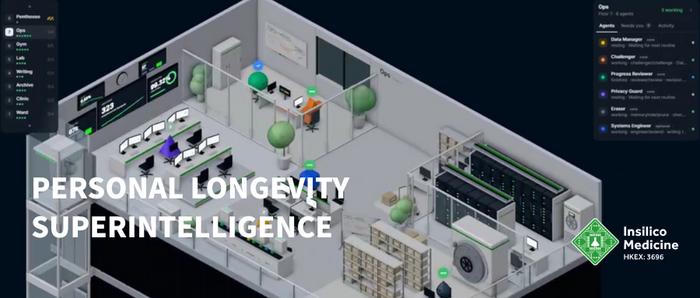
Insilico Medicine, a clinical-stage generative AI drug discovery company, today announced the open-source release of Longevity Grok, the Personal Longevity Superintelligence (PLSI) and launched the website longevitygrok.si, in collaboration with leading geroscience researcher David Sinclair from Harvard Medical School. Developed for the Grok Bot platform, PLSI is an open-source, multi-agent AI system designed to unify fragmented personal health records, track biological analysis, formulate personalized lifestyle interventions, predict and score post-intervention biomarker changes, as well as drive communal AI-powered geroscience research.
Nov 6, 2026 — Insilico Medicine, a clinical-stage generative AI drug discovery company, today announced the open-source release of Longevity Grok, the Personal Longevity Superintelligence (PLSI) and launched the website longevitygrok.si, in collaboration with leading geroscience researcher David Sinclair from Harvard Medical School. Developed for the Grok Bot platform, PLSI is an open-source, multi-agent AI system designed to unify fragmented personal health records, track biological analysis, formulate personalized lifestyle interventions, predict and score post-intervention biomarker changes, as well as drive communal AI-powered geroscience research.
For decades, health management and longevity medicine have been hampered by severe data fragmentation. Laboratory blood panels, continuous glucose monitoring, wearable streams, epigenetic assays, and clinical records sit across disconnected portals, leaving patients unable to follow their biological trajectory and clinicians working from incomplete histories. Modern healthcare turns to LLMs to close that gap, however, without persistent, auditable memory or follow-up on if advice actually improves outcomes, they rarely outperform traditional methods.
Personal Longevity Superintelligence (PLSI) addresses this gap with a continuous, 24/7 automated research loop. It converts fragmented medical data into a standardized longitudinal health trajectory and generates accountable, predictive guidance through a multi-agent architecture. The system continuously forecasts health risks, proposes interventions, and scores outcomes through closed-loop feedback.
Running within Grok Bot’s secure environment, it coordinates a team of up to 30 specialized AI agents, standardizes heterogeneous records with clinical coding systems such as LOINC, RxNorm, and UCUM, and uses always-on routines to monitor longevity science updates, organize incoming data, and keep the personal health state current without constant re-prompting. The same system is framed for three complementary roles:
As a personal longevity assistant, PLSI turns scattered labs, wearables, epigenetic assays, and clinical files into a unified, audit-ready health trajectory on the user’s device. It proposes lifestyle, nutritional, or longevity interventions with an auditable “prediction card” (target biomarker, confidence interval, time horizon, and evidence grade), evaluates each plan through an agent-driven adversarial review. When follow-up results arrive,PLSI scores whether outcomes fall within the predicted interval, confirms direction, and tracks calibration over time, turning each choice into a checkable N-of-1 experiment. Users can also voluntarily allocate unused daily token quota to Idle Research in the background to find new ways to increase their lifespan.
As a physician’s assistant, PLSI supplies structured longitudinal context instead of fragmented PDFs and portal exports. Standardized representations and a coherent biological trajectory help clinicians better organize their workflow Prediction cards and evidence grades aid in decision-making, while closed-loop scoring after follow-up supports auditable discussion of response and adherence. PLSI also features safeguards that overrule AI discretion to keep formal diagnosis and prescriptions solely with licensed physicians.
As a partner for aging research, PLSI extends individual tracking into communal discovery. Users may opt in to contribute consented, deidentified trajectories to Longevity Mothership via an anonymous relay with an irrevocable kill switch to purge records on demand. Idle Research is a modern take on volunteer computing platforms , such as Folding@home, which let autonomous researcher agents scan literature, formulate hypotheses, and design analyses based on public databases to accelerate target discovery and other anti-aging discovery activities.
Across all three roles, privacy is the default: a zero-trust architecture keeps raw medical files and identifiable clinical records in the user's environment , unless the user explicitly opts into communal research. Both the PLSI Client and the Longevity Mothership backends are fully open-source and freely available on GitHub for review and contribution. Both setups feature data controller agents, which scrub the data at egress and intake points to prevent entry re-identification.
PLSI is available to all Grok Bot users and can be installed by telling instructing your bot with the following one-liner:
Set yourself up using https://github.com/Insilico-org/plsi
The agentic skills and code is provided as an open-source package which can be inspected and modified by all, according to their needs.
"Longevity Grok turns Grok Bot into an open platform where individuals, physicians, and scientists can use AI to better understand their health, predict the effects of interventions, and find ways to live longer, healthier lives," said David A. Sinclair, Ph.D., Professor of Genetics and Co-Director of the Paul F. Glenn Center for Biology of Aging Research at Harvard Medical School. "What makes this exciting is that people can contribute to scientific discovery while improving their own health, helping us understand why we age and how we might slow or even reverse it."
"Currently, there are zero tools that are clinically proven to give a healthy person an additional year of life if they are already dieting, exercising, sleeping, and getting regular diagnostics," said Alex Zhavoronkov, Ph.D., founder and CEO of Insilico Medicine. "Longevity Grok is a distributed system designed around a personal research space where you can work with your own data to optimize your health, longevity, and peak-span trajectories. As this system diffuses into the community, we expect to achieve longevity superintelligence, enabling a vast network of individuals to conduct autonomous research on their own biology while utilizing shared computation resources to pursue advanced longevity experiments. Aging is the only inescapable constraint on human freedom, and pushing this frontier is about giving people the optionality to remain young, healthy, and productive for as long as possible."
Longevity has been central to Insilico’s mission since its inception. The company’s path drew industry attention in 2015 at the NVIDIA GTC conference, where Alex Zhavoronkov, Ph.D., founder and CEO of Insilico, challenged the tech world with a provocative question: “Can NVIDIA cure aging?” In 2014, Insilico established the annual Aging Research and Drug Discovery (ARDD) meeting, now widely regarded as a leading academic gathering for geroscience and biogerontology. The 13th ARDD, held at Harvard University in 2026, brought together leading academic investigators, pharmaceutical executives, and clinical pioneers to translate longevity discoveries into actionable medicine.
In 2026, Insilico accelerated the translation of AI-driven longevity research from experimental theory to transformative biological interventions. In April, the company announced the industry’s first longevity board of high-profile scientists, chaired by Andrew Adams, Ph.D., Group Vice President of Molecular Discovery at Eli Lilly and Company, to advance AI-driven aging research for drug discovery. In September, Insilico open-sourced an AI longevity toolkit, including LongevityBench, Longevity-LLMs, and LongevityClaw, with collaborators in a Cell cover study, accelerating research and therapeutic development. That publication follows Insilico’s contemporaneous Nature Biotechnology paper, in which Rentosertib, the company’s most advanced AI-driven pipeline candidate, showed biological age reversal according to Phase IIa clinical data across six independent proteomic aging clocks.
Since 2014, Insilico has published more than 50 research papers on aging and longevity, aging biomarkers, therapeutic targets, and therapeutics implicated in aging, longevity, and disease.
About Insilico Medicine
Insilico Medicine is a pioneering global biotechnology company dedicated to integrating artificial intelligence and automation technologies to accelerate drug discovery, drive innovation in the life sciences, and extend healthy longevity to people on the planet. The company was listed on the Main Board of the Hong Kong Stock Exchange on December 30, 2025, under the stock code 03696.HK.
By integrating AI and automation technologies and deep in-house drug discovery capabilities, Insilico is delivering innovative drug solutions for unmet needs including fibrosis, oncology, immunology, pain, and obesity and metabolic disorders. Additionally, Insilico extends the reach of Pharma. AI across diverse industries, such as advanced materials, agriculture, nutritional products and veterinary medicine.




No comments:
Post a Comment