
Sunday, November 08, 2026


COP31 in Turkey: What to expect at the 2026 UN Climate Summit

COP31 in Turkey: What to expect at the 2026 UN Climate Summit
A "Let's change our planet" commercial released on @Turkiyecop31 showing an ice skater performing as the ice melts and cracks beneath her. / @Turkiyecop31, screenshot
By Alice C. Hill, Angus Soderberg November 8, 2026

Representatives from around the world will gather in Antalya, Turkey, from November 9 to 20 for the thirty-first Conference of the Parties (COP31) to the UN Framework Convention on Climate Change. Although it is an annual event, this year’s climate summit is notable for two reasons: first, it coincides with the tenth anniversary of the Paris Agreement entering into force; and second, the United States—the world’s second-largest and historically biggest emitter, which formally withdrew from the agreement at the start of this year—will not send an official delegation. (Members of Congress and US businesses will still attend.)

With the legacy of the Paris Agreement in question, COP31 president Murat Kurum has set the goal of moving beyond climate pledges to the concrete implementation of existing commitments. Alongside the formal COP agenda, Kurum has introduced an Action Agenda organised around 10 themes, including the clean energy transition and electrification, zero waste and methane reduction, and climate-resilient cities. The COP31 presidency has also put forward voluntary pledges, including a 35-by-35 pledge aimed at increasing electricity’s share of total energy consumption to 35% by 2035—up from 23% today—as well as a commitment encouraging countries, corporations and investors to make artificial intelligence (AI) more sustainable.
COP31 comes after three decades of work on climate change. Major concrete outcomes are not expected, but hope remains that parties can press forward on goals such as methane emissions reductions, adaptation and finance, and accelerating the implementation of existing COP agreements.


What progress has been made since the Paris Agreement?

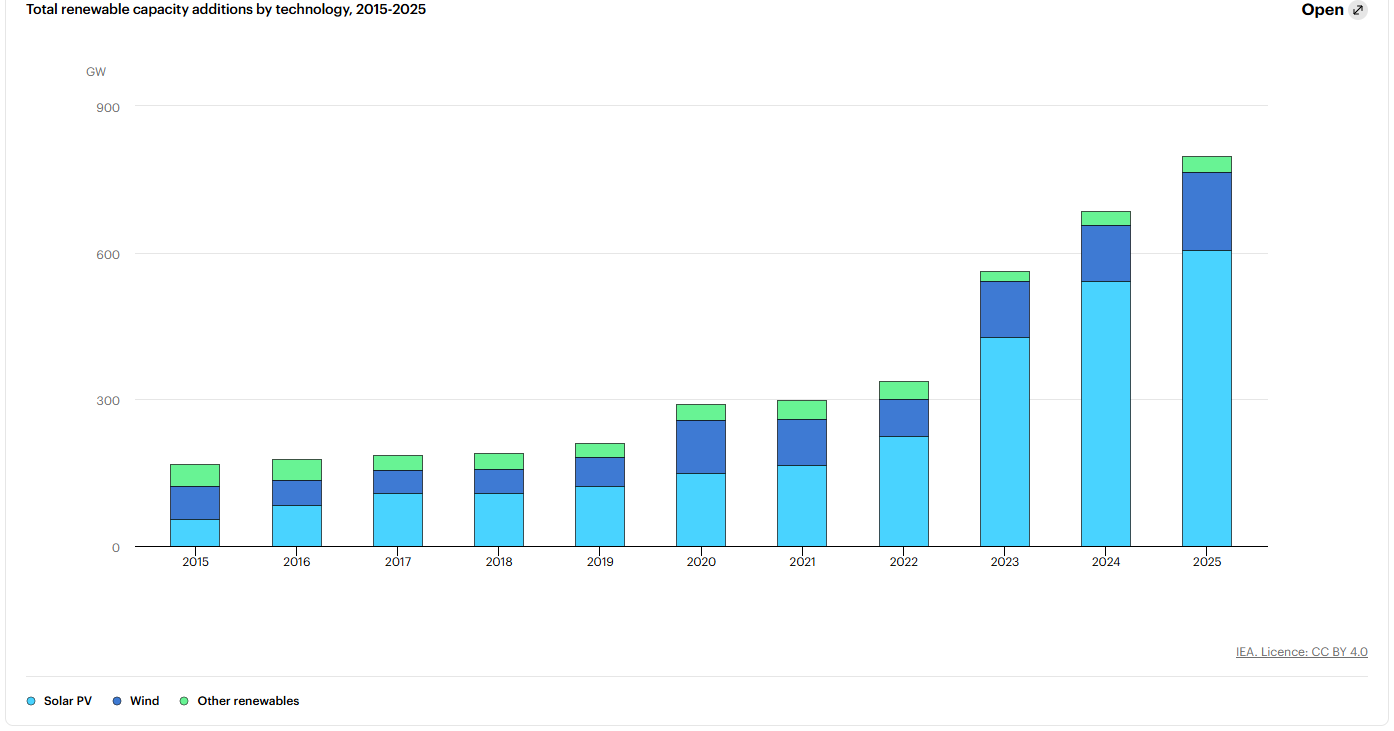
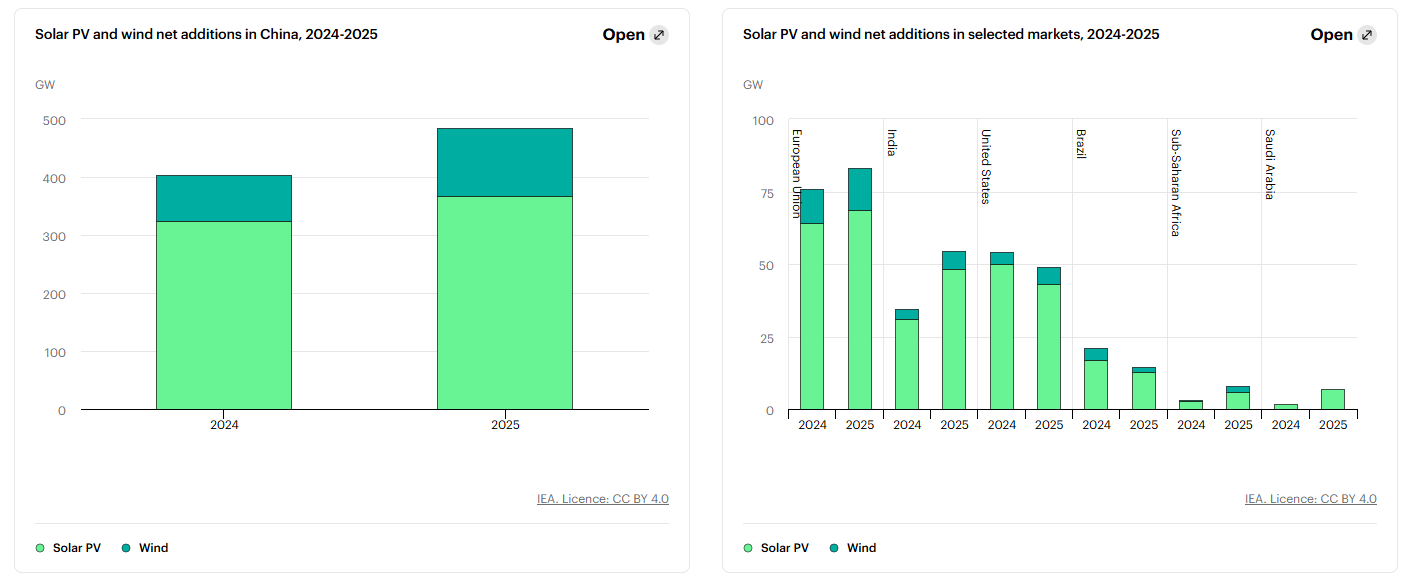
There are achievements to be celebrated at COP31. When the Paris Agreement was negotiated in 2015, the world was on track to experience catastrophic warming of 3.7°C–4.8°C (6.7°F–8.6°F) by 2100. Thanks to policy shifts and the growth of clean energy, including a spectacular increase in global solar capacity by 2025 to over 10 times what it was in 2015, projected warming by the end of the century has fallen.

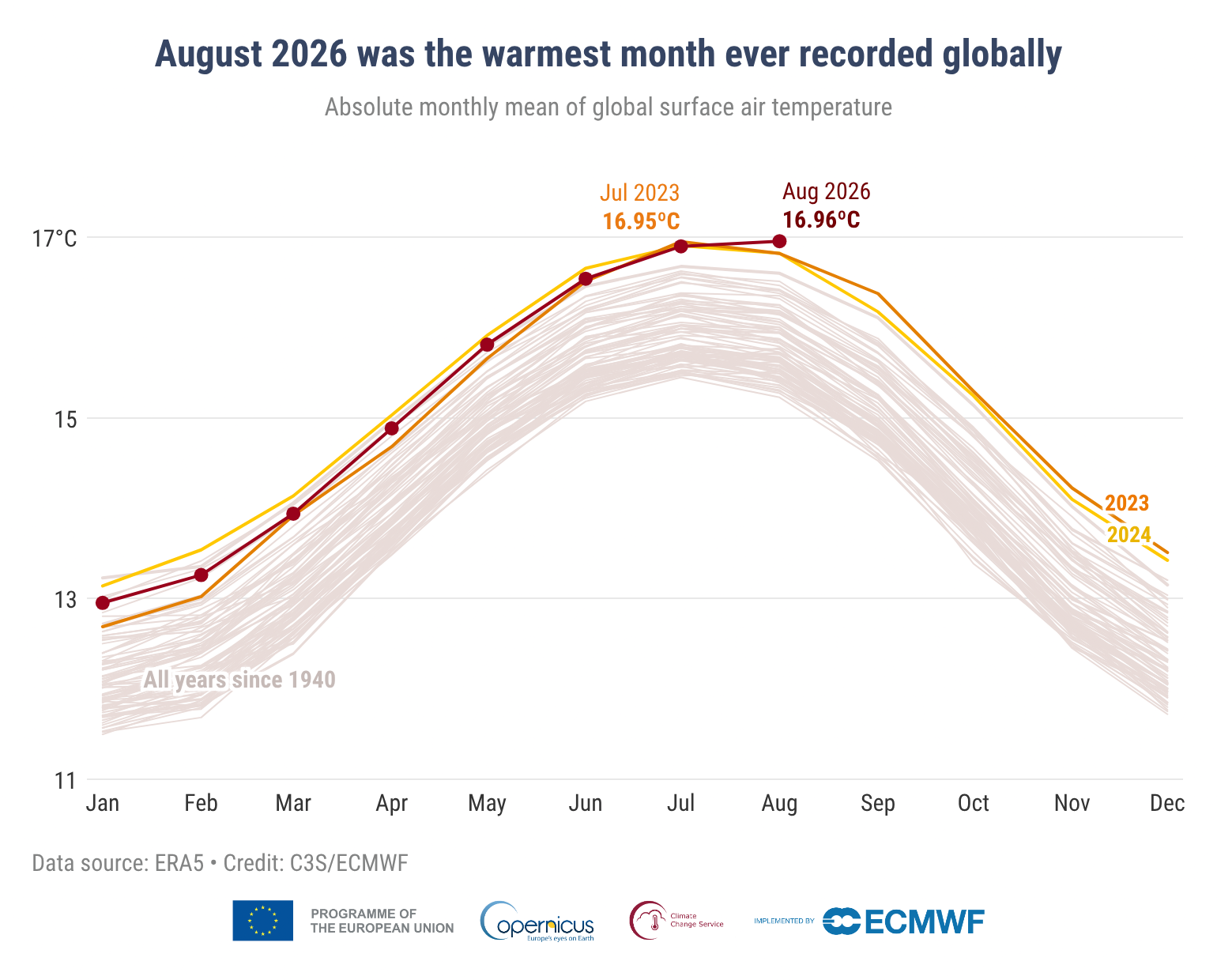
Under current policies, temperatures are now expected to rise by around 2.8°C (5.0°F), or around 2.6°C (4.7°F), if the most recent climate commitments are fully implemented. This is still an extremely dangerous level of warming, but bending the curve downward by a degree spares the Earth from some of the worst consequences of climate change. The heat is already beginning to bite: August 2026 joined July 2023 as the hottest month on record globally.
What’s on the agenda at COP31?

The summit in Antalya will cover familiar points of discussion from previous COPs, including climate finance, greater emissions reduction and funding for loss and damage in countries that have contributed the least to climate change. Of these, finance will likely prove the most contentious issue on the formal negotiating agenda.

Climate finance. Article 9.1 of the Paris Agreement states that developed countries “shall provide” financial resources to developing nations “with respect to both mitigation and adaptation”—but who pays, in what form, and how much are matters of long-standing debate. At COP31, developing nations will continue pressing developed countries to deliver on existing funding commitments, including the COP29 goal to mobilise at least $300bn per year in climate finance by 2035 and the COP30 call to at least triple adaptation finance over the same period. Developed countries provided and mobilised a record $136.7bn in climate finance in 2024, according to the Organization for Economic Cooperation and Development (OECD). Although developing nations are seeking faster and larger payouts and note that loans can add to debt distress, developed nations are under financial stress from increased fuel costs.

Fossil fuels. How to treat fossil fuels is a recurring point of contention at recent COPs. At COP30, the parties failed to formalise a roadmap for transitioning away from fossil fuels, even though the measure drew support from a broad coalition of more than 80 countries. The outcome of COP30—the Belém Political Package—omitted the words “fossil fuels” from the official text. Vulnerable nations, civil society groups, environmental nongovernmental organisations, and other actors viewed the omission as a major pullback from the Glasgow Climate Pact (COP26), which called for the phasedown of unabated coal power and phaseout of inefficient fossil fuel subsidies, and the United Arab Emirates Consensus (COP28), which explicitly called for transitioning away from fossil fuels. To quell the tension, the COP30 presidency published elements of a voluntary roadmap ahead of COP31.

Emissions reductions. The COP31 formal agenda includes the Mitigation Work Program, an initiative designed to accelerate emissions reductions. In a June lead-up meeting to COP31, however, nations could not agree on the terms of the initiative, including whether it should drive cuts or remain a space for dialogue. Negotiators have also clashed over the Global Goal on Adaptation, tussling over whether to reference the call to triple adaptation finance into the formal text and how to shape metrics and indicators to measure progress.

Other topics. Another issue likely to feature is the just transition mechanism agreed to be developed at COP30. The mechanism aims to strengthen cooperation and provide technical support to economies transitioning away from carbon-intensive industries. But questions remain over how the mechanism should operate in practice, and further dialogue on the topic is scheduled to take place at COP31.

Additionally, since COP26 in Glasgow, when the Global Methane Pledge was introduced, more than 150 countries have signed on to reduce methane emissions. Methane is a potent greenhouse gas that is responsible for about 30% of global warming and plays a significant role in near-term heating. There are low-cost, readily available ways to cut methane, and doing so now would help slow the rate of heating. There are hopes that COP31 will help accelerate ambition to cut methane emissions, particularly in the oil and gas sectors.
 

What’s standing in the way of climate action?

The Paris Agreement’s stretch goal of limiting global warming to 1.5°C (2.7°F) has slipped out of reach, according to the 2026 Emissions Gap Report by the UN Environment Program. The report finds that efforts to keep warming to well below 2°C (3.6°F) would require emissions to fall 18% by 2030, 45% by 2035, and 69% by 2040, compared with 2025 levels. Yet current national commitments will not yield that level of reduction. Beyond the lack of ambition shown by many countries, additional headwinds have emerged with the potential to push the 2°C goal even further out of reach.

One such headwind is the delay in science-based reporting. The second global stocktake—an inventory check of progress toward meeting the Paris Agreement’s goals—will begin at COP31, but the scientific process that underpins it is sputtering. The Intergovernmental Panel on Climate Change (IPCC), the UN-backed body of scientists responsible for assessing the latest climate science, has failed to reach agreement on when it will finalise the next set of working-group reports. The IPCC had proposed publishing the reports in 2028, but member states were unable to agree on a timeline at a meeting in October. A group of countries, including China and Saudi Arabia, argued that more time was needed because the dominance of developed nations in climate science skewed IPCC findings.

But delaying the timeline means that nations could base their next round of national commitments to reduce emissions on outdated science. Some scientists and experts warn that in the absence of updated, comprehensive climate science reporting, climate ambition could wane among some parties.

Adding to the headwinds is uncertainty over the outcomes of national elections. In the United States, control over both chambers of Congress could decide if climate change regains prominence in national policymaking or not. In Europe, recent electoral gains by right-wing parties could see climate policies falling out of favour and new limits placed on climate-related action.

Climate change is also receiving less attention now than it was during the heady days of the Paris Agreement. Media coverage of the issue has declined over the last four years in several regions around the world, including Europe and North America, according to a study by the University of Colorado Boulder. And the number of journalists registered to attend the June lead-up meeting to COP31 reached its lowest level since 2021.


Is COP worth all the effort?

While the summit in Turkey is not the first COP to take place without the United States’ participation, the country’s continued absence comes during a consequential time for the COP process amid continuing questions about its effectiveness. The emphasis on implementation, present at COP30 as well, reflects a widespread concern that the summits’ outcomes are long on dialogue and commitment and short on concrete action. Those are fair criticisms.

One thing that the COP process does well, however, is keeping the issue of climate change on the global agenda. Every year, countries know that they will be expected to show up and, to some extent, lay bare what they have (or have not) accomplished on climate action. Moreover, the annual convening provides countries with an opportunity to build coalitions on pressing problems, such as accelerating efforts to cut methane.

COP31 isn’t expected to be characterised by one big outcome or breakthrough. But that nations continue to convene in this formal channel shows that climate action and the hope for a better future that it portends is not going away.

The authors of this article are Alice C. Hill, a Council on Foreign Relations expert and David M. Rubenstein senior fellow for energy and the environment & Angus Soderberg, a research associate, climate change policy.

This work represents the views solely of the author(s). The Council on Foreign Relations is an independent, nonpartisan membership organisation, think tank and publisher, and takes no institutional positions on matters of policy.

The article was originally published here on the Council on Foreign Relations website. It is republished under Creative Commons licensing (Creative Commons Attribution-NonCommercial-NoDerivatives 4.0 International (CC BY-NC-ND 4.0) Licence).


Nine in 10 Turks oblivious their country is set to host world’s flagship climate summit COP, survey finds
Nine in 10 Turks oblivious their country is set to host world’s flagship climate summit COP, survey finds
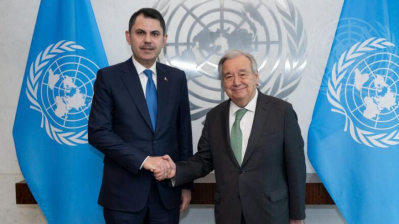
UN Secretary-General António Guterres (right) meets with Murat Kurum, Turkey's Minister of Environment, Urbanization and Climate Change, who is serving as the COP31 president. / UN
By IntelliNews Turkey desk November 8, 2026

Tomorrow (Monday, November 9) marks the start of Turkey’s 12-day hosting of the latest COP world climate summit – but it seems nine out of 10 people in the country are not even aware of the impending event.

Turkish media outlet bianet on November 6 reported on a survey conducted by KONDA Research and Consultancy. It found that just 10% of respondents had heard that the UN Climate Change Conference (COP31) was to be held in Turkey, while just 5% said they knew what it was.

The finding suggests Turkey has invested little in communicating the importance of COP31 to its own people, while ministers have been busy bigging up the country’s dedication to the energy transition before international media and financiers ahead of the summit in the Mediterranean setting of Antalya.

Nevertheless, despite the lack of climate summit awareness, survey data also reportedly pointed to 77% of respondents urging Turkey to prioritise and accelerate investments in solar and wind power and 78% calling for no additional coal mines to be opened. Half of those quizzed said Turkey’s planned construction of new coal-fired power plants would conflict with its goal of demonstrating leadership at COP31. To some embarrassment, Turkey in 2024 overtook Germany to become Europe's biggest user of coal in power generation.
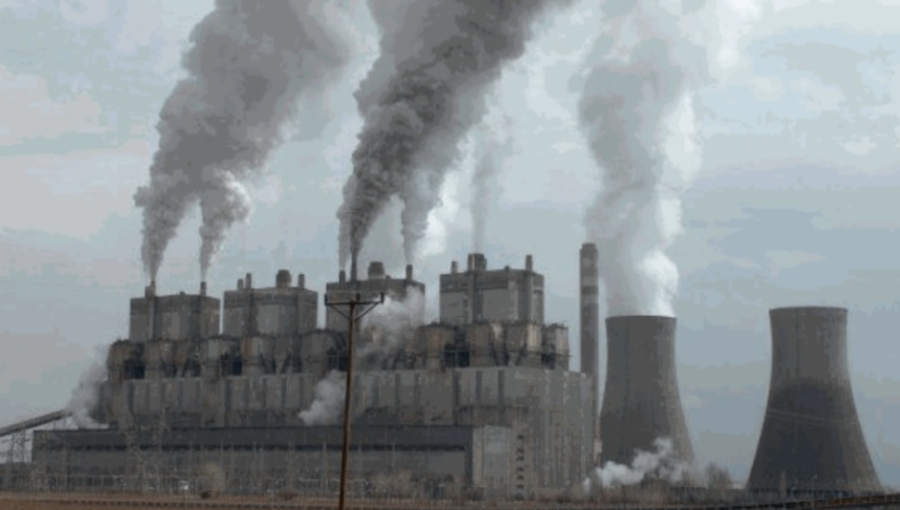
Coal remains the largest single source of power generation in Turkey (Credit: Javabite, cc, wiki).

The survey outcomes also showed that some 71% of respondents were reported as worried or very worried about climate change, with that figure up seven percentage points from a poll conducted in November last year.

In 2025, 43% of Turkey’s electricity derived from clean energy sources, of which wind and solar accounted for 22%, according to energy think tank Ember.

Energy Minister Alparslan Bayraktar on November 5 set out plans to triple Turkey’s installed solar and wind capacity from around 40 gigawatts to 120 GW by 2035. Coal, is, however still the leading single source of power generation in Turkey at 33.5%, and despite its ambitious drive for a green electrification, Ankara as yet has no plan to make a definitive shift away from fossil fuels. It is still building coal-fired power plants and has not set a date to phase out fossil fuels.

"Türkiye's continued reliance on coal, alongside plans for further expansion, highlights the contradiction at the heart of its current trajectory," Duygu Kutluay of Beyond Fossil Fuels told AFP.

There could be no genuine energy transition while "coal remains the country's largest source of electricity generation", she said.

"As Türkiye increases renewable capacity, it must ensure clean electricity replaces fossil-fuel generation rather than simply meeting additional demand," Kutluay was further quoted as saying.

Bayraktar has talked about initially replacing coal with gas, prior to a medium to long term substitution achieved with nuclear. Last week, the energy minister said that the first reactor of Turkey’s first, and much delayed, nuclear power plant, Akkuyu, built by Russia’s Rosatom, should be online by the start of 2027.

Turkey is placing a big bet on nuclear as it seeks to hit emissions targets. The opening of its first nuclear power plant, the much-delayed Akkuyu (above), might be just around the corner (Credit: Rosatom).

Emin Emrah Danis, chief executive of MOBEN consultancy, observed in remarks to AFP that Turkey must ensure its "baseload" generation can deliver constant power around the clock.

"For coal's share of power generation to fall to meaningful levels, Türkiye needs substantial investment in electricity storage and nuclear power," he said, referring to battery storage for renewable power.

Turkey’s nuclear expansion, with two more plants planned, would be unlikely to provide enough baseload capacity to replace coal-fired electricity generation before around 2040, Danis also said.

Separately, COP31 will include the formal launch of the Türkiye Industrial Decarbonization Investment Platform (TIDIP), targeting hard-to-abate sectors in Turkey, including steel, aluminium, cement and fertilizer.

Developed jointly by the Turkish Industry and Technology Ministry, the European Bank for Reconstruction and Development (EBRD), the International Bank for Reconstruction (IBRD) and the World Bank Group’s International Finance Corporation (IFC), TIDIP will attempt to mobilise over $6bn by 2030. The capital will be invested in securing an annual reduction of 20mn tonnes of CO2 equivalent across carbon-intensive sectors.

TIDIP is supported with $250mn in initial seed funding from the Clean Technology Fund and up to €5.7bn in aligned EU IPA III support.

The platform prioritises green hydrogen, carbon capture, energy efficiency and renewable power integration.

Turkish Industry and Technology Minister Mehmet Fatih Kacir said TIDIP will aim to deepen strategic investment ties between Turkey and European markets while also preparing domestic industrial exporters for compliance rules in the pipeline, such as the EU’s Carbon Border Adjustment Mechanism, or CBAM.


Political uncertainty and corporate green investment: Evidence from European firms


Tsinghua University Press

Expected green investment in financial constraint groups according to political uncertainty

image: 

Left: fitted responses of the disclosure-based green investment proxy. Right: marginal effects with 95% confidence intervals. Tighter financial constraints amplify firms’ negative responses to political uncertainty.

view more 

Credit: Ruoyi Li and coauthors, Energy and Climate Management.


Corporate investment is essential to Europe’s transition toward climate neutrality. However, projects with long payback periods depend on predictable policy. A study published in Energy and Climate Management on September 30, 2026, examines how political uncertainty can impede green investment and which firms are most vulnerable.

Researchers from Renmin University of China, the University of Amsterdam and Ludwig-Maximilians University Munich analyzed 2,358 firm-year observations across 20 European countries from 2016 to 2021.

They used newspaper-based Economic Policy Uncertainty indices at European and national levels. Nine green-related keywords in annual reports, adjusted for report length, provided a proxy for firms’ disclosed orientation toward green investment. This indicator does not measure monetary expenditure.

Fixed-effects models, supplementary instrumental-variable estimates and checks using the World Uncertainty Index supported a negative relationship between uncertainty and the green investment proxy.

The paper highlights national policy predictability because governments implement climate commitments through subsidies, permits and regulation. As the authors write in the paper, “climate neutrality requires not only ambitious goals but also stability in fulfilling them.”

Uncertainty was also associated with tighter financial constraints, while more constrained firms showed stronger negative responses. Political connections provided a partial buffer, potentially through policy information and resources, but can carry agency costs and reputational risks.

European-level uncertainty was significantly associated with lower green investment indicators among EU and UK firms. The authors recommend predictable national implementation, targeted financing and wider access to policy information.

Future research could extend the disclosure measure to additional environmental dimensions, compare industries and countries, and identify policy designs that unintentionally increase uncertainty. The broader goal is to preserve corporate decarbonization through policies that remain credible during political turbulence.


Author biography

Lei Zhang is the corresponding author of this study at the School of Ecology and Environment, Renmin University of China.


DOI Link:

https://doi.org/10.26599/ECM.2026.9400039


Synergistic impact of structural macroprudential policies on climate transition risks


Tsinghua University Press
The Mitigating Effect of Differentiated Capital Adequacy Ratio (CAR) Requirements on Transition Risks

image: 

Impulse responses of macroeconomic variables to a carbon tax shock. Note: ss denotes steady state.

view more 

Credit: Energy and Climate Management, MOE Laboratory for Low-carbon Intelligent Governance (LLIG), Beihang University


Environmental Dynamic Stochastic General Equilibrium (E-DSGE) models have become increasingly prevalent in climate transition risk assessment, offering valuable insights into the complex interactions between climate policy, macroeconomic performance, and financial stability. The E-DSGE model developed in this paper is a multi-sector dynamic stochastic general equilibrium model incorporating pollution externalities, banking-sector financial frictions, carbon tax policies, and a differentiated capital adequacy ratio (CAR) requirement policy. It is well-equipped for analyzing how carbon pricing generates transition risks in China, how financial frictions amplify these risks, and how structural macroprudential policy can mitigate them while achieving emission reduction targets.


The team published their paper in Energy and Climate Management on August 20, 2026.


“This E-DSGE model aims to evaluate the macroeconomic and financial stability impacts of carbon tax policies, identify the climate transition risks arising from rapid decarbonization, examine how financial frictions in the banking sector amplify these risks, and assess whether a differentiated capital adequacy ratio requirement policy can mitigate transition risks while achieving emission reduction targets,”said Ying Fan, corresponding author of the paper, professor in the School of Economics and Management at Beihang University and Director of the MOE Laboratory for Low-carbon Intelligent Governance (LLIG).


The team presents an overview of the E-DSGE model and its policy applications. The model incorporates pollution externalities, banking-sector financial frictions, carbon tax policies, and a differentiated capital adequacy ratio requirement policy within a multi-sector dynamic general equilibrium framework. It is applied to evaluate the macroeconomic and financial stability impacts of carbon tax policies—the so-called transition risks—to analyze how financial frictions amplify these risks through credit contraction and bank net worth losses, and to assess whether differentiated CAR requirements can mitigate transition risks while achieving emission reduction targets. The model is well-equipped for policy coordination analysis under China’s dual carbon goals.


The modeling methods used in the E-DSGE model are described in detail, including the model sectors and agents (households, green and brown firms, banks, and the government), parameter calibration procedures, the representation of pollution externalities and banking-sector financial frictions, the differentiated capital adequacy ratio (CAR) requirement policy, climate policy simulation methods, dynamic optimization and equilibrium conditions, and numerical implementation.


The research team expects the paper to guide model users and spur further development of E-DSGE modeling in China. Ying Fan said, “The E-DSGE model is well-equipped for future applications in climate policy analysis under China’s dual carbon goals. We expect to further integrate the model with economic fluctuations and, within a business cycle framework, explore optimal policy combinations and coordination.”


Other contributors include Shanhua Zhang and Hao Jin from the School of Economics and Management at Beihang University and the MOE Laboratory for Low-carbon Intelligent Governance (LLIG) at Beihang University.


This work was supported by the Fundamental and Interdisciplinary Disciplines Breakthrough Plan of the Ministry of Education of China (No. JYB2025XDXM904) and the National Natural Science Foundation of China (No. W2412161).


DOI Link:

https://doi.org/10.26599/ECM.2026.9400038


Conducting traditional Chinese medicine trials that achieve global credibility


High-quality randomized controlled trials are needed


SciOpen

How Can TCM RCTs Achieve Global Credibility

image: 

Traditional Chinese Medicine’s randomized controlled trials can achieve global credibility through meeting general standards of scientific rigor; demonstrating generalizability; and addressing traditional Chinese medicine-specific challenges.

view more 

Credit: Evidence-Based Chinese Medicine and Technology Assessment, Tsinghua University Press


Researchers have published a paper discussing the key requirements that traditional Chinese medicine trials should meet to gain global credibility.


This paper was published in the journal Evidence-Based Chinese Medicine and Technology Assessment on September 2, 2026.


For generations, traditional Chinese medicine has operated based on the teachings of ancient clinicians and centuries of accumulated clinical experience with the knowledge summarized from historical practice and handed down through classical literature and master-apprentice mentorship. By contrast, Western medicine has operated based on a framework of evidence-based medicine that evaluates the effectiveness of health care interventions, patient prognosis, and diagnostic accuracy.


“Success in bringing traditional Chinese medicine to the West requires high-quality randomized controlled trials that rigorously evaluate its effects. This paper outlines the key requirements that traditional Chinese medicine trials should meet to gain global credibility,” said Professor Ying Wang from the University of Chinese Medicine, Beijing, China.


The traditional Chinese medicine randomized controlled trials will need to be exemplary in their content and design. This involves choosing clinical questions that are important and prevalent in both China and the West. The team should consist of experienced trialists, statisticians and data mangers conducting the randomized controlled trials. Several thousand patients should be included in the trial samples.


For Western doctors and patients to have confidence in the trials, the research team suggests that the trials take place at multiple hospital locations, including Western hospitals. Although this multicenter approach is more costly and challenging logistically, it is necessary to build confidence among Western doctors and patients.


There are some challenges specific to traditional Chinese medicine. In disease diagnosis, traditional Chinese medicine uses “patterns” while Western medicine uses “disease” classification. With pattern diagnosis, doctors base their diagnosis on a comprehensive analysis of symptoms and then select treatment based on the patterns. For example, the same disease in different patients, or even in the same patient at different stages, may represent different underlying patterns that call for different treatments. For traditional Chinese medicine to gain acceptance in the West, adopting the Western disease classification for eligibility criteria in the trials and then conduct subgroup analysis by patterns would be ideal.


A second challenge specific to acupuncture trials is blinding. It is difficult to construct a sham acupuncture control that is indistinguishable from true acupuncture and physiologically inert. Researchers are still searching for successful ways to conduct acupuncture randomized controlled trials.


The third challenge specific to traditional Chinese medicine relates to Chinese herbal medicine trials. Traditional Chinese medicines typically prescribe Chinese herbal medicine as a blend of multiple herbs tailored to each patient’s specific needs. This level of personalization is nearly impossible to replicate in Western settings. Standardized finished dosage forms, such as pills, granules, and tablets, known as proprietary Chinese medicines, are needed for conducting trials in Western countries.


“For traditional Chinese medicine to gain global acceptance, researchers should embrace evidence-based medicine principles and conduct high-quality randomized controlled trials that meet international standards, with appropriate clinical questions, experienced trialists, adequate sample sizes, low risk of bias, multicenter participation including Western centers, and pragmatic designs,” said Wang. “Beyond these general requirements, researchers must also address challenges specific to traditional Chinese medicine.”


In their paper, the research team provides guidance on conducting high-quality randomized controlled trials to evaluate the effects of traditional Chinese medicine and generate credible evidence. Traditional Chinese medicine practitioners must prove that their practices work using general scientific and global research methods, if they want to be successfully accepted globally. “Demonstrating the benefits of traditional Chinese medicine by high-quality randomized trials could promote its international acceptance and use,” said Professor Gordon Guyatt.


The researchers include Ying Wang, Beijing University of Chinese Medicine, Beijing, China, and Gordon Guyatt, McMaster University, Ontario, Canada. Professor Guyatt is also a visiting professor at Beijing University of Chinese Medicine.  This work was funded by Research and Development for Evidence-Based Chinese Medicine Program, Ministry of Education and Ministry of Science and Technology of the People’s Republic of China.


DOI Link:

https://doi.org/10.26599/eCMTA.2026.9570044


Europe can establish safeguards for enhanced rock weathering before large-scale carbon crediting begins


A new Perspective proposes an EU-specific certification approach based on verified net carbon removal, lifecycle accounting, explicit treatment of uncertainty and safeguards for feedstocks, soils and water


Tsinghua University Press

Enhanced rock weathering in the European Union: from deployment to responsible carbon removal

image: 

Graphical overview of the proposed pathway for responsible enhanced rock weathering in the European Union, linking deployment, monitoring and verification, environmental safeguards, and carbon-removal certification.


view more 

Credit: Behrouz Gholamahmadi


Enhanced rock weathering (ERW) is gaining attention as a carbon dioxide removal (CDR) approach that could be integrated into existing agricultural systems. Finely ground silicate rocks such as basalt are applied to soils, where weathering reactions can consume carbon dioxide and generate dissolved inorganic carbon that may be transported towards long-term storage. Translating that geochemical potential into a defensible carbon credit, however, is not straightforward.

A new Perspective published in Energy and Climate Management argues that the European Union should treat ERW as a promising but conditional soil-climate practice rather than as a ready-made carbon-credit product. The article, by Behrouz Gholamahmadi of Ibero Massa Florestal S.A. and the Centre for Environmental and Marine Studies (CESAM), University of Aveiro, examines what would be needed for responsible certification, monitoring and governance of ERW in Europe.

“Applying rock to a field should not, by itself, trigger a carbon credit,” said Gholamahmadi. “Certification should follow verified net carbon removal, after lifecycle emissions, time lags, uncertainty and downstream carbon and alkalinity losses have been accounted for.”

The Perspective stresses that ERW involves a chain of processes rather than a single measurable event. Mineral dissolution in the amended soil is only the beginning. Carbon and alkalinity can move through deeper soils, groundwater, rivers and eventually the ocean, while the climate benefit may be delayed and some carbon or alkalinity may be lost along the pathway. Quarrying, grinding, transport and field application also generate emissions that must be deducted from gross removal.

To address this, the article proposes an ERW-specific methodology under the EU Carbon Removals and Carbon Farming Certification Framework. It recommends distinguishing “potential CDR” from “certifiable CDR”, combining empirical near-field measurements with conservative modelling of far-field processes, and issuing carbon-removal units only after net removal has been generated and verified. Where time lags are long or uncertainty remains unresolved, issuance should be delayed or restricted to the fraction that can be conservatively supported by the evidence.

The paper also calls for strong feedstock and site safeguards. Mineral composition, particle size, contaminant concentrations, sourcing, transport burden, baseline soil conditions, hydrology and crop system can all affect whether an ERW deployment produces credible net removal without unacceptable environmental impacts. Potential agronomic co-benefits, such as improved soil pH or nutrient availability, should be reported separately from verified carbon-removal claims.

The European policy context creates an opportunity to build these safeguards before ERW crediting becomes widespread. The Perspective links future ERW certification to the EU carbon-removal framework, the Soil Monitoring Law and the Common Agricultural Policy. It argues that monitored pilots and farmer participation can be supported through agricultural and soil programmes even where tonne-for-tonne carbon crediting is not yet justified.

“Europe has a policy window now,” Gholamahmadi said. “The EU can establish an evidence-based methodology before large-scale crediting becomes established, while still supporting carefully monitored deployment and learning in the field.”

The article concludes that ERW could become a credible part of the EU climate portfolio, but only if certification follows verified net removal rather than tonnes of rock applied. Long-term field evidence, cradle-to-grave accounting and transparent treatment of uncertainty will be central to building trust in the pathway.

The Perspective was published on 30 September 2026 in Energy and Climate Management. The author acknowledges support from the European Union’s Horizon Europe C-SINK project, grant agreement No. 101080377.


DOI Link:

https://doi.org/10.26599/ECM.2026.9400040