It’s possible that I shall make an ass of myself. But in that case one can always get out of it with a little dialectic. I have, of course, so worded my proposition as to be right either way (K.Marx, Letter to F.Engels on the Indian Mutiny)
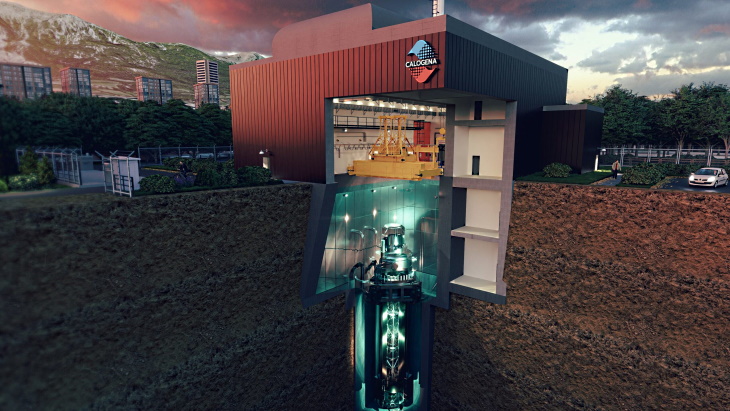
French small modular reactor developer Calogena has been awarded EUR40 million (USD44.6 million) through the European Commission's Innovation Fund to support the potential construction of its first commercial nuclear reactor in Pierrelatte, in southern France.
(Image: Calogena)
Calogena - a subsidiary of Group Gorgé founded in 2021 - is developing a water-cooled small modular reactor (SMR), called the CAL30, with a thermal power of 30 MW, specifically designed to supply urban heating networks with carbon-free energy. Its technology is based on a low-temperature, low-pressure pool-type reactor. It says its simple design aims to deliver a high level of safety and allows it to be located close to district heating networks. The CAL30 will be able to supply heat to about 20,000 homes. Calogena said its aim is for deployment as early as 2030.
The Innovation Fund is one of the world's largest funding programmes for the deployment of innovative net-zero and low-carbon technologies. Established by Article 10a (8) of Directive 2003/87/EC to support innovation across all EU Member States, it is one of the key tools of the European Green Deal Industrial Plan. Financed by revenues from auctioning allowances from the European Union Emissions Trading System and with an estimated revenue of approximately EUR40 billion between 2020 and 2030, the Innovation Fund aims to help businesses invest in clean energy and bring technologies to market that can decarbonise European industry, while fostering its competitiveness.
"The Innovation Fund grant would enable Calogena to reach a new industrial milestone by building its first commercial reactor in Pierrelatte, supplying the town with locally produced, low-carbon heat," the company said. "For Calogena, this support marks the transition to its first commercial project, following more than EUR50 million in funding secured under France 2030 to develop its technology and bring it to industrial scale."
Calogena was selected in 2023 as part of the Innovative Nuclear Reactors call for projects under the aegis of the French government via the Secrétariat Général Pour l'Investissement, in order to support the development of nuclear technologies.
Through its CityHeat project with Finland's Steady Energy, Calogena also participates in the European SMR Industrial Alliance.
The Pierrelatte project could become Calogena's first commercial reference and pave the way for deployment in other European towns and cities. The company is already involved in several projects outside France and is notably in contention to supply more than fifteen reactors in Finland.
In June, Calogena signed a cooperation agreement with Veolia, a European leader in district heating, to explore the potential of its SMRs to decarbonise district heating networks in Central and Eastern Europe.
"This funding marks a major milestone for Calogena," said Julien Dereux, Executive Chairman of Calogena. "Having developed our technology and brought it to industrial scale, we are now entering the construction phase of our first commercial reactor. The European Commission's support confirms the maturity of our project and its potential to address one of Europe's major energy challenges: producing local, low-carbon, cost-competitive heat at scale while strengthening energy sovereignty. Pierrelatte would be our first commercial reference and should pave the way for wider deployment across Europe."
Calogena's CAL30 is one of four SMR designs being evaluated by the French Nuclear Safety and Radiation Protection Authority.
X-energy selects Fluor for second Xe-100 project
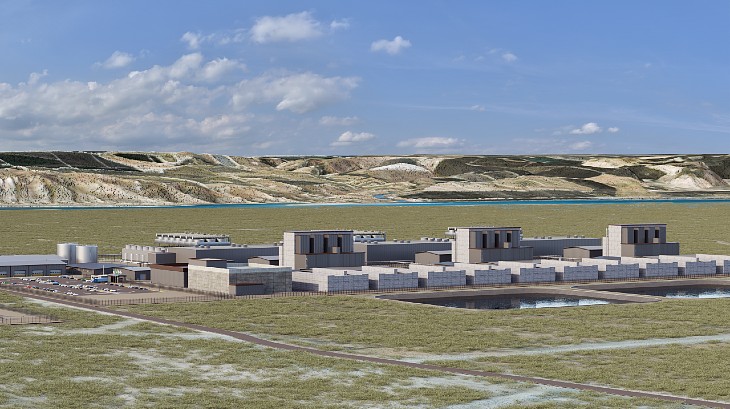
Fluor Corporation is to provide design and engineering services to support the second-of-a-kind US project featuring X-energy's Xe-100, at Energy Northwest's proposed Cascade Advanced Energy Facility near Richland, Washington.
A rendering of the proposed Cascade plant (Image: Amazon/X-energy)
This is the second commercial contract between the two companies for nuclear island engineering and design: in April, Fluor entered into a contract with X-energy to support the company's first proposed Xe-100 project at Dow's UCC Seadrift Operations in south Texas under the US Department of Energy's Advanced Reactor Demonstration Program. The latest agreement builds on Fluor's ongoing work for the Texas project, the companies said, enabling them to incorporate learnings from one project into the next, with the aim of targeting long-term cost and schedule reductions through standardisation and repeatable project execution.
The Cascade facility is expected to deploy four of X-energy's Xe-100 high-temperature gas-cooled reactors, each with a capacity of 80 MWe, for a total capacity of 320 MWe, with the potential to scale to a total of 12 units.
Under the agreement, Fluor will provide engineering, design development, supply chain, estimating and project control services for the nuclear island scope of the Cascade facility. The value of the contract has not been disclosed, but Fluor said it will "recognise" the value in the third quarter.
Cascade Nuclear Partners, a joint venture of Kiewit Nuclear Solutions, Black & Veatch, and Aecon, is responsible for the conventional island and integrating requirements across the plant to support potential future phases of the project.
"Advanced nuclear technologies are poised to play a critical role in meeting growing energy demand while supporting decarbonisation goals," Fluor's Business Group President of Energy Solutions Pierre Bechelany said. "The Cascade Advanced Energy Facility represents an important step forward in the deployment of next-generation nuclear energy. Fluor is proud to bring decades of nuclear expertise and project execution experience to support X-energy and its partners in advancing this innovative project."
The Cascade facility is the first project in a collaboration between X-energy and Amazon launched in 2024, with the goal of deploying 5 GW of new nuclear capacity by 2039: utility American Electric Power and X-energy signed a joint development agreement to evaluate the potential second project, for 960 MWe of capacity at a former coal plant site in Indiana, in October.
Engaging experienced engineering partners and suppliers early in each project’s development cycle helps ensure that components, capabilities and expertise are in place as each project advances, X-energy says, as part of a disciplined approach to building project readiness that positions the company and its partners to commercialise and scale energy solutions.
"The success of our projects begins with working as one team, building on each other's expertise to drive toward scale," said Dragan Popovic, Global Chief Operating Officer at X-energy. "Repeated execution with partners of Fluor's quality helps us build that expertise in real time, so that every lesson we carry forward supports greater efficiency in design, licensing, and construction."
NAC to supply used fuel storage solution for Norway
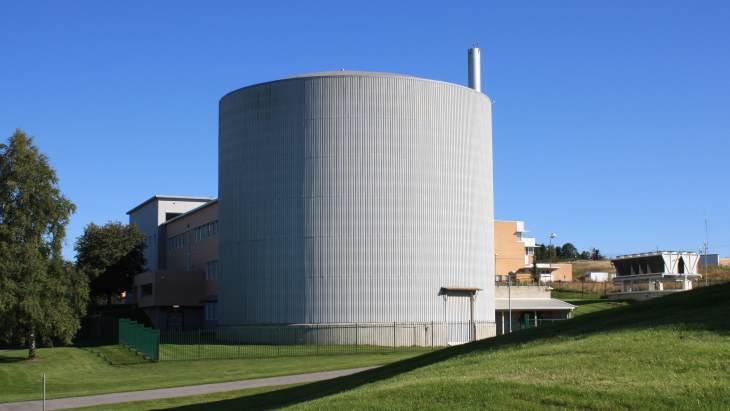
NAC International of the USA has been contracted to deliver casks for the dry storage of Norway's used nuclear fuel from the former research reactors at Halden and Kjeller.
The JEEP-II research reactor at Kjeller, which shut down in April 2019 (Image: IFE)
Norway holds about 16.5 tonnes of used fuel from six decades of operating nuclear research reactors. Much of it cannot be stored long term or disposed of in its current form. The inventory includes metallic uranium fuel, aluminium-clad fuel and experimental fuels.
Following an international tender for a suitable storage system, Norwegian Nuclear Decommissioning received four offers. With the NAC agreement, work on new storage and transport solutions enters a more concrete phase, and once the used fuel has been moved out of the current storage solution, it will open the way for further dismantling of the nuclear facilities that Norwegian Nuclear Decommissioning has been given responsibility for decommissioning.
Using NAC's solution, the used fuel will be stored in a stainless steel container, surrounded by a protective concrete silo. For transport, a separate transport container will be used, not the concrete silo itself. The storage solution is designed for passive dry storage and has a design life of more than 70 years.
Last month, Norwegian Nuclear Decommissioning signed an agreement with Swedish nuclear technical services provider Studsvik to manage used nuclear fuel from the former research reactors at Halden and Kjeller. Under that agreement, which runs until 2055, Studsvik will transport the fuel to its licensed facilities at Studsvik outside Nyköping, Sweden, inspect it and, where required, treat it, including oxidation of metallic uranium fuel, to prepare it for interim storage and final disposal. The treated fuel will remain at Studsvik until it is returned to Norway for final disposal.
"The casks could be important in enabling such treatment," Norwegian Nuclear Decommissioning said. "The transport will take place when the necessary permits and approvals are in place. The casks could also contribute to increasing the safety of the Norwegian nuclear facilities by allowing some of the current solutions to be phased out more quickly, i.e. both in parallel with treatment at Studsvik, and as a supplement to such treatment for some types of fuel. The casks will also be used when the spent fuel returns from Sweden."
"This is good work by everyone involved who has managed to bring an important agreement to fruition," said Norwegian Nuclear Decommissioning Director Pål Mikkelsen. "Together with the agreement with Studsvik, we now have good solutions for the further decommissioning work."
Before the solution can be put into use, NAC will collaborate with Norwegian Nuclear Decommissioning and the Institute for Energy Technology on design, analysis and safety documentation. The development work also includes additional equipment, plans for inspection, maintenance and training. NAC anticipates a development period of 22 months, with start-up dependent on the necessary security agreement being in place. The documentation will then be reviewed before Norwegian Nuclear Decommissioning and the Institute for Energy Technology submit the documentation to the authorities for processing.
The background
Norway's two research reactors - the nuclear fuel and materials testing reactor at Halden and the JEEP-II neutron scattering facility at Kjeller - were declared permanently shut down in June 2018 and April 2019, respectively. In addition to the research reactors, there are several other nuclear facilities that will be decommissioned and a wide range of nuclear waste that must be handled and disposed of in a safe way. The clean-up activities are estimated to cost more than NOK21 billion (USD2.2 billion) and will last for at least 20 years.
Norwegian Nuclear Decommissioning, established in 2018 as a government agency under the Ministry of Trade, Industry and Fisheries, is responsible for decommissioning the research reactors and other related nuclear infrastructure. It is also responsible for the safe handling, storage and disposal of nuclear waste in Norway.
The nuclear facilities in Halden were transferred from the Institute for Energy Technology to Norwegian Nuclear Decommissioning on 1 April last year. Last month, the latter submitted a licence application to the country's nuclear regulator to take over responsibility for the nuclear facilities at Kjeller.
Norwegian Nuclear Decommissioning plans to build a range of different facilities for the storage and disposal of radioactive waste: storage for low- and intermediate-level radioactive waste; storage for used nuclear fuel; a treatment plant where waste can be sorted, processed and treated; and final disposal landfills, "including deep disposal for used fuel/high-level radioactive waste".
Reactor components completed for El Dabaa 1
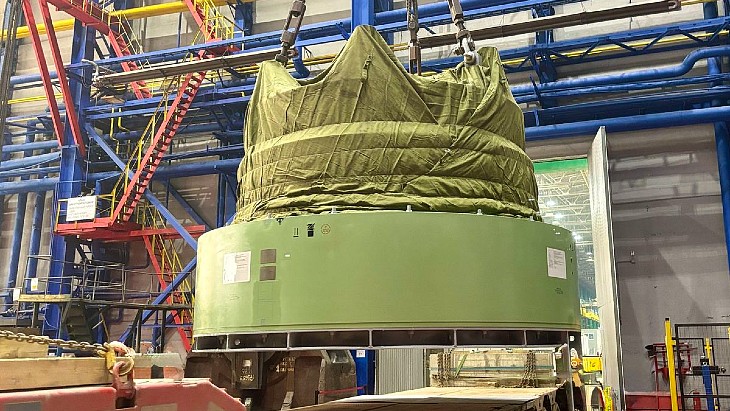
All the key components have now been manufactured for the first unit’s reactor at Egypt's El Dabaa Nuclear Power Plant.
(Image: Rosatom)
Production of the reactor internals and the VVER-1200 reactor head for the unit were produced at Rosatom’s Izhora site in St Petersburg.
Rosatom, Russia's state nuclear corporation, says the total weight of the reactor vessel internals and the reactor head to be shipped to Egypt is about 340 tonnes. Including the already assembled reactor vessel the total weight will be more than 670 tonnes.
"Completion of the internals and reactor head is a crucial step in the construction of the power unit, paving the way for the next stages. Once they are installed, construction workers will be able to proceed with the installation of the remaining reactor hall equipment and move forward with commissioning," Rosatom said.
"The internal reactor vessel devices (including the shaft, baffle, and protective tube block) and the reactor lid form the basis of the reactor core, ensure the correct placement and fixation of the nuclear fuel, as well as the tightness and safety of the entire reactor installation."
Background
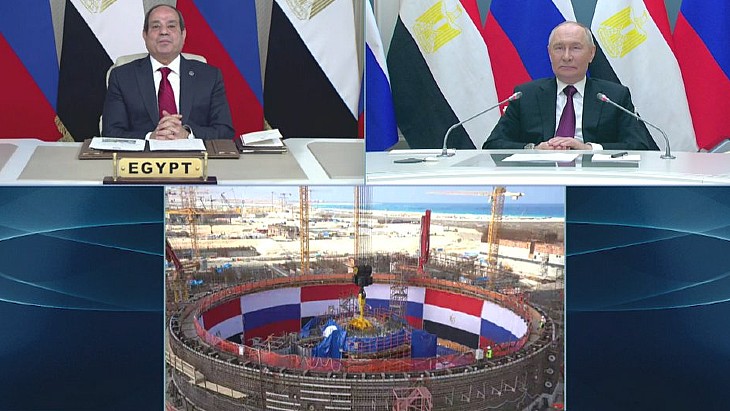
The reactor pressure vessel was installed in unit 1 in November last year, following a ceremony which included speeches from the Egyptian and Russian presidents (see picture below). Among the construction landmarks this year, concreting work on the fourth tier of the reactor building's inner containment was completed in August.
(Image: Kremlin.ru)
El Dabaa will be Egypt's first nuclear power plant, and the first in Africa since South Africa's Koeberg was built nearly 40 years ago. The Rosatom-led project, about 320 kilometres north-west of Cairo, will comprise four VVER-1200 units, like those already in operation at the Leningrad and Novovoronezh nuclear power plants in Russia, and the Ostrovets plant in Belarus.
Under the 2017 contracts, Rosatom will not only build the plant, but will also supply Russian nuclear fuel for its entire life cycle, including building a storage facility and supplying containers for storing used nuclear fuel. It will also assist Egyptian partners in training personnel and plant maintenance for the first 10 years of its operation. Rosatom has said it is aiming for a future service life of up to 100 years for nuclear power plants.
The four units are being built almost concurrently, with first concrete at unit 1 in July 2022, followed in turn by the others, concluding with first concrete at unit 4 in January 2024. Egypt's aim is for 9% of electricity to be generated by nuclear by 2030, which would be achieved by the commercial operation of the first two units by that time, directly displacing oil and gas.
IHI to supply components for first Polish AP1000
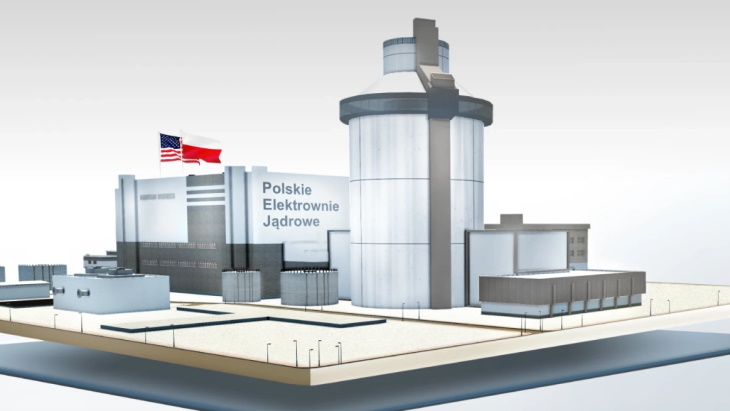
Japanese engineering firm IHI Corporation has received an order from Westinghouse covering engineering and procurement activities for long-lead items for one containment vessel and an associated large steel module for the first unit of Poland's first nuclear power plant.
(Image: PEJ)
The contract covers the containment vessel - an essential safety system that encloses the reactor and other critical systems - as well as the CA01 'super module'. Measuring more than 26 metres long, 29 metres wide and 23 metres high, the concrete and steel CA01 module - composed of 47 sub-modules - sits inside the unit's containment module where it houses the plant's reactor pressure vessel, steam generators and other components.
Three Westinghouse AP1000 reactors are planned for the plant at the Lubiatowo-Kopalino site in the Choczewo municipality in Pomerania in northern Poland. The AP1000 reactor design uses modular construction techniques, enabling large structural modules to be built at factories and then installed at the site. The reactor building and systems consist of dozens of prefabricated, steel-concrete structural and mechanical modules.
Last month, Polskie Elektrownie Jądrowe (PEJ) gave Westinghouse the go-ahead to start ordering long-lead items for the project's first AP1000 unit. It said the scope of the order for the first unit covers six key components of the nuclear island, including the reactor containment vessel and associated structural modules.
Westinghouse subsequently placed conditional purchase orders with Polish companies Energomontaż-Północ Gdynia SA (EPG), FAMAK SA, Mostostal Kielce SA and Mostostal Krakow SA to support the first AP1000 unit at the Lubiatowo-Kopalino site. The conditional purchase orders cover the CA02 Walls Module Scope for Mostostal Kielce, the CA03 Module Scope for EPG, the CA05 Walls Module Scope for Mostostal Krakow, and the CA20 Floors Module Scope for FAMAK.
In an AP1000 unit, the CA02 walls module and the CA03 module are part of the in-containment refuelling water storage tank in the containment building. The CA05 walls module consists of reinforced steel plates that provide protective walls separating various rooms in the containment building. The CA20 floors module consists of reinforced concrete slabs placed on steel plates to form the floors of the larger CA20 module that houses plant equipment inside the unit.
Early procurement of components with long lead times is common in nuclear projects worldwide. It helps secure the availability of production capacity, mitigates the risk of delays, and supports timely project implementation. The scope of work includes preparing technical documentation, quality and supervision plans, selecting and contracting suppliers, and initiating material procurement necessary to commence production. The production and delivery of finished components to the construction site will be handled as part of a subsequent order, which PEJ plans to issue as part of the power plant construction contract.
Construction of the Lubiatowo-Kopalino plant is scheduled to begin in 2028. Under a recent update to the country's nuclear power programme, the first unit is scheduled to start commercial operation in 2036, and the plant is expected to reach full capacity by 2038 - three years later than previously planned.
Construction of Chinese HTGR begins
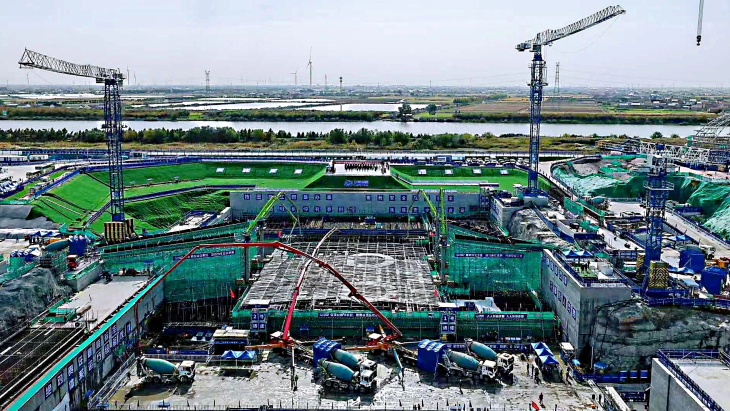
The first batch of concrete has been poured for the nuclear island of the high-temperature gas-cooled reactor that forms part of the initial phase of the Jiangsu Xuwei Nuclear Heating and Power Plant, China National Nuclear Corporation has announced.
(Image: CNNC)
Xuwei Phase I was among 11 reactors approved by China's State Council in August 2024. China National Nuclear Corporation (CNNC) plans to build two 1,208 MWe (net) Hualong One (HPR1000) pressurised water reactors (units 1 and 2) and one 660 MWe high-temperature gas-cooled reactor (HTGR) (unit 3) at the site in Lianyungang, Jiangsu province. The project will be equipped with a steam heat exchange station, which will adopt the heat-to-electricity operation mode for the first time.
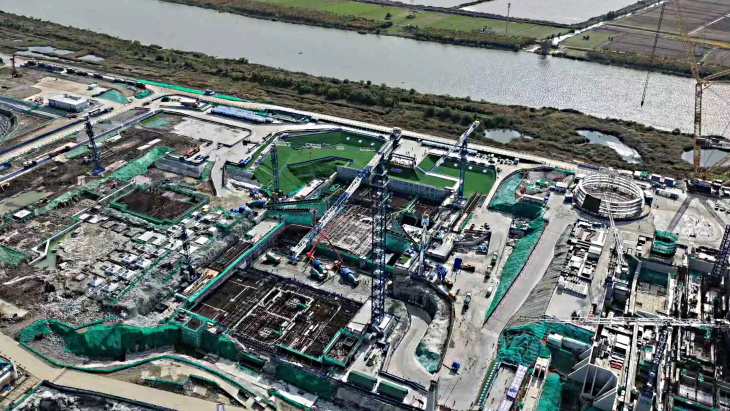
Construction has now started on unit 3 of the plant, which will feature a Chilong One HTGR, jointly developed by CNNC and Tsinghua University. The unit has a rated capacity of 660 MWe and is designed for an operational lifespan of 60 years.
(Image: CNNC)
"With the commencement of concrete pouring for the high-temperature gas-cooled reactor nuclear island of Unit 3, the project construction is progressing smoothly according to plan," CNNC said.
First concrete was poured in January this year for the nuclear island of the unit 1 Hualong One at the Xuwei project.
CNNC said the project is planned to be implemented through direct procurement, with specialised nuclear power engineering subsidiary CNNC Energy Technology Company Ltd entrusted with the high-temperature reactor design, equipment and material procurement and delivery, certification support, construction technical support, commissioning support, equipment training, and related project management. CNNC Energy Technology Company Ltd has previously undertaken EPC general contracting for the nuclear island and balance of plant for the Shandong Shidaowan High-Temperature Gas-Cooled Reactor Nuclear Power Demonstration Project, as well as nuclear island commissioning services. CNNC holds a 46% stake in the company.
(Image: CNNC)
A contract for the construction of the conventional islands of the three units was awarded in September last year to a consortium formed by China Energy Engineering Jiangsu Electric Power Construction No 3 Company and China National Nuclear Huachen Construction Engineering Company. Under the CNY4.2 billion contract, Jiangsu Electric Power Construction No 3 Company will build the three conventional island power plants, their ancillary facilities, and the construction and installation of some 'balance of plant' components.
At the plant - very close to CNNC's existing Tianwan plant - demineralised water will be heated by the primary steam of the Hualong One units to produce saturated steam, and the primary steam of the HTGR will be used to heat the saturated steam for the second time "to generate three different types of high-quality industrial steam with different parameters". CNNC said: "This will meet the industrial steam demand of the petrochemical park. Once completed, the plant will have both high-quality steam supply and power generation capabilities under its design conditions."
A rendering of the Xuwei plant (Image: CNNC)
Once the first phase of the project is completed and put into operation, it will supply 32.5 million tonnes of industrial steam annually, with a maximum power generation of more than 11.5 billion kilowatt-hours, which can reduce the use of standard coal by 7.26 million tonnes and reduce carbon dioxide emissions by 19.6 million tonnes each year.
"Jiangsu Xuwei Nuclear Power Plant is the world's first large-scale coupling project of nuclear energy and petrochemicals, the world's first coupling project of pressurised water reactor and high temperature gas-cooled reactor, the world's first application project of 'reactor-machine-heat' coordinated control mode, and the world's first commercial application project of high temperature gas-cooled reactor," according to CNNC.
CNNC Suneng Nuclear Power Company is the CNNC subsidiary which is the owner of the Xuwei project and responsible for project investment, construction and operation management.
"From experimental reactors and demonstration projects to the commercial promotion of the Xuwei project, China's fourth-generation nuclear energy technology is accelerating towards large-scale industrial application," CNNC said. "The commercial application of high-temperature gas-cooled reactors not only provides a large-scale supply of high-quality heat sources for the petrochemical industry, but also promotes the transformation of China's nuclear energy from primarily power generation to diversified supply, providing a replicable 'Chinese solution' for the green transformation of energy-intensive industries worldwide."
It was back in the days after the 1973 oil crisis that the then Philippine President Ferdinand Marcos's administration decided to build a nuclear plant. The initial plan was for it to comprise of two 600 MWe units. By the time the contract was signed in February 1976, that plan had evolved into a single 621 MWe Westinghouse unit, to be built at Napot Point in Bataan.
Construction work began in July 1976 and was completed in 1984 at a cost of $1.9 billion. However, due to financial issues and safety concerns related to earthquakes, the plant was never loaded with fuel or operated. Following the April 1986 Chernobyl accident, the new President Corazon Aquino - who had taken over following a popular uprising - decided to mothball the plant.
Unlike many half-built plants, this one was essentially finished. Fresh nuclear fuel had even been delivered to the Bataan plant in 1984 ready for the planned commissioning process. That, of course, never happened and the fuel was eventually sold to Siemens for about $25 million in 1997.
The plant was put into a care and maintenance programme, where it was looked after in case a decision was ever taken to operate it. Ten years later, in April 2007, the Philippine government made the final payment for the plant. At the time the government was considering converting it into a natural gas-fired power plant, but this seemed impractical, and it has simply been maintained at a cost of about $800,000 per year. National Power Corporation has been the caretaker of the Bataan plant. As their aerial picture of the site and the control room shows, it is still in pretty good nick.
In 2008, an International Atomic Energy Agency mission commissioned by the government advised that Bataan could be refurbished and economically operated for 30 years. Refurbishment, with upgrade of safety and instrumentation & control systems, was estimated to cost between $800 million and $1 billion.
In December 2008, National Power Corporation commissioned Korea Electric Power Corporation (parent company of Korea Hydro & Nuclear Power) to conduct an 18-month feasibility study on commissioning Bataan. Its preliminary recommendation in December 2009 was that Bataan should be refurbished. Meanwhile, Toshiba expressed interest in rehabilitating the plant. In May 2013, National Power Corporation urged the government to refurbish and commission the plant to address power shortages. It estimated the $1 billion cost as being one-third of building equivalent coal-fired capacity. Following sharp rises in electricity prices over 2014 to 2016, the Philippine Department of Energy was reported to be studying the prospect of reviving the project with South Korean help.
In November 2022, then Department of Energy Undersecretary of Energy Sharon Garin announced that it would cost $2.3 billion to refurbish and start up Bataan and that the department hoped to utilise a portion of its 2023 budget to commence a third-party assessment of the facility.
In October 2024, it was announced that Korea Hydro & Nuclear Power (KHNP) would complete a technical and economic feasibility study on the potential rehabilitation of the Bataan plant. The costs of the study were to be borne by KHNP. The study commenced in January 2025 in two phases: first assessing the plant's current condition; then evaluating refurbishment options.
The potential prize is a clear one - the Bataan plant's design it a well-proven one around the world - it is similar to Angra unit 1 in Brazil - pictured below - Krsko in Slovenia and Kori unit 2 in South Korea, which have all been in operation for around 45 years.
A new lease of life?
The Philippines has now gone full circle, with a new President Marcos - son of the 1970s/80s president - and a policy agenda to adopt nuclear power.
The country is working to establish the policy, regulatory and commercial foundations for its first nuclear power project, with a target of 1.2 GW of capacity by 2032 and a longer-term ambition to reach 4.8 GW by 2050, the World Nuclear Supply Chain conference in Manila heard.
And among the front-running options being considered is to refresh and start-up the Bataan plant itself.
Visiting the plant
So is this a feasible plan? There's no better way to assess the state of any nuclear power plant than to visit it yourself.
And I was among the attendees of World Nuclear Association's World Nuclear Supply Chain conference in Manila, the Philippines, who were lucky enough to have a tour of the plant site, which is in Barangay Nagbalayong, Morong, Bataan.
Following a four-hour drive to the plant site - about 100 kilometers (62 miles) west of Manila - the visit opened with an orientation and briefing from Bataan staff, who gave delegates an overview of the plant's history, from its construction through to its mothballing.
Plant manager Noel Hermano had a clear message: "This facility is the most significant nuclear-related asset, a complete industrial-scale nuclear power plant that has been preserved for almost four decades. Your visit today supports our continued commitment for nuclear energy with the stewardship of Department of Energy and with the guidance of the IAEA."
The walking tour through the plant took us through the security building, the water treatment facility, to the condenser unit, and the electrical room. After passing through a hatch into the plant's containment building, the groups were shown the reactor vessel and the steam generators. We then visited the fuel handling building, where the unused fuel for the plant had once been stored. This was followed by a visit to the plant's main control room and then the turbine-generator hall.
The general sense I got was that there are some understandably obvious signs of ageing - more than you might expect from a 40-year-old operating nuclear power plant - but, as you can see from the following selection of pictures (we were not allowed to take photographs inside the containment building) this was no abandoned site that had been left to the elements.
Seeing it up close certainly gives the impression that selecting it for the future nuclear power programme looks feasible, especially when the cost - likely to be a fraction of a completely new-build option - is taken into account. Much may have changed in the world over the past four decades, but debate about the potential operation of the Bataan plant continues.
The Angra 1 unit in Brazil (Image: Eletronuclear)
The chance of a tour proved popular (Image: DOE)
Turbine (Image: Warwick Pipe)
Condenser (Image: DOE)
Briefing on the history of the plant (Image: DOE)
The electrical room (Image: Warwick Pipe)
Water treatment facility (Image: DOE)
Water treatment facility (Image: DOE)
Brazil picks 27 critical minerals in push for local supply chain
Brazil has designated 27 critical minerals as the country looks to accelerate mineral projects, develop the sector domestically and reduce its reliance on exporting raw materials.
The National Council for Industrialization of Critical and Strategic Minerals (CIMCE) approved the list on Nov. 5, dividing the minerals into three priority groups based on their importance to national security, industrial development and supply chain resilience. The classification will help determine which mining projects qualify for federal support.
“For so long we have exported mineral wealth as ore and imported it back as a finished product, developing value and jobs in other countries,” development, industry, commerce and services minister, Brazil’s minister of development, industry, commerce and services, Márcio Elias Rosa, said. “We want to stop this cycle and create a strategy to develop this here.”
The initiative comes as countries seek to diversify supplies of minerals essential to electric vehicles, renewable energy, defence and advanced technologies.
Brazil hopes to capture more value from its mineral resources by encouraging investment in refining and manufacturing rather than relying primarily on raw material exports.
President Luiz Inácio Lula da Silva said the government intends to work with international partners rather than control the industry outright.
“We don’t want the state to have absolute control over exploration, processing and industrialization,” Lula said during the council meeting, according to Bloomberg. “We need to work with other countries that want to join us in developing and processing this wealth.”
Only the 27 minerals included in the list, and nationally registered projects, will be eligible to receive government support, according to the new government strategy.
The list
The council identified nine high-priority minerals: rare earths, graphite, lithium, nickel, cobalt, copper, manganese, silicon and uranium. The government said high-priority minerals have a high geopolitical risk, global demand and low substitution rate for other materials, CNN Brasil reported.
“The list will function as the compass of Brazilian mineral politics, giving the sector the most important tool: predictability,” the mines and energy ministry said in a statement to G1.
Eight minerals fall into the medium-priority category: tungsten, chrome, vanadium, tantalum, titanium, phosphate, potassium and sulfur. The remaining 10 are classified as lower priority: niobium, tin, iron, zinc, gold, magnesium, molybdenum, thorium, aluminum and platinum group metals.
The classifications will undergo reviews every four years to account for economic, technological and geopolitical developments.
Investment priority
Having this list will allow the government to direct financing toward projects that strengthen domestic mineral production and processing. The rules for approval or denial of projects still need to be defined.
The council also created a fund to reduce risks and expand investments in the sector, known as FGAM. It can receive up to R$2 billion (about $364 million) from the federal government as well as more from local and state governments and private investment.
A separate Federal Program for Critical and Strategic Minerals (PFMCE) will have an annual funding limit of R$1 billion ($180 million) between 2030 and 2034 so companies can invest in mining development and transformation.
The measures follow Lula’s approval in September of R$5 billion (about $909 million) in funding to advance rare earths exploration, part of Brazil’s broader push to develop its mineral industry.
Both the council and government aim to have another meeting on this issue before the end of the year to better define supply chain priorities to advance investment decisions in the sector.
The list will be reassessed every four years and may undergo changes based on economical, technological or geopolitical changes across the globe.
(With files from Bloomberg)
Australian miners rail against looming tax changes
Wayne Bramwell, presenting at the 2025 Diggers & Dealers Mining Forum. (Image: Kristie Batten.)
Australian mining executives and industry groups are intensifying pressure on the federal government to exempt mineral explorers from planned capital gains tax (CGT) changes they warn could undermine investment and weaken the country’s global competitiveness.
The reforms, announced by Treasurer Jim Chalmers in the May 2026 federal budget, would replace the longstanding 50% CGT discount with cost base indexation and a 30% minimum tax on gains accruing from July 1, 2027. The government granted exemptions to technology start-ups but confirmed in September that exploration companies would not receive the same treatment.
“The capital gains tax is terrible,” Evolution Mining (ASX: EVN) founder and chairman Jake Klein said during the International Mining and Resources Convention (IMARC) in Sydney.
The dispute comes as Australia faces declining greenfields exploration and growing competition for global mining capital. Industry leaders argue the reforms would discourage investors from backing early-stage discoveries, potentially weakening the pipeline of projects needed to support future mineral production.
Exploration at risk
Minerals Council of Australia chief economist Ross Lambie said the reforms failed to recognize the high risks and low success rates associated with mineral exploration.
“Exploration is absolutely critical. We’ve got to be doing more of it,” he told an IMARC panel.
Lambie said investors accepted the possibility of losing money on exploration ventures because successful discoveries could deliver substantial returns. The proposed tax arrangements would diminish those potential rewards.
“So, this is bad policy. We have asked the government to treat junior explorers the same as what they want to treat innovative start-ups and give the industry a concession, given the unique characteristics it has, but so far, that’s fallen on deaf ears.”
Chamber of Minerals and Energy of Western Australia CEO Aaron Morey said the changes also conflicted with Australia’s ambitions to develop its critical minerals industry.
“That is a policy that is fundamentally at odds with that vision,” he said.
The Association of Mining and Exploration Companies has also challenged the reforms. Although the government has opened another round of consultation on the legislation, the association warned the process would be meaningless without substantive changes.
“There is no reason why someone starting their career today, as I did 30 years ago, is going to do 25% worse than I did – that just makes no sense at all,” he said.
Westgold Resources (ASX/TSX: WGX) managing director Wayne Bramwell described the proposed changes as an “own goal” that would damage Australia’s exploration industry.
“Federal decisions around capital gains tax – treating exploration in Australia differently than start-ups – absolutely leads to a bad outcome for this country,” he said on the sidelines of IMARC.
Bramwell said the effects were already emerging in Western Australia, the country’s largest destination for exploration spending.
“The largest destination for exploration dollars in this country has started to dry up because the people doing the high-risk work now are not being rewarded for that,” he said.
He warned that the consequences could extend well beyond the immediate investment cycle, potentially damaging the exploration ecosystem for years.
“That’s a real concern for me, thinking that our ecosystem has been damaged long-term by that decision. It can be reversed because we absolutely need the explorers to explore.”
The latest consultation gives the government another opportunity to reconsider the treatment of junior explorers before the reforms take effect in July 2027. Whether it grants the sector relief could influence Australia’s ability to attract the risk capital needed to discover its next generation of mines.
Trump-backed critical minerals deals face growing pressure after blue wave
Mining companies backed by billions of dollars in support from the Trump administration are facing a new risk: heightened scrutiny after the Democrats’ midterm sweep.
Even before a blue wave overtook Congress, Democratic lawmakers were questioning the methods used for President Donald Trump’s push to rebuild the nation’s critical minerals industry. His administration made a flurry of unconventional financing arrangements — including taking equity stakes and issuing stock warrants — to support mining and processing companies in a bid to lessen reliance on China.
Some of the beneficiaries of Trump’s deal-making bonanza, including USA Rare Earth Inc., Vulcan Elements Inc. and Kaz Resources, were singled out by Democratic lawmakers, including Massachusetts Senator Elizabeth Warren, earlier this year over potential conflicts of interest from their connections to the Trump family and Commerce Secretary Howard Lutnick.
The deals have drawn criticism even from within the Republican Party. Former Senator Pat Toomey pointed to the rare-earth agreements in a post on X on Thursday.
“We all seem to oppose government-owned grocery stores,” he said. “But are we ok with government ownership of semiconductors companies and rare earth miners?”
Cutting Deals
USA Rare Earth, which is seeking to build a rare earth mine and processing plant in the US, landed a $1.6 billion agreement with the Commerce Department in January. The deal includes a roughly 10% government equity stake. The company selected Cantor Fitzgerald, the investment bank previously run by Lutnick and now led by his sons, as the lead placement agent for a separate $1.5 billion private stock offering.
Vulcan Elements, a privately held rare-earth company, secured a $620 million conditional loan commitment from the Pentagon and a $50 million equity investment from the Commerce Department just months after 1789 Capital, a venture capital firm where Donald Trump Jr. is a partner, acquired a stake in the company.
USA Rare Earth and Vulcan Elements didn’t respond to requests for comment.
Since Trump entered office, the administration has also taken equity stakes in rare-earth miner MP Materials Corp. as well as Lithium Americas Corp. and Trilogy Metals Inc. The US government is also backing a project from Korea Zinc Co., the world’s largest producer of silver, in Tennessee.
Kaz Resources, which has received preliminary indications of support for as much as $1.6 billion from the US government, also counts Trump Jr. and Eric Trump among its passive investors. The brothers acquired indirect interests in the Kazakhstan tungsten venture through a series of transactions involving Dominari Holdings. The miner plans to go public through a direct listing next year.
“Since 2023, we have worked closely with US officials to secure a generational asset that will secure an independent tungsten supply chain for the West,” Kaz Resources said in a statement, adding it welcomed any questions from US officials.
A Bipartisan Push
Many critical minerals companies have enjoyed bipartisan support for reducing US dependence on foreign mineral supplies. The Biden administration also deployed billions of dollars for domestic mining and processing, including backing Lithium Americas’ Thacker Pass project in Nevada. Both Republicans and Democrats in the House of Representatives voiced support for the Trump administration’s 2025 deal with MP Materials, which was seen as a way to spur rare earth production outside China.
“These initiatives are essential for Western industrial resilience and national security,” said Pavlo Verkhniatskyi, a managing partner at the corporate intelligence firm COSA. “Investigations and political controversy could complicate financing, delay investment decisions, and slow strategically important initiatives.”
The current administration has argued that the US must secure alternative sources of materials in an industry dominated by China. The Asian country’s control over mining and processing has become a concern for Washington amid trade tensions and geopolitical competition.
But the dramatic expansion of the federal government’s role in the critical minerals industry has raised concerns about how some deals were negotiated and whether politically connected businesses received preferential treatment.
Under the microsope
Democratic lawmakers, including Representative Jared Huffman of California and Senator Martin Heinrich of New Mexico, have already called for greater transparency around the administration’s investments in mining and minerals companies. They’re seeking details about how recipients were selected, the legal authority used to make the investments and what safeguards were put in place to protect taxpayers.
“By privileging select corporations through direct ownership — essentially picking winners and losers — the government may undermine broader market competition and the development of innovative technologies or mineral or material substitutions,” Huffman and Heinrich, the top Democrat on the Senate energy committee, wrote alongside Representative Robert Garcia, the top Democrat on the House oversight committee, in a February letter to the Trump administration.
The risk is that Democrats wield their control of congressional committees to hold hearings, subpoena documents and investigate the administration’s selection of investment recipients. They could also use the appropriations process to challenge future funding and push for greater disclosure around the government’s growing portfolio of private-sector investments.
Still, the change in congressional control is unlikely to unwind agreements already signed or claw back money that has been legally obligated.
“I don’t think the intent is necessarily to break existing binding legal contracts,” said John Miller, a TD Cowen analyst. Republicans have used similar tactics, he noted. In 2023 for example, House Republicans launched broad investigations into the Biden family’s financial dealings.
But companies with transactions where federal support remains conditional or agreements that have yet to be finalized face greater uncertainty as lawmakers examine the administration’s decisions.
“My view is that there will be a pause on these plans as some of the previous deals are looked at more carefully,” said Ed Meir, a consultant at Marex.
(By Jacob Lorinc and Grace Asenov)
DLA commits $2 billion to acquire critical materials for U.S. National Defense Stockpile
Tungsten is a critical metal for defense industry. AI-generated stock image by hocine.
The US Defense Logistics Agency (DLA) has committed $2 billion to acquire strategic and critical materials for the National Defense Stockpile throughout the fiscal year.
The National Defense Stockpile helps reduce the risk that material shortages could affect national defense and essential civilian industries. Strategic and critical materials needed to meet military, industrial and essential civilian requirements during a national emergency, but aren’t available commercially in sufficient quantities include rare earths, tungsten, titanium and antimony.
Most of the critical mineral contracts awarded through DLA’s Contracting Services Office were targeted demand signals to enable domestic production and to support the National Defense Strategy emphasis on resilient, secure supply chains, Director of DLA Strategic Materials Eric Mata said.
“Domestic sourcing is especially important when a material is essential to national defense, is subject to concentrated or vulnerable supply chains, is difficult to replace, and is not readily available from reliable sources in the quantities or forms required,” Mata said in a news release. “In those cases, domestic acquisition and stockpiling can help reduce single-point-of-failure risks, sustain U.S. industrial capability, and preserve material availability during disruption.”
Materials sourced for the stockpile can range from high-purity aluminum to vanadium pentoxide, with many elements, metals and compounds in between. Outside of mining, approaches like recovery, recycling, refining and processing can also produce these materials. Where it’s technically and economically feasible, domestic reclamation strengthens supply resilience by providing secondary sources of critical materials, Mata said.
The National Defense Strategy calls for supporting the defense industrial base through reshoring strategic industries and expanding domestic production.
DLA’s acquisitions for the National Defense Stockpile direct demand toward American material suppliers and processors, strengthening industrial readiness and resilience, Mata said.
“These materials support a range of industrial capabilities across aerospace, maritime, ground, space, communications and munitions-related sectors,” he said.
Stockpiled materials reduce defense industrial base uncertainty and provide demand signals that help sustain specialized capabilities, Mata said. They work alongside other War Department and federal projects to strengthen domestic critical-material supply chains to complement — rather than replace — other investment options.
He also noted the national security benefits of stockpiling to reduce exposure to foreign supply risk by lowering reliance on overseas producers, long transportation routes, and geographically concentrated supply chains.
“These efforts are helping domestic companies plan production, retain skilled workers and expand capacity where economically viable,” Mata said. “By pairing targeted acquisitions with domestic sourcing and broader industrial-base investments, DLA Strategic Materials is helping build a more resilient supply chain for materials important to national defense.”
European stainless steelmakers see recovery pushed further into 2027
European stainless steelmakers are pushing back against expectations of fast demand recovery, as the European Union’s tighter import curbs have yet to translate into stronger orders.
The European Union imposed tighter steel import rules in July, complementing the fees on high-emission goods that have been in force since January, to protect domestic manufacturers from cheaper, often carbon-intensive shipments from other parts of the world, notably Asia.
But trade protection alone cannot generate demand. Sud Sivaji, the CEO of Luxembourg-based Aperam (AMS: APAM), said on Friday he was not counting on the long-touted demand recovery to happen in 2026, as customers remain in a wait-and-see mode.
“For the past three and a half years, people have been hoping and praying and talking about demand recovery,” Sivaji told Reuters in an interview. “But we’ve always said that real, underlying, demand is not picking up.”
His comments echo similar warnings from Finnish peer Outokumpu (HEL: OUT1V) and Spain’s Acerinox (BME: ACX), which both said the recovery in the European stainless steel market had been delayed.
For stainless steel producers, lower imports cannot compensate for a lack of orders from end-users, particularly in the household appliance and automotive industries.
For customers to return, either inventories must fall or business activity and investment must improve, Outokumpu Chief Financial Officer Marc-Simon Schaar said.
He expects the market to normalise in the first half of 2027, as clients work through excess inventories built up ahead of the EU safeguards.
Sivaji said a recovery could be triggered by easing turbulence in AI-related markets or a resolution of the Iran war that would bring energy prices closer to normal levels.
Earnings forecasts disappoint
Outokumpu’s deliveries fell 7% quarter-on-quarter to 454,000 metric tons between July and September, and it expects them to decline by a further 5% to 15% in the final quarter of the year.
It also warned fourth-quarter adjusted earnings before interest, taxes, depreciation and amortisation would fall to only a tenth of its third-quarter result of €101 million ($113 million).
Aperam, meanwhile, forecast quarterly adjusted EBITDA of around €110 million, a slight sequential increase but about 25% below an LSEG consensus estimate.
Acerinox last week also guided for sequentially lower fourth-quarter earnings, citing an expected business slowdown during the US holiday season and a protracted recovery in Europe.
Shares of Outokumpu and Aperam fell 13% and 2.5% by 1345 GMT, respectively, while Acerinox closed 5.5% lower last Friday when it reported its results.
Carbon steelmakers, on the other hand, have benefited from an improving European environment, with ArcelorMittal MT.AS expecting shipment growth in the fourth quarter and SSAB (STO: SSAB-B) citing price increases thanks to the EU measures.
“Unlike in carbon steel, weak market conditions are preventing stainless steel producers from passing through price increases to offset higher energy costs,” Oddo BHF analyst Maxime Kogge said in a note to investors.
($1 = 0.8930 euros)
(Reporting by Javi West Larrañaga and Jagoda Darlak in Gdansk, editing by Milla Nissi-Prussak)
Congo says China’s Huayou unit must pay $6 million compensation despite halt
Chinese-owned miner CDM must still pay $6 million to Congolese communities hit by last year’s industrial wastewater spill even though it has suspended operations, the Democratic Republic of Congo’s mines ministry said on Friday.
Congo is the world’s largest cobalt producer and second-largest copper producer, and has tightened mining regulations in recent years to boost state revenues.
Congo Dongfang International Mining (CDM) is a unit of China’s Zhejiang Huayou Cobalt (SHA: 603799), one of the world’s largest battery materials producers and a key supplier to the electric vehicle industry.
Congolese authorities suspended CDM for three months after wastewater leaked from a containment basin at its Lubumbashi operation in November 2025, contaminating nearby communities. The basin was designed for water retention but had been used to store acidic solutions.
Authorities subsequently ordered the company to pay $2 million each to the three affected communities of Kasapa, Kamatete and Kamisepe.
In a statement on Friday, the mines ministry said implementation of the compensation programme had been delayed in part by financial difficulties cited by CDM, which recently announced a suspension of its activities.
“Financial difficulties or the suspension of operations do not exempt the operator from its obligations toward affected populations,” the ministry said.
Commitments made to local communities “must be honoured”, it added.
Huayou and CDM did not immediately respond to requests for comment.
The ministry said CDM was also required to pay a $6.6 million penalty to the state treasury following the incident.
(Reporting by Fiston Mahamba; Writing by Maxwell Akalaare Adombila; Editing by Sanjeev Miglani)
China and Gabon elevated their diplomatic ties during a state visit by the Central African nation’s president to China, and are looking to deepen cooperation in the areas of mining and security, they said in a joint statement on Friday.
China and Gabon agreed to pursue closer high-level political, governmental, party, legislative and local exchanges, according to the statement released by China’s state-run Xinhua news agency.
China and Gabon are willing to further deepen cooperation in the mining sector, and China said it would “support Gabon in turning its resource advantages into drivers of development.”
The two nations are committed to strengthening cooperation in peace and security, pledging to expand exchanges between their armed forces and law enforcement and security agencies, the statement said.
The statement also called for deeper cooperation in trade, education and public health.
“China is willing to be a reliable friend and partner in Gabon’s independent development,” Chinese President Xi Jinping told his counterpart Brice Oligui Nguema during a meeting in Beijing on Friday, Chinese state media reported.
(Reporting by Xiuhao Chen, Shi Bu and Ryan Woo; Editing by Joe Bavier)
Two Egyptian army officers killed in gold-mining crackdown on southern border, military says
Egypt’s Eastern desert by the Red Sea. (Image courtesy of Wikimedia Commons.)
Two Egyptian army officers, including a high-ranking border guard officer, were killed during a military crackdown on illegal gold mining along Egypt’s southern border with Sudan, a military spokesperson said on Thursday.
The military launched the campaign to counter illegal gold mining in the Eastern Desert in June, with the first three phases complete. The military said the fourth phase was due to begin on Saturday, adding the campaign intended to strengthen state control over Egyptian territory and protect national resources.
It was not immediately clear when the two officers were killed, and the spokesperson did not specify the timing of their deaths.
The military spokesperson said authorities had detained 151 Egyptians and 540 foreigners during the campaign.
The campaign has drawn attention after the rights monitor Emergency Lawyers said in October that at least 72 artisanal miners had been killed in an airstrike in northern Sudan, close to the Egyptian border. The group blamed the Egyptian Air Force for the strike.
Egypt’s military did not refer to the reported strike or the deaths at the time. In a statement then, it said a phase of its campaign against illegal gold mining in southern Egypt was under way after it dropped warning leaflets on what it described as “criminal elements.”
Artisanal gold mining has risen in northern Sudan since Sudan’s civil war disrupted livelihoods. Gold has become a key revenue source during the conflict, while experts and industry participants say much of it is smuggled into Egypt through a porous and disputed border area that includes the mineral-rich Halayeb and Shalateen regions.
The Egyptian military spokesperson said there was coordination with Sudan, including recent meetings between Egyptian and Sudanese officials. He said the armed forces of both countries exchanged information on securing the Egypt-Sudan border.
(Reporting by Ali Khafagi, Nayera Abdallah, Hatem Maher, Enas Alashray and Yomna Ehab; Writing by Enas Alashray; Editing by Chris Reese and Rod Nickel)