Monday, November 09, 2026


China Sets Out a New Posture on Environmental Protection in Antarctica
Chinare
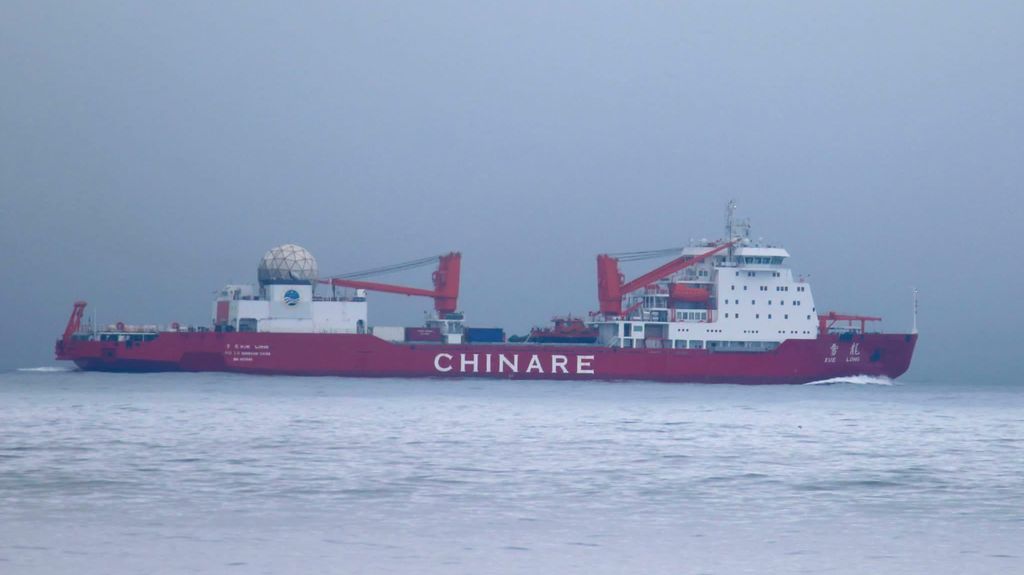
Chinese research icebreaker Xue Long, July 2026 (USCG file image)

China is adopting new environmental measures for its rising activities in Antarctica. Last week, the country’s top legislature, the National People’s Congress (NPC), passed a law on Antarctic activities and environmental protection. The law has 59 articles and seeks to streamline Chinese missions in Antarctica.

A major emphasis of the law is on environmental protection. Researchers carrying out Chinese scientific work in Antarctica will now be required to submit environmental impact assessments (EIAs) for projects in the region. The EIAs should demonstrate protection for local animals and plants, a plan for waste disposal as well as measures to prevent marine pollution.

In adopting the law, the Legislative Affairs Commission of the NPC said the framework fulfills China’s obligations under the 1959 Antarctic Treaty. While China acceded to the Antarctic Treaty in 1983, it lacked a domestic law to guide its activities in the region. As a matter of common practice, most parties under the Antarctic Treaty system adopt a national law to ensure compliance with the international framework.

The adoption of the law coincided with the start of China’s 43rd Antarctic expedition, which set sail on Saturday from Nanshan Port in Sanya, Hainan Province. The expedition involves the Xuelong and Xuelong 2 research icebreakers as well as the oceanographic research vessel Dayang. Over 600 researchers and engineers are participating in the five-month-long mission.

An important activity during the expedition includes surveys and mapping work for support facilities for the planned new research station in Marie Byrd Land in West Antarctica. The remote area spanning 1.6 million square kilometers is considered one of the least studied regions in the whole of Antarctica.

The proposed Marie Byrd Land station is set to become the sixth Chinese research base in Antarctica. Despite concerns from other Antarctic states, China maintains that there is no geopolitical motive behind its expansion of research facilities in the region.

But it is apparent that China is increasingly strengthening its influence in Antarctica as leverage to defend its interests. For years, China, together with Russia, has blocked attempts to create a marine protected area (MPA) around the Antarctic Peninsula. China is rapidly expanding its fleet for Antarctic krill fishing as it seeks to change the rules governing marine protection in the Southern Ocean.

This has been part of the discussion under the Commission for the Conservation of Antarctic Marine Living Resources (CCAMLR), the international body mandated to protect marine life in Antarctica. The organization has 27 member states and meets annually. This year, the meeting took place in Hobart, Australia, from 19 to 30 October.

China brought two notable proposals, which appear to challenge the Western-backed approach for marine protection in Antarctica. The first proposal is on the creation of a new 127,000 km2 MPA in East Antarctica’s Soviet-named Cosmonauts Sea. Western countries have been advocating for stronger environmental protections around the Antarctic Peninsula, which encompasses areas where industrial krill fishery is prevalent.

Krill fishing does not currently take place in the area proposed by Beijing. However, some observers have argued that the choice of Cosmonauts Sea signals Beijing’s continued strategic relationship with Russia in Antarctica. The name Cosmonauts Sea has not been adopted by the International Hydrographic Organization. The name has origins in the Soviet Antarctic expeditions back in the 1960s.

The other proposal by China focuses on changes to CCAMLR’s MPA rulebook. This includes changes to the definition of what is considered an MPA. The protected areas are defined by restricting or prohibiting harvesting of a marine resource. In China’s proposal, an MPA could include rational use, which equates to sustainable harvesting of a marine resource.

China argued that MPAs should be designed to complement other conservation measures as opposed to replacing them. Although these proposals were not adopted at CCAMLR’s meeting last month, they could act as a bargaining chip for Beijing in future deliberations.

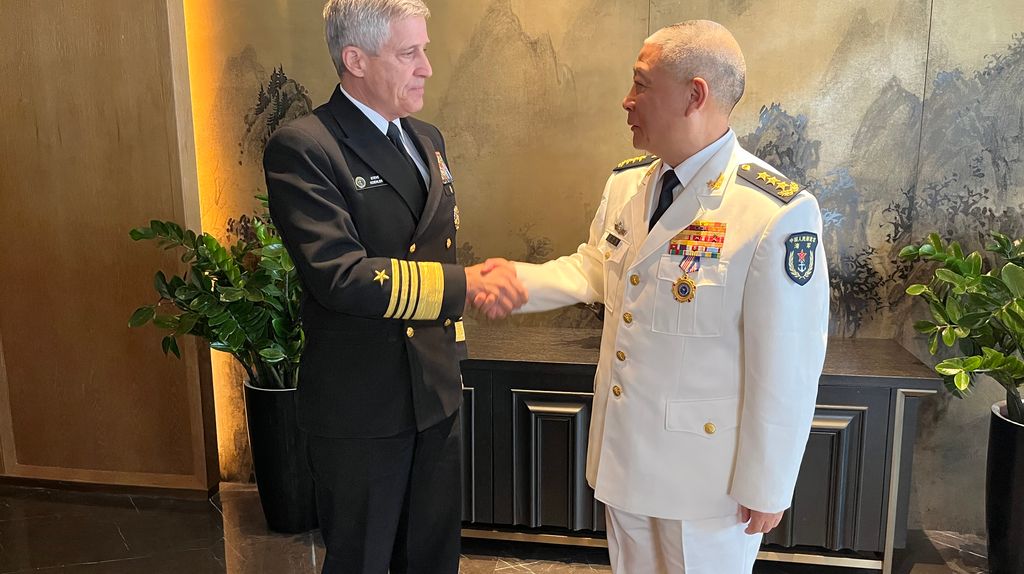
 

Xi Jinping Completes His Military Purge, Including PLA Navy's Top Admirals

Huazhi
Adm. Yuan Huazhi (right), then-political commissar of the People’s Liberation Army Navy, 2024. He was ousted in a purge earlier this year. (USN)

In the latest issue of The Maritime Executive magazine, the thorough-going purge of China’s Peoples’ Liberation Army (PLA) was described, a clean-out so comprehensive that it was uncertain if there was anyone left in the high command of the PLA with the necessary experience to prepare for and to execute an invasion of Taiwan. President Xi himself has said repeatedly that the PLA must be equipped and ready to ‘recover’ Taiwan by 2027, the year in which the PLA attains its 100th anniversary and President Xi presents himself for an unprecedented fourth term in office at the 21st Chinese Communist Party (CPC) Congress.

But rather than culminating with the recently-confirmed dismissal of General Zhang Youxia, who as Vice Chairman of the Central Military Commission (CMC), the equivalent of the US Joint Chiefs of Staff, was the CMC’s most senior officer, the purge has continued. There is almost no officer left in the senior PLA hierarchy to purge – and often replacements have not been appointed, so many posts have now been left open and further purge opportunities are now limited. The PLA Navy has been particularly hard-hit.

The continuing purge was the central theme of the CPC’s Fifth Plenary Session, which concluded in Beijing this week. With President Xi Jinping speaking to an auditorium with dozens of empty seats, the communique issued afterwards stressed the importance of adopting ‘Xi Jinping Thought on Party Building’ and on taking ‘systematic steps to address both symptoms and root causes of corruption, adopting a holistic approach that combines severe punishment, targeted remedy, and effective prevention, carrying this fight through to the end." The surviving delegates voted unanimously in favor of the supporting resolutions.

President Xi railed against a lack of Party spirit amongst CPC members, and malpractices such as ‘cultivating connections’, the use of proxies to make back-room deals, contractor collusion with recently-retired officers, and the illicit use of the internet, blockchain technology and foreign currency exchanges.

Those known to have been purged earlier this year included General Zhang Youxia, CMC Deputy Chairman, and General Liu Zhenli, Chief of Staff for Joint Operations, now announced as not just dismissed but up for trial on what could be capital charges. Both were previously close friends and long-standing political allies of President Xi. Also dismissed earlier this year were:

General He Weidong, head strategic planner for operations against Taiwan.

Admiral Miao Hua, Head of the CMC Political Works Directorate

Admiral Yuan Huazhi, Head of the PLA Navy Political Works Department.

Admiral Wang Houbin, Commander PLA Rocket Force

Vice Admiral Li Hanjun, former Commander PLA Navy

Lieutenant General Lin Xiangyang, Commander of the Eastern Theatre facing Taiwan

Vice Admiral Wang Zhongcai, Commander East Seas Fleet facing Taiwan.

Major General Ding Laifu, Commander 73rd Army Group, in the Eastern Theatre facing Taiwan

The sixteen new names added during the CPC’s Fifth Plenary Session to the list of those purged included:

Lieutenant General Zhong Shaojun, Director CMC General Office, long-term Xi aide

Lieutenant General Fang Yongxiang, Director CMC General Office,

General Wang Haijiang, Commander Western Theatre

General Huang Ming, Commander Northern Theatre

General Liu Qingsong, Head Political Works Department Eastern Theatre

General Zhao Zongqi, retired and a former Western Theatre Commander

General Zhao Zongqi may perhaps have been targeted because he was a Chinese military hero, renowned for his exploits in the Sino-Vietnamese War and his leadership in the 2020 Galwan Valley clash with India. General Zhang Youxia may also have been dismissed just for being a bit too charismatic and effective – and hence presenting a potential challenger to the somewhat dour President Xi.

Those dismissed include all four theatre commanders, as well as the principal operational commanders in the Eastern Theatre who would be charged with ‘recovering’ Taiwan. There will also have been hundreds of junior officers, subordinates of those dismissed, who will also have been purged. One of the few senior officers to remain in post is Admiral Hu Zhongming, PLA Navy Commander since December 2023 and previously Commander North Sea Fleet. But he has not been elevated to membership of the CMC.

All were variously dismissed for ‘forming political cliques and factions, disloyalty and dishonesty toward the ruling party, abuse of office and illicit promotion assistance, and for accepting large sums in defense-related corruption’. They may also have posed a perceived political threat to Xi in the run-up to his expected bid for an unprecedented fourth term as the CCP’s top leader.

Judge Rejects Efforts to Stop Planned Sinking of S.S. United States

liner s.s United States hull
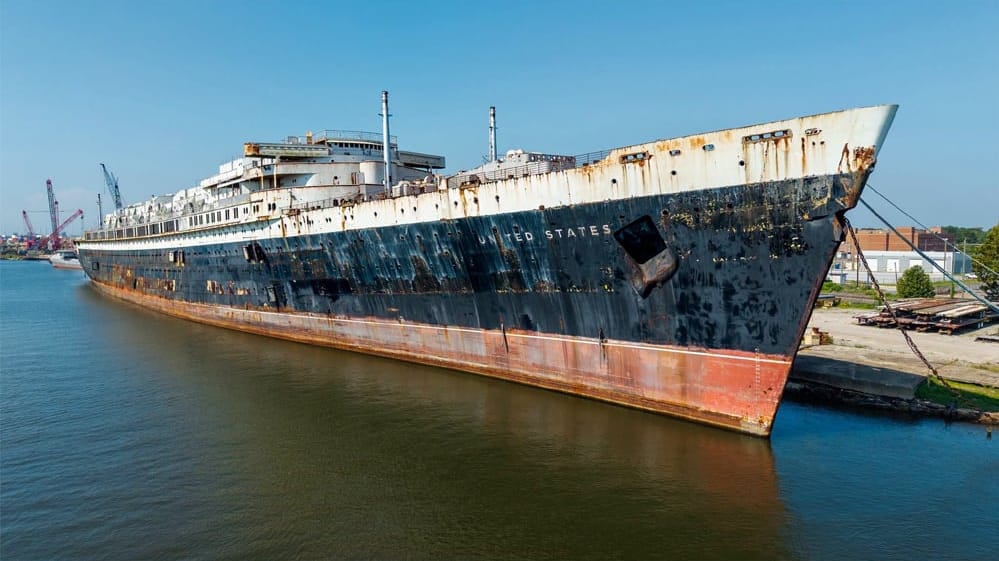
Hull of the famous liner prepared for the sinking scheduled for next week (Okaloosa Board of County Commissioners)

A complaint filed in U.S. Federal Court is seeking to stop the planned sinking of the famed ocean liner S.S. United States, currently scheduled for next week. A small, nonprofit, the SS United States Preservation Foundation, filed the suit on November 3 and an emergency motion for a temporary restraining order and preliminary injunction asking the court to stop the tow-out of the hull of the vessel scheduled for November 9.

Florida’s Okaloosa County acquired the vessel in October 2024 from another nonprofit, the SS United States Conservancy, which had owned the ship since February 2011. Okaloosa announced plans to convert the liner into the world’s largest man-made reef, sinking the ship about 22 nautical miles southwest of Destin, Florida. 

Built by Newport News Shipbuilding in Virginia, the liner entered service in July 1952, in the heyday of Atlantic passenger travel. She was the largest passenger liner built in the United States and was designed by William Francis Gibbs, one of the foremost naval architects. She was designed for speed and, on her maiden voyage, smashed the speed records held by Cunard’s Queen Mary since 1938. The 53,300 gross ton liner, measuring 990 feet in length, averaged approximately 35 knots on the crossing, although it was rumored she was capable of approximately 40 knots when she was run all-out. She continues to hold the title of the fastest passenger liner to cross the Atlantic.

The S.S. United States was removed from commercial service in 1969 and later sold to the U.S. Government. Starting in 1980, she went into private hands with a variety of plans to restore her to operation. The Conservancy was looking for a partner to develop the ship as a museum, tourist attraction, or possibly a hotel.

Okaloosa hired consultants to remediate the ship in preparation for its conversion into a reef. The efforts focused on removing elements such as the remaining electric wiring, fuel, and other toxic materials, as well as making the hull safe for divers.

The suit, however, alleges that the U.S. Army Corps of Engineers approved the project without adequately examining environmental risks or complying with historic preservation requirements. The complaint asks the court to set aside the Army Corps’ permit modification and finding of no significant impact, and to bar the tow and sinking until the Army Corps complies with the National Environmental Policy Act and the National Historic Preservation Act. 

It alleges that the Army Corps approved the project without preparing an environmental impact statement. It also alleges that the Army Corps failed to complete a required historic preservation review. It also highlights that the preparation project undertook “anticipatory demolition,” without the approval for the reefing project.

At issue is the use of hexavalent chromium in the early 1950s in the primer for the steel surfaces of the ship. The nonprofit asserts that laboratory testing identified hexavalent chromium in sampled coatings aboard the vessel and cites University of Florida’s Dr. Todd Osborne, who warned of potential harm to marine organisms, sediments, and the food web, as the chemical breaks down in water. Okaloosa has in the past asserted that it breaks down to a less harmful chemical. The Army Corps predicted minimal adverse effects despite uncertainty about contaminant quantities and release rates, according to the Foundation.

The Foundation estimates in its complaint that about 59,000 pounds of zinc chromate was applied as the primer during construction based on historical painting specifications and modeled surface area for the vessel. The Foundation is calling for further sampling and environmental assessment before sinking the vessel.

The suit is also challenging the mandated “Section 106” review. It is a key provision of the National Historic Preservation Act of 1966 (NHPA) that requires federal agencies to consider the impact of their federally funded, licensed, or permitted projects on historic and cultural properties.

The Foundation emphasizes the historical significance of the vessel, noting that it was listed in 1999 on the National Register of Historic Places. It says that the S.S. United States was described by National Park Service historian Patrick Andrus as “exceptionally important for engineering for its hull design and propulsion system.”  

It also cites that the ship’s funnels, radar mast, last propeller, and portholes and windows were all removed during the remediation process.

On Friday, Judge M. Casey Rodgers of the U.S. District Court, Northern District of Florida Pensacola Division denied without prejudice the Emergency Motion for a Temporary Restraining Order. The judge wrote that the docket lacked a verified complaint and/or any affidavit attesting to the truthfulness of the facts. In addition, the judge said the plaintiffs were requesting the court to wave or set a minimal security bond, while noting the likely high berthing, mooring, docking, storing, etc. expenses for the S.S. United States. The court instructed that any subsequent motion must propose a bond amount sufficient to cover these expenses. 

The Foundation refiled with an amended Emergency Moition later on Friday. Judge M. Casey Rodgers again denied the second motion for a Temporary Restraining Order saying that the Foundation did not account for the cost to taxpayers for continuing to berth the ship. The second order issued on Saturday, November 7, states that it is "rank speculation and not a
basis on which the court can say there is no risk of monetary loss to the county," if the court were to issue the TRO. It further concludes, that it is "naïve to think that this process would impose only a brief delay." The motion was again dismissed without prejudice, saying, "Any subsequent TRO must propose a bond amount sufficient to protect the county taxpayers (supported by a reasonable factual basis)."

The current plan calls for the hull of the liner to be towed from Mobile, Alabama on November 9. Weather permitting, the sinking is scheduled for November 12 in the Gulf.

The Foundation's lawyers reported they had served Okaloosa County and that its lawyers indicated that the county opposes a temporary restraining order and a preliminary injunction. Okaloosa County has said it continues to move forward with the project.

Oil Traders Want U.S. to Release Sanctioned Tankers as Freight Costs Soar

By Julianne Geiger - Nov 06, 2026


Some of the world's biggest oil traders are asking Washington for permission to put sanctioned tankers back to work, as a global vessel shortage pushes oil transportation costs to extraordinary levels.

Trafigura, Vitol, Mercuria and Abu Dhabi National Oil Co. are negotiating with U.S. officials for licenses to purchase or lease blacklisted oil tankers, Bloomberg reported Friday, citing people familiar with the discussions.

The talks involve approximately 50 vessels currently under U.S. sanctions. Treasury officials are considering approvals on a case-by-case basis, although no decisions have been finalized.

The proposal comes after months of shipping disruptions stemming from the Iran war, which has forced tankers onto longer routes, increased insurance costs, and tied up vessels in inefficient transfers around the Strait of Hormuz.

The cost of chartering a supertanker from the U.S. Gulf Coast to China reached nearly $80 million in October, roughly ten times the average rate before the conflict.

Valero estimated last month that shipping U.S. crude to Asia had reached $30 to $35 per barrel, compared with approximately $5 a year earlier.

Those costs have consequences. Asian orders for U.S. crude for November delivery fell roughly 50% in October, potentially pushing shipments to their lowest level in seven years.

Adding sanctioned vessels could relieve some of that pressure.

U.S. Energy Secretary Chris Wright said last month that Washington was exploring arrangements allowing investors to acquire and refurbish blacklisted tankers for transporting legitimate oil cargoes.

As of November 4, U.S. sanctions covered 1,568 ships, including 462 crude tankers, according to Treasury data compiled by Bloomberg.

But the potential benefit depends heavily on which vessels receive approval. Restoring previously idled tankers would add actual shipping capacity. Simply legalizing vessels already transporting sanctioned oil would do considerably less to ease the shortage.

Many blacklisted tankers are also aging vessels requiring repairs, inspections and insurance before entering conventional commercial service, and U.S. authorization would not automatically remove restrictions imposed by the European Union or Britain.

By Julianne Geiger for Oilprice.com


Russian Owner of Notorious Tanker Challenge US Sale as It Reaches Scrappers

USCG looking at tanker at sea
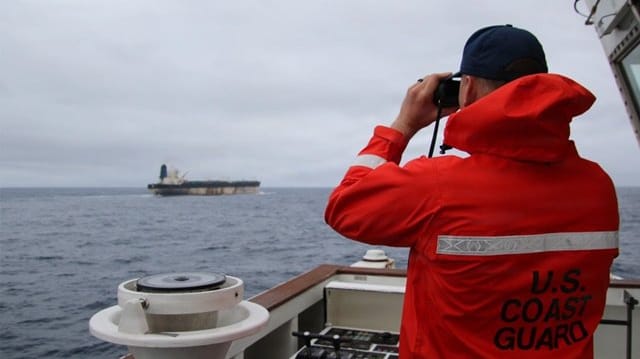
USCG tracking the ship during the chase across the Atlantic before it was seized (USCG)

The crude oil tanker Bella 1 (aka Marinera) reportedly arrived at Chattogram, Bangladesh, on November 4, under the name Era, prompting urgent new court filings in the United States from the purported Russian owners of the vessel, who are challenging the United States' forfeiture and sale of the vessel. The vessel famously made international headlines in December 2025 and January 2026 as the United States Coast Guard chased it across the Atlantic before a seizure and took the vessel to Scotland.

Lawyers for Burevestmarin, a Russian company that claims to have acquired the vessel on December 17, 2025, are contesting the sale  by the United States, calling it an “economically irrational sale for its own convenience,” and accusing the United States of conducting the “maneuver behind closed doors.”

In a filing on November 4, the lawyers revealed the tanker, which had been sold by the United States to GMS as a cash buyer, was resold on October 14 to a recycler in Bangladesh for $20,763,062.25, which they assert contradicts statements from the United States. It says the U.S. reported the GMS was not authorized under its license to transfer ownership of the ship and would retain the vessel while it was scrapped.

They are asserting that this was the latest in a series of steps in the illegal forfeiture and sale of the vessel to GMS at a “grossly unreasonable price at which to attempt the government's fire sale.” They highlight that the court was told in a filing in August that the ship tanker was sold under an April court order for $9.1 million, yielding proceeds of just under $8.1 million after more than $1 million in costs related to the sale. The U.S. Government further asserted that it had additional unspecified costs for “repairing serious safety and operational deficiencies, maintaining and transiting the vessel,” unrelated to the sale.

The court case for the forfeiture had been sealed until August 2026. Burevestmarin, however, filed in October, making a claim and seeking to overturn the sale. The United States in March had contended to the court that the tanker, which it continues to refer to as Bella 1, had been used dating back to at least 2023 to transport Venezuelan and Iranian oil in violation of sanctions. However, the U.S. says the vessel was stopped in January 2026 after the pursuit because it was operating without a valid flag. It says the ship was claiming to be registered in Guyana, although the authorities said it was not a legitimate registry.

The United States refused to recognize the sale of the vessel to Burevestmarin and the attempt to register the vessel in Russia while it was being pursued across the Atlantic. In the March filing for the forfeiture and sale, the United States lists a Turkish company as the owner of the tanker.

The United States has opposed Burevestmarin’s attempts to seek a temporary restraining order and compensation for the seizure. Burevestmarin was asking the court to hold the ship or force its return, not permitting it to be beached for scrapping. The United States, in its response, highlights that the company waited months to file its case, refutes the various elements of the claim, and asserts that the company came to court with “unclean hands,” saying it was involved in the vessel’s movements while it failed to respond to USCG orders to stop. The United States also points to what it calls a “threatening email” from representatives of Burevest sent in March 2026 to the company hired to tow the tanker, demanding the vessel be returned to the Russian Federation.

The lawyers for the company assert that the United States told the court alternately that the tanker was going to India or Bangladesh for scrapping. The vessel has not been transmitting an AIS position since mid-October. 

The lawyers are saying not only was the vessel sold at half its scrap value, but that it has far greater value as an operating asset. In the November 4 filing, they are again asking the court to stay any transfer of the vessel by GMS to a third party and to show cause why the vessel should not be preserved or held pending adjudication of the sale order’s validity. 

The court has ordered the U.S. Justice Department to respond by Friday morning to the latest filing from Burevestmarin’s lawyers.


Sanctioned Russian Merchant Vessels Are Underway

warship tracking Russian shipping
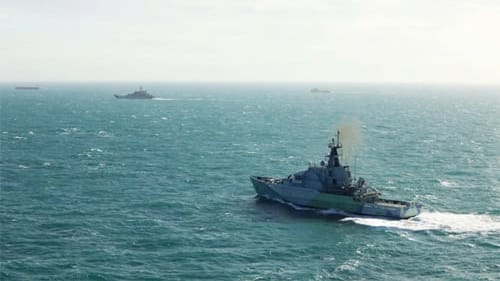
European warships follow the movements, such as the UK Royal Navy tracking Russian ships last month in the English Channel (Royal Navy)

The military cargo convoy of sanctioned Russian-flagged vessels which had been observed forming up in the Russian port of Baltiysk in the Kaliningrad has set sail. It formed into two separate packets, likely one headed for the Mediterranean and the other for West Africa. 

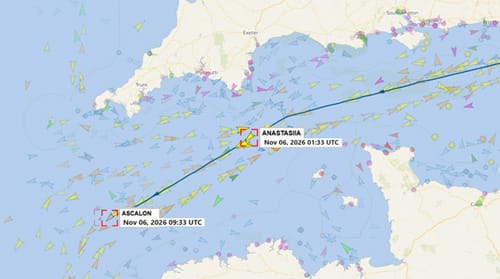
Two ships, the Ascalon (IMO 9198226) and Anastasiia (IMO 9349291) set off together on October 31. Sailing in company, the ships passed through the Langeland Belt, escorted first by the German Coastguard vessel Bamburg (IMO 9830020) and the Danish Coastguard vessel Merkur (MMSI 219167000), and then by the Danish naval patrol vessel HDMS Rota (P525). On November 6, the two vessels were making their way through the English Channel, with no surface naval escort visible, and appear to be heading southwest.

Meanwhile, the Lady R (IMO 9161003) and the Lady D (IMO 9349289) set off together from Baltiysk on November 5, and early on November 6 were between Rügen and Bornholm, heading west and being escorted by the Danish naval patrol vessel HDMS Najaden (P523). The Sparta (IMO 9268710) appears to be engaged separately on a regular resupply run between Baltiysk and St. Petersburg. 

All four of the ships travelling to warmer waters are moving with their AIS systems activated.

Two Russian military cargo vessels convoying through the English Channel November 6 (VesselFinder)

At the same time, Russia’s shipments of diesel to the United States remain in disarray, with four product tankers having initially been identified as leaving Baltic terminals and as being en route to the East Coast.  Owners and managers appear to have heeded the warning of civil and criminal prosecutions issued to port operators should they handle the cargos.

As of November 6, three of the product tankers, each operating under sanctions, are underway, but none appears bound for the United States. The Russia-flagged Talisman (IMO 9292060) has just passed north of Malta, heading eastwards, and is displaying “For Orders,” possibly destined for Turkey. The Sierra Leone-flagged Leruo (IMO 9385831) is west of the Azores heading for Brazil, showing “For Orders” on its AIS. They had loaded at Primorsk. The Sierra Leone-flagged product tanker Beast (IMO 9290921), sanctioned by the EU and UK, left Ust Luga on October 30, indicating that she was heading for “Brazil For Orders.” Currently, southwest of the Faroe Islands, and probably as a consequence of her sanctioned status, she avoided UK territorial waters and took the long route to the Atlantic by sailing north around the Shetland Islands.

The only product tank that still appears to be approaching the United States is the Maltese-flagged Agioi Fanendes (IMO 9798375). This vessel, not sanctioned, passed through the Pentland Firth in UK territorial waters displaying “For Orders,” and is now south of Newfoundland, still heading towards the U.S. East Coast ports.

Dmitry Peskov, the Kremlin spokesperson, when questioned about the diesel tankers altering course has said that all the diesel will find buyers. However, in the interim, Ukraine has resumed its attacks on refineries producing diesel, exacerbating the shortages which previously had resulted in Russia voluntarily limiting its own exports.

Early on November 5, Ukrainian drones once again attacked Rosneft’s refinery complex at Ryazan, one of Russia’s largest petroleum processing facilities and serving Moscow and Central Russian regions. The complex was again set ablaze, and diesel and petrol stocks will need to be diverted within Russia to keep the politically-sensitive capital region well supplied. The attack on Ryazan follows a huge attack on November 3 mounted against the Slavneft-Yanos refinery in Yaroslavl, which also services the Moscow region.


Salvage of the MSC Baltic III Wreck Prepares to Remove Final Stern Sections

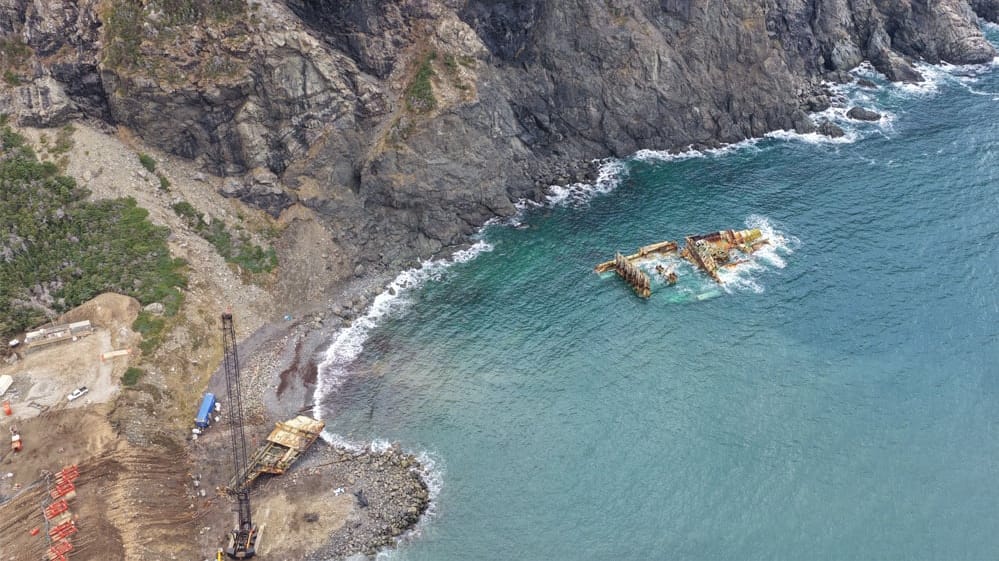
stern sections of MSC Baltic III containership prepared for salvage
Two final stern sections from the wreck of the MSC Baltic III will be pulled ashore in Newfoundland (Canadian Coast Guard)

The salvage efforts in Newfoundland, Canada, to clear the wreck of the containership MSC Baltic III continue to report strong progress. In the latest update, the Canadian Coast Guard reports that Resolve Marine is preparing for pulling operations for the final two portions of the stern that remain in the water.

Clearance of the wreck got underway during the summer of 2026, nearly a year and a half after the 33,767-dwt containership blacked out and was driven ashore in Ceder Cove, Newfoundland, near Corner Brook, in February 2025. The 207-meter (679-foot) vessel, which had a capacity for 2,478 TEU, had about 400 containers aboard. Canadian forces airlifted the crew from the ship without injury. 

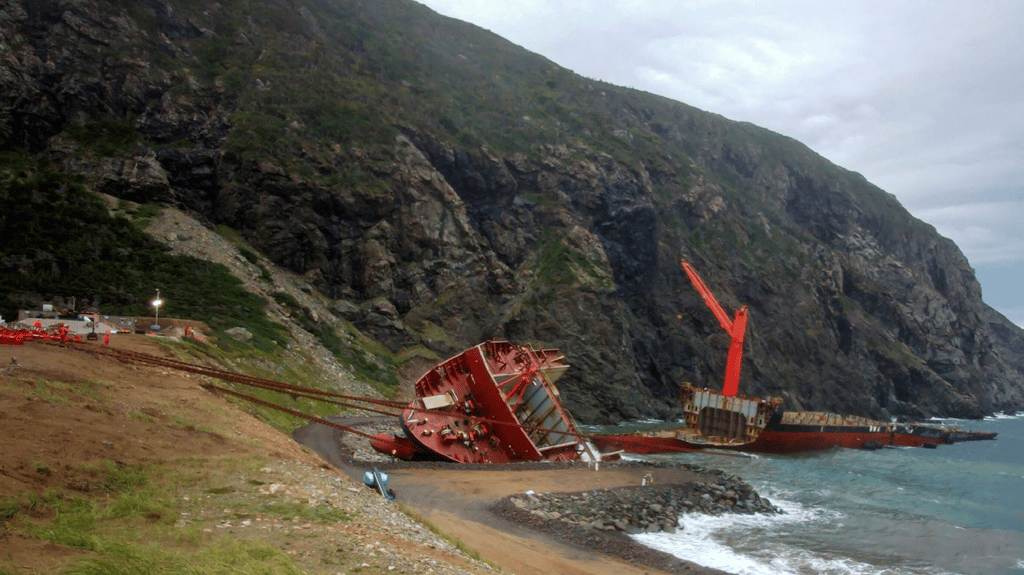
The upper works of the containership were stripped away, including the accommodation block and the cargo hatches and gear. Upper portions of the hull were also removed before the operation began pulling sections of the vessel forward onto the beach to be cut up and trucked away for recycling.

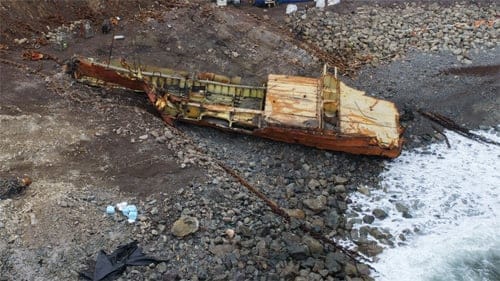
Portion of the stern of the MSC Baltic III pulled shore for recycling (Canadian Coast Guard)

The latest update shows that the bow section of the MSC Baltic III wreck is fully ashore and removed from the beach. The Canadian Coast Guard also reports that one section of the vessel’s stern has been pulled ashore, deconstructed, and removed from the shoreline.

Critically, the salvage operation reached six heavy fuel oil tanks, which the Coast Guard said were a priority to end the pollution risks. These tankers were cleaned and have been recycled. The Coast Guard says that while intermittent oil sheening continues to be observed in Cedar Cove, it has significantly decreased since the bow section was removed from the water.

The Canadian Coast Guard and Environment and Climate Change Canada continue to conduct shoreline, on-water, and aerial pollution surveillance and monitoring, weather permitting. 

To date, Resolve has removed 9,282 tonnes from the MSC Baltic III wreck. It equated to approximately 84 percent of the vessel's total tonnage.

After all the vessel has been salvaged, there will be a final clean-up of the sea floor and coastline in Ceder Cove. Resolve has also committed to coastline restoration as the final stage of the salvage operation.


An Ocean of Services

From towing and wreck removal to firefighting and oil spill response, a salvor’s work is never done.

Resolve Marine Wreck Removal, Newfoundland

(Article originally published in Sept/Oct 2026 edition.)

For more than a century, you could gauge the state of the marine salvage industry by the number of Lloyd’s Open Form (LOF) cases.

A simplistic explanation of a typical LOF case is a vessel calling a salvor to perform a rescue operation. The agreement constitutes a blank check for the salvor to provide whatever equipment, labor and services necessary to complete the operation. Known familiarly as a “no cure, no pay” contract, the operation must first be completed, and an arbitrator then reviews the case and decides on the appropriate billable amount for the services provided.

Salvors take most of the financial risk while vessel owners have a mechanism for the rapid initiation of emergency services. Historically, the annual number of LOF cases was the best measure of the health of the marine salvage industry. For the past two decades, however, this number has been in sharp decline. Yet salvors like Donjon Marine, Resolve Marine, Global Diving & Salvage and Vanguard Tech have expanded their services far beyond LOF cases. 2026 has demonstrated that marine salvage is a strong, healthy industry that includes oil spill response, lightering, vessel removal, towing, firefighting and an ocean of other emergency services.

Donjon Marine

It’s been just over a year since U.S.-based Donjon Marine was acquired by the private equity Tallvine Group, and Donjon CEO John Witte, Jr. says it’s more like a partnership than an acquisition. Tallvine and Donjon have since added a West Coast affiliate and are looking at another “bolt-on” towing organization on the Gulf coast.

Thus far in 2026 the industry has not had a major rescue operation like the Costa Concordia, Key Bridge collapse in Baltimore or Golden Ray. “Our salvage work to date in 2026 has involved removal of numerous hazards in support of the U.S. Corps of Engineers and the U.S. Navy, small barge salvage, emergency towing and other localized events,” Witte explains.

Donjon also has a shipyard in Erie, Pennsylvania and is expanding into the Great Lakes.

Stevedoring and construction support work may not be the first things that comes to mind when thinking about salvage, but they’re keeping Donjon busy as port infrastructure continues to grow and change. Vessels are built larger with more variation in cargoes, resulting in the industry-wide need for upgrading standard salvage assets.

When a request would come for an open ocean emergency towing case, a tug with 70 to 90-ton bollard capacity could be dispatched without concern. Today, capacity limit is not a given and must always be considered prior to mobilization. It’s not just towing that’s affected. Pumping, marine firefighting and heavy lift capabilities, and the appropriate labor force to meet the response are increasing as well.

“Maybe we should modify the phrase, ‘bigger is better’ to ‘bigger is necessary,’” Witte quips.

The longtime joint venture between Donjon and Smit Salvage Americas continues to be busy providing OPA-90 services in the U.S. as well as contributing to salvage efforts in the Strait of Hormuz area. “When a salvor is required to work in a war zone,” Witte says, “it becomes an entirely different situation and much more than a difficult commercial response. While absolutely necessary, we all hope that it ends very, very soon.”

Vanguard Tech

Vanguard Tech is a U.K.-based, intelligence-led maritime risk, response and recovery partner that supports shipowners, operators, insurers and their representatives globally. Vanguard clients have a partner managing a situation’s intelligence, casualty monitoring and physical response – all within a single operational structure.

Its business has developed from maritime risk, intelligence and crisis management to the broader area of casualty response and salvage capability. “Our focus is on remaining nimble, adapting to what the market needs and continuing to support our clients and the wider industry as that operating environment evolves,” says Matthew Cooke, Senior Salvage Manager & Americas Lead.

2026 has been a particularly active year for Vanguard’s casualty response team with a significant number of simultaneous operations in and around the Strait of Hormuz. To preserve confidentiality and without identifying individual vessels or clients, these cases have included emergency towage operations involving disabled tankers and other large commercial vessels including a laden vessel that had lost steering and required the rapid mobilization and coordination of suitable towage assets.

“The salvage landscape is ever-changing,” Cooke states, “from regulation and safety culture to larger vessels and new operating environments. 2026 has also become a year of wartime vessel incidents, bringing a very different set of risks and operational challenges.”

A response in a war zone often takes the form of recent Vanguard operation. The vessel required a combination of emergency services working in a fluid and seamless manner including towage, divers performing subsea patching, engine-room and aft-peak dewatering, structural stabilization and the coordination of ship-to-ship cargo discharge operations – the kind of variables that Donjon’s Witte described and politely understated as “much more than a difficult commercial response.”

Resolve Marine

A global leader in maritime response, recovery and compliance, U.S.-based Resolve Marine also understands that the business of marine salvage is as diverse as the waters of the vast oceans.

“Our customers range from mom-and-pop fishing owners to technology companies literally pushing the limits of space,” states Daniel Dettor, Director of Business Development. “Time and again they rely upon Resolve Marine to solve their maritime challenges. It doesn’t get any better than that!”

Resolve has been busy this past year. The team responded to an oil rig that suffered a catastrophic leg failure off the coast of Trinidad. The multi-phase project consisted of stabilizing the compromised rig and mitigating environmental risks including the removal of hydrocarbons and hazardous drilling materials.

The team then dismantled and removed the rig’s topsides, rig mat, drill floor and derrick using the salvage barge RMG 1000 equipped with two American 450-ton cranes. The topsides were transferred to a submersible barge fitted with custom-engineered grillage, enabling the structure to be safely transported for final disposal.

Currently, the Resolve team is working on several interesting projects including the wreck removal of a containership in Newfoundland, Canada, removal works on behalf of the U.K. government on an American Liberty ship that sank during World War II in the Thames Estuary outside London, and a fire on an LNG-fuelled car carrier in the Pacific.

It’s impossible to forecast what the future of marine salvage will be, but one area everyone seems to agree on is specialized marine firefighting. The transport and use of lithium-ion batteries in containers and cars has been a concern for several years now, and Dettor says, “I don’t see these types of casualties abating anytime soon. What most people don’t realize is the work scope that follows extinguishment of the fire.” This includes damage to cargo, hazardous material recovery, wastewater management and fire damage remediation.

A good example was the response to the Francis Scott Key bridge collapse. The public and stakeholders know that removing the containership Dali and reopening the port of Baltimore was managed in just 55 days. What people didn’t see was the laborious tasking of dealing with the damaged cargo and the associated regulatory hurdles.

Global Diving & Salvage

Seattle-based Global Diving & Salvage has been part of the Moran Group since 2019. Its core service lines include commercial diving, marine construction, marine casualty response, and environmental and emergency services.

Those services sprang into action when Category 5 Hurricane Lowell hit Kauai in early September. Within days of the storm, the Global team mobilized to address a vessel that had been damaged at its slip in a small boat harbor. After deploying a containment boom and confirming the vessel’s stability, divers accessed its fuel tanks and recovered 1,000 gallons of fuel, sealing all vents and fills and preventing further discharge.

Like the Francis Scott Key bridge response, there were plenty of challenges on the overlooked back end of the project. With inter-island logistics strained, demobilization took real coordination, moving equipment from Kauai to Oahu to Maui and finally back to Seattle.

The Global approach to disaster response is fast mobilization, close coordination with agencies and the flexibility to adapt mid-operation while keeping safety and environmental protection front and center

Global Vice President Aaron Harrington says “You can’t fake safety, and you can’t fake respect. Every project we take on comes down to the same thing: Work together with purpose, treat everyone on that job site the way you’d want to be treated, and commit to doing it right, every time.”

Dive instructor and retired USCG reserve officer Pat Zeitler is a regular contributor to The Maritime Executive.

The opinions expressed herein are the author's and not necessarily those of The Maritime Executive.