French pupils step up protests as government concessions fall flat
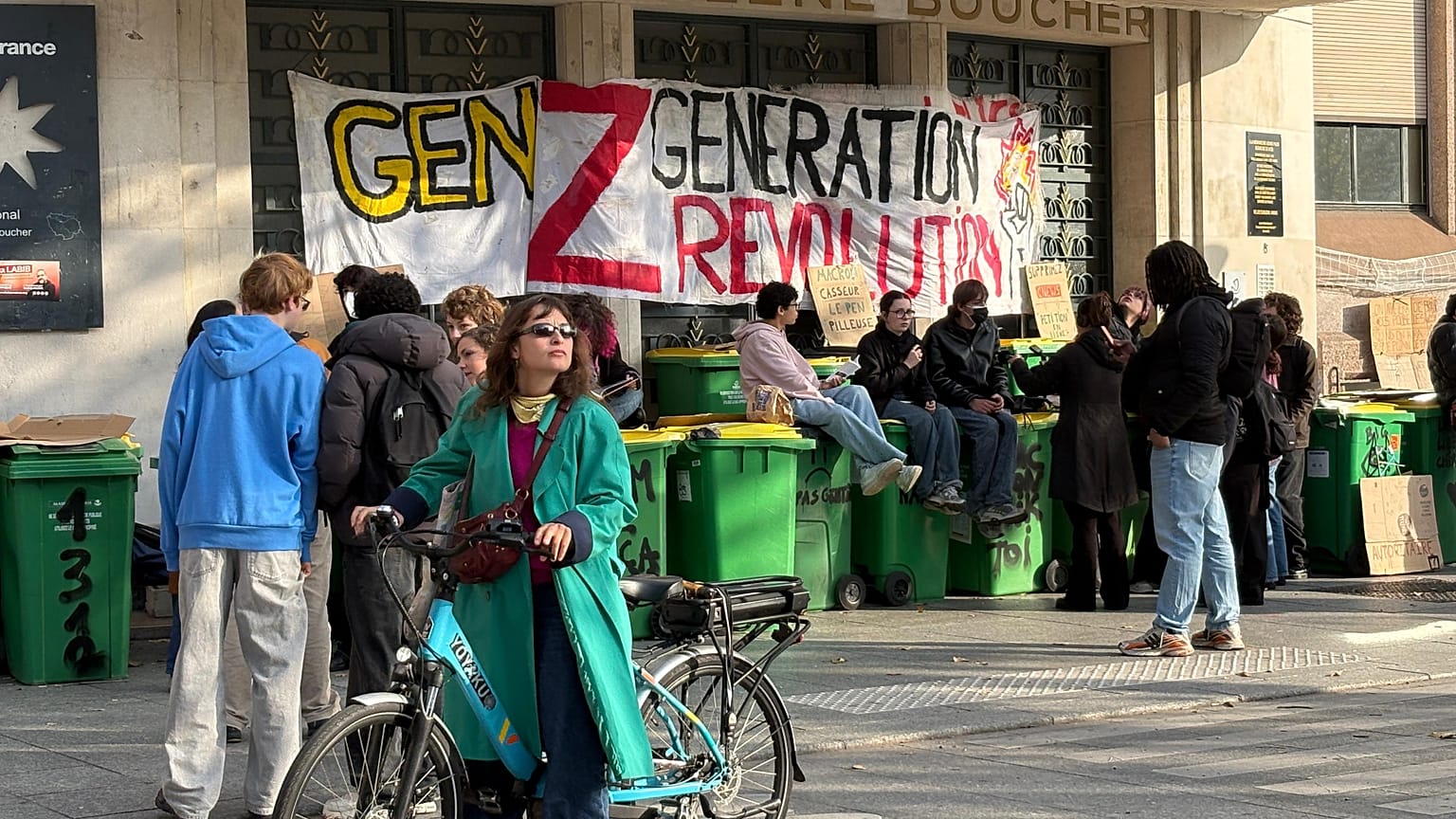
Unions walked out of talks with the prime minister’s office over the presence of the far right, while firework mortars have been set off inside schools as tensions rise.
Secondary school pupils in France are back on the streets on Tuesday. Nearly two months into their protest movement, the government’s concessions have failed to bring it to an end.
A coalition of trade unions and youth organisations has called a nationwide day of strikes and demonstrations. It is the latest escalation in a dispute that has seen sporadic violence at schools across the country.
Two weeks ago, Prime Minister Sébastien Lecornu’s government tried to calm things down. It promised to overhaul Parcoursup, France’s national online platform for allocating university places, from 2027 and to replace it completely in 2028. It also pledged more money for school buildings and extra resources for the most deprived schools.
Protesters were not won over. Relations got worse at a meeting on the Parcoursup reform at the prime minister’s office in Paris. Most of the pupil and student groups, along with education unions, walked out in protest at the presence of far-right and business representatives.
"We are calling on everyone who supports the legitimate demands of young people, but also those of workers, to be out on the streets," said Éloïse Lefebvre-Milon, co-leader of the Union étudiante student union, after leaving the talks.
The coalition includes some of France’s biggest labour unions, such as the CGT and FO, alongside pupil and student organisations. It said in a joint statement that now was the time "to step up the mobilisation by continuing to put pressure on the government".
"Giving fresh momentum to the mobilisation"
Pupil leaders say they have no intention of backing down. "The balance of power is in our favour, we have to keep going," said Ryad Rani, president of the Union syndicale lycéenne, a secondary school pupils’ union.
“We have to stay mobilised. We are not only fighting for ourselves. We are fighting for teachers, for their working conditions,” Rani said.
Sophie Vénétitay heads Snes-FSU, the largest union for secondary school teachers. She said Tuesday’s action would include “supervised and secure marches”, since tensions outside schools are rising.
Youth protests have a long history of putting pressure on French governments. Former president François Hollande faced mass demonstrations against his labour reforms in 2016. At the time, he privately compared a student movement to toothpaste: "You can get it out of the tube, but you cannot get it back in."
Violence reported in several secondary schools
Most of the protests have been peaceful, but there has been a string of violent incidents on the fringes.
On Monday, firework mortars were set off inside two secondary schools in Seine-et-Marne, in theeast of Paris. The regional council said two pupils were hurt at one of them. At the other, nobody was injured, but education officials said pupils were left "in shock".
Police arrested five people after trouble outside schools in Le Havre and Rouen in Normandy, according to France 3 Normandie (source in French). Fireworks were also set off outside a school in Angers in western France (source in French). Further incidents were reported in the north-eastern Meurthe-et-Moselle department, according to Ici (source in French).
French student protests continue amid
deadlock over education reforms
Students and teachers are planning a new day of strikes and demonstrations Tuesday, as talks with the government remain deadlocked, nearly two months after the start of protests by high school and university students.
Issued on: 10/11/2026 - RFI
“This is the time to step up the mobilisation and continue putting pressure on the government,” wrote a coalition of student organisations and teachers unions, calling for the strike, on Saturday.
Demonstrations are planned in most of France’s major cities. In Paris, a march will leave off from the Panthéon at 2pm and head towards Place d’Italie.
Some teachers are expected to be on strike, said Sophie Vénétitay, general secretary of the Snes-FSU teachers’ union, notably in some areas, though participation is expected to be lower than last week, on 5 November, when nearly 16 percent of teachers went on strike, according to the Education Ministry.
“The balance of power is on our side, and we must keep going. I am not saying we have won anything, but I am saying we are on the right track,” said Ryad Rani, president of the USL secondary school students’ union on Monday evening, after the first meeting of the committee set up to reform Parcoursup, the national university admissions platform.
Students walk out on Prime Minister
The meeting with the Prime Minister ended prematurely after a number of student and teachers’ organisations walked out in protest against the presence of right week representatives, far right lawmakers and employers’ organisations.
The groups criticised the attendance of student union UNI, which describes itself as the leading right wing student movement, as well as Thierry Tesson, a far right National Rally MP and Gaëlle Frontoni, a senator for the right wing UDR.
“We want to make it absolutely clear that we will never sit in a room with the far right, with people responsible for spreading racist, fascist and hateful ideas,” Manon Moret, General Secretary of Unef, the French national union of students, told reporters.
Student unions also objected to the influence given to employers’ organisations.
“We refuse to let higher education be reformed around the needs of businesses. Young people are the ones who need to be heard,” said Eloïse Lefebvre-Milon, co-general secretary of Union étudiante.
Parcoursup is at the heart of the protests, with students continuing to demand it be scrapped. The government announced a revision of the platform two weeks ago, ahead of its planned replacement in 2028.
Organisations representing schools also walked out of the meeting.
“The government is incapable of offering a new response to students and education staff,” said Vénétitay.
Making up missed lessons
Meanwhile, Education Minister Édouard Geffray said on Monday that students who have missed lessons because of the protests could be offered catch-up classes during school holidays,
Such classes already exist, but they will be expanded into school holidays in February and at Easter, to make up for teaching time lost during the student protests, Geffray said in an interview with public broadcaster France 2.
School representatives rejected the proposal, questioning how the government would recruit enough volunteer teachers to work during their holidays.
Geffray also confirmed that the dates of the baccalauréat examinations would remain unchanged.