Tuesday, November 10, 2026


French pupils step up protests as government concessions fall flat
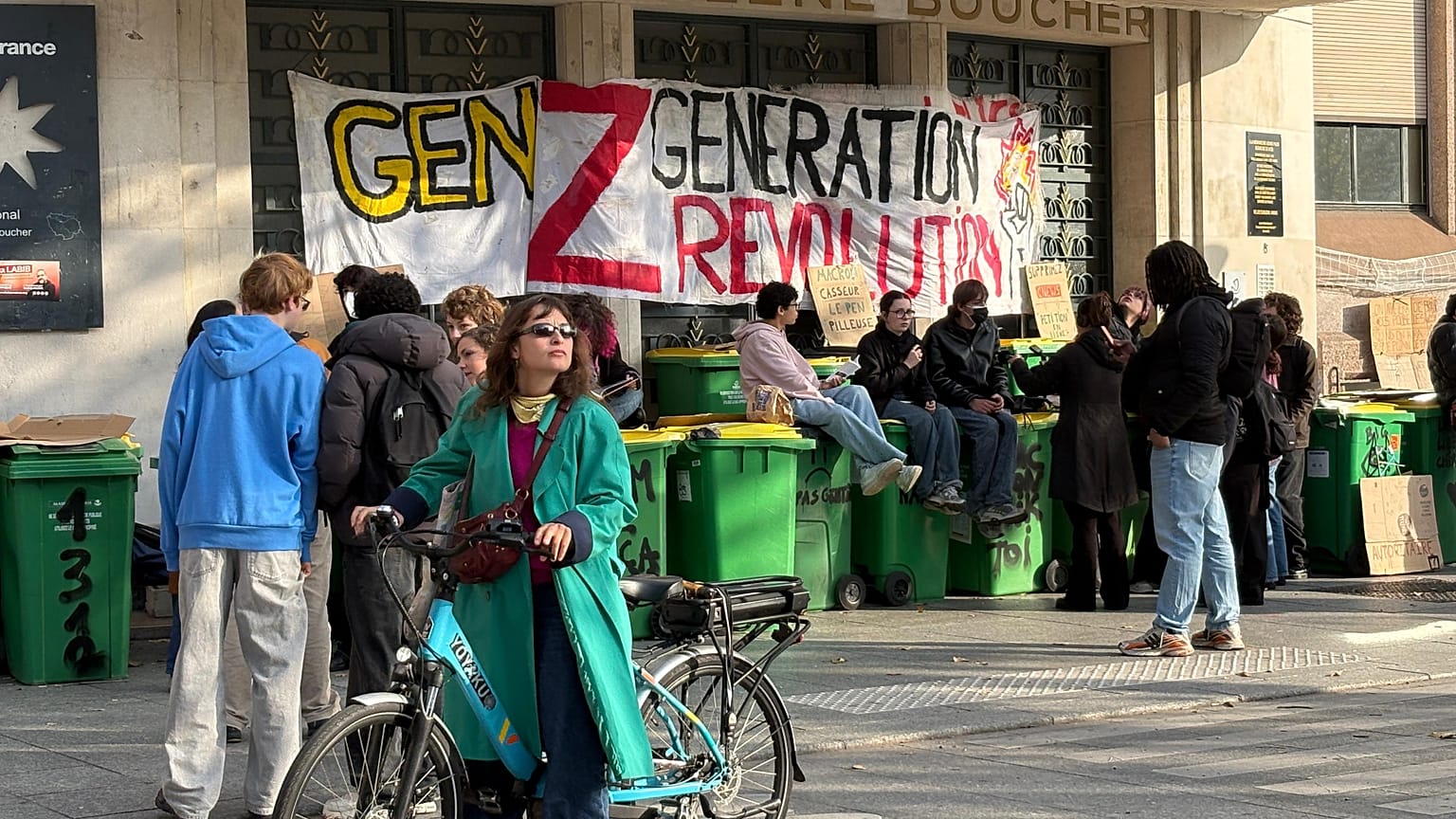
Students stand in front of a barricaded secondary school to protest against the lack of resources in schools, in Paris, Monday 2 November 2026.
Copyright AP Photo/Nicolas Garriga

By Nathan Joubioux
Published on

Unions walked out of talks with the prime minister’s office over the presence of the far right, while firework mortars have been set off inside schools as tensions rise.

Secondary school pupils in France are back on the streets on Tuesday. Nearly two months into their protest movement, the government’s concessions have failed to bring it to an end.

A coalition of trade unions and youth organisations has called a nationwide day of strikes and demonstrations. It is the latest escalation in a dispute that has seen sporadic violence at schools across the country.

Two weeks ago, Prime Minister Sébastien Lecornu’s government tried to calm things down. It promised to overhaul Parcoursup, France’s national online platform for allocating university places, from 2027 and to replace it completely in 2028. It also pledged more money for school buildings and extra resources for the most deprived schools.

Protesters were not won over. Relations got worse at a meeting on the Parcoursup reform at the prime minister’s office in Paris. Most of the pupil and student groups, along with education unions, walked out in protest at the presence of far-right and business representatives.

"We are calling on everyone who supports the legitimate demands of young people, but also those of workers, to be out on the streets," said Éloïse Lefebvre-Milon, co-leader of the Union étudiante student union, after leaving the talks.

The coalition includes some of France’s biggest labour unions, such as the CGT and FO, alongside pupil and student organisations. It said in a joint statement that now was the time "to step up the mobilisation by continuing to put pressure on the government".

"Giving fresh momentum to the mobilisation"

Pupil leaders say they have no intention of backing down. "The balance of power is in our favour, we have to keep going," said Ryad Rani, president of the Union syndicale lycéenne, a secondary school pupils’ union.

“We have to stay mobilised. We are not only fighting for ourselves. We are fighting for teachers, for their working conditions,” Rani said.

Sophie Vénétitay heads Snes-FSU, the largest union for secondary school teachers. She said Tuesday’s action would include “supervised and secure marches”, since tensions outside schools are rising.

Youth protests have a long history of putting pressure on French governments. Former president François Hollande faced mass demonstrations against his labour reforms in 2016. At the time, he privately compared a student movement to toothpaste: "You can get it out of the tube, but you cannot get it back in."

Violence reported in several secondary schools

Most of the protests have been peaceful, but there has been a string of violent incidents on the fringes.

On Monday, firework mortars were set off inside two secondary schools in Seine-et-Marne, in theeast of Paris. The regional council said two pupils were hurt at one of them. At the other, nobody was injured, but education officials said pupils were left "in shock".

Police arrested five people after trouble outside schools in Le Havre and Rouen in Normandy, according to France 3 Normandie (source in French). Fireworks were also set off outside a school in Angers in western France (source in French). Further incidents were reported in the north-eastern Meurthe-et-Moselle department, according to Ici (source in French).


French student protests continue amid


deadlock over education reforms

Students and teachers are planning a new day of strikes and demonstrations Tuesday, as talks with the government remain deadlocked, nearly two months after the start of protests by high school and university students.


Issued on: 10/11/2026 - RFI

High school and university students at a demonstration in Nantes, 15 October 2026. A new day of strikes and protests is being called for Tuesday as talks with the government remain deadlocked, nearly two months after the start of the movement. 
© Stephane Mahe/Reuters

“This is the time to step up the mobilisation and continue putting pressure on the government,” wrote a coalition of student organisations and teachers unions, calling for the strike, on Saturday.

Demonstrations are planned in most of France’s major cities. In Paris, a march will leave off from the Panthéon at 2pm and head towards Place d’Italie.

Some teachers are expected to be on strike, said Sophie Vénétitay, general secretary of the Snes-FSU teachers’ union, notably in some areas, though participation is expected to be lower than last week, on 5 November, when nearly 16 percent of teachers went on strike, according to the Education Ministry.

“The balance of power is on our side, and we must keep going. I am not saying we have won anything, but I am saying we are on the right track,” said Ryad Rani, president of the USL secondary school students’ union on Monday evening, after the first meeting of the committee set up to reform Parcoursup, the national university admissions platform.
Students walk out on Prime Minister

The meeting with the Prime Minister ended prematurely after a number of student and teachers’ organisations walked out in protest against the presence of right week representatives, far right lawmakers and employers’ organisations.

The groups criticised the attendance of student union UNI, which describes itself as the leading right wing student movement, as well as Thierry Tesson, a far right National Rally MP and Gaëlle Frontoni, a senator for the right wing UDR.

“We want to make it absolutely clear that we will never sit in a room with the far right, with people responsible for spreading racist, fascist and hateful ideas,” Manon Moret, General Secretary of Unef, the French national union of students, told reporters.

Student unions also objected to the influence given to employers’ organisations.

“We refuse to let higher education be reformed around the needs of businesses. Young people are the ones who need to be heard,” said Eloïse Lefebvre-Milon, co-general secretary of Union étudiante.

Parcoursup is at the heart of the protests, with students continuing to demand it be scrapped. The government announced a revision of the platform two weeks ago, ahead of its planned replacement in 2028.

Organisations representing schools also walked out of the meeting.

“The government is incapable of offering a new response to students and education staff,” said Vénétitay.

Making up missed lessons

Meanwhile, Education Minister Édouard Geffray said on Monday that students who have missed lessons because of the protests could be offered catch-up classes during school holidays,

Such classes already exist, but they will be expanded into school holidays in February and at Easter, to make up for teaching time lost during the student protests, Geffray said in an interview with public broadcaster France 2.

School representatives rejected the proposal, questioning how the government would recruit enough volunteer teachers to work during their holidays.

Geffray also confirmed that the dates of the baccalauréat examinations would remain unchanged.


A huge explosion at a steel factory in Western Turkey has left at least 17 people dead and 13 injure


By Anna Kirchheim with AP, AFP
Published on

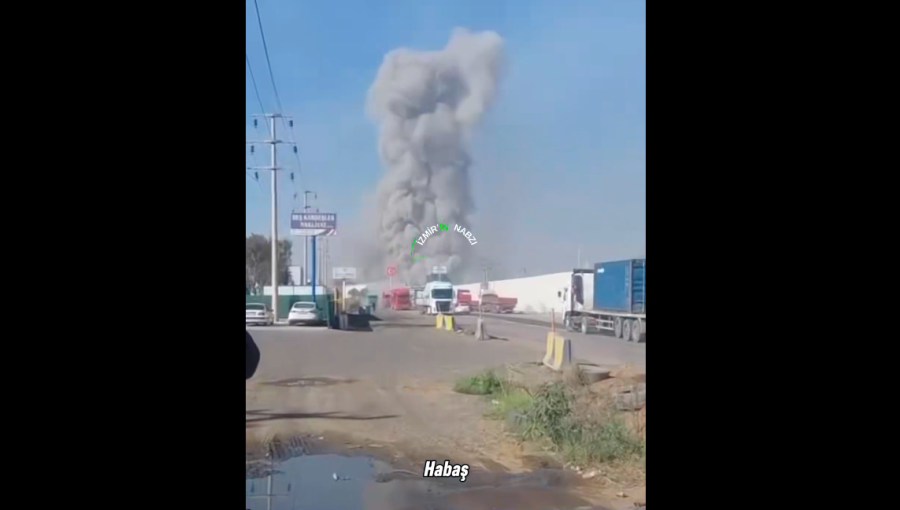
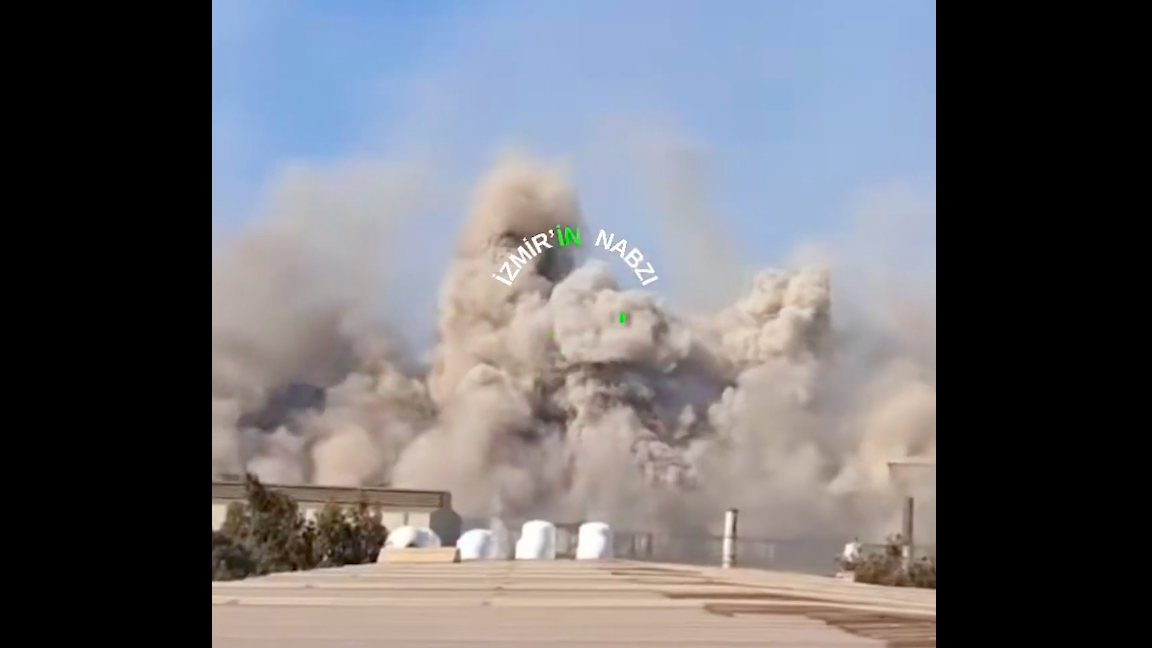
The explosion occurred when a crane lifting a boiler collapsed into a large industrial furnace, causing a huge fire.

The blast happened at midday local time, when a crane lifting a replacement boiler collapsed and fell into a furnace used during the liquid steel casting process.

The fire at the HABAS plant in Aliaga, Izmir province, claimed at least 17 people's lives and also injured 13 people, two of them critically, President Recep Tayyip Erdogan said in a televised address following a scheduled Cabinet meeting.

"The circumstances surrounding this tragic incident, which has deeply saddened our nation, including how and why it happened, whether there was any negligence and who bears responsibility, will be established," Erdogan said on television.

According to eye witnesses, the explosion "felt like an earthquake".

Izmir mayor Cemil Tugay said on X that rescue teams were "continuing their work to remove the collapsed platform" and that those affected were factory workers.

EU president Ursula van der Leyen has expressed her condolences

HABAS is a privately owned group and one of Turkey's top steel producers. The plant was established in 1987 and can produce 4.5 million tons of steel annually, according to the company’s website.

Workers' groups said there was a long record of safety issues at HABAS.


Major explosion at Turkish steelmaker Habas’ Aliaga plant kills at least six

Major explosion at Turkish steelmaker Habas’ Aliaga plant kills at least six
The noise and smoke caused by the explosion at the plant were observed across Izmir. / social media footageFacebook
By Akin Nazli in Belgrade November 9, 2026

At least six workers were killed, with dozens more injured or trapped, following a major explosion on November 9 that took place around noon (local time) at steelmaker Habas’ plant in western Turkey, the Izmir governorate said in a press release.

The incident occurred at the industrial group’s primary manufacturing complex in the Bozkoy neighborhood on the Aliaga peninsula, an industrial heartland and key shipping hub located north of Izmir on the Aegean coast.

According to preliminary assessments released by the governorate, the blast was triggered during a liquid steel casting operation when an overhead crane failed and plummeted directly into an electric arc furnace.

Initial reports from regional officials confirmed three fatalities at the scene and 14 injuries with several victims transferred to nearby medical facilities in a critical condition. In a subsequent statement issued later in the afternoon, the governorate updated the death toll to six after one critically injured worker succumbed to injuries in hospital and search-and-rescue teams recovered two additional bodies from wreckage.

Emergency crews remain deployed at the site where search-and-rescue efforts continued to reach workers feared trapped beneath heavy industrial debris.

Habas, one of Turkey’s biggest steel producers, also operates extensive production facilities for industrial gases and heavy manufacturing. Its Aliaga complex serves as a crucial node in the country's metal export supply chain, producing long products and billets for international markets.


\


‘We Could Have Waited’: Caesareans The Norm For Pregnant Women In Greece – Analysis
Graphic: Igor Vujcic/BIRN.


Key Takeaways:

Nearly 63% of births in Greece in 2025 were by caesarean section, one of the highest rates in the EU, driven by time pressures, staff shortages, limited midwife-led care and insufficient training in vaginal birth.

Many women reported feeling pressured into unnecessary C-sections, with poor informed consent and lasting trauma, while experts note rates above 10% do not reduce mortality and raise risks.

Proposed remedies include midwife-led care, natural-birth centres, Robson classification audits and hospital incentives, but implementation remains stalled amid resistance and no national oversight.


Five weeks before her due date, Mirela’s doctor told her the baby was in the breech position, lying bottom or feet down.

The doctor proposed a caesarean section, but Mirela, a 32-year-old electrical engineer from the island of Crete, was reluctant and asked why. Responding to a BIRN online questionnaire, Mirela recalled her doctor growing annoyed and telling her to “do what you want, at your own risk”.


Mirela asked about a non-invasive procedure in which the foetal position is manipulated, but, she said, the doctor insulted her and dismissed the procedure as dangerous. Eventually, the baby turned on its own, head down. Nevertheless, the doctor insisted on inducing labour, claiming that “the baby was big”.

Mirela tried unsuccessfully to find another doctor and eventually agreed to an induction. Thirteen hours passed without a contraction, during which time Mirela couldn’t eat and her water intake was rationed. Weak and worried, she underwent a C-section. This was January 2025.

Mirela said she suffered “nightmares for months” afterwards and had to seek psychological help.

According to the Hellenic Statistical Authority, ELSTAT, almost two-thirds [62.7 per cent] of births in Greece in 2025 were by C-section, up from 58.4 per cent in 2020.

In 2023, EU data placed Greece fifth in the bloc in terms of rates of C-sections, behind Turkey, Cyprus, Romania and Bulgaria.

Experts blame the rate on a desire among doctors as well as parents “to save time”, as well as shortages of midwives and anaesthesiologists, a lack of doctor training in natural childbirth, and not enough information for young couples.

Experts blame the rate on a desire among doctors as well as parents “to save time”, as well as shortages of midwives and anaesthesiologists, a lack of doctor training in natural childbirth, and not enough information for young couples.

C-sections “are not treated as a surgical procedure,” but rather as an “expected outcome of pregnancy,” said Kleanthi Gourounti, a professor in the Department of Midwifery at the University of West Attica and Vice President of the Midwives’ Association of Athens.

Obstetrician Ioannis Mouzalas, a vocal advocate of natural childbirth, told BIRN: “It is a solution for the obstetrician that used to save money, but now it saves time, unless you consider that time is money.” At his clinic, the C-section rate is between 18 and 22 per cent.

“I’ve come to believe that natural childbirth will remain the minority, not only because of doctors but also because of the mindset of just wanting to ‘get the birth over with’,” Mouzalas said. “Nevertheless, I think it’s worth trying to increase natural childbirth. Not for ideological reasons, but for scientific reasons.”
‘We could have waited’

Maria, a 37-year-old lawyer, gave birth to her first child in August at a public hospital in Athens via a C-section. The procedure was deemed medically necessary “due to the baby’s breech presentation and the umbilical cord being wrapped twice around its neck and shoulder”, she said.

Maria had preferred a vaginal birth, and her doctor, whom she had chosen because she trusted him, encouraged her to wait and try certain exercises to help the baby change position, but to no avail.


“I felt a bit disappointed,” Maria said, but “I accepted the decision, prioritising my child’s safety”.

Gourounti said it “goes without saying that a C-section can be lifesaving for both the woman and the foetus”.

“The issue, however, is that there must be documentation justifying the necessity of every C-section.”

The Hellenic Obstetrical and Gynaecological Society has set guidelines for performing C-sections.

But what happens in cases where a C-section is not necessary?

Another respondent to the questionnaire, Eftichia, quoted her doctor as saying: “When women reach their 39th week, I induce labour. I don’t let them go any longer.”

Eftichia, a 34-year-old police officer, had attended seminars led by independent midwives in Athens during her first trimester. While she preferred a vaginal birth, the seminars had prepared her for every eventuality.

During one of her check-ups, her doctor mentioned that there was low amniotic fluid and suggested that her waters might have broken without her realising; the very next day, he “announced that he was going to break my waters”.

The induction began at 9:00 a.m., but by 6:00 p.m., there was still no cervical dilation. She was told that the baby’s position was preventing pressure on the cervix, which is necessary for dilation to begin, so a C-section was performed.

“That is why I believe that if we had waited just one more week, I might have been able to give birth naturally, even with an induction,” Eftichia said. “The baby would have descended and moved into the proper position, something that didn’t happen because, for some reason, we were in such a rush.”

The cause of Greece’s high rate of C-sections is “multifactorial”, said Dimitra Kentrifylli, an independent midwife and lecturer in the obstetrics department at the Metropolitan College in Thessaloniki.

They begin with “the wrong prenatal care monitoring plan”.

“Normally, there should be midwife-led care for low-risk pregnancies,” said Kentrifylli, in “close collaboration with obstetricians”.

Research shows that midwife-led births are less likely to involve medical intervention as midwives are more likely to treat childbirth as a natural process and focus on psychological support and the position of the mother.

“When a woman in labour has a midwife continuously by her side, the likelihood of needing a Caesarean section decreases, and overall birth outcomes improve,” said Apostolos Athanasiadis, president of the Hellenic Society of Obstetrics and Gynaecology.

“This is because the care provided is truly personalised – essentially one-on-one – allowing a strong relationship of trust to develop between the midwife and the woman,” he added.


Other factors include a shortage of anaesthesiologists and midwives, a lack of public awareness, and a failure to conduct regular evaluations of the service provided by healthcare bodies.

According to the World Health Organisation, WHO, C-section rates above 10 per cent do not reduce mortality but instead increase health risks for both mother and baby.

Kentrifylli said that fear of childbirth drives many women to request C-sections, yet this fear remains “unrecognised”.

Of 14 women who told BIRN it was their wish to have a C-section, nine said they were afraid of a natural birth.

Likewise, Mouzalas said, some young obstetricians also turn to C-sections “out of fear or panic” because they don’t have enough experience of natural births.

According to Gourounti, when you have a high rate of C-sections, new resident doctors and midwives do not get to practice vaginal deliveries, and thus “the skill is lost”.
Are women given enough information?

Niki* was eight months gone when her doctor told her the baby was “too big”, that she had a “very narrow pelvis”, and that the baby would “tear her apart”.

Despite her partner’s objections, Niki agreed to a C-section.

“A doctor is someone to whom you entrust your body,” she said. “It is extremely difficult to shatter that trust; it’s like choosing to turn a blind eye – as if you don’t want to hear the truth.”

She describes the birth of her child as “an unforgettable, negative experience”.

“I didn’t see that, through this, I had gained a child. All I saw was that I had ended up with an incision on my abdomen.”

Almost half of respondents said they felt steered or pressured into undergoing a C-section.

Gourounti said the question is “to what extent the choice, the consent to all of this, is truly informed”.

More than two thirds of respondents said they did not receive any prenatal information about birth options from their midwife or doctor.

Angeliki, a 38-year-old teacher, said she underwent a C-section she now believes was not medically necessary.

In her response to the BIRN questionnaire, she cited “the importance of women being well-informed promptly, choosing appropriate healthcare professionals, and receiving support during childbirth and breastfeeding”.

Gourounti said women must also actively seek information: “We are currently living in an era where information is available online. We can access it. Furthermore, we should certainly press the professional we are consulting to discuss this with us. In other words, women themselves need to assert their rights”.


Ioanna Vasilaki, an independent midwife and president of the Association of Independent Midwives of Greece, EAMME, said doctors will sometimes suggest inducing labour so the baby can be delivered during his or her shift. Often this ends in a C-section.

A third of respondents said their labour was induced; a quarter of these women said they were not told why.

Half who underwent C-sections said it was conducted as an emergency procedure.

Gourounti said it was “quite strange that when you go to give birth, one in two women ends up having some kind of difficulty or medical issue that arises during labour, necessitating an emergency C-section”.

According to Giorgos Daskalakis, professor of obstetrics and gynaecology at the National and Kapodistrian University of Athens and director of the first obstetrics and gynaecology clinic at the public Alexandra Hospital, some doctors in public hospitals outside Greece’s main urban centres work too many shifts, “so it is extremely difficult for them to spend too much time performing normal deliveries on women”.

Midwives say that often epidurals are not provided to women giving birth vaginally because there aren’t enough anaesthesiologists in Greece.

According to a report in the Greek newspaper Kathimerini in 2024, there are roughly 1,000 anaesthesiologists in Greece. The Hellenic Society of Anaesthesiology puts the figure at 750, in a country of some 10.5 million people. That’s far fewer than global healthcare bodies recommend.

“If you pay,” said Kentrifylli, “if you find a hospital doctor and they see you privately in their office and take you to the emergency room without it being time for you to give birth and put you in a labour induction position, then you will have the option of an epidural.”

Daskalakis said that issues with the legal framework in the event of alleged malpractice are also driving doctors to err on the side of caution by recommending C-sections.

“Consequently, every time a complication arises, the simple question asked is: ‘If a C-section had been performed, would things have turned out differently? Would it have been better?’ And the inevitable answer is that a caesarean section would obviously have led to a better obstetric outcome. Terrified of legal repercussions, doctors are highly susceptible to performing a C-section just to get through the process easily.”

In mid-2024, a law was passed allowing for the creation of Natural Birth Centres within public hospitals and independent institutions, where midwives would oversee deliveries. Amid what midwives say is resistance from obstetricians, no such centre has been opened in the public health system. One private centre was opened, but it closed in January this year, citing financial constraints.

Daskalakis is not enthusiastic about such birth centres. Instead, to encourage natural childbirth, he says staffing should be approved, uniform protocols introduced, and public awareness raised.

Financial incentives?

Daskalakis also argues for bonuses for hospitals that cut their own rate of C-sections.

“The money won’t go into someone’s pocket,” he said. “It will go to the hospital, which will automatically have an incentive to monitor the process because it will receive a bonus.”

Mouzalas, however, said the way a birth is handled should have nothing to do with “economic or ideological” considerations. “It should be related exclusively to scientific reasons”.

In 2017, the WHO proposed the use of the Robson classification as the global standard for assessing and comparing C-section rates across healthcare facilities.

The Robson classification was applied for the first time in 2019 by scientists in Greece to identify trends in caesarean births by examining 8,572 women in a private health facility. Just under 61 per cent of births were caesareans, 34.6 per cent were induced, and 30.7 per cent were births after a previous C-section.

However, in Greece, there is a complete absence of any oversight mechanism for C-sections.

“There is no system in place to require every hospital and every physician to provide a substantiated explanation as to why they deemed a C-section necessary,” said Gourounti, who expressed doubts regarding the widespread application of the Robson classification system in Greece.

“Each hospital and each doctor must provide a substantiated explanation as to why they deemed the choice of a caesarean section necessary,” she said.


Professor Athanasiadis told BIRN that the Robson classification is used in all Obstetrics and Gynaecology departments of the Aristotle University of Thessaloniki, as well as at the Aretaieion and Alexandra public hospitals in Athens, though he stressed he cannot speak for all Ob-Gyn departments across Greece.

According to him, the Robson classification serves as an “internal audit” tool that helps refine clinical practice and reduce unnecessary C-sections. He also underlined that the Robson system can be implemented in public hospitals, but not in private ones, which do not have a departmental structure but instead rely on collaborating private physicians.
The role of the midwife

Gianna, a 33-year-old literature teacher in Athens, faced a number of complications during her pregnancy and, fearing something might go wrong, agreed to be induced.

When the induction didn’t work, a C-section was performed.

“For me, it was a traumatic experience that left me feeling like a failure and filled with guilt,” said Gianna*.

She was left with numbness in her abdomen, and difficulties with breastfeeding took an even greater toll on her emotional well-being.

Almost 40 per cent of respondents described their experience of childbirth as negative, saying it had left them traumatised.

“It is deeply concerning to see such high rates of C-sections, alongside a large proportion of women who return home after giving birth feeling that the entire experience was traumatic, all this in a country facing a severe demographic crisis,” said Gourounti.

For Mouzalas, the increasing number of C-sections is also due to the “distortion of the midwifery profession” in Greece, which is too often marginalised.

In Greece, prenatal care and pregnancy monitoring are usually carried out by obstetricians.

“About one per cent of pregnant women will turn to a midwife as their first healthcare professional,” said Kentrifylli, who, as an independent midwife, supports low-risk, at-home deliveries as well as in private hospitals.

Midwives’ associations have long demanded official job recognition that ensures their professional autonomy and reflects their full scope of competencies.


In February, the health ministry withdrew a draft job description, which midwives criticised as degrading “the scientific and autonomous role of the midwife”.

“The Ministry committed that the responsibility for childbirth would remain with the midwife within the primary healthcare setting,” said Gourounti. “They stated that they would review the text with legal experts and then sign it. Unfortunately, as we speak, this has not yet happened.”

Mouzalas told BIRN: “We need a model where doctors and midwives do not compete, but compete for a common goal.”

The Greek Ministry of Health has not responded to BIRN’s questions.

*Some names have been changed to allow interviewees to remain anonymous.


About Balkan Insight
The Balkan Insight (formerly the Balkin Investigative Reporting Network, BIRN) is a close group of editors and trainers that enables journalists in the region to produce in-depth analytical and investigative journalism on complex political, economic and social themes. BIRN emerged from the Balkan programme of the Institute for War & Peace Reporting, IWPR, in 2005. The original IWPR Balkans team was mandated to localise that programme and make it sustainable, in light of changing realities in the region and the maturity of the IWPR intervention. Since then, its work in publishing, media training and public debate activities has become synonymous with quality, reliability and impartiality. A fully-independent and local network, it is now developing as an efficient and self-sustainable regional institution to enhance the capacity for journalism that pushes for public debate on European-oriented political and economic reform.
View all posts by Balkan Insight →
When The Economic Pendulum Begins To Move Toward Africa – Analysis

The October 2026 IMF World Economic Outlook projects Sub-Saharan Africa to grow about 4.5 percent in 2026, roughly 1.4 percentage points above the global average of 3.1 percent, supported by commodity exports, prior reforms and simpler production bases.
High performers such as Ethiopia (9.2 percent), Rwanda (7.4 percent) and Guinea (7.2 percent) illustrate growth beyond pure commodities, yet the region still faces elevated energy and food costs, debt burdens and limited reserves.

In a fragmented world where security joins cost in investment decisions, the article sees a potential “pendulum” shift toward Africa if the continent can convert growth into industrialization, infrastructure and legal certainty.

There is an interesting change in the global economic growth map. As war, trade fragmentation, geopolitical tensions, and supply chain disruptions become new sources of uncertainty, Sub-Saharan Africa is instead demonstrating resilience that is increasingly attracting attention.


In the October 2026 World Economic Outlook (WEO), International Monetary Fund The figure is far above projected global economic growth of around 3.1% in 2026. In other words, Sub-Saharan Africa’s growth is around 1.4 percentage points above the global average.

The important question is not simply why Africa is growing rapidly. The more strategic question is why a region that has often been regarded as one of the areas most vulnerable to global shocks is instead demonstrating resilience as the world faces war and economic fragmentation.

Growth in Sub-Saharan Africa is largely supported by structural changes. IMF notes several factors that have helped Sub-Saharan Africa mitigate the impact of the war in the Middle East. Adjustments in global supply, favorable export revenues for some countries, and reforms undertaken previously have become important buffers against external shocks.

Africa’s economic composition also provides certain advantages. Many Sub-Saharan countries are exporters of strategic commodities, ranging from oil and gas to minerals and raw materials that are increasingly important for the energy transition. In a situation where the world is diversifying its supply chains, this position is becoming increasingly strategic. Companies and countries are no longer looking only for locations with the lowest production costs. They are increasingly looking for sources of raw materials, energy, and trade routes that can guarantee supply continuity.

Africa’s New Opportunity

Growth does not come only from resource-rich countries. IMF data IMF shows considerable variation. Ethiopia is projected to grow by 9.2%, Rwanda by 7.4%, Guinea by 7.2%, Benin by 7%, while Tanzania is projected to grow by 6% and Ghana by 5.7% in 2026. This shows that the African story is not merely a story of commodities, but also one of reform, domestic consumption, and expansion of productive sectors.

In addition, the IMF also warns that Sub-Saharan Africa continues to face high energy and food costs, debt-interest burdens, limited foreign exchange reserves, and declining external assistance. Growth risks also remain tilted to the downside. This means that Africa is not immune to shocks. But Africa is learning to absorb shocks.

Some African countries have economic structures that are not highly integrated into complex global industrial supply chains. When global supply chains are disrupted, countries that are highly dependent on imports of intermediate goods, energy, and industrial components can experience significant pressure. By contrast, some African economies have simpler production bases and rely more heavily on domestic resources.

On the other hand, increases in certain commodity prices caused by conflicts can actually increase export revenues for commodity-producing countries. Therefore, the impact of war is asymmetric. Energy-importing countries can come under pressure, while certain commodity exporters can benefit from improved terms of trade.

Africa’s New Resilience

There is another factor that is no less important: reforms undertaken before the crisis. IMF notes that fiscal consolidation before the war and declining public debt ratios have been among the important achievements of Sub-Saharan Africa. This is important because economic resilience is not built when a crisis has already occurred. Resilience is built beforehand.

Countries with fiscal space, adequate foreign exchange reserves, healthier banking systems, and credible economic policies have a greater capacity to withstand external shocks. However, the challenges remain significant. Africa must transform growth into productive investment, industrialization, and job creation. High growth without structural transformation will only produce large GDP figures without necessarily creating broadly shared prosperity.


This is where I see the theory of the economic pendulum becoming relevant. From this perspective, the center of gravity of the global economy is not permanent. It moves according to a combination of growth, resources, markets, capital, technology, and security.

During the previous era of globalization, the pendulum moved toward locations that were the most efficient: low labor costs, adequate infrastructure, and broad market access. But the world after the war in Ukraine, the conflict in the Middle East, trade wars, and economic fragmentation has introduced a new variable: the security premium.

Investors are now asking not only, “Where is production the cheapest?” They are also asking, “Where is production the safest?” This change in the question could become a strategic advantage for Africa. The continent has natural resources needed by the future economy, a large and relatively young population, a growing domestic market, and a geographical position connecting Europe, the Middle East, and Asia. If these factors are combined with political stability, infrastructure, trade integration, and legal certainty, Africa will no longer be merely a supplier of raw materials.

Africa could become one of the main destinations for global investment reallocation. Although the pendulum does not move automatically. Africa must provide reasons for global capital to come and stay: security, legal certainty, infrastructure, competitive energy, digital connectivity, education, and efficient bureaucracy.

Therefore, 4.5% growth is not the end of the story. It may be an early signal. The fragmented world is changing the definition of economic advantage. Efficiency remains important, but security is becoming increasingly important. And when security becomes part of investment decisions, the global economic pendulum has a reason to move further South—including toward Africa. The question now is no longer whether Africa will be part of the future of the global economy. The question is how quickly Africa can position itself before the pendulum moves further.

This is the question that must be answered and, at the same time, become a momentum for Africa amid shocks and the pressures of wars that show no sign of ending.


About Dr. Eko Setiobudi
Dr. Eko Setiobudi, SE, ME, is an economist, lecturer at STIES Mitra Karya Bekasi, Indonesia, and business practitioner. His areas of interest include macroeconomics, fiscal policy, international trade, financial markets, economic development, and global economic affairs. He writes analytical commentaries on Indonesia, ASEAN, Asia, and the evolving global economic order.
View all posts by Dr. Eko Setiobudi →

Argentina: Pope Leo XIV urges Milei's government to protect the most vulnerable


By Juan Carlos de Santos with AP
Published on

The Pontiff visited the Cottolengo Don Orione, which cares for over 400 people and has been hit by Javier Milei's cuts, and said a nation's progress should be judged by how it treats those most in need.

On Monday Pope Leo XIV called on Argentina to protect the most vulnerable people and placed attention on those with disabilities at the heart of his message during his first full day in the country. The Pontiff visited Cottolengo Don Orione, a care centre located in Claypole, south of Buenos Aires, whose work has been affected by the austerity measures of Javier Milei's government.

The institution, founded in 1935 by an Italian priest, houses more than 400 people with disabilities on a 50 hectare site. Known as the "city of charity", the centre has suffered the consequences of cuts to health and social services, as well as funding difficulties for specialised care and therapy programmes.

Not a burden but a blessing

During his tour, Leo XIV hugged residents in wheelchairs, talked with them and gave them his blessing. The arrival of the Pope brought some workers and residents to tears. Addressing them, he said that their lives are a blessing and not a burden for society.

In the centre's chapel, the Holy Father defended the dignity of all people and called for the importance of solidarity to be restored in the face of the pursuit of economic success and the cult of appearances. "The progress of a nation is also measured by how it welcomes all people with disabilities and particular needs," he said.


Pope Leo XIV arrives to preside over a Mass at Monumento de los EspaÒoles in Buenos Aires Monday, Nov. 9, 2026. Photo: Andrew Medichini. Copyright 2026 The Associated Press. All rights reserved.

The message carries particular weight in a context of tension between the Argentine government and organisations working in the field of disability. Last year Congress overturned Milei's veto of a law that provided for an increase in funds for this sector. However, the executive has resisted implementing it, arguing that it could put at risk the fiscal balance achieved.

Government opposition to funding care of the disabled continues

As a consequence, care centres such as Cottolengo have outstanding debts amounting to hundreds of thousands of euros. In addition, the government's adjustment measures have affected specialised therapy programmes that for decades have been fundamental for many of the approximately five million people with disabilities living in Argentina.

The papal visit also comes just a few days before the Senate is due to study a draft bill that seeks to reserve funds for disability benefits in next year's budget. Milei opposes this initiative.

Kuyen Rolon Rey, a Cottolengo volunteer, highlighted how important it is that Leo XIV chose to start his tour of Argentina precisely in this establishment. "The people here deserve this grace," he said. He also praised the fact that the Pontiff chose a place that is small in size, but big in the love it represents.

A call to business leaders and trade unions

The visit to the care centre opened a day in which Leo XIV was scheduled to meet at the Catholic University of Argentina with business representatives, trade union leaders and representatives of popular movements.

The meeting is part of the message of Catholic social teaching that the Pope is developing during his trip: putting the weakest and most vulnerable people at the centre of economic decisions. This line also revives an integral part of the legacy of Pope Francis, who was Argentine by birth.

On Sunday, during his first speech in the country and in Milei's presence, Leo XIV had already recalled one of his predecessor's recurring ideas: money must be at the service of people and not the other way round. "The economy must serve the person, not the person the economy," he said.

Those expected to take part in Monday's meeting include representatives of national manufacturers, affected by the arrival of low-priced imported products after Milei removed trade restrictions that had been in force for years.

Members of the main Argentine trade union confederation were also invited, whose representatives conveyed to the Vatican in September their concern about job losses and falling wages.

Since coming to power at the end of 2023, Milei has driven a broad austerity programme that has turned him into one of the leading figures in the international conservative backlash against the liberal establishment.

His government has defended cuts to disability programmes as part of a reform process aimed at eliminating fraud and unnecessary spending in the federal administration.


Pope Leo puts Argentina’s poor at centre of visit as Milei’s austerity bites

Pope Leo puts Argentina’s poor at centre of visit as Milei’s austerity bites
“The economy must be at the service of the person and not the person at the service of the economy.” Pope Leo XIV said. / XFacebook
By IntelliNews Latam desk November 9, 2026

Pope Leo XIV mounted a forceful defence of workers’ dignity before Argentina’s union and business leaders, in a speech that opponents of President Javier Milei hailed as a repudiation of his libertarian agenda, at the end of a day in which the pontiff drew the biggest crowd of his papacy.

Addressing an audience at the Catholic University of Argentina (UCA) in Buenos Aires on November 9, the first US-born pope said joblessness inflicted damage far beyond lost earnings. “To deprive a person of work is not simply to deny that person an income,” he said. “It severely wounds their dignity, deprives them of the ability to contribute to society and plunges them into social exclusion.”

The speech followed an open-air Mass in the capital’s Palermo district which the Vatican estimated was attended by 2.5mn people. Earlier in the day Leo had visited a home for people with disabilities that has been caught up in disputes over government funding.

Leo took aim at several pillars of Milei’s free-market creed, telling the gathering that private property was “always subject to a social mortgage”. He warned that “wherever the domination of a few becomes the rule, work is turned into the exploitation of all components of the work community, and workers end up being valued solely for their efficiency.”

The pope described trade unions, which have spearheaded resistance to Milei’s reforms, as “indispensable institutions when they defend those who have no voice”. He also spoke up for grassroots movements of informal workers, which the government has excluded from handing out welfare payments on the grounds that they breed dependence on the state. Waste pickers, smallholders and artisans “do not passively wait for state assistance”, he said.

The audience broke into repeated applause, notably when Leo invoked his Argentine predecessor Pope Francis’s formula for social justice of “tierra, techo y trabajo”, or land, housing and work.

Leo also cautioned that “artificial intelligence and unregulated automation can put countless jobs at risk” and urged governments to protect workers. Milei opposes regulation of the technology and has been seeking billions of dollars in AI-related investment.

“Rapid technological development needs an ethical awareness to match its level," the Pope said.

Those in the hall included union leaders who have called general strikes against the government, manufacturers hurt by a surge in cheap imports since trade barriers were lifted, and “cartoneros”, the informal recyclers who enjoyed a prominent place during Francis’s papacy.

Opposition figures were quick to claim the pope’s message. “Let them listen to him, those who have closed their ears,” said Axel Kicillof, governor of Buenos Aires province and the most powerful elected Peronist, who met the Pope at the Cottolengo.

Milei has praised the pontiff’s words while avoiding their content. He described Leo’s address to Argentine officials on November 8 as “outstanding”, with “many elements of great value”, but declined to go further, saying he did not want to “fall into the mud of using the speech politically”, AP reported.

In that speech, delivered at the Palacio Libertad cultural centre with Milei seated beside him, Leo said “the economy must be at the service of people, not people at the service of the economy”. He urged support for education, pensioners and people with disabilities, groups that have borne much of the burden of the president’s spending cuts. “Those who exercise authority have a duty to act prudently, recognise the limits of the power entrusted to them and direct their decisions towards the common good of the entire community,” he said.

The pope also lamented emigration among the young. “A nation must seriously ask itself where it has gone wrong when its young people have to leave their homeland to fulfil their dreams,” he said, while calling for the protection of unborn life.

The libertarian leader, who welcomed the visit as a “profound honour”, told the pope: “I would ask you only to pray for Argentina, as we do.”

Milei, who was raised Catholic, has spent years studying Judaism and has said he intends to convert once he leaves office, arguing that religious observance would be incompatible with the duties of the presidency.

Leo began his tour on November 9 at the Cottolengo Don Orione in Claypole, south of the capital, which houses more than 400 people with disabilities. “A nation’s progress is also measured by how it welcomes all people with disabilities and special needs,” he said.

"Their lives are not a burden on society; they are a blessing."

The government has held back much of the funding for disability care despite a law that Congress passed over Milei’s veto last year to restore it, a stance that has drawn protests from Argentina’s bishops, AP reported. The Senate is due to debate legislation earmarking disability funding in next year’s budget.

At the Mass, attended by Milei, his sister and presidential chief of staff Karina Milei and the entire cabinet, Leo struck a more traditional tone, describing the family as the bedrock of society. “Do not give in to those who dismiss the Christian family as outdated,” he said. He acknowledged that Argentine households faced instability, precarious employment, domestic violence and addiction. The government declared a national holiday to allow people to attend.

Vice-president Victoria Villarruel, who is at odds with the government, did not attend and later said she had never received access details, La Nación reported.

The trip is the first papal visit to Argentina since John Paul II in 1987. Francis, who was archbishop of Buenos Aires before becoming pope, never returned during his 12-year papacy, a choice widely attributed to a reluctance to be drawn into the country’s polarised politics. He died in April 2025.

Leo, 71, underwent surgery for lung cancer in October. His 12-day South American tour, which began in Uruguay on November 6 and ends in Peru on November 17, covers about 31,000km and 10 cities. He travels to Córdoba on November 10 and to the shrine of Luján on November 11 before leaving for Peru.

The visit comes as Argentina’s economic recovery falters. Poverty fell from 52.9% in the first half of 2024 to 28.2% in the second half of 2025 as inflation collapsed, but rose to 32.3% in the first half of this year, according to Indec. Estimates based on the agency’s microdata put the rate at 34.4% in the second quarter, broadcaster C5N reported. Among children under 15, poverty stood at 44.5%.

Unemployment reached 7.9% in the second quarter, while gross domestic product shrank 0.6% from the previous three months. Monthly inflation edged up to 1.9% in September, taking the annual rate to 33.4%.

The IMF has praised the government’s fiscal discipline as it completes the third review of a $20bn programme. But 60% of Argentines disapproved of the government in an October poll by the University of San Andrés, as Milei prepares to seek re-election in October 2027.

The minimum pension is about $300 a month, roughly a quarter of what an older person needs to cover medicine, housing and food. “The weakest cannot be the ones carrying the burden of the adjustment, especially poor retirees,” said Isabel Martín, a 73-year-old parishioner at the Mass, according to AP. “If anyone can make him reconsider, it’s the pope.”

Displaced Kurds Return To Destroyed Homes In Northeast Syria


Displaced Kurds returning home in northeast Syria. November 5, 2026. Photo Credit: Ivan Hassib, VOA


November 9, 2026

By VOA

By Ivan Hassib


Key Takeaways:

After more than seven years of displacement from the 2019 Turkish-led offensive, thousands of families are returning to Sere Kaniye (Ras al-Ayn) in northeast Syria under an integration process between the interim government and the SDF.

More than 4,000 families have returned, but most face destroyed or occupied homes; the government offers $2,000 per family, which many say is insufficient for rebuilding.

Authorities are working to clear occupied houses and aim to facilitate the return of 1,000 people within a month, while remaining camp residents urge faster action before winter.

After more than seven years of displacement, Daham Ibrahim is finally preparing to return home in the countryside of Sere Kaniye (Ras al-Ayn) in northeast Syria.

Ibrahim, who had hoped that his tent would become nothing more than a painful memory of the past, is now taking it with him to set it up on the site where his house once stood.

“I’m returning to my village, but I have no choice but to set up this tent at the same place where my house used to be,” Ibrahim, a father of eight, told VOA. “My house was destroyed during the war. Our village used to have 500 houses; now barely 100 houses are intact.”

Ibrahim is one of many who were displaced during a 2019 Turkish-led offensive against the Kurdish-led Syrian Democratic Forces (SDF), a former U.S. partner in the fight against the Islamic State terror group.

Since last August, thousands of displaced people in northeast Syria have been returning home as part of an integration process between the interim Syrian government and the SDF.

According to Syrian government officials, more than 4,000 families have returned to the Sere Kaniye region. But, like Ibrahim, most returnees are going back to destroyed or damaged houses.

To help compensate for these losses, the Syrian government is providing each returning family with $2,000 in assistance. But many say the amount isn’t enough to rebuild their homes.

At displacement camps, those still waiting to return home hope that authorities will expedite the process, especially as a harsh winter approaches.


“We have endured seven years of hunger and cold. It is time for us to go back home,” said Fatima Habash, another displaced person from Sere Kaniye.

“We yearn for a normal life. The government needs to remove those people who are living in our houses, so that we can return to them,” she told VOA.

Before the fall of the Bashar al-Assad regime in December 2024, Sere Kaniye was under the control of Turkish-backed Syrian armed groups. Although those groups have since integrated into the Syrian ministry of defense, their continued presence, along with that of their families living in houses of displaced residents, has made it difficult for many to return.

Mahmoud Khalil, deputy commander of the Internal Security Forces in Hasaka province, said efforts are underway to remove families currently occupying the homes of Sere Kaniye residents.

“If everything goes according to plan, we should be able to facilitate the return of 1,000 people to the city within a month,” Khalil told VOA.

The Sere Kaniye Displaced Persons Committee, a civil society group advocating for displaced people in northeast Syria, this week said that returning home is a fundamental right for displaced people, particularly now that in its view, the Syrian conflict has ended.

The group called on Syrian authorities to ensure the safe and voluntary return of people still living in displacement camps.
Nicaragua’s China Bet Is Changing Washington’s Leverage – OpEd


Nicaragua’s Ortega-Murillo government has weathered years of U.S. sanctions by cultivating ties with Russia, Venezuela and now China, which has granted Chinese firms about 80 mining concessions covering 11% of national territory since 2023.

Managua remains economically dependent on the United States through CAFTA-DR while using Chinese infrastructure, mining and telecom deals to reduce the cost of confrontation, including recent rejection of a U.S. ambassador-designate.

Effective pressure requires tracking financial intermediaries and supporting independent institutions and civil society without broad measures that harm ordinary Nicaraguans or accelerate the pivot to Beijing.


The recent Senate hearing on Nicaragua took me back nearly twenty years. On September 30, the Senate Foreign Relations Subcommittee on 
the Western Hemisphere heard testimony from Eddy Acevedo of the National Endowment for Democracy, Gil Guerra of the Hudson Institute, Deborah Ullmer of the National Democratic Institute and Juan Sebastián Chamorro of Ciudadanos por la Libertad. Much of the hearing dealt, understandably, with the continuing concentration of power under Daniel Ortega and Rosario Murillo. What interested me more was the discussion of how the government has learned to live with years of sanctions, diplomatic pressure and international isolation.

I know some of that terrain personally. From 2005 to 2007, I led USAID’s democracy and governance work in Nicaragua during the period
surrounding Ortega’s return to the presidency. Deborah Ullmer was then NDI’s country director there, and I later wrote about those years in
The New Nicaragua. Our work was deliberately broad because no one program, election or institution could carry the weight of a democratic system.

We worked with civil society and independent media, universities and churches, political parties, election observers, municipal governments
and civic organizations. On the justice side, we supported technical assistance for prosecutors, judges, public defenders and others trying
to make Nicaragua’s relatively new adversarial criminal procedure function in practice. We also supported transparency, access to information, local government and institutional accountability, while working with international partners, including the OAS.


At the same time, Nicaragua was becoming more deeply tied to the U.S. and regional economy. CAFTA-DR was signed in 2004, approved in the
United States in 2005 and entered into force for Nicaragua on April 1, 2006, while I was there. The agreement was about more than tariffs. It
also covered investment, procurement, telecommunications, transparency, labor and environmental standards, and it helped anchor Nicaragua more firmly in a regional economic system centered on the United States.

Our democracy work was not designed to produce a particular electoral result. Ortega won the 2006 presidential election, and we accepted
that outcome. The premise was that Nicaraguans had the right to choose their own government and that the institutions surrounding that choice should be strong enough to survive whichever candidate prevailed. Looking back now, what is striking is how many of those institutions were later weakened, captured or dismantled. Independent media were closed or pushed into exile. Civil society organizations lost their legal status. Universities were confiscated. Churches and clergy came under sustained pressure, while judicial independence, already fragile, deteriorated further.


The other side of the story is external. Ortega and Murillo have spent years cultivating relationships that reduce the cost of pressure from Washington and Europe. Cuba was the historic revolutionary ally. Russia later reemerged as an important political, security and military partner. Venezuela under Hugo Chávez then supplied oil-financed resources that gave Ortega extraordinary political flexibility at home.

China is now becoming the latest and potentially most consequential part of that pattern. Nicaragua first established diplomatic relations
with the People’s Republic of China under the Sandinistas in 1985. Violeta Chamorro restored relations with Taiwan after taking office in 1990, and Nicaragua continued recognizing Taiwan even after Ortega returned to power in 2007. That changed only in December 2021, when Managua again broke with Taipei and restored relations with Beijing.

The relationship has moved quickly since then. A trade agreement has opened another commercial channel, while Chinese companies have moved into infrastructure, energy, telecommunications and especially mining. Recent reporting indicates that Chinese companies have obtained about
80 mining concessions since 2023 covering roughly 1.4 million hectares, about 11 percent of Nicaragua’s national territory.

Those concessions matter for reasons that extend beyond mining. Gold produces hard currency, infrastructure creates long-term commercial
relationships, and telecommunications carry obvious strategic implications. More broadly, every new Chinese connection gives Managua another possible way to soften the effect of U.S. and European pressure.

Yet Nicaragua has not broken with the U.S.-centered economic system. It remains a member of CAFTA-DR, continues to benefit from
preferential access to the U.S. market and remains far more economically dependent on the United States than on China. The strategy appears to be something more subtle: keep the advantages of access to the United States while building enough alternatives through China to make Washington’s leverage less decisive.


The diplomatic relationship with Washington has deteriorated at the same time. Nicaragua recently denied agrément to Natasha Franceschi, the newly confirmed U.S. ambassador-designate to Managua, and the United States subsequently recalled chargé d’affaires Elias Baumann to Washington for consultations. Managua rejected another U.S. ambassadorial nominee in 2022, so the move is not unprecedented, but the timing matters. Ortega and Murillo are deepening their relationship with China while showing less interest in preserving even the normal diplomatic channels through which disagreements with Washington might be managed.

That does not mean Beijing has replaced Washington in Nicaragua’s calculations. Managua does not need China to replace the United States economically or diplomatically. It only needs enough alternatives to make confrontation with Washington less costly.

That is why the Senate testimony was worth paying attention to. Chamorro focused on gold, sovereign finance, reserves, confiscated property and the intermediaries that keep resources moving. Ullmer emphasized the broader networks that can allow sanctions to be circumvented and China’s expanding role in strategic sectors. Guerra likewise focused on the financial structures that help the government absorb pressure. The discussion was moving beyond the familiar question of which official should be sanctioned next and toward the more difficult question of how the system actually sustains itself.

Sanctions can be useful, but they are not a strategy by themselves. During my years in Nicaragua, we occasionally used visa restrictions aggressively against people involved in corruption or attacks on democratic institutions, and they sometimes worked because they imposed direct personal costs. But they were a small part of a much larger effort. The real strategy was institutional: strengthen courts and prosecutors, public defenders and local governments, universities and churches, political parties and civil society, journalists and election observers.

That broader approach remains relevant because Ortega and Murillo have spent years dismantling precisely those independent centers of authority. Pressure from outside can raise the cost of repression, but it cannot substitute for institutions inside Nicaragua that give people room to organize, report, teach, worship, litigate and participate politically. Nor can sanctions work indefinitely if the government succeeds in building enough alternative financial relationships to blunt their effect.

Washington therefore needs some restraint as well as pressure. Broad economic measures can destroy jobs, increase migration and weaken the independent businesses and social institutions that would be needed in any future democratic opening. If ordinary Nicaraguans absorb the economic pain while politically connected actors gain access to Chinese financing, contracts and markets, the result may be the opposite of what policymakers intend.

The better approach is still an “all of the above” strategy. Washington should continue following the money, scrutinizing beneficial ownership, intermediaries and companies used to evade restrictions, while working closely with Europe, Canada and democratic governments in Latin America. At the same time, it should continue supporting the journalists, lawyers, churches, civic organizations, universities and political actors who preserve the possibility of a different political future, whether they remain inside Nicaragua or now operate from exile.


CAFTA-DR also belongs in that calculation. The United States still has considerable leverage because Nicaragua remains embedded in a regional economic system centered on the U.S. market. The challenge is to use that leverage carefully enough to pressure the government without damaging the economic integration that benefits ordinary Nicaraguans or accelerating Nicaragua’s movement toward Beijing.

Twenty years ago, our approach rested on the belief that democratic resilience came from having many institutions capable of resisting the concentration of political power. Ortega and Murillo appear to have drawn the opposite lesson from the same experience. They have spent years weakening those institutions at home while building relationships abroad that make doing so less costly. The recent diplomatic rupture over the ambassador-designate only reinforces that larger pattern. Any serious U.S. strategy toward Nicaragua now has to take both sides of that equation into account.


About Steven E. Hendrix
Steven E. Hendrix is a former senior U.S. foreign assistance official who served in leadership roles with the U.S. Agency for International Development and the U.S. Department of State. He worked extensively in Latin America, Africa, and Asia, including collaboration with European development partners.
View all posts by Steven E. Hendrix →