November 9, 2026
Rapporteur
By Elisa Braun
Key Takeaways:
He reaffirmed radical positions—leaving NATO, supporting Donbas self-determination, escorting Gaza aid flotillas—while softening attacks on social democrats and omitting Europe.
With older voters decisive and current polls unfavourable among them, the campaign’s challenge is to broaden the enthusiastic youth base into a runoff coalition within six months.
(Rapporteur) — The 20,000 supporters cheering Jean-Luc Mélenchon at his political convention near Paris on Saturday had their marching orders: go home and convince your parents and grandparents.
The far-left leader’s France Unbowed (LFI) movement, which is rising in the polls, used the gathering to cement the prospect of a presidential showdown with far-right leader Marine Le Pen and galvanise his troops against their designated enemies.
LFI leaders portrayed Macronists and their “far-right allies” as part of the same establishment, vowing to campaign relentlessly to “bring the far right back to the dustbin of history, where it belongs”.
This came two weeks after Le Pen assembled 10,000 supporters in Orléans, courting conservatives as potential coalition partners.
Mélenchon, meanwhile, called for sweeping change. “I only have one reasonable thing to suggest: change everything,” he said during his hour-long speech.
His Le Bourget rally highlighted the 75-year-old’s central electoral challenge in his fourth presidential bid: how to turn an enthusiastic, youthful crowd into a coalition broad enough to reach the runoff, despite widespread opposition to his candidacy.
The whole menu
Mélenchon vowed not to “water down his wine” to please others, a French expression for moderating one’s stance, instead doubling down on policies that divide the social democrats and centrists he needs to win over.
He condemned Russia’s invasion of Ukraine while denouncing escalation by “warmongers” and calling for self-determination in the Donbas. He also said France would leave NATO and stay out of American wars.
On Israel, he promised action against what he described as genocide in Gaza and the gradual annexation of the West Bank. French ships, he pledged, would escort civilian aid flotillas if elected.
Calls to end the war in Gaza drew some of the loudest cheers from a crowd dotted with keffiyehs, also sold at the entrance of the convention. Environmental pledges drew less enthusiasm, although party officials said climate policy was now a central pillar.
The young, diverse crowd embodied the “new France” at the heart of Mélenchon’s strategy: a country he describes as positively transformed by immigration, women’s rights and the demands of younger generations.
“You either love France as it is or you don’t. We do,” he said. “You don’t pick and choose – it’s the whole menu,” he added, calling on the ‘New France’ to hold its chin up.
Rap performances and songs punctuated the speeches. One video featured a French flag marked with 93, the number of Seine-Saint-Denis, a poor Paris suburb and LFI stronghold. Speakers saluted single mothers, Uber drivers, teachers and protesting students.
“We’ve become much younger and diverse,” one party official said, adding that many attendees were first-time rally goers, motivated less by left-wing ideology than by opposition to discrimination.
Now convince grandma
The challenge is to turn enthusiasm into broader electoral support.
Short, Netflix-style films presented proposals from Mélenchon’s 212-page manifesto on education and work, complemented by theatrical performances. Purchasing power, housing and low-paid jobs featured heavily.
“We don’t want this to be a sad campaign,” said Antoine Léaument, an MP and France Unbowed’s communications director.
Supporters received a 100-page “victory notebook”, combining voter-registration checklists with arguments for dinner-table debates. A WhatsApp group distributes campaign material, while a gaming app rewards participation.
With older voters carrying considerable electoral weight, Mélenchon cannot rely on Gen Z alone.
“Convince your parents, convince your grandparents,” Mélenchon’s lieutenant Manuel Bompard urged.
Le Pen has a head start. She is courting conservative allies such as former Republican leader Éric Ciotti and cultivating a presidential image, pressuring EU leaders over budget negotiations as if already at the table.
Mélenchon’s rally offered little evidence of support beyond his existing camp, apart from overtures to Communists and Greens. Policies targeting older voters included home care, support for family caregivers and replacing commercial nursing homes with nonprofit providers.
Still, he struck a softer tone, making no mention of Europe and sparing social democrats from his attacks.
“Don’t ask yourselves whether you like me,” he said. “Ask whether you think the solutions we are proposing should be implemented.”
For now, polling suggests many older voters remain unconvinced. His young supporters have six months to change their minds.Nicoletta Ionta contributed reporting.
About Rapporteur
Rapporteur, formerly EurActiv, is Europe’s expert media organisation for policy and politics. Through deeply reported journalism, trusted expertise and a commitment to engagement with our audiences, we aim to help the people shaping Europe’s future make better decisions.
View all posts by Rapporteur →
Leader of the hard-left France Unbowed party, Jean-Luc Mélenchon has vowed to pursue an uncompromising programme of radical change as he bids for the French presidency in 2027. This sets up a potentially decisive confrontation with far-right leader Marine Le Pen, despite warnings that his divisive politics could ultimately hand her victory.
Issued on: 09/11/2026 - RFI

Addressing more than 20,000 supporters at Le Bourget, north of Paris, on Saturday, the 75-year-old leader of the hard-left France Unbowed (LFI) movement rejected calls to soften his message to appeal to a broader electorate.
“Other commentators advise me to water down my message to win people over and be less divisive. I will not do that,” he told a predominantly young crowd.
“I have only one sensible thing to propose to you: we must change everything.”
The rally showcased LFI's newly published presidential manifesto, L'Avenir en commun – A Shared Future – containing 1,069 proposals ranging from higher taxes on the wealthy and retirement at 60 to lowering the voting age to 16.
Central to his programme is replacing France's Fifth Republic, established in 1958, with a new constitution giving citizens greater power to challenge legislation and even remove elected leaders.
Mélenchon also attacked President Emmanuel Macron's decade in office, describing its final months as a period of “Macronist agony”, while accusing the government of responding to recent student and cost-of-living protests with excessive police force.
He reserved particular criticism for the far-right National Rally (RN), declaring: “They have no ideas, apart from racism.”

Political backlash over Ukraine
But Mélenchon's foreign policy positions quickly overshadowed his domestic proposals, triggering accusations that he was echoing Russian propaganda over the war in Ukraine.
Speaking about a possible peace settlement, he argued that territorial concessions involving the Donbas region of eastern Ukraine should not be agreed without consulting local populations.
“It is for the people themselves to decide what they want,” he said.
On Sunday, Foreign Minister Jean-Noël Barrot accused Mélenchon of becoming “the Kremlin's spokesman”, arguing that his position disqualified him from holding the presidency.
Raphaël Glucksmann, his main rival on the left, similarly accused him of repeating talking points promoted by Russian President Vladimir Putin.
Critics argue that any referendum in Russian-occupied territory would be fundamentally compromised by the displacement of Ukrainian residents since the invasion.
Mélenchon rejected the accusations, countering that Barrot had misrepresented his position and pointing to previous discussions involving possible territorial exchanges.
The dispute comes ahead of planned US-mediated peace talks involving Moscow and Kyiv in Abu Dhabi, with Ukraine continuing to reject territorial concessions.
More broadly, Mélenchon's foreign policy agenda includes withdrawing France from NATO's military command and ultimately the alliance itself – a proposal that would have significant implications for European security.
Mobilising young voters
The stakes, however, extend well beyond foreign policy.
After three unsuccessful presidential campaigns, Mélenchon is polling strongly enough to make a second-round appearance a realistic prospect for the first time.
In 2022, he missed qualification for the runoff by just over 421,000 votes. Recent surveys suggest he could now face Le Pen in the decisive vote on 2 May 2027.
But those same polls indicate he would lose heavily to the RN leader.
His strategy relies on mobilising young voters, working-class communities and the ethnically diverse suburbs where LFI has established a formidable electoral base.
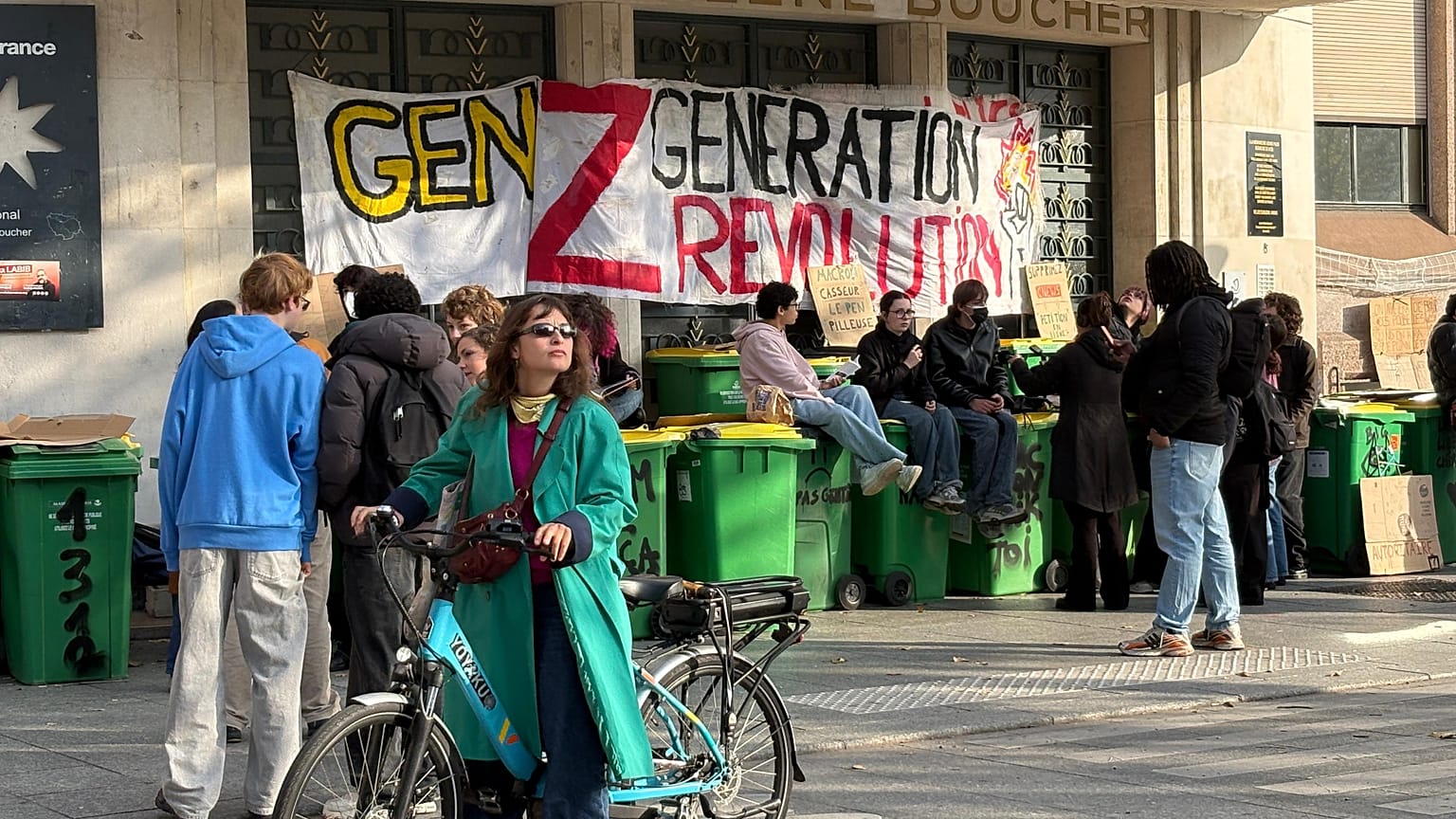
The weekend rally in Seine-Saint-Denis – one of France's poorest departments – was designed to demonstrate that strength, drawing heavily on the energy of recent student protests.
Yet his outspoken style, confrontations with political opponents and recurring accusations of antisemitism, which he denies, have made him deeply unpopular among sections of the wider electorate.
That presents a fundamental dilemma: while his radicalism energises supporters, it could also discourage moderate and centre-left voters from backing him against Le Pen.
Mélenchon also faces competition from Glucksmann on the left and former prime ministers Édouard Philippe and Gabriel Attal in the centre.
Reaching the runoff would mark a breakthrough after three unsuccessful presidential bids, but defeating Le Pen would require support well beyond his traditional electorate.
Ukrainian Foreign Affairs Ministry hits back at hard-left leader Jean-Luc Mélenchon over Donbas referendum
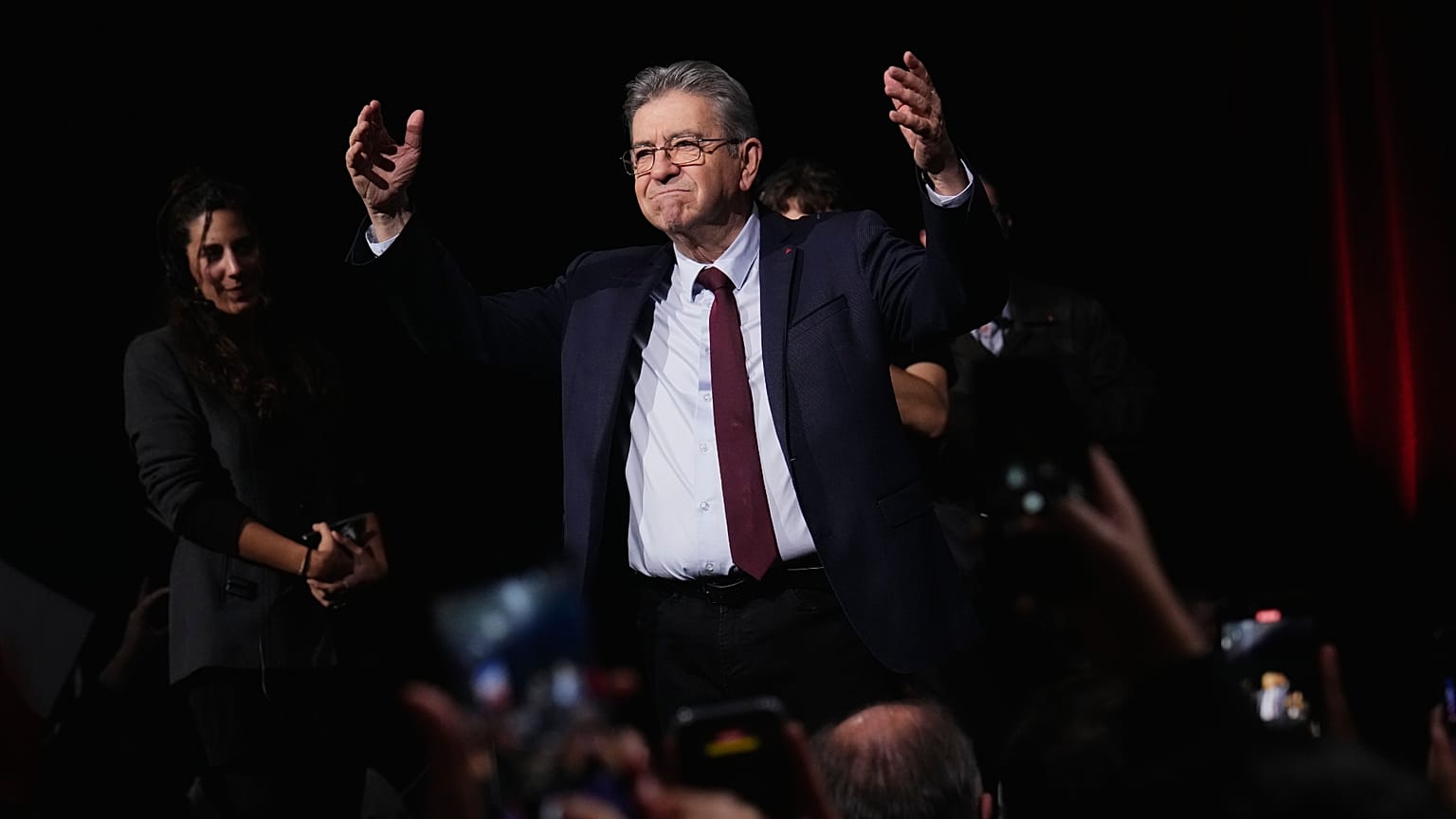
The leader of the hard-left France Unbowed party declared that Ukrainians living in the Donbas should be "consulted' on their future.
Ukraine's spokesperson on Foreign Affairs Heorhii Tykhyi hit back at Jean-Luc Mélenchon on Monday, after the leader of the hard-left France Unbowed party, declared that Ukrainians living in the Donbas should be "consulted' on their future.
During a major campaign ally on Saturday, Mélenchon said that his party refused to "allow discussions about peace in Ukraine" to be headed by European leaders. This comes as France, Germany and the UK are set to take part in US mediated Russia-Ukraine talks in Abu Dhabi on Tuesday, alongside a joint EU team.
"We cannot accept the notion of a peace agreement that involves territorial concessions in Ukraine without first seeking the consent of the affected populations to live on either side of the border", said Mélenchon.
Responding to Mélenchon's remarks on X, Tykhyi declared that Ukrainians had "already settled the question of their country's border" during the country's 1991 independence referendum
Tykhyi said that Russia had chosen to "disregard the choice of Ukrainians" with its invasion of Ukraine, adding that "'referendums' under occupation are a tool of annexation, not an expression of the people's will."
"No civilised, democratic country would ever accept this for its own borders, so it should not be proposed to Ukrainians", he said.
Moscow has already staged sham consultations in annexed Crimea and in the four regions of south-eastern Ukraine it partially controls, procedures rejected by Kyiv and the international community.
France's Foreign Affairs Minister Jean-Noël Barrot also weighed in on the controversy Sunday, describing Mélenchon as a "mouthpiece of the Kremlin."
"All over the world the Kremlin is trying to convince heads of state and government that, basically, the Donbas is Russian and that the war of aggression is a war to liberate the Donbas", said Barrot.
"This is obviously of unprecedented seriousness and, in my view, definitively disqualifies him [Mélenchon] from holding the offices he aspires to", he added.
The France Unbowed party programme affords less space to the question of Russia's war against Ukraine in comparison with the Israeli-Palestinian conflict, which is featured more prominently.
The war in Ukraine has become an increasingly controversial topic over the course of France's presidential elections. The far-right candidate, Marine Le Pen, said in mid-October that she would end French financial aid to Ukraine, which she estimated at €6 billion a year, if she were to win the 2027 presidential election.
Ukrainian President Volodymyr Zelenskyy then responded that "Madame Le Pen does not have a very good grasp of certain details" of French-Ukrainian military cooperation, defending a "win-win" partnership that he said was also beneficial to France's security.