Sunday, November 08, 2026

 Opinion

'Witches’ epithet hurled at abortion proponents has roots in Appalachian history
(RNS) — Reproductive healthcare providers and advocates are routinely called demonic and witches, and through a twist of fate, there is some truth in it — specifically in the language of far-right leaders’ ancestors, who also called the reproductive healthcare providers of their isolated, rural communities ‘witches.’
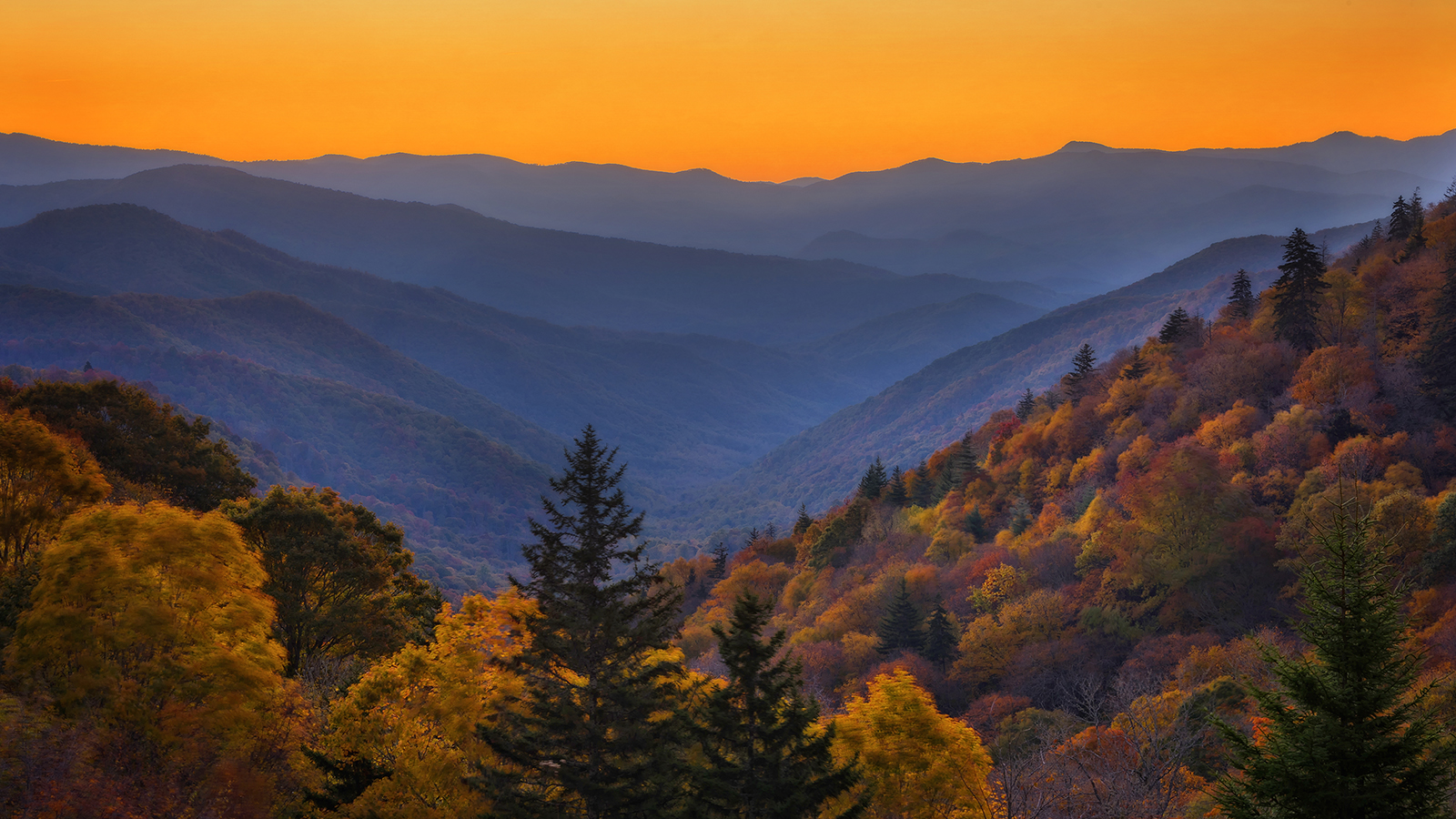
An autumn view of Great Smoky Mountain National Park. (Photo by Justin Mier/Flickr/CC BY-NC-SA 2.0)

(RNS) — On Aug. 10, Massachusetts Gov. Maura Healey signed House Bill H.5595, which prioritized doctors’ judgment about abortion over bans based on the stage of pregnancy. In response, far-right pundits dusted off age-old accusations that the women involved were “witches.” 

Anti-abortion activist Abby Johnson described the signing ceremony as “a coven of witches celebrating depravity.” Harrison Smith, host of the “War Room” podcast, called the women signing the law “shrieking harpies.” 

As someone who studies “granny witches,” Appalachian folk magic practitioners, I see these accusations as rooted in the same bigotry that ended a rich tradition of women providing reproductive care to rural communities. 

When reproductive healthcare providers and advocates are called demonic and witches, it mirrors the language of far-right leaders’ ancestors, who also labeled the reproductive healthcare providers of their isolated communities “witches.”  

But the irony is this: When women’s reproductive choices are eliminated, they are pushed toward the very solutions that these granny witches provided. 

In Appalachian areas where doctors with formal medical credentials were scarce, Appalachian grandmothers created cures from the land around them, using local plants and Christian Scripture. These women were not just key providers of community healthcare but respected spiritual leaders. They fused together Native American, European and African wisdom in the mountains where all three identities collided.  

European immigrants, tribal communities and free and enslaved Black people brought with them cultural knowledge — of what root would lessen a toothache, of what verse could be used to talk fire out of a burn, of how to create a poultice that would ease labor pains.

(Photo by Yan Krukau/Pexels/Creative Commons)

Traditional herbalism and matrilineal healthcare are not confined to Appalachian women — in fact, many communities that settled in the United States have long looked to “wise old women” to close the healthcare gap in areas where poor and enslaved Africans did not have access to institutional medicine. 


As John D’Emilio and Estelle Freedman write in “Intimate Matters: A History of Sexuality in America”: “In the early nineteenth century, and in rural areas for many later generations, herbal and home remedies for terminating unwanted pregnancies continued to be passed on through oral tradition. Native American healers and midwives prescribed roots or herbs known to induce abortion.” 

Granny witches provided vital healthcare that extended beyond herbalism, encompassing roles as midwives and death doulas. In communities where resources were limited, these women provided herbal contraception and abortion medications that are still in use today in areas with restrictive abortion laws but carry serious risks of poisoning and organ failure.  

For granny witches, this care was part of their midwifery roles, along with using herbal remedies to manage menstrual flow and period cramping. These women brewed teas from pennyroyal, mullein or tansy to soothe stomachaches. Pennyroyal was also mentioned in Clarence Meyer’s “American Folk Medicine” for “suppression of the menses,” which might indicate it was used to attempt to induce abortion.  

Abortion and even childbirth were taboo topics in mostly Christian Appalachia. But granny witches did not consider what they were doing to be in conflict with their faith. For overwhelmed young women, another baby could stretch a poor family to the brink. This healthcare was a very private form of mercy, ensuring women could survive.  

In an interview conducted by then-master’s student Harriet P. Masters with M. Greene, a Tennessee woman who is the granddaughter of a Southern Appalachian granny witch, Greene shared: “If a married woman thought she was pregnant and she did not want the child — maybe had two in diapers already — if it had been her own daughter Grandma would have helped her. I have an idea that she had one daughter that she probably did (help).” 

According to Masters’ interviews and research by Appalachian students, “the Southern Appalachian granny-woman often served as the first ‘line of defense’ for women awaiting the birth of a child, but these women rarely, if ever, supplied specific information regarding herbal-based birth control or abortive measures.” Much, if not all, of their practice was coded in secrecy, and as the American medical system became more formal and gynecology became its own field, it was largely lost. 

In the 20th century, childbirth transitioned to a hospital setting. States installed regulations requiring midwives to pass written exams and complete formal training. Since most midwives in the mountains learned through oral tradition, they were not licensed, and providing herbal remedies and assisting in births put them at risk of being prosecuted.  

This remains a problem today in marginalized communities where midwives provide vital obstetrics care when outsider doctors are mistrusted, but they still risk fines and jail time. Amid a rise in Black maternal mortality, midwives have continued to step into the gap, providing vital care for communities that face systemic discrimination and dismissal in hospital settings.  

As logging and coal mining corporations moved into Appalachia in the 20th century, they inspired new highways and bridges that connected previously isolated areas to cities with medical care. At the same time, these external companies caricatured mountain culture and cast skepticism and mistrust on folk healers. As Appalachian culture was lampooned by the media, these women were seen as superstitious “old wives” and “witches.”  

Many grannies chose not to pass their traditions to daughters and granddaughters because of the stigma and legal risk. The practice largely died with them. But in the hurtful words of anti-abortion activists, the label lives on today.


(Emma Cieslik is a queer religious scholar who researches the intersections of gender, sexuality and faith communities, specializing in Appalachian folk magic and herbal medicine. Her museum work focuses on curating and collecting religious, LGBTQ+ and disability histories. This essay is based on original research among today’s Appalachian folk magic practitioners. The views expressed do not necessarily reflect those of Religion News Service.)

Witches, midwives, and nurses : a history of women healers

Sep 5, 2009 · Witches, midwives, and nurses : a history of women healers by Ehrenreich, Barbara; English, Deirdre Publication date …


Why Hollywood keeps turning to Catholicism for horror


(RNS) — ‘When a vampire is at your door or your child is possessed, you don't call for a Methodist,’ said Matthew J. Cressler, the co-author of the new book ‘Body and Blood: Catholic Horror in America.’
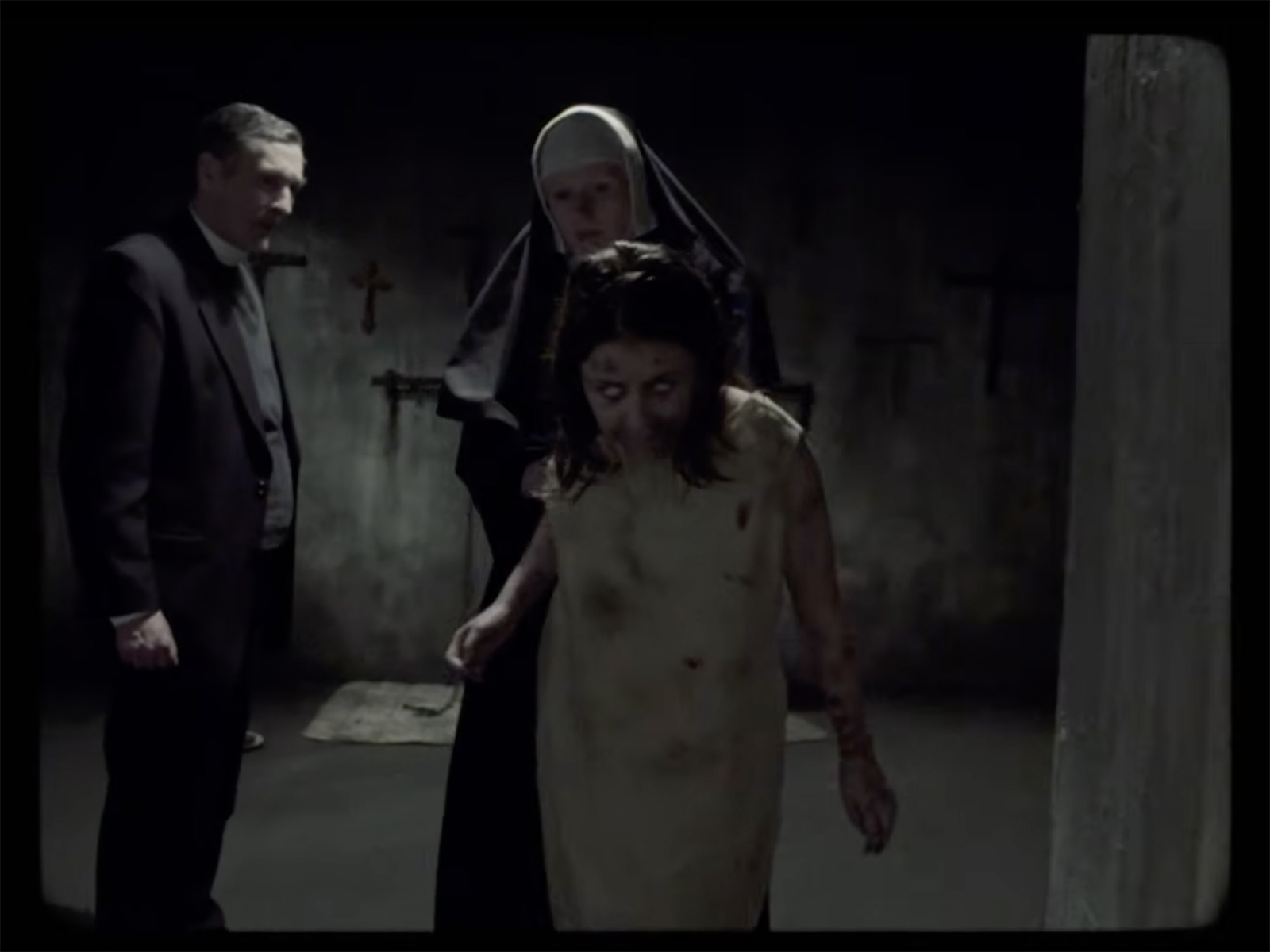
A still from "The Devil's Doorway." (Courtesy image)

(RNS) — Think of some of the most iconic scenes in classics of the horror genre — priests gathered around a rotting, spitting child in “The Exorcist”; the chanting of the neighborhood coven in “Rosemary’s Baby”; the priest warning Damien’s father in “The Omen.” Notice a theme? 

Horror villains and monsters show up in all shapes and sizes, but when religion shows up, it is usually Catholicism. In Hollywood, it’s the faith often featured for its mysterious conclaves and Gothic churches, depicting the white clerical collar up against the ultimate prince of darkness. 

“When a vampire is at your door or your child is possessed, you don’t call for a Methodist,” said Matthew J. Cressler, the co-author of the new book “Body and Blood: Catholic Horror in America,” along with Jack Lee Downey, Kathleen Holscher and Michael Pasquier. “God love the Unitarians, but you don’t ask for your Unitarian minister. You grab your rosary beads, your St. Christopher medal, your holy water, your priest.”

“Body and Blood: Catholic Horror in America” (Courtesy image)

Cressler said that beyond the dripping candles and ominous devotional music, Catholicism also has theological themes that work with the genre.

“Catholics have long had a sense that when one suffers, one is bearing the cross of Christ. And that in suffering, one is drawn closer to Christ,” he said. 

Aislinn Clarke said having an Irish Catholic childhood was the perfect preparation to become a horror film director. She wrote and directed the 2024 horror movie “Fréwaka.” 

“I  remember reading a book about the lives of the saints, which my parents probably thought was a very wholesome thing for a child to read,” remembers Clarke. “But there was a lot of stuff about, like, St. Lucia plucked out her eyeballs, and another saint cut off her breasts. And everybody’s wearing hair shirts and thorns and flagellating.”


Clarke said the Mass itself has elements of what we might now call body horror.

“The priest holds up a cup and says, ‘This is the blood of Christ, this is the body of Christ,’ and we’re invited to drink the body and blood of Christ,” she said. “Which, as a child who was really interested in horror, I was thinking, this is a bit cannibal-ish.” 

Of course, horror movies take these ideas and ratchet them up to 11, Cressler said. He argued that Catholic themes, like venerating the remains of the beloved dead, can show up in movies that are not even overtly Catholic. For example, keeping the mummified corpse of your mother in the basement of the house next to your roadside motel, as Norman Bates does in “Psycho.”

Matthew J. Cressler. (Courtesy photo)

Beyond the fictionalized depictions, it is a faith that can take spiritual warfare fairly literally. The Rev. Aaron Williams, a pastor at the Basilica of Saint Mary in Natchez, Mississippi, consulted on the 2025 horror film “The Ritual.” Williams said that while most people are far more likely to fall into sin through temptation rather than possession, “we do come in contact with the occult and the enemy and his minions, the demons.”

Though the average Catholic may not hold these views, the church still performs the rite of exorcism. And the Catholic Church positions its clergy to deal with ultimate evil by imbuing them with ultimate good.

“A priest … through ordination, he’s sacramentally received a character that allows him to act with the authority of Christ,” Williams said.

Some films use that heightened authority to save characters from the demonic. And some use horror to point out broken elements in the church itself. Clarke discussed a scene from her 2018 film, “The Devil’s Doorway,” in which nuns sing hymns to Christ and perform a brutal symphysiotomy procedure while ignoring the suffering of the young woman giving birth in front of them. It was a nod to the confinement of women in Magdalene laundries, asylums run by Protestants and Catholics between the 18th and 20th centuries. 

“There are things flying around, and crosses going upside down, and we have some stuff like that,” Clarke said. “But the most horrific scene in the movie from the script stage for me was always going to be this birth sequence.”

Catholic symbols and songs show up in horror so much so that Cressler said it can influence how we see the church itself.

“If you walk into a room that’s got too many candles and too many crosses and too many statues, you know you’re in trouble,” he said. 

But Cressler said that also goes for the tropes of Catholic grace and redemption, as horror brings monsters out into the open — whether they’re coming from inside or outside of the house. The movies help us see and defeat them, at least until they’re resurrected for the sequel.


Federal judge orders Iowa to allow Satanic Temple to hold one-day holiday event in the state Capitol

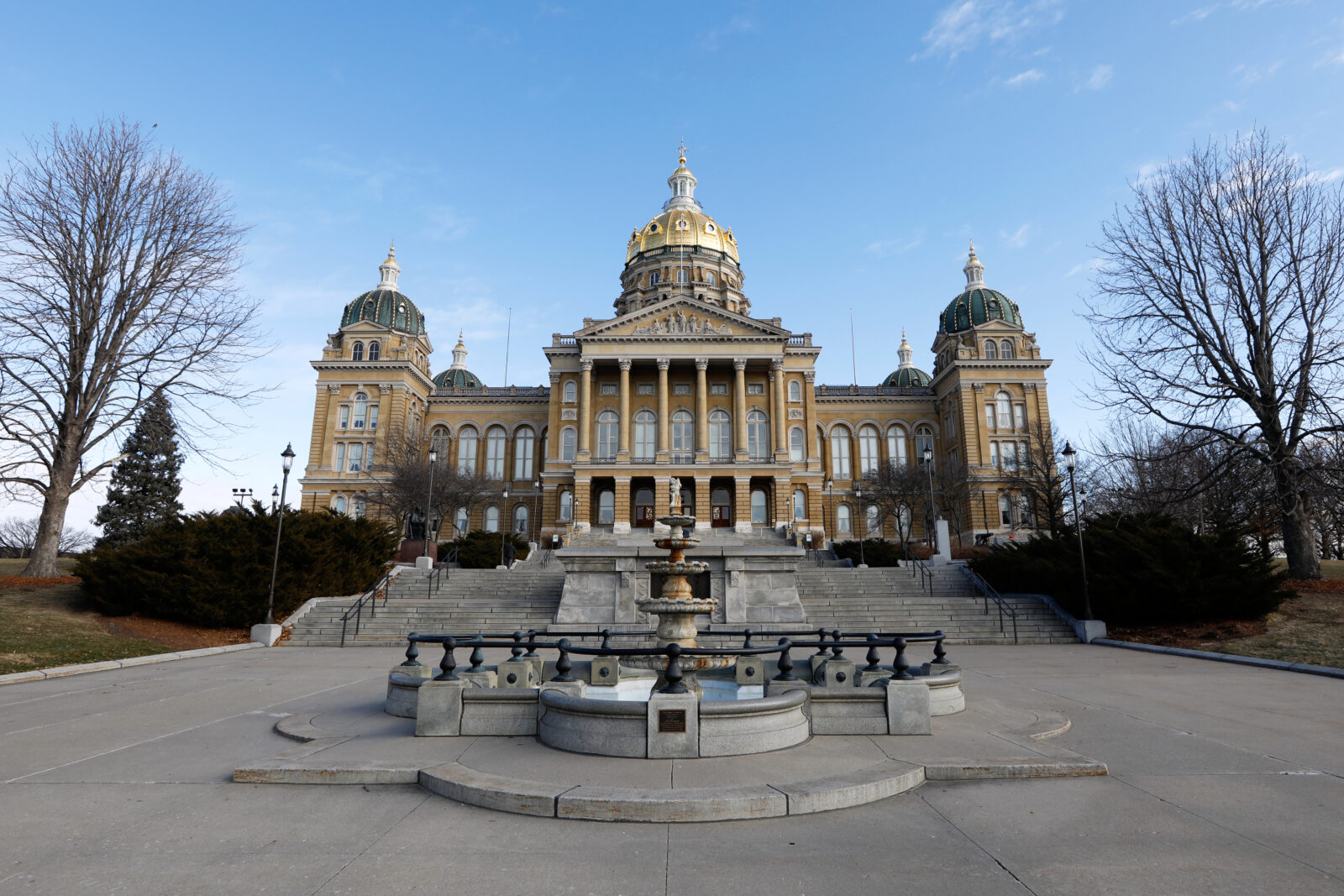
DES MOINES, Iowa (AP) — Iowa’s Republican leaders have barred the Satanic Temple Iowa's holiday observances in recent years, citing the state Capitol building’s policies that prohibit gratuitous violence and obscene displays.
Federal judge orders Iowa to allow Satanic Temple to hold one-day holiday event in the state Capitol

DES MOINES, Iowa (AP) — A federal judge on Monday ordered Iowa state officials to allow a local Satanic Temple organization to hold a holiday event in the rotunda of the state Capitol after years of rejecting their application.

The court order is the latest in a back-and-forth between the religious organization and Republican state officials, who intend to appeal the judge’s decision, according to Attorney General Brenna Bird’s office.

Iowa’s Republican leaders have barred the Satanic Temple Iowa’s holiday observances in recent years, citing the state Capitol building’s policies that prohibit gratuitous violence and obscene displays.

The Satanic Temple and the leader of its Iowa organization in August sued the state in federal court, arguing that current and former Iowa officials discriminated against their religion by repeatedly refusing to permit their holiday event and violated their constitutional rights and state law.

Chief District Judge Stephanie M. Rose said in her order that the Satanic Temple was likely to succeed on its free speech claim and ordered the current director of the Iowa Department of Administrative Services to approve the group’s application for a holiday event within seven days.

Founded in 2013, the Salem, Massachusetts-based Satanic Temple says it doesn’t believe in Satan but describes itself as a “non-theistic religious organization” that advocates for secularism. It is separate from the Church of Satan, which was founded in the 1960s.

The Satanic Temple hasn’t always been barred from participating in the holiday season at the Iowa Statehouse, where a Christmas tree and other religious holiday installations are included in the rotunda. A Satanic Temple Iowa display, which depicted the goat-headed figure Baphomet, was vandalized three years ago, leading to increased scrutiny of the group and its observances.

In 2024, its application for a display and event was rejected.

The group said its holiday event would include costumes of the European folklore character Krampus, as well as caroling, coloring for kids and ornament making. In denying its application, state leaders have cited policies to protect children who may be present in the public space and pointed to the costumes’ use of sticks, which could be used as weapons. The Satanic Temple members reject that argument.

The chief district judge wrote that Iowa officials’ arguments likely don’t justify the denials. Rose wrote that concern that the Krampus character may frighten children is “not a permissible basis for excluding speech,” adding that concern surrounding sticks being carried as part of costumes “cannot justify denying the entire event.” She said the state department could impose the same conditions it applies to other events on the Satanic Temple’s event, saying props remain subject to the building’s regular security screening.

Members of The Satanic Temple celebrated the ruling, as did the American Civil Liberties Union of Iowa, which is representing the religious organization.

“Too often, fear or misunderstanding of the ‘other’ is amplified by petty governmental bureaucrats looking to score cheap political points by portraying unfamiliar beliefs as ‘dangerous,’” said Matt Kezhaya, attorney for The Satanic Temple, in a statement.

“This was always going to be a family-friendly event,” he added. “None of this became ‘harmful’ just because state officials disapproved of our chosen expression.”

Spokespeople for the Iowa Department of Administrative Services and Gov. Kim Reynolds did not immediately respond to requests for comment.

__

Kelety reported from Phoenix.


Muslim advocacy group CAIR shuts Florida chapter as terror designation takes effect

(RNS) A federal judge denied the Council on American-Islamic Relations’ bid to halt Florida’s terrorist designation.


In this file photo, people enter the headquarters of the Council on American-Islamic Relations (CAIR) in Washington, Thursday, Dec. 10, 2015. (AP Photo/Pablo Martinez Monsivais)

Ulaa Kuziez
November 5, 2026
RNS


(RNS) — The Florida chapter of a leading Muslim civil rights group shut down a day before a state “domestic terrorist organization” designation took effect, the organization announced.

A federal judge on Wednesday denied a request by the Council on American-Islamic Relations and its Florida chapter to block the designation. The groups’ attorneys had asked the court in October to intervene before the designation went into effect on Nov. 5.

In a statement, Hiba Rahim, who was executive director of CAIR-Florida until it shut down Wednesday (Nov. 4), said the group “categorically rejects Florida officials’ baseless designation.”


“Nevertheless, we are heartbroken that we have no choice but to close our doors to protect our staff and people of all faiths who support our work,” she said.

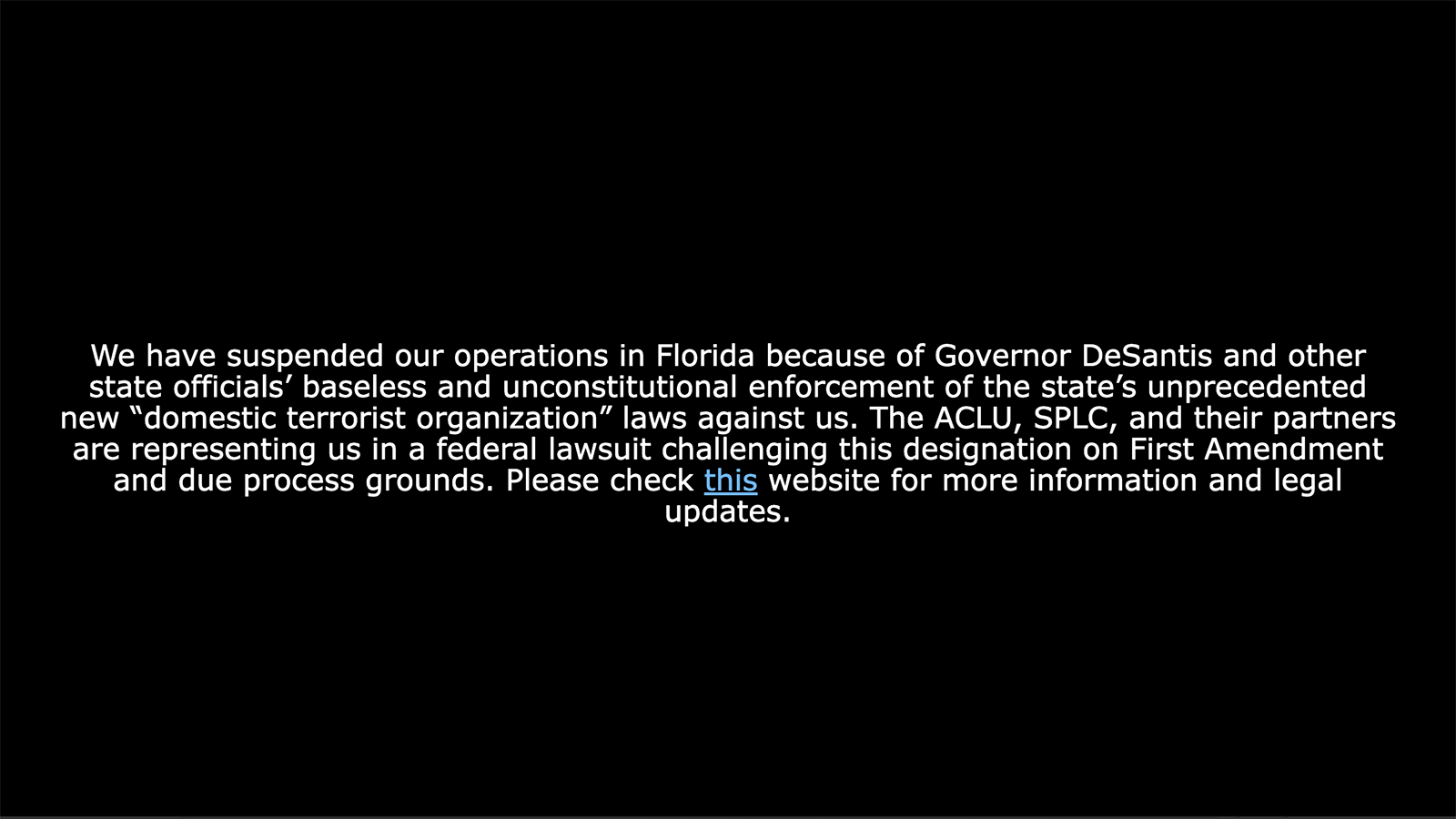
A message on CAIR-FL’s website says it “suspended our operations in Florida because of Governor [Ron] DeSantis and other state officials’ baseless and unconstitutional enforcement of the state’s unprecedented new ‘domestic terrorist organization’ laws against us.” A similar notice was posted outside the group’s Tampa office Wednesday, according to local media.


Message on CAIR-Florida’s webpage on Nov. 5, 2026. (Screen grab)

The group also paused recurring donations on its platforms and urged supporters to cancel or pause automatic payments before Nov. 5, a spokesperson said.
RELATED: Muslim advocacy group fights for trust after Texas brands it a terrorist group

When asked for comment, the Florida Attorney General’s office pointed to its X post, in which Attorney General James Uthmeie called the ruling a “great win.” The governor’s office did not respond to a request for comment.

On Sept. 29, Gov. Ron Desantis and the Cabinet voted to designate more than 90 groups as terrorist organizations, including CAIR. The designation took effect Nov. 5, about a month after the group was given its designation notice by the state.

The civil rights organization plans to appeal the ruling, said Ashley Gorski, senior counsel with the American Civil Liberties Union, one of the groups representing CAIR and CAIR-Florida. Gorski described the state law as an attempt “to silence” CAIR’s civil rights work and “damaging not only them but also their community.”

In his Nov. 4 ruling, Chief U.S. District Court Judge Allen Winsor of the Northern District of Florida wrote that the groups “have not shown they are likely to succeed” on their due process claims. The judge did grant one exception: State prosecutors may not use Florida’s Domestic Terrorist Organization law against CAIR and its Florida chapter, its employees or their lawyers over legal services.

DeSantis has said the designation aims to combat the group’s alleged extremist ties and influence. In an October motion, a lawyer for the state argued that CAIR operates as a front for Hamas and the Muslim Brotherhood, groups that the federal government have designated in whole or in part as terrorist organizations.


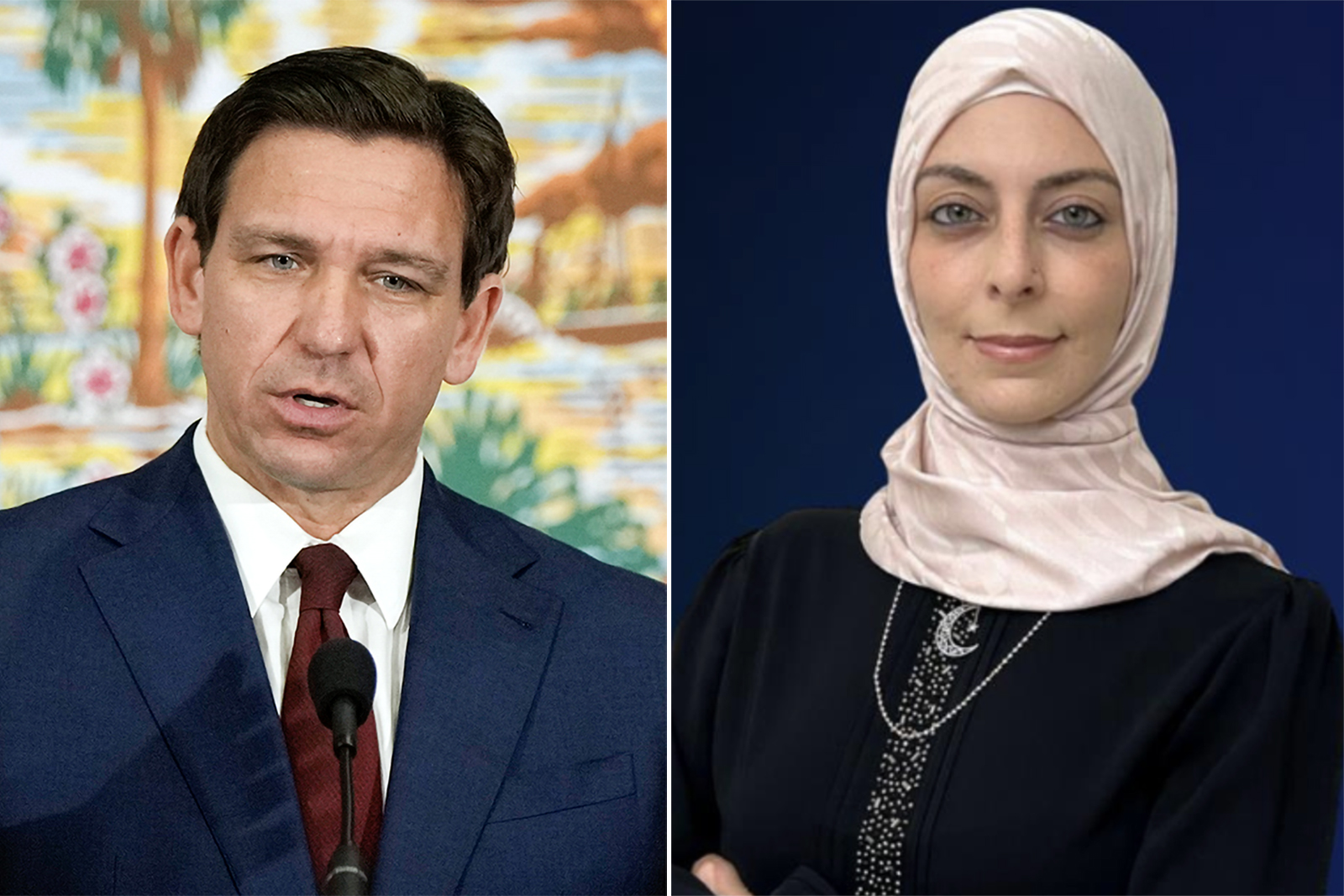
Florida Gov. Ron DeSantis, left, and Hiba Rahim of CAIR-Florida. (AP Photo/CAIR Photo)

Florida has not previously indicted or convicted CAIR or CAIR-Florida under any criminal law.

The designation triggers an array of criminal and civil penalties against the nonprofits and people who associate and support them and “effectively criminalizes the existence of designated organizations in Florida,” lawyers for CAIR and CAIR-Florida argued in a lawsuit.

This is Florida’s second attempt to label CAIR a terrorist organization. In March, a federal judge blocked an executive order by Gov. DeSantis designating the group a terrorist organization, finding it likely violated the First Amendment. The Legislature then passed two bills, which created a designation process.

Texas Gov. Greg Abbott also made a similar designation in November 2025 against CAIR’s Texas chapter, which is challenging the label in court.
Islam Beyond Phobia

Hating Muslims is becoming a losing strategy

(RNS) — One of the many revelations of the 2026 midterm elections is that Islamophobia is becoming a much less effective political weapon.


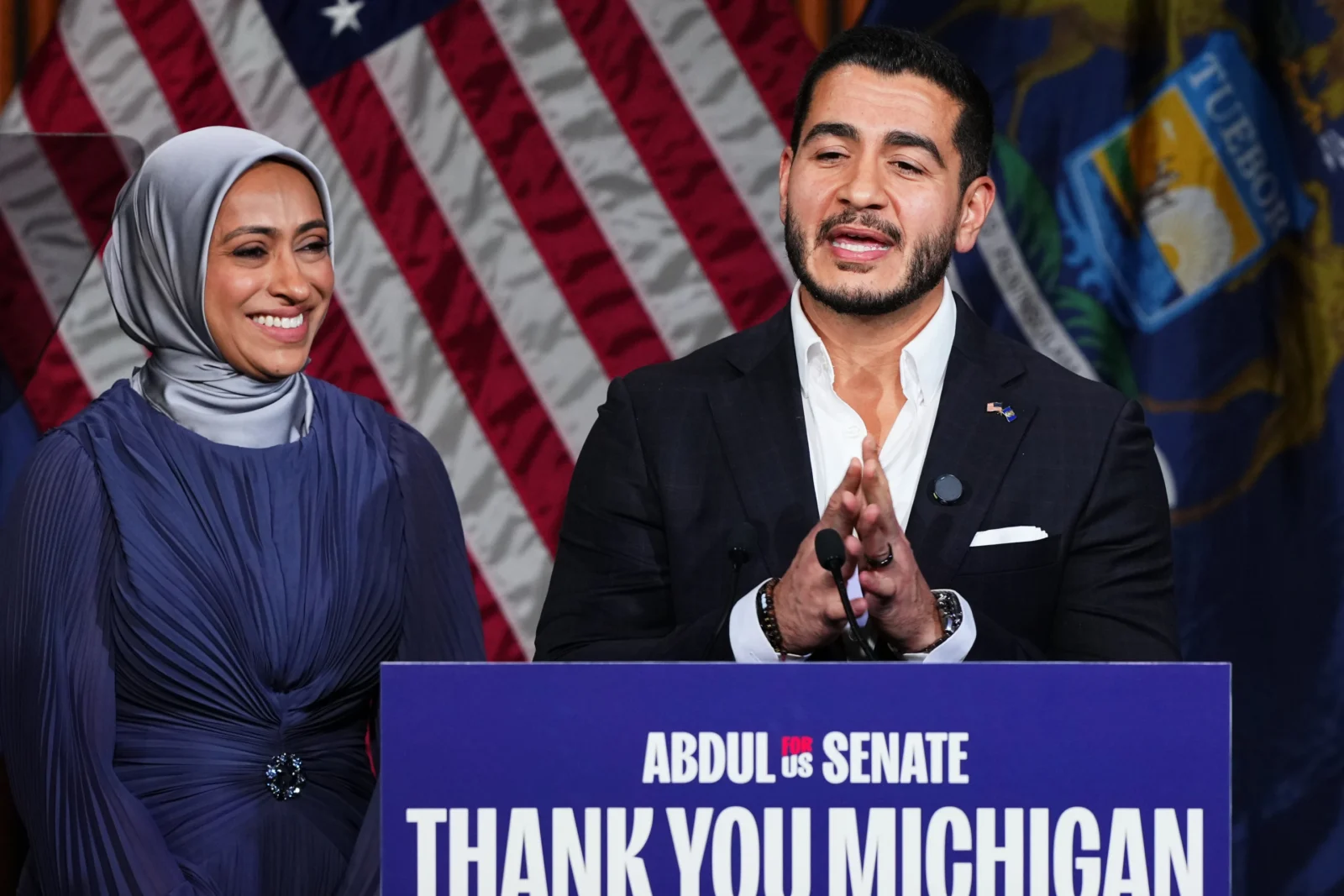
Michigan Democratic Senate candidate Abdul El-Sayed speaks at an election night event, early Wednesday, Nov. 4, 2026, in Detroit, as his wife Sarah Jukaku watches. 
(AP Photo/Julia Demaree Nikhinson)

Omar Suleiman
November 5, 2026
RNS

(RNS) — There is a particular exhaustion, election after election, in seeing the Muslim community dunked on for cheap political points. The anti-Sharia ads and billboards have gotten old, and we’re tired of hearing lies regurgitated constantly about our faith and community.

But after this week’s elections, I wonder whether some politicians will finally recognize another kind of exhaustion: Americans are tired of being told whom to fear instead of what a candidate plans to do to improve their lives.

The assumption behind so much anti-Muslim campaigning is that invoking Islam will end the conversation. Make a candidate sound foreign, turn a mosque into a threat and say “Sharia” often enough, and voters will stop asking about their medical bills and gas prices. They’ll also just turn off their moral conscience in the face of the obvious atrocities our country has helped commit with the genocide in Gaza


This election offered a warning to politicians still relying on that formula. The people you are teaching others to fear vote, too. And their neighbors may be considerably less interested in your prejudices than you imagined.

In Michigan, Abdul El-Sayed became the first Muslim elected to the U.S. Senate despite a campaign that repeatedly cast his faith as a national security threat. President Donald Trump straight-up branded him a jihadist and used the name “Muhammad” to mock him at his ever-more-racist rallies. Mike Rogers questioned his loyalty to the country, Haley Stevens never stopped undermining him and the “Muslim brotherhood” card was overplayed. Like El-Sayed or not, he campaigned on health care and the cost of living and won. He actually seemed to not want to talk about foreign policy much at all, except as it related to how it influences our crumbling domestic affairs. Clearly, the voters didn’t fall for the nonsense.

The warning was already there a year earlier. Zohran Mamdani faced a wave of anti-Muslim attacks during his campaign before becoming New York City’s first Muslim mayor. The city so closely associated with the trauma of Sept. 11 elected a Muslim to lead it. So what?

And by the way, Gaza has been on the ballot ever since the genocide began, and Democrats would be wise to heed that lesson, as I wrote here.

These victories don’t prove that prejudice never wins or that every voter rejected it. Elections turn on many issues. But they should challenge the lazy assumption that Islamophobia is an electoral asset with no downside.

Sometimes the people you intend to intimidate become more determined to participate. Sometimes the people you intend to frighten recognize that you are insulting their intelligence.


And this year, a great deal of money was invested in trying.

By mid-March, Republicans had already spent more than $10 million on television advertisements mentioning Islam or Sharia negatively, according to AdImpact data reported by NPR. Most of that spending was in Texas ahead of its primaries. It was roughly 10 times the spending in each of the previous four election cycles. That was just a March snapshot, not a final accounting of the election season.

Consider what that money was purchasing: not a plan to lower housing costs or improve schools, but an invitation to regard millions of fellow Americans as a threat.

In my home state, Gov. Greg Abbott and Attorney General Ken Paxton helped turn that invitation into government action. They pursued multiple investigations into a Muslim-led housing development, while Abbott threatened airport funding over wudu washing stations used by Muslims before prayer. Paxton’s Senate campaign even attacked his Republican primary opponent for supporting “Muslim mass immigration,” distorting comments about obligations to Afghans who had helped American forces.


Democratic gubernatorial candidate Texas state Rep. Gina Hinojosa, left, and Democratic Senate candidate Texas state Rep. James Talarico, right, hold a campaign rally in Austin, Texas, Monday, Nov. 2, 2026. (AP Photo/Eric Gay)

Neither man was rescued by that tired form of politics. Abbott lost to Gina Hinojosa, and Paxton lost to James Talarico. Their lopsided defeats cannot be attributed to one issue, but they demonstrate that making Muslims a target was no substitute for earning voters’ confidence.

The consequences extended beyond those races. Texas’ Republican-dominated State Board of Education approved a curriculum presenting early Islam through the Prophet Muhammad’s supposed “brutal military campaigns” and “slavery,” despite objections from Muslims and concerns raised by its own appointed experts. As of this writing, Democrats had secured at least seven seats on the 15-member board, sharply reducing what had been an 11-4 Republican majority.


There is a lesson there for anyone who imagines that turning a child’s religion into a classroom indictment is a way to earn his or her parents’ trust.

But the national significance goes beyond Texas, and beyond any single candidate.

For those of us who came of age after Sept. 11, this moment challenges a familiar demand: that we spend our lives proving we belong before we are permitted to discuss anything else.

I am tired of that bargain. I do not want another generation of Muslim children to inherit it.

And be careful, bigots: You may just be organizing the very people you hoped to silence.

The most hopeful part of this moment is not simply that Muslims are exercising political power. It is the possibility of a broader rejection of the idea that our belonging is something politicians get to revoke.

The lesson of this election is not that America has overcome Islamophobia. It is that politicians should no longer assume Americans will reward them for it.


Hating your Muslim neighbor will not lower your rent, improve your child’s school or make your health care affordable. It will, however, give a politician something to talk about instead of explaining why those problems remain.

Muslims belong in this country whether we win elections or lose them.

Politicians who campaign as though we do not are discovering that their own place in office is far less secure.
Religion Hub

‘A beautifully American story’: El-Sayed’s historic Senate victory resonates with Muslim Americans

DEARBORN, Mich. (AP) — “They tried to demonize people because of how they pray,” El-Sayed told The Associated Press on Wednesday. “And Michigan — the whole Michigan — clapped back. People don’t want that. They’re sick of it.”


Michigan Democratic Senate candidate Abdul El-Sayed speaks at an election night event, early Wednesday, Nov. 4, 2026, in Detroit, as his wife Sarah Jukaku watches. (AP Photo/Julia Demaree Nikhinson)

Susanna Granieri
November 5, 2026
RNS

DEARBORN, Mich. (AP) — Campaigning relentlessly across Michigan, Abdul El-Sayed didn’t highlight the possibility that he could become the first Muslim elected to the U.S. Senate. But with victory in hand, he savored his triumph over the vitriol aimed at him and his fellow Muslim Americans.

“They tried to demonize people because of how they pray,” he told The Associated Press on Wednesday. “And Michigan — the whole Michigan — clapped back. People don’t want that. They’re sick of it.”

He showed his pride in his victory speech, declaring: “My name is Abdulrahman Mohamed El-Sayed.


Twenty-five years after the Sept. 11 attacks and their aftermath yanked anti-Muslim sentiment into the forefront of American life, those emotions are shared by many Muslim Americans in Michigan and across the country.

They saw a surge of anti-Muslim rhetoric after Zohran Mamdani’s election as New York City mayor a year ago, and they saw the attacks intensify as El-Sayed became the new prime target. President Donald Trump called him a “jihadist” who was “on the side of the terrorists.” Dozens of Trump’s fellow Republicans in Congress formed a Sharia-Free America Caucus, depicting Islam’s religious code as a threat to the U.S. Constitution.

But now, after El-Sayed’s defeat of GOP rival Mike Rogers was confirmed early Wednesday, there is a pervasive sense that a broader victory is at hand.

The outcome “represents a historic turning point for American Muslim political engagement and a historic defeat for the politics of hate,” said Nihad Awad, national executive director of the Council on American-Islamic Relations.

“Anti-Muslim extremists, Israel lobby groups and even the president of the United States used every smear in the book to paint Dr. El-Sayed as a Muslim boogeyman,” he said. “None of it was true, and none of it worked. Anti-Muslim hate was on the ballot, and it failed.”
In Dearborn, talk of ‘a beautifully American story’

Excitement over El-Sayed’s victory was palpable in Dearborn, a city near Detroit with a sizable Arab American population. The mayor, Abdullah Hammoud, said residents showed up at the ballot box in huge numbers.


“What a beautifully American story,” Hammoud said. “One of our brightest and best earned the support of the majority of Michiganders who participated in yesterday’s election. And regardless of the direction in which he prays, they’re sending him to the U.S. Senate.”

Hammoud, who has known El-Sayed for more than a decade, said although his win was important for many Arab Americans, people voted for him because of his platform, not his identity. He cited support in Dearborn for independent Vermont Sen. Bernie Sanders’ 2016 presidential campaign. Sanders, who is Jewish and caucuses with Democrats, ran on a progressive platform.

In El-Sayed, residents of Dearborn “finally saw themselves and a candidate who appealed to them, but it had to do with far more than just his ethnicity or his religion,” Hammoud said. “It was honestly because of the policies and building a coalition with this community in an honest way.”

When Zaynah Jadallah, 26, canvassed for El-Sayed in Dearborn, she said most people told her they already planned on voting for him before inviting her in for water or food. She credited the name recognition to El-Sayed’s grassroots campaigning and his pride in his Egyptian heritage.

“He’s always been proud of his identity. He never shied away from it or from saying his name,” Jadallah said.

Yasmin El-Sayed, no relation to the senator-elect, took her two daughters to the Detroit watch party from New York. She teared up after the victory speech.


“Having grown up in a post-9/11 world, being Muslim, being Arab myself, never in a million years did I think we would see what we saw today,” she said.
In a time of suspicion of government, a message of representation

El-Sayed depicted his election as a victory for all those “who don’t see themselves reflected in our government or who’ve been told that they don’t belong for some reason or another — not just how they pray but who they love, how they identify, the color of their skin, where they grew up.″

“I didn’t run to be the first Muslim senator. I ran to be the next senator of the state of Michigan who happens to be Muslim,” he said. ″But I also know that democracy is constantly about the conversation about who we are, who we want to be.”

“Michigan proved just how big we are. Rejected a hateful, spiteful campaign that had nothing to say about the issues and only wanted to point to my name and my face,” he added. ″I want all of those folks out there who have been told that America’s not big enough for them to reflect on that. America really is big enough for all of us.”

Mohamed Gula, CEO of the Muslim American advocacy group Emgage Action, said he was elated by El-Sayed’s triumph after a year of “extremely Islamophobic and disgusting rhetoric being used as a campaign strategy.”

“For Abdul to come out last night and use his full name meant the world to someone who grew up in post-9/11 America, where the Muslim American community was seen through a national security lens,” Gula said.


“Our children, years from now, will be able to run for office,” he said, “to be seen as who they are.”
A debate over the place of Sharia law — and its very definition

Among the most frequent targets of anti-Muslim rhetoric was Sharia, the religious code that provides Muslims with guidance on how to lead righteous lives. At the Republicans’ midterm convention in Dallas, some of the loudest cheers came after GOP Sen. Ted Cruz of Texas declared: “Sharia law has no place in America.”

Muslim American civic leaders and scholars — in Texas and other states — responded forcefully to the anti-Sharia rhetoric that dates back more than 15 years.

They passionately defended Sharia — the way it’s practiced in the United States — as positive guidance that shares elements with the codes of other faiths, such as the Ten Commandments and the collective body of Jewish law derived from the Torah. They rebutted the claims of GOP critics that Sharia is a coercive code that threatens the Constitution and the judicial system.

Gula noted that Republican Texas Gov. Greg Abbott and Attorney General Ken Paxton were among the leaders of the anti-Sharia campaign. Abbott lost his bid for reelection in Tuesday’s voting, and Paxton was trounced by Democrat James Talarico in the race for a U.S. Senate seat.

“I saw this as not just Muslims standing against Islamophobia as never before,” Gula said. “I saw Americans saying hate will not be used as a campaign issue … we are not going to accept hate.”


Asma Uddin, a professor at Michigan State University’s College of Law, has argued that many American politicians are depicting ordinary Muslim religious practices — such as prayer, choice of apparel, family counseling and mosque attendance — as evidence of political danger.

“What I find especially exciting is that El-Sayed won in a political climate where being visibly Muslim can still be a liability,” she said. His victory “gives us real reason for optimism. It suggests that anti-Muslim attacks don’t necessarily carry the political weight that those deploying them assume they do.”