Anti-Zionism is popular now, but it is not new. A new anthology covers its long history.

(RNS) — Anti-Zionist Jews have become an increasingly prominent force over the past three years as Israel’s war in Gaza has continued and settler violence in the West Bank has escalated. But as a new book demonstrates, these dissenters from the Jewish mainstream who have objected to the idea that the Jewish people need a national homeland are hardly new.
Princeton University Press earlier this month published a 488-page anthology featuring writings of Jewish anti-Zionists, dating back to 1885.
As the book’s editors, Shaul Magid, a Harvard University professor of modern Jewish studies, and Zev Mishell, a Harvard graduate student, point out, Zionism was contested from the start and rejected by a host of Jewish thinkers — including rabbis, scholars and other community leaders who did not believe a nation-state was the best option for Jewish flourishing in the face of growing antisemitism.
Over the course of the last 140 years, those voices of dissent have waxed and waned. After the establishment of the state of Israel in 1948, and especially after Israel’s victory in the 1967 Six Day War, Zionism emerged triumphant, becoming the predominant ideology of Jewish life around the world.
But while Jewish anti-Zionism may have been sidelined in public conversation — it remained robust in non-Jewish and especially in Palestinian circles — it never fully disappeared from Jewish life. Now, Magid and Mishell are offering those dissenting views a new life.
“We’re giving the reader 400 pages of sources and saying, don’t recreate the wheel,” Magid said. “There were hundreds of other people who had similar but also different ambivalences about Zionism and about the prospect of a Jewish national project.”
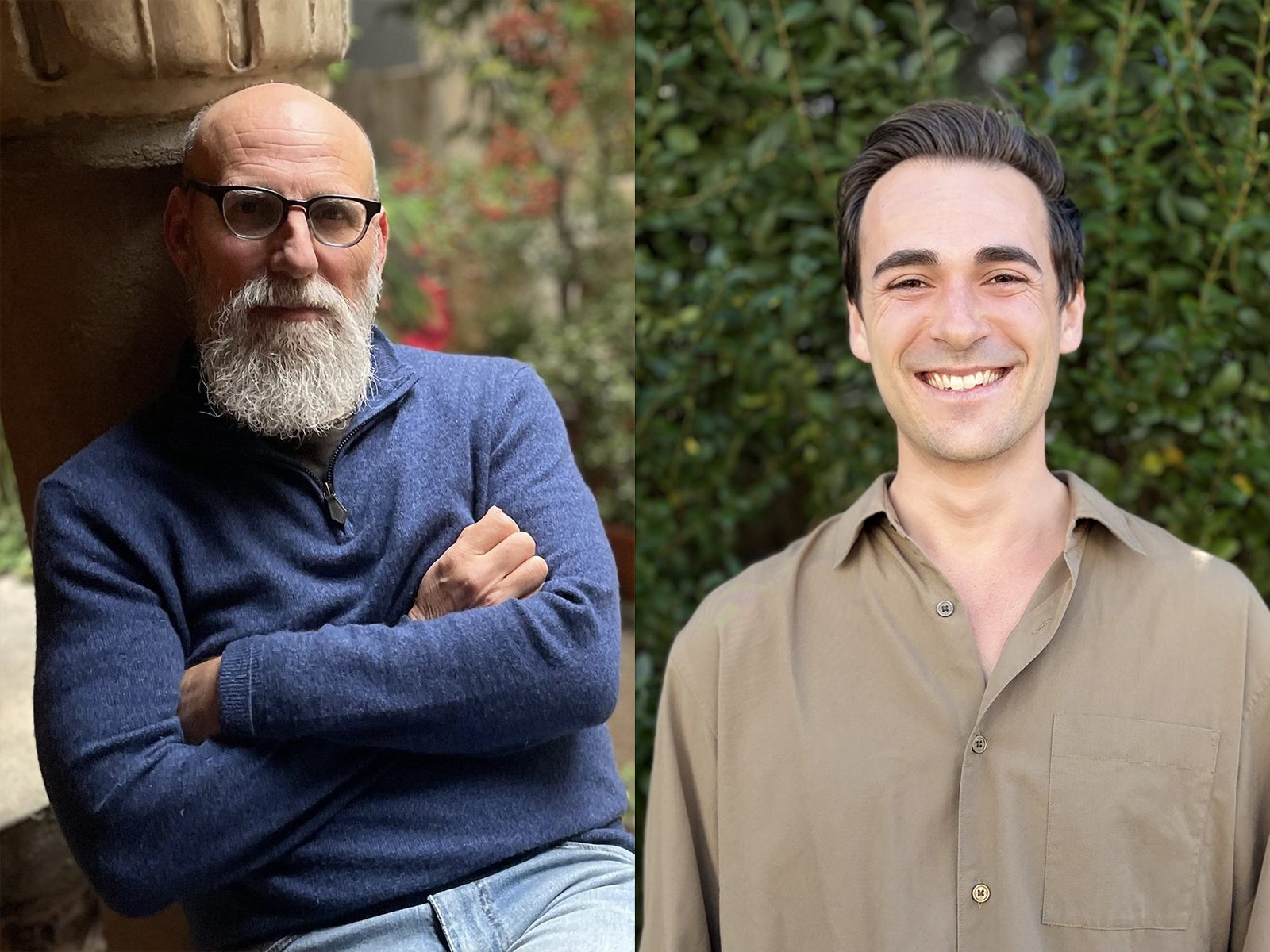
Editors Shaul Magid, left, and Zev Mishell. (Courtesy images)
Jewish Anti-Zionists have coalesced into a growing movement.
Earlier this year, a new association of synagogues, nonprofits and small lay-led prayer communities, united in their rejection of Israel’s ethno-nationalist Judaism, was launched. Called the Jewish Diaspora Movement, it now has 62 member organizations. Among them are Jewish Voice for Peace, IfNotNow and Rabbis for Ceasefire, which are many of the same groups that engaged in widespread public actions against the war in Gaza, including the campus encampments of 2024.
RELATED: Sidelined from legacy institutions, a movement centering Judaism outside Israel rises
They, along with other institutions, such as the online news site Jewish Currents, which relaunched in 2018, are challenging the idea that Zionism should be a part of their Jewish identity.
Alongside those institutions, a flurry of books have also been published recently, dedicated to the forgotten anti-Zionists. This year’s trove includes Molly Crabapple’s “Here Where We Live is Our Country,” a history of the Jewish Labor Bund, an anti-Zionist political party founded in Lithuania in 1897. There’s also Benjamin Moser’s “Anti-Zionism: A Jewish History,” consisting of biographical sketches of Jews who refused to abandon the Diaspora, among them, philosopher Hannah Arendt, historian Avi Shlaim and photographer Nan Goldin.
And there are now new liturgical resources for anti-Zionist Jewish worship, including “As We Speak These Words,” a collection of prayers and poems by anti-Zionist Rabbi Brant Rosen, founder of Tzedek Chicago, the country’s first non-Orthodox anti-Zionist synagogue. The volume, illustrated by Rabbi Lynn Gottlieb, is intended to be used in lieu of traditional prayers, such as the “Prayer for the State of Israel,” recited in many synagogues, or as supplementary readings on Shabbat, holidays or during lifecycle events.
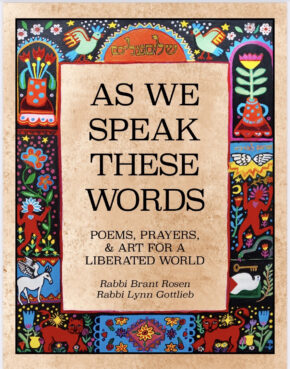
“As We Speak These Words” by Rabbi Brant Rosen. (Courtesy image)
“Prayer has always been an evolving organism in Jewish life,” said Rosen, who recently retired. “It’s never been fixed and static, unlike, say, the Torah.”
When he couldn’t find appropriate prayers for services at Tzedek Chicago, he said, “I started writing my own.”
The anthology assembled by Magid and Mishell includes essays from progressive rabbis, like Rosen. It also includes a chapter of older theological writings from mainly Orthodox and Haredi rabbis who rejected the idea of returning to the land of Israel before messianic times. Some Haredi sects remain anti-Zionist to this day.
Still, many contemporary historians, such as Gil Troy who wrote “The Zionist Ideas,” have omitted the voices of anti-Zionists when writing about Zionism. Magid and Mishell — both are no longer Zionists — contend that’s a mistake. They argue in a 60-page introduction to the anthology that it’s impossible to fully understand Zionism without also understanding the ways Jews have opposed it.
Even the founder of modern Zionism, Theodor Herzl, had to confront it, Mishell points out. When he wanted to hold the First Zionist Congress in Germany, Herzl was rebuffed.
“There were a group of rabbis who said, ‘You are not welcome here. You are going to jeopardize our ability to continue advocating for emancipation to be full German citizens in emerging nation states,’” Mishell said. (Herzl ultimately found a home for that first Congress in Basel, Switzerland, in 1897.)
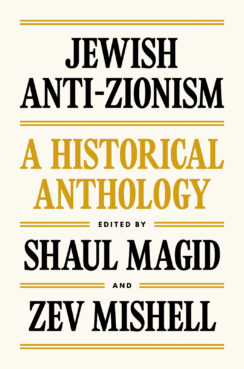
“Jewish Anti-Zionism: A Historical Anthology,” edited by Shaul Magid and Zev Mishell. (Courtesy image)
But even after the establishment of the state of Israel in 1948, and especially after Israel’s capture of East Jerusalem, the West Bank and Gaza, dissent from the Zionist project did not disappear, as the authors document. As Israel’s occupation of the Palestinian territories hardened and the possibility of a two-state solution grew more distant, many more disillusioned liberal Zionists became anti-Zionists. Today, those ranks include Canadian physician Gabor Maté, philosopher Judith Butler, and journalists Naomi Klein and Peter Beinart — all featured in the anthology.
Anti-Zionist Jews are still a minority in the U.S. — although what one means by Zionism often varies, research has shown. They are often called as traitors, self-hating Jews or “un-Jews.” Jonathan Greenblatt, CEO of the Anti-Defamation League, has called anti-Zionism antisemitic. (The anthology acknowledges that some forms of anti-Zionism, especially those espoused by white nationalists, can be antisemitic.)
Magid fears there is no path toward unity and in fact, the growing animosity between the two worldviews may precipitate a new schism in Jewish life across the world.
“Anti-Zionist Jews are going out and building a Judaism of their own — without the state of Israel and without Zionism,” Magid said. “People don’t want their Jewish identity to be anchored in the support of a nation state that is acting in ways that they find abhorrent.”
The latest surveys suggest younger Jews in particular are less invested in Israel. A survey this year found that almost half of American Jews under 35 believe the Israeli-Palestinian conflict should end by creating a single binational state.
“We want people to learn,” Mishell said. Referring to the anthology, he added, “It’s an educational tool at heart. It’s not advocacy. The work of this project is to illuminate a gap that’s just gone unexamined.”

No comments:
Post a Comment