The Rohingya got a verdict. Now they need a future.
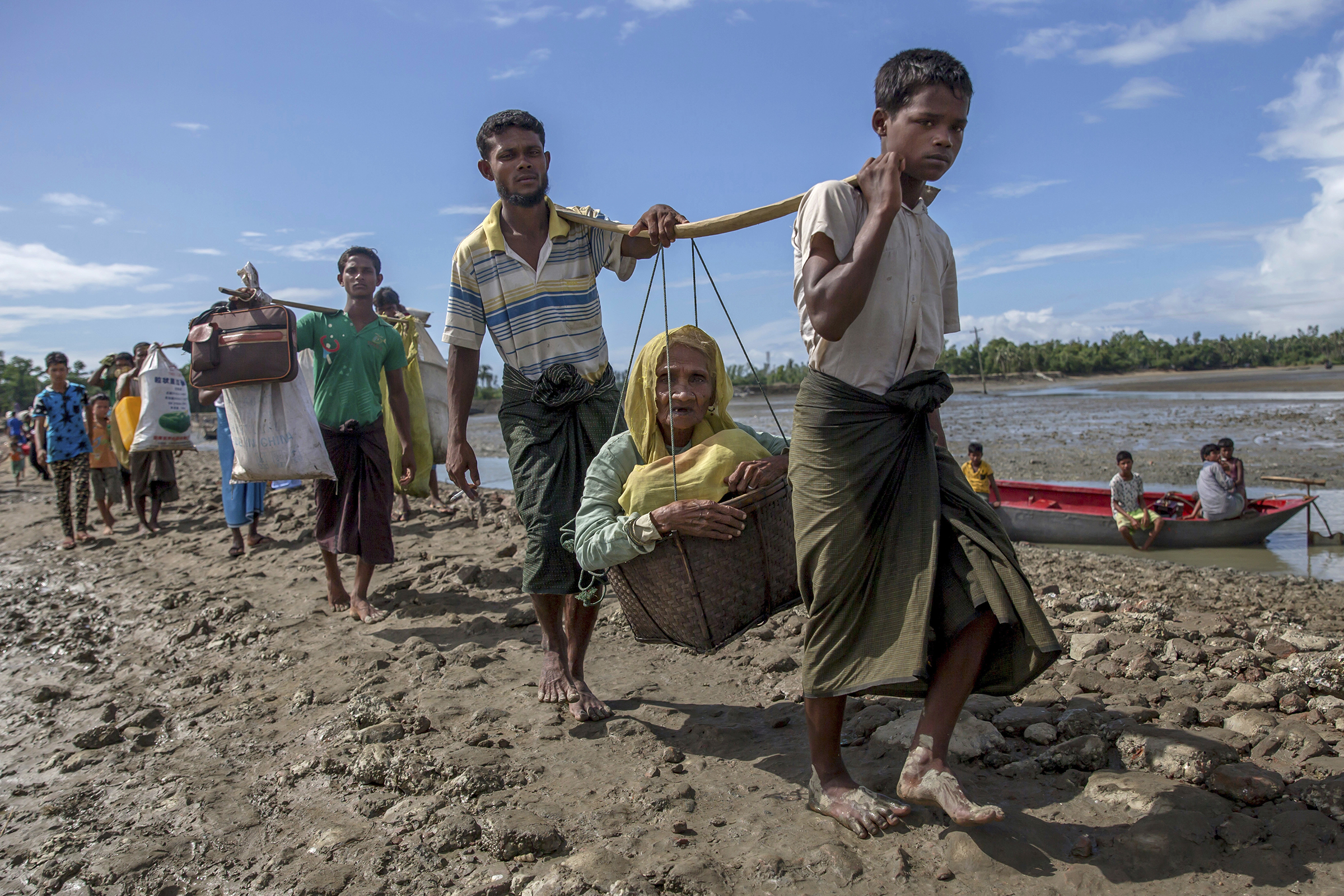
(RNS) — Today, my first thoughts are with the Rohingya people. With the families who have waited years for the world to acknowledge what they survived, and with those who did not live to see this day.
The International Court of Justice has ruled that Myanmar committed genocide against the Rohingya during its military’s 2017 operations in northern Rakhine State. I pray that this recognition brings some measure of comfort to survivors who have carried their grief alongside the burden of having to prove what was done to them.
Their testimony was what counted to me long before this ruling. Their humanity was never awaiting a verdict from another human being. This judgment belongs first to the Rohingya who preserved evidence, shared painful memories and continued demanding justice in a world that never really seemed to care for their plight. We should honor their persistence. We should also ask what will change for them tomorrow.
When I addressed the Rohingya genocide in a Yaqeen explainer, I spoke about the suffering that followed families into exile. Escaping the place where you were targeted does not necessarily mean finding a place where you can rebuild your life.
That remains painfully true. UNHCR describes restrictions on movement and livelihoods for Rohingya refugees in Bangladesh, alongside overcrowded camps and deep dependence on humanitarian assistance. This week, Human Rights Watch warned that funding shortages threaten education programs, while remaining restrictions obstruct schools established by Rohingya teachers themselves.
Imagine surviving an attempt to destroy your people, then watching your children grow up without dependable access to an education. Imagine being expected to become less dependent on assistance while policies restrict your ability to earn a living.

In this Nov. 12, 2017, file photo, Rohingya Muslims aboard a makeshift raft made with plastic containers cross over the Naf river from Myanmar into Bangladesh, near Shah Porir Dwip, Bangladesh. (AP Photo/A.M. Ahad, File)
The world cannot congratulate itself for recognizing the crime while accepting conditions that deny survivors a future.
While Bangladesh, for example, has seen the largest influx of Rohingya refugees, wealthier countries must share that responsibility through sustained assistance and pathways to safety. Host governments must protect refugees’ ability to learn, work and participate in decisions about their lives. Any return to Myanmar must be safe, voluntary and dignified.
The court’s orders include compensation and measures enabling safe, voluntary return. Those commitments must reach the people they are intended to serve. A judgment has meaning for a displaced family when it helps restore choices that violence took away.
I am also thinking of The Gambia, and of a man I had the honor of recognizing years before this ruling.
In 2020, I presented Abubacarr Tambadou, then The Gambia’s justice minister, with the Torch of Justice Award on behalf of Justice For All’s Burma Task Force and the American Muslim community. My remarks honoring him were published by MuslimMatters. I celebrated a leader who had listened to Rohingya survivors and used the authority entrusted in him to pursue accountability.
Tambadou had worked on prosecutions arising from the genocide in Rwanda. When he heard what Rohingya families had endured, he recognized a responsibility to act.
In my tribute, I reflected on how Abu Bakr, the Prophet Muhammad’s closest companion and his first successor, understood leadership. The person denied power must have someone prepared to restore their rights, even when doing so requires confronting the powerful. That principle should guide every government that claims to speak in the name of justice.
The Gambia brought this case in 2019 with the backing of the Organisation of Islamic Cooperation. Other countries later intervened in the proceedings. Their contributions matter, but The Gambia took the initiative when governments with far greater resources had failed to do so.
Its example should trouble every leader who has confused a shortage of political will with an absence of options.
To The Gambia, to Tambadou, and to those who sustained this effort: thank you. You showed what a government can accomplish when it treats the suffering of people beyond its borders as a responsibility worth accepting.
Now we must insist on that same determination for Gaza.
South Africa’s genocide case against Israel remains before the ICJ. In October, the U.N.’s independent Commission of Inquiry reiterated its finding that Israeli authorities and forces continue to commit genocide in Gaza. Palestinians cannot be asked to wait years for protection while legal proceedings continue.

Displaced Palestinians return to Rafah, Gaza Strip, Jan. 20, 2025, a day after a ceasefire deal between Israel and Hamas went into effect. (AP Photo/Jehad Alshrafi, File)
We have watched the genocide in Gaza unfold in real time. Ignorance cannot explain the failure to stop it. The question is whether governments will act on the evidence even when it implicates an ally.
Those who welcome accountability for Myanmar must be prepared to demand accountability from Israel. A state’s powerful friends cannot determine whether its victims are entitled to justice. Nor can a court’s timetable become an excuse for governments to postpone protecting people whose lives remain in danger.
As a Palestinian, a Muslim and a human being, I see a shared obligation to defend both peoples, while honoring the particular histories and losses each carries. The Rohingya deserve justice in its fullness. So do Palestinians.
Today deserves gratitude and renewed commitment. I pray that Allah comforts our Rohingya brothers and sisters, honors their dead and grants their children a future of safety and belonging.
Let us celebrate this ruling by changing the conditions in which its survivors live. Let us honor The Gambia by following its example. And let us act for Gaza while lives can still be saved.
Justice must arrive in time for people to live it. Ruling on yesterday’s genocide is one thing; treating the Rohingya, and those like them, humanely today is another.

No comments:
Post a Comment