It’s possible that I shall make an ass of myself. But in that case one can always get out of it with a little dialectic. I have, of course, so worded my proposition as to be right either way (K.Marx, Letter to F.Engels on the Indian Mutiny)
Tuesday, November 03, 2026
'Northern women and esotericism': Life after death explored at Finnish National Gallery
Copyright Photo: Finnish National Gallery / Aleks Talve
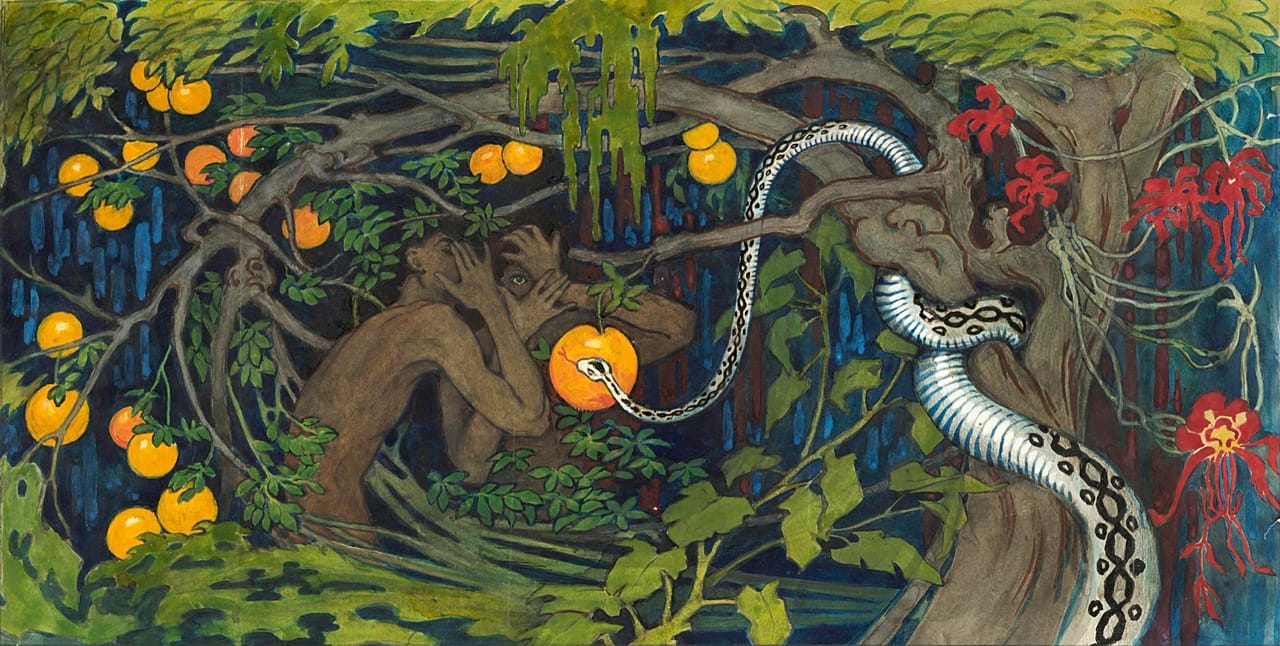
The relationship between spirit and matter, questions related to life after death and the existence of the spirit world are the key themes of the exhibition "Arcana Borealis – Northern Women and Esotericism" at Ateneum Art Museum, Finnish National Gallery.
The Latin words arcana and borealis mean "hidden knowledge" and "the north", two elements at the heart of the Finnish National Gallery's latest exhibition.
"Arcana Borealis – Northern Women and Esotericism" is the first large-scale museum show to examine how female artists from across the Nordic region and Sápmi have engaged with esotericism, spirituality and alternative systems of knowledge from the 19th century to the present day.
The exhibition brings together more than 200 works by 50 artists and features both well-known and overlooked artists, including Hilma af Klint, Tyra Kleen and Tove Jansson.
Previously the connection between modern art and esotericism, occultism and magic has been explored mainly through famous male artists, according to Dr Marja Lahelma, Chief Curator at Ateneum Art Museum and co-curator of the exhibition.
"For quite a long time art history has been dominated by narratives focusing on male artists and on this notion of the individual genius. Our focus is on women and we also draw attention to this idea of communality and working together," Dr Lahelma explained to Euronews Culture.
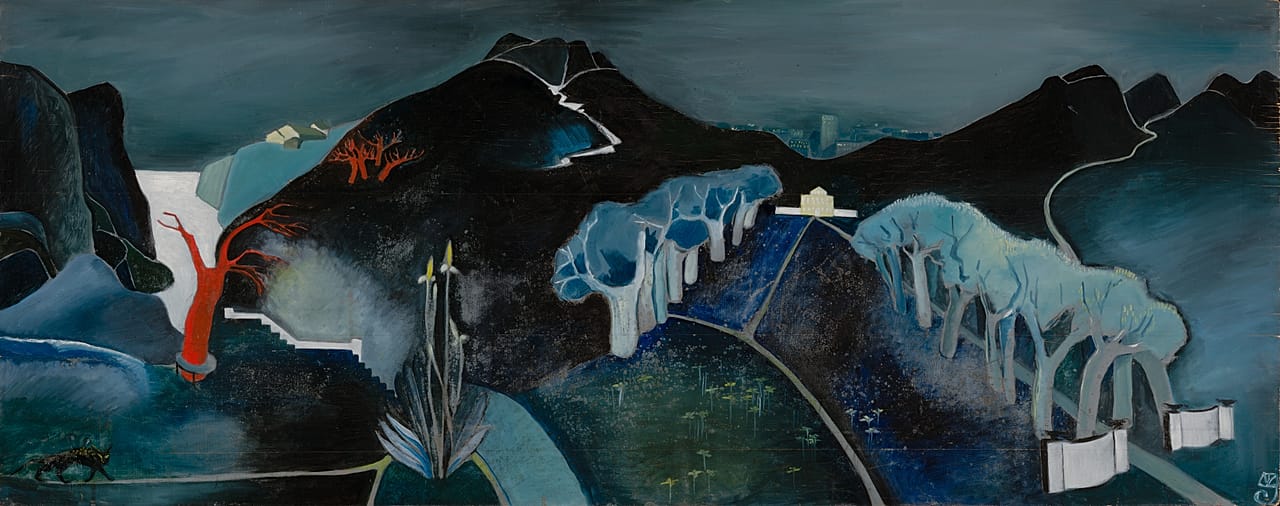
Tove Jansson, Mysterious Landscape (c.1930–1939). Finnish National Gallery. Collection / Ateneum Art Museum. Photo: Finnish National Gallery / Hannu Pakarinen
Art, spirituality and handicraft
"Arcana Borealis shows how the boundaries between art and spirituality, fine art and craft, object and process, individual authorship and collective making begin to blur when viewed through the lens of artist women and esotericism" added Dr Nina Kokkinen from University of Turku, co-curator of "Arcana Borealis – Northern Women and Esotericism" .
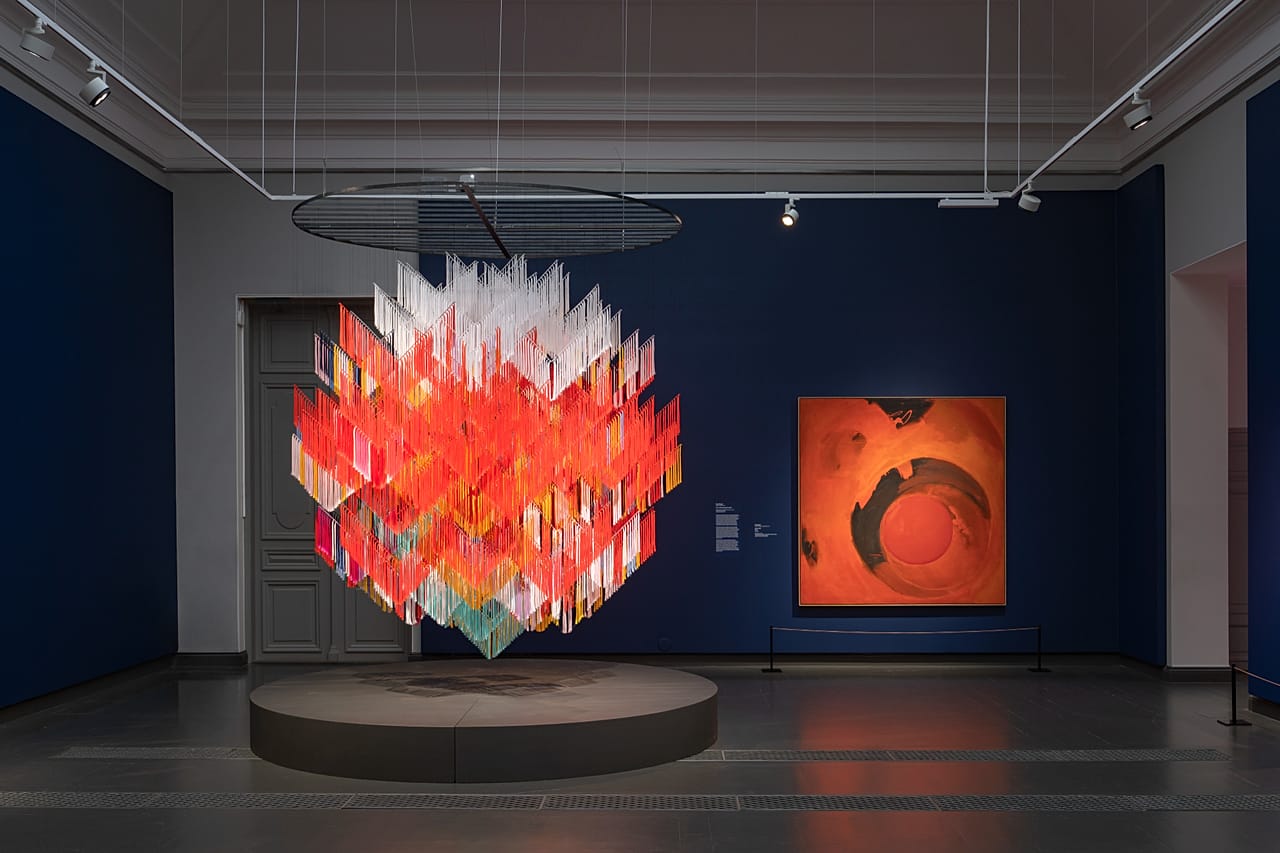
Arcana Borealis – Northern Women and Esotericism. Installation view, Ateneum Art Museum, 2026.Photo: Finnish National Gallery / Aleks Talve
The range of materials featured in the exhibition is exceptionally wide, including textiles, ceramics, metal engravings, and traditional media from sacral art, such as stained glass and mosaics.
Handicraft involves matrilineal transmission of tradition, that is, passing down knowledge and skills from one woman to the next. Sámi duodji, the traditional Sámi craft tradition, brings together spirituality, the tacit knowledge passed on from one generation to another, and values related to nature.
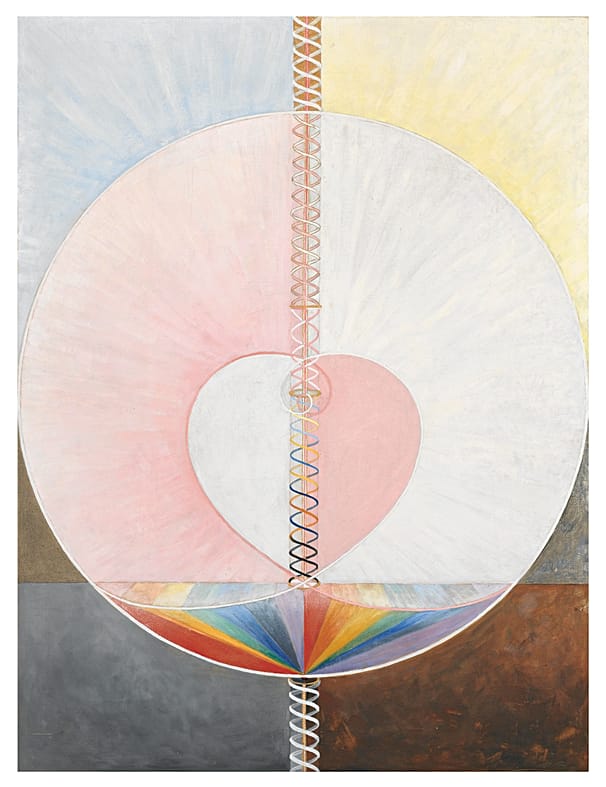
Hilma af Klint, The Dove no 1, Group IX, Series UW, 1915, oil on canvas, By Courtesy of The Hilma af Klint Foundation. Photo: Moderna Museet
Some of the artists gathered on the exhibition were saying that they were guided by some kind of non human agency whether it was angels or guiding spirits, or in some cases a source of nature.
Halloween or Kekri
"This is a perfect exhibition to visit for Halloween, or Kekri as we say in Finnish. Esotericism is about light and darkness. We can explore themes such as death in art through this esoteric theme and sometimes the hidden knowledge, the secret knowledge that esotericism is all about, can be found through exploring darkness rather than light," explained Dr Marja Lahelm.
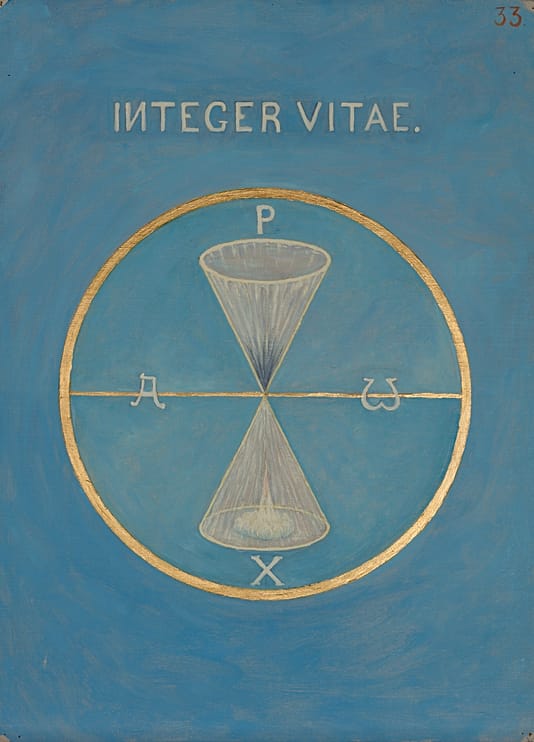
Anna Cassel, Untitled II, No. 33, 1915, oil and metallic paint on canvas, Private collection. Photo: By Courtesy of The Hilma af Klint Foundation / Anders Fredriksén
Arcana Borealis – Northern Women and Esotericism at Ateneum Art Museum, Finnish National Gallery is on open until 28 February 2027.
Hooray for Houdini: Budapest celebrates 100th anniversary of escape artist's death
An event honouring the greatest escape artist and most influential magician of all time has brought Harry Houdini's only living descendant, his brother's grandchild, to Budapest. The centenary for the former "King of Shackles" is also being celebrated by a film festival and an artwork.
As part of the Houdini 100 series of events, a four-day programme has begun in Budapest to mark the 100th anniversary of Harry Houdini's death. In tribute to the Hungarian-born American illusionist and escape artist, a relief is being unveiled and, among other things, a film festival and circus performances await visitors.
At the opening of the programme series, the deputy mayor of District I, Csilla Fazekas, said they are proud that the Houdini House operates in Buda Castle, preserving in a unique way in Europe the legacy of a world-famous Hungarian, Harry Houdini.
According to David Merlini, a magician and founder of the Houdini House in Budapest, many guests from around the world have arrived in the city for the celebrations. They include George Hardeen, the only living descendant of Harry Houdini, the grandson of his brother; television producer Gay Blackstone, from the legendary family of magicians and former president of the Academy of Magical Arts, which runs Hollywood's Magic Castle; and also Péter Gloviczki, a world champion magician and vascular surgeon.
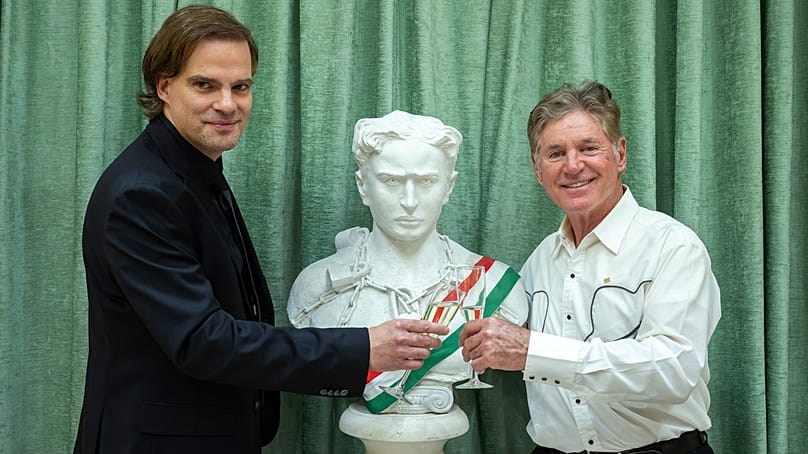
Magician David Merlini, founder of the Houdini House (left), and George Hardeen, the grandson of Harry Houdini's brother, in front of Houdini's bust in Budapest on 29 October 2026 Lakatos Peter/MTI - MTI
Merlini added that the programme also includes the unveiling of a memorial plaque, a magic auction, and a night-time show at Houdini's birthplace in Csengery Street.
Houdini's eventful life
Harry Houdini was born on 24 March 1874 under the name Erik Weisz in Budapest, the son of a rabbi with many children. Four years later the family emigrated to the United States, lived for a time in Appleton, Wisconsin, then moved to New York in 1882.
Erik sold newspapers and shined shoes, and at the age of nine he made his stage debut as the "prince of the trapeze". At 12, he ran away from home and joined a travelling circus, but later returned to help his parents. During his youth he trained himself, running, swimming and boxing.
His career as a magician began when he was 17, with card tricks, but he was already experimenting with escape acts. After his father's early death, he devoted his time exclusively to magic.
He adopted the stage name Houdini in honour of the Frenchman Jean-Eugene Robert-Houdin, the first modern magician. In 1893 he met Wilhelmina Rahner, who became his wife and, under the name Bess Houdini, his stage assistant.
How did he become an escape artist?
In 1899 Houdini met impresario Martin Beck, who advised him to focus his show on escape acts.
He gained fame as the Handcuff King. For freeing himself from the handcuffs of Scotland Yard he received a six-month contract and a weekly fee of £300.
He toured Europe, with the local police assisting his acts with locks, handcuffs and prison cells, and he was often stripped naked and searched, yet he always managed to work his way free.
In 1904 he returned to New York a wealthy man. His acts attracted audiences in America as well and, from 1908, because of the large number of imitators, he built his productions not on chain and straitjacket escapes but on breaking out of locked spaces.
His first attraction of this kind was escaping from a giant milk churn filled with water and hermetically sealed from the outside. He lured audiences to this spine-chilling act with the slogan "Failure means death by drowning".
Houdini broke free from tanks filled with water, ranging in size from a coffin to a prison cell, from pits filled in with earth and even from the stomach of a beached whale. He owed his success to his vivid imagination, his tremendous physical strength, flexibility and suppleness, and his exceptional skill in opening locks, knots and other mechanisms.
He could hold his breath for up to four minutes, yet even so his life often hung by a thread, and he frequently fainted after freeing himself.
With a few exceptions he devised his own tricks, and he revealed the solutions of the most difficult only to his four assistants. Because of his secrecy, the mystery of most of his escapes has never been solved.
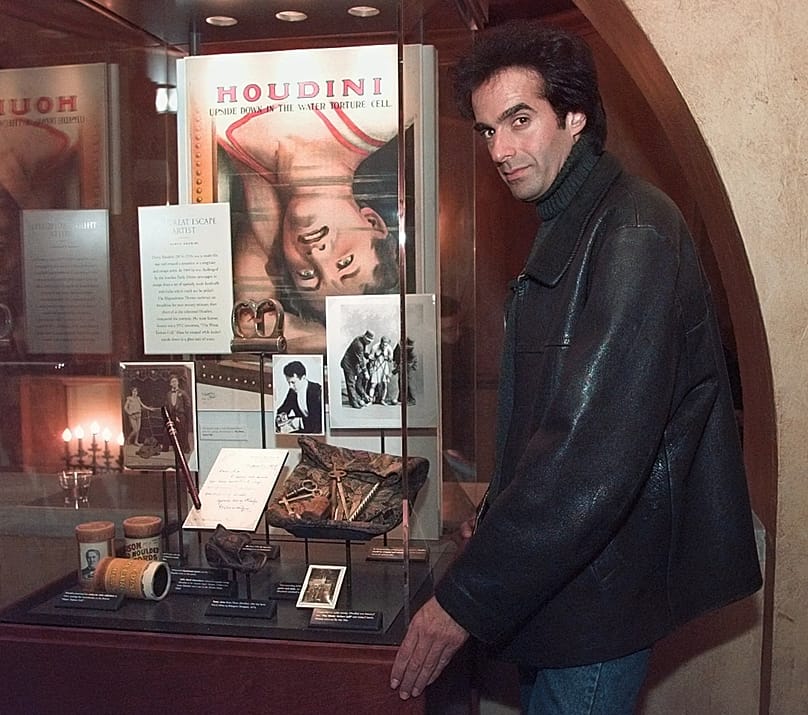
David Copperfield beside a display case containing items from his personal collection related to Harry Houdini on 21 November 1996 at the Martin Beck Theatre in New York Kathy Willens/AP
Audiences flocked to the shows bearing the name of the best-paid American illusionist. In addition to preparing for his tricks, he still found time to write books, try flying and make films (in March 2015, his first film, long thought to be lost, The Grim Game, resurfaced).
Houdini used his powers of persuasion and did not spare his fortune to promote the self-organisation of magicians, and from 1917 he was president of the Society of American Magicians.
As an illusionist he did not believe in "supernatural" powers. He campaigned against credulity and charlatanism, attended spiritualist séances in disguise and exposed fraudsters on the spot. He wrote books on the subject entitled "Miracle Mongers and Their Methods" and "A Magician Among the Spirits".
Yet together with his wife he undertook a spiritualist experiment: they agreed that whoever died first would try to contact the partner who remained alive. His widow's attempt was unsuccessful.
His mysterious death
In the autumn of 1926 Houdini was preparing a new show, but it never premiered. On Halloween, 31 October 1926, he died in Detroit. Officially his death was caused by peritonitis brought on by a ruptured appendix.
It is alleged that on 22 October, before his last performance, two students visited him in his dressing room in Montreal and, when Houdini boasted that he could withstand any blow, one of them punched him hard in the stomach twice without warning. The magician, who had no time to brace himself, later performed his show in excruciating pain, was taken to hospital, but they were unable to save him.
James Starrs, professor of forensic medicine, photographs Houdini's grave on Thursday 22 March 2007 in the Queens borough of New York Copyright 2007 AP. All rights reserved.
Others blame Houdini's demise on the spiritualists who had previously threatened him with death, believing they poisoned him.
His body, which was transported home in the coffin prepared for his new show, was buried without an autopsy in New York, where he lies in Machpelah Cemetery in Glendale.
In 2007 the idea of exhumation was raised, but this has not happened to this day.
Houdini's legacy
In 1975 Houdini was posthumously awarded a star on the Hollywood Walk of Fame, and his figure has been evoked in novels, for example in Doctorow's work 'Ragtime', and in films.
In the 2014 American-Canadian film about him, shot in Hungary and entitled "Houdini" (source in Hungarian), the title role was played by his great admirer, Adrien Brody, who also has Hungarian roots.
His legacy is jealously guarded at his magic centre in Las Vegas by the world-famous illusionist David Copperfield.
Prada champions the human touch and not AI slop for their new Christmas campaign
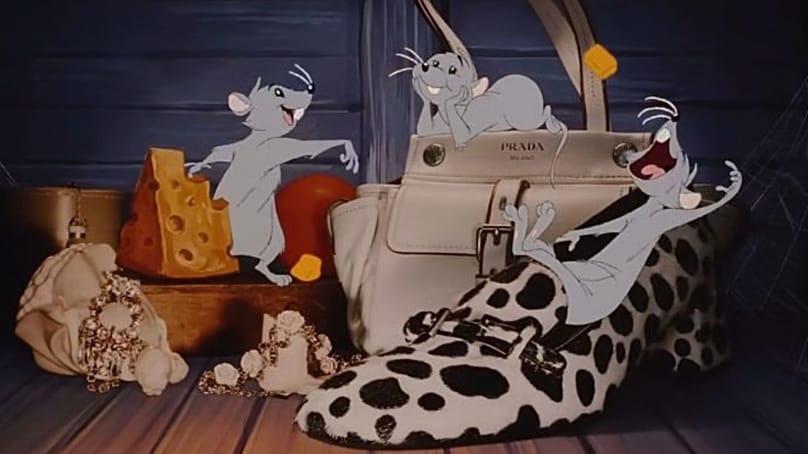
Prada's new advertising feels like a direct response to those still indulging in a tech that is threatening human creativity and livelihoods. Their ‘Drawing Prada: Animated By Hand’ campaign shows that the "not-made-by-AI" approach has become a major selling point.
As generative AI continues to pollute the internet and advertising, certain luxury houses are betting on human craft when it comes to their Christmas marketing.
Call it "effort signaling" all you want; their efforts are to be applauded at a time when cost-cutting initiatives result in mediocre and bar-lowering slop.
One luxury brand choosing to celebrate human creativity this year is Italian fashion house Prada, which has swapped AI-generated dross for traditional, hand-drawn illustration for their new Christmas campaign.
Combining live-action footage with hand-drawn characters, the ‘Drawing Prada: Animated By Hand’ campaign has enlisted veteran animator John Pomeroy to lead a team of artists to bring animated characters and environment to life.
“That sense of touch expresses a fundamental notion of humanity, and a connection with craft that always lies at the very heart of Prada’s approach to creation,” according to a press release.
The campaign, developed under the creative direction of Miuccia Prada and Raf Simons, with Ferdinando Verderi overseeing campaign creative direction, sees each frame drawn by hand and the live-action scenes photographed by Glen Luchford.
Check out the campaign below, which features a cast of celebrity ambassadors including Sadie Sink, Maya Hawke, Chen Haoyu, Luther Ford and Kelvin Harrison Jr.:
Best known for his work at Disney, Pomeroy has contributed to iconic films including the Oscar-nominated Winnie the Pooh and Tigger Too (1974), The Rescuers (1977), Pete’s Dragon (1977) and The Fox and the Hound (1981).
After his departure from Disney, he established independent animation studio Don Bluth Productions, creating films like The Secret of NIMH and The Land Before Time.
He later returned to Disney, where he worked on films such as Pocahontas, Fantasia 2000, Atlantis: The Lost Empire and Treasure Planet. He later worked as an animator on films like Curious George, several Tom and Jerry films, and Space Jam: A New Legacy.
Still from Prada's Christmas campaign 2026 Prada - YouTube
In a behind-the-scenes film accompanying the campaign, Pomeroy explained his commitment to traditional technique.
“I learnt my craft with pencil and paper, through traditional, analogue drawing. We’ve remained faithful to that approach and want to pass it on to future generations,” said Pomeroy.
“There’s a very distinct and purposeful reason to do hand-drawn animation, and that’s to see that there’s value in it and that hand-drawn and handcrafted work is still alive in the world today.”
Prada's ad comes at a time when other brands aren't caring as much. Their 2026 campaign feels like a direct response to those still indulging in a tech which is threatening human creativity and livelihoods.
Unlike Coca-Cola and their AI-generated Christmas advertisements, which faced criticism in both 2024 and 2025 (since the brand did not learn from their mistake the first time around), certain companies are starting to understand how fed up potential consumers are with AI.
More and more people have grown wary of the pervasive tech and there is a growing backlash towards the rise of AI – leading younger, digital-savvy generations to appreciate the value of human creativity while older generations embrace the traditional crafts in a bid to push back against soulless imagery.
Moreover, the "not-made-by-AI" approach has become a massive selling point, and Prada have understood the value of delivering an antidote. Their new campaign has sparked enthusiasm online, with users commenting: "Love it when ads go AI free, much respects to the artists"; "Now this, THIS is how you make an ad"; "Normally not interested in Prada, but I'm reading "Animated by Hand" and I'm in"; and "Such a breath of fresh air seeing something with soul again".
It goes to show that something as simple as hand-drawn illustration can still create enthusiasm.
Your move Coca-Cola. Let's see if a multi-billion company can be bothered to pay real animators this year or if they'll churn out yet another deeply derivative campaign based on the works of artists, used without permission.
SHH, DON'T TELL RED MEAT HEGSETH
More greens, higher testosterone? What a Finnish study found
Research involving more than 2,500 men found contrasting associations between animal and plant protein intake — but does not show that changing diets boosts testosterone.
Sport, smoking and alcohol are often discussed as factors that can affect men’s testosterone levels. But diet — and whether protein comes from plants or animals — could also play a role, according to new research from Finland.
A study of 2,546 men found that those with the highest intake of animal protein had lower testosterone concentrations than those who consumed the least, while the opposite was true for men with the highest intake of plant protein.
Testosterone is a key male sex hormone, involved in sexual function, muscle development and bone health. Its levels vary with age, body weight and other factors, making it difficult to isolate the contribution of any single part of a person’s diet.
Higher dairy-protein intake was associated with lower total testosterone and sex hormone-binding globulin concentrations. Meat-protein intake, meanwhile, was associated with lower sex hormone-binding globulin concentrations but not with total testosterone.
Higher intake of plant protein from vegetables and sources other than cereal products was associated with higher total testosterone.
Researchers at the University of Eastern Finland analysed data from men aged 42 to 60 living in eastern Finland. Their diets were recorded over four days between 1984 and 1989, and their blood samples were used to measure total testosterone and sex hormone-binding globulin, a protein that influences testosterone concentrations in the blood.
Men in the highest animal-protein intake group had average total testosterone concentrations that were 1.2 nanomoles per litre lower than those in the lowest-intake group. For plant protein, the association ran in the opposite direction: men in the highest-intake group had concentrations 1.1 nanomoles per litre higher than those in the lowest-intake group.
The researchers adjusted their analyses for age, body mass index and several other dietary, lifestyle and health-related factors.
The Finnish study does not establish that animal protein lowers testosterone or that switching to a plant-based diet raises it.
The research was cross-sectional, meaning it examined associations rather than demonstrating cause and effect.
“Although the observed differences in testosterone concentrations were statistically significant, they were relatively small,” Miika Wynne-Ellis, a doctoral researcher at the University of Eastern Finland, said in the university’s announcement of the findings.
Watch: Unseen images of drone sinking Greek tanker off Bulgarian coast
Russia is suspected of being behind a recent wave of attacks targeting commercial vessels in the Black Sea.
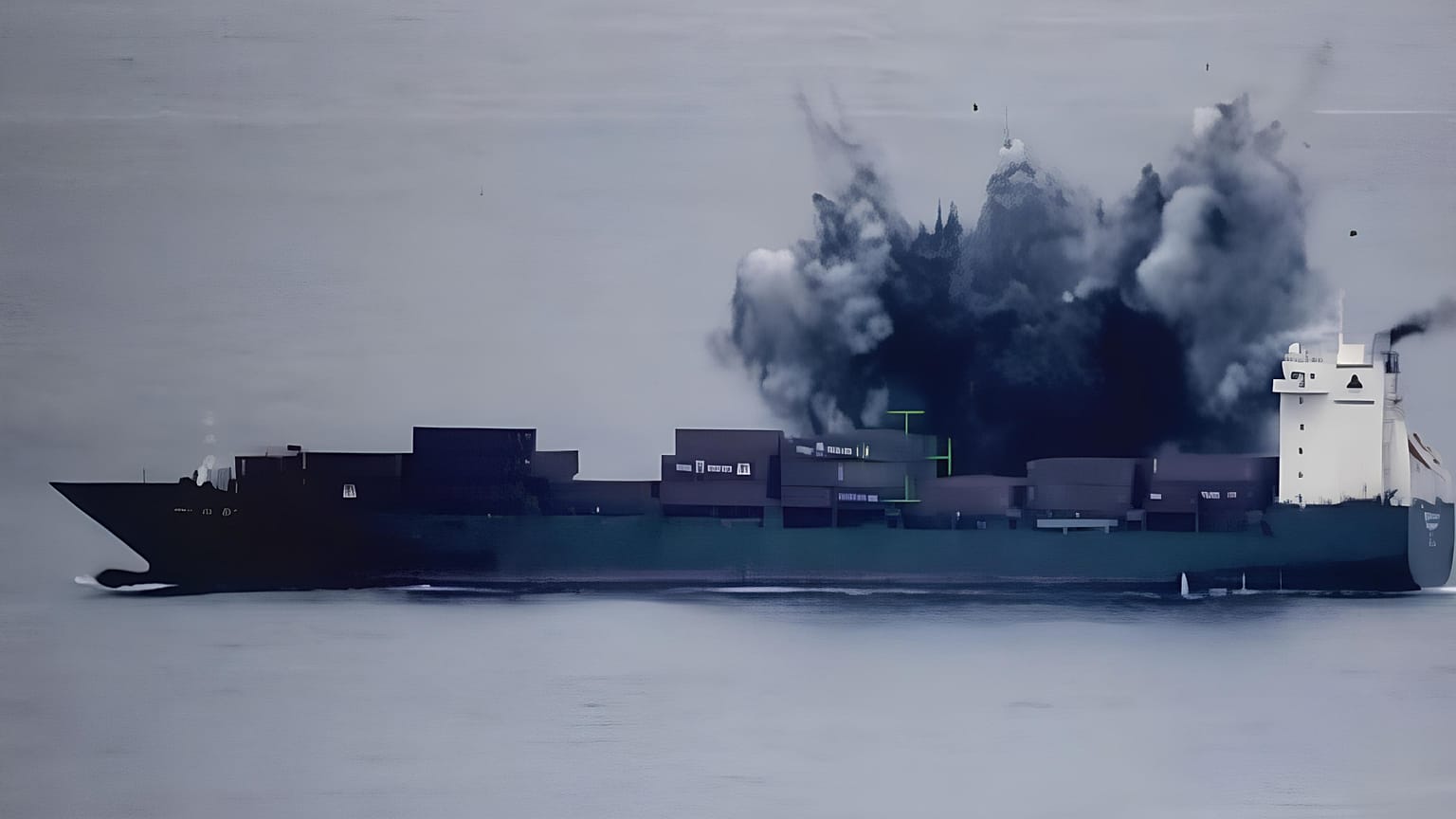
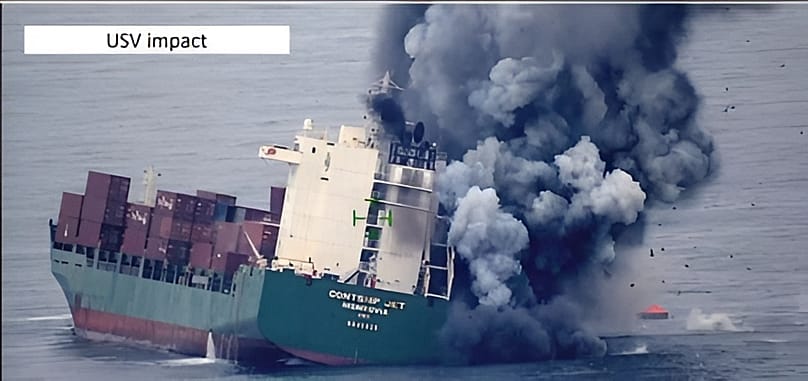
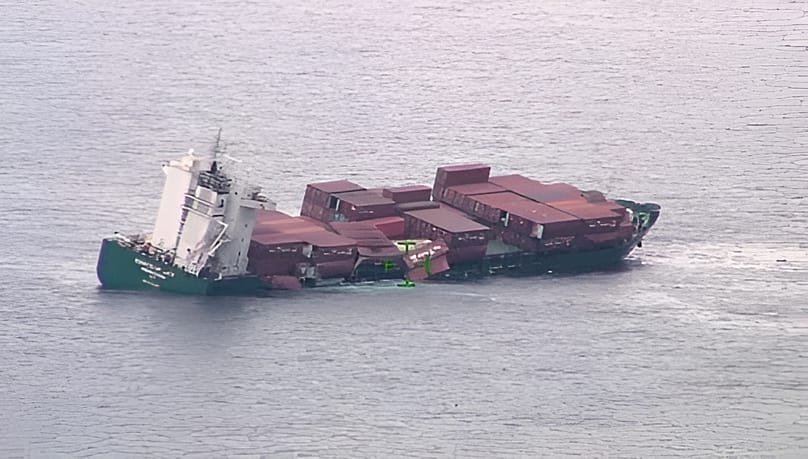
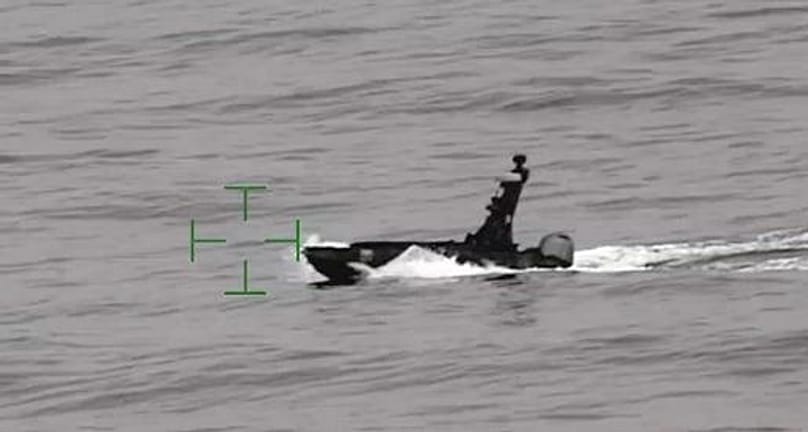
Euronews has obtained images of the Liberian-flagged vessel targeted by sea drones off Bulgaria’s Black Sea coast on 28 October.
The incident marked the fifth drone attack recorded in the NATO country’s exclusive economic zone last month.
The Greek-managed Contship Jet tanker was travelling from Israel’s port of Haifa to Constanța in Romania when it was struck by three maritime drones.
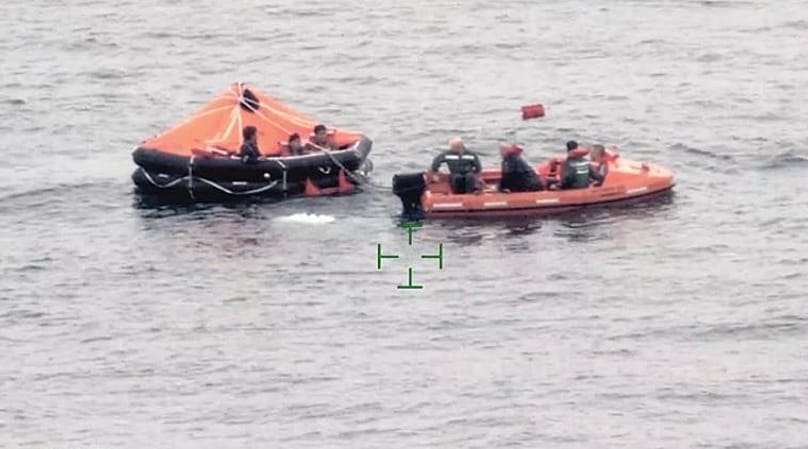
All 18 crew members - 14 Filipinos and four Ukrainians - were rescued by Bulgarian naval and border police vessels and taken to the port city of Varna for medical checks.
Image of Greek-managed Contship Jet tanker which was impacted by sea drones, 28 October 2026 Euronews
Bulgaria's Military District Prosecutor's Office announced it had opened a preliminary investigation into the attack the next day. Russia is suspected of being behind a recent wave of attacks targeting commercial vessels in the Black Sea.
Some of the containers on board were carrying lithium-ion batteries, flammable liquids, gases and other hazardous materials, the maritime.bg site reported. Navy teams reported no signs of pollution after taking samples from several locations in Bulgarian territorial waters.
Image of Greek-managed Contship Jet tanker which was impacted by sea drones, 28 October 2026 Euronews
The incident came as defence ministers from Bulgaria, Romania and Turkey met in the Bulgarian capital, Sofia, to discuss security in the Black Sea region.
In a statement after the talks, the three NATO countries strongly condemned the strikes on vessels in the Black Sea and called for an “immediate cessation of attacks that threaten commercial ships, maritime infrastructure and the safety of maritime activities.”
They also agreed on stronger intelligence sharing, early warning capabilities and coordination in the region.
Sea drone which struck Greek-managed Contship Jet tanker, 28 October 2026 Euronews
A recent wave of such incidents off the coasts of Romania and Bulgaria has led some alliance members to wonder if Russian President Vladimir Putin is seeking to test their support for Ukraine as it continues to fight against Moscow’s full-scale invasion.
Bulgarian Prime Minister Rumen Radev told his country's parliament earlier this month that “the logic points in that direction … The problem is that we cannot prove it.”
The crew aboard the tanker were rescued by Bulgarian naval and border police vessels, 28 October 2026 Euronews
In response to the attacks, NATO Secretary-General Mark Rutte said on 15 October in a post on X that the alliance had "strengthened" its "posture along the eastern flank including with increasing counter-drone capabilities."
Ukraine says hopes of 'progress toward peace' knocked by attack on aid distribution centre
Copyright Copyright 2026 The Associated Press. All rights reserved
Zelenskyy said the Zaporizhzhia attack showed Russia was "sending an entirely opposite signal" and that it was "counting on more killings."
Ukrainian President Volodymyr Zelenskyy said any hopes of "progress toward peace" following a localised truce last week had been dampened by deadly Russian strikes on an aid distribution centre in southeastern Ukraine.
The aerial bomb attack in the region of Zaporizhzhia killed at least 26 people, including two rescue workers and four police officers, on Monday, according to Ukraine's State Emergency Service (DSNS). Five others were also reportedly injured in the strikes.
Ivan Fedorov, the regional governor, said Russian forces had fired "at least nine KAB-3000 bombs" on the Komyshuvakha settlement throughout the day.
"All emergency services are working flat out at the scene, while municipal workers are clearing the rubble," he wrote in a post on Telegram.
Zelenskyy called it an "utterly horrific" attack, saying it had targeted "a school used for humanitarian purposes" where some people were receiving aid.
"After the first aerial bomb strike, there was a double-tap strike with nine more bombs, specifically targeting the shelter where people were taking cover," he wrote on X.
Images shared by the DSNS from the scene show a building reduced to a pile of rubble and what appears to be a burned-out bus.
Russia 'counting on more killings'
In his post, Zelenskyy said the attacks had also knocked hopes of moving closer to a peace deal.
"After the humanitarian operation in Oleshky, there was a moment when the next steps could have shown that progress toward peace was possible," he wrote. Evacuees from the Russian-occupied city of Oleshky in Ukraine's southern Kherson region arrived in Ukraine on Saturday after travelling through Belarus amid a rare humanitarian truce between Kyiv and Moscow.
But Zelenskyy said the Zaporizhzhia attack showed Russia was "sending an entirely opposite signal" and that it was "counting on more killings."
"There must be a response to this – a response from the world. A strong and tough response," he added.
Authorities in Kherson said Russia had resumed attacks on the region on Monday following a drone strike on the Korabelny district.
A 62-year-old woman and a 73-year-old man reportedly sustained blast injuries in the attack.
Thousands of troops from Europe to rehearse post-war Ukraine deployment in Poland
The force, which was set up in 2025 and already has an operational headquarters in Paris, is not a NATO operation and has little US involvement.
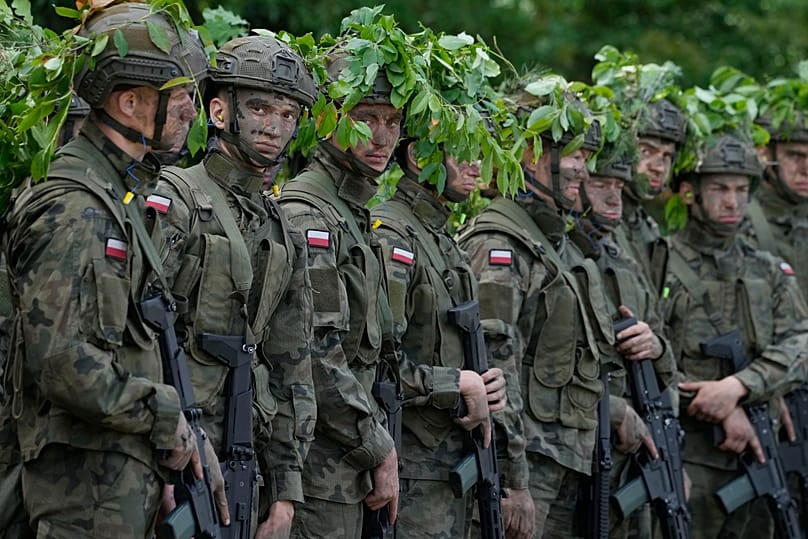
Around 2,800 troops from 10 European countries will stage the first exercise of a new multinational force in support of Ukraine in Poland later this month, London and Paris said on Tuesday.
Led by France and the UK, the Multinational Force - Ukraine (MNF-U) has no offensive mission and is only to be deployed once a ceasefire is agreed to end the war sparked by Russia's 2022 full-scale invasion.
The force, which was set up in 2025 and already has an operational headquarters in Paris, is not a NATO operation and has little US involvement.
It aims to support the Ukrainian armed forces, ensure security in Ukrainian airspace and allow economic activity to resume in the Black Sea.
But the extent and duration of the exercise, dubbed Koalicja ("Coalition" in Polish), risks antagonising Russia, with Moscow still showing little appetite to settle for peace.
"The exercise will allow the testing of the speed and efficiency at which several nations can deploy forces on land, sea and air to support Ukraine once hostilities have finished," the joint statement released by the French defence ministry said.
Volunteers takes part in basic training with the Polish army in Nowogrod, 20 June, 2024 AP Photo
"This isn't a hypothetical plan, it's a real force, ready to help Ukraine once the fighting stops," UK Defence Minister Wes Streeting was quoted as saying in the UK statement.
The exercise is scheduled to last from 9-22 November in southeast Poland not far from the Ukrainian border, involving 2,800 troops.
The largest contingent of 1,100 troops will come from France, with the UK deploying 300 soldiers.
Light equipment deployed
The first exercise for the coalition force is "a key milestone, as it will serve as a concrete demonstration of the MNF-U's ability to be deployed as soon as hostilities have ended," said French General Armel Dirou, who will co-lead the exercise alongside Britain's Lieutenant General Tom Bateman.
It will involve troops from Belgium, Estonia, Germany, France, Lithuania, the Netherlands, Poland, Spain, Sweden and the UK in air and land operations around the town of Nowa Deba, some 100 kilometres west of the Ukrainian border, the joint statement said.
Meanwhile, a maritime simulation will be led by Turkey from Istanbul to test preparedness for eventual mine-clearing operations in the Black Sea. Turkish troops will not be involved in the land exercise in Poland, it added.
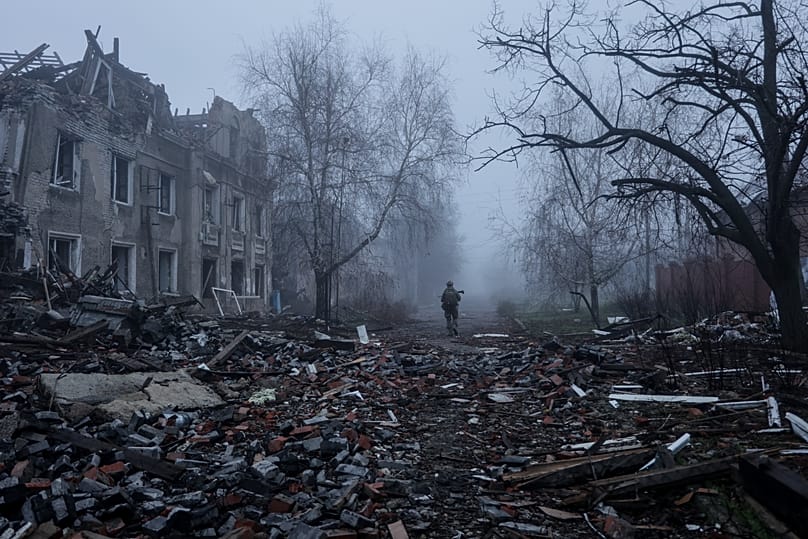
A Ukrainian soldier goes along a street in the frontline town of Kostyantynivka, 28 November, 2025 AP Photo
Bateman emphasised that the force is not a "peacekeeping or ceasefire monitoring mission".
"It is not designed for offensive operations. Its purpose is to provide reassurance and support the regeneration of Ukraine's armed forces, strengthening their ability to deter and, if necessary, defend against future Russian aggression," he said.
Nevertheless, Moscow will be watching closely as the war grinds towards its five-year milestone with neither side apparently close to a decisive breakthrough.
Dirou said that the aim of the exercise was to prepare how the mission would be deployed, overcoming the various potential logistical and cultural issues between the different countries' militaries.
"This is not a show of force. We are not going to flex our muscles," he said.
Related
It is expected that only light equipment, such as drones, will be deployed in Poland for anti-drone and self-defence exercises, rather than heavy weaponry, and that no tanks will be deployed.
Aspects tested in the exercise will include coordination arrangements, rehearsing the movement of personnel, equipment and supplies, and assessing whether the different components can integrate and operate effectively as one multinational force, said Bateman.